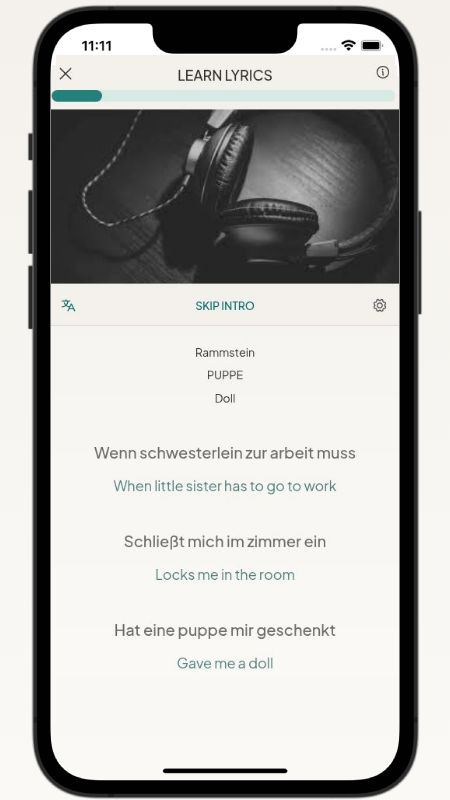
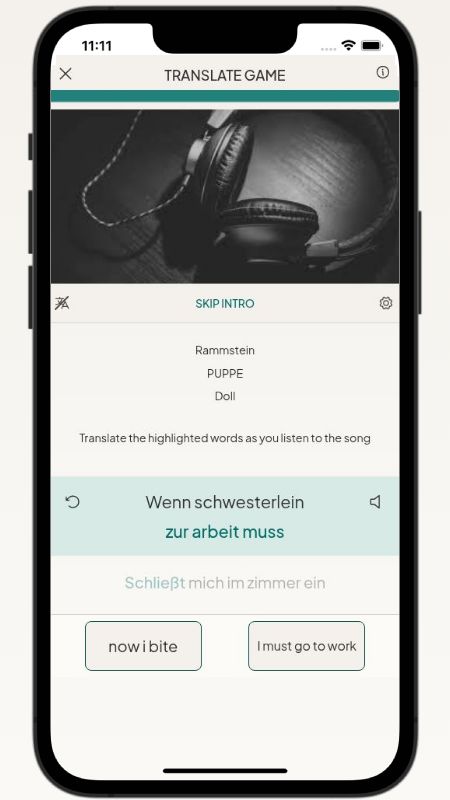
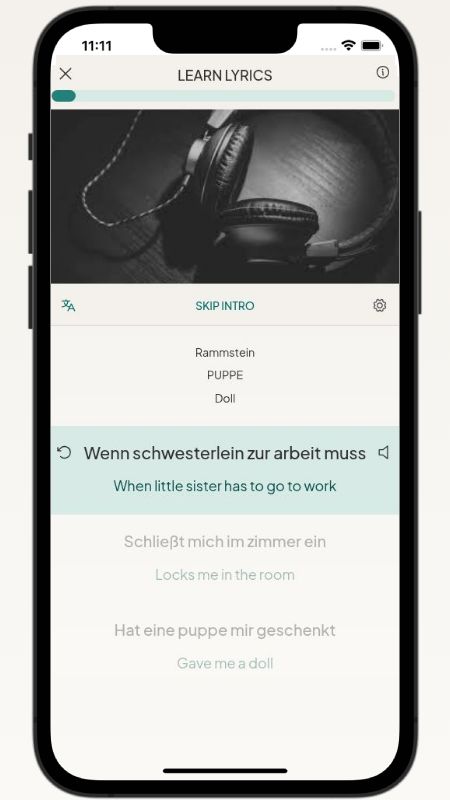
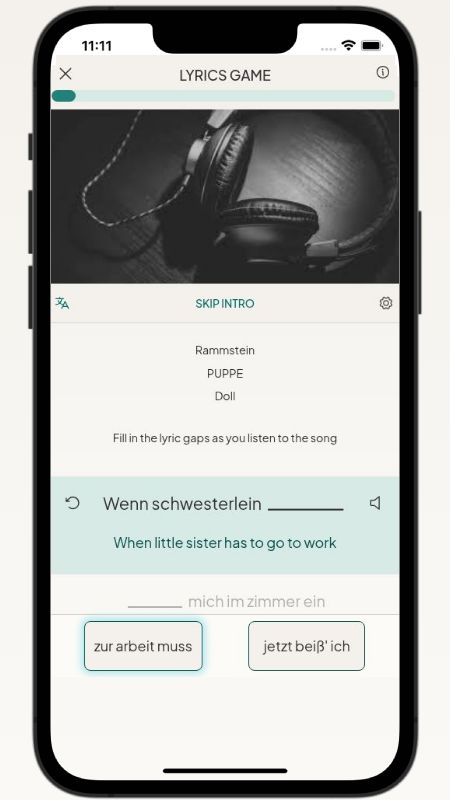
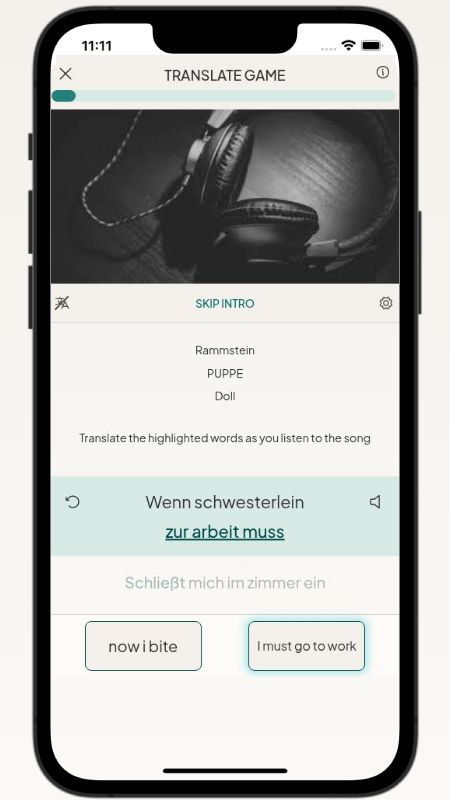
PUPPE Lyrics in English by Rammstein
Daunenbeet literally translates to "down bed" or "feather bed." It's a compound word that evokes a sense of softness and comfort, but in the context of this Rammstein song, it takes on a much darker, more unsettling meaning.
The protagonist, a child locked in a room, waits in this "down bed" while disturbing events unfold next door. The contrast between the innocent comfort of a feather bed and the horror of the situation makes this word particularly striking and memorable, hinting at a twisted reality.
"Puppe" ("Doll") is told from a child's point of view. Whenever the older sister has to go to work, she locks the child in a room next door and hands over a doll for company, so the child won't be alone. The workplace is never named, but it's right there through the wall, and the sister comes and goes with different people, sometimes in pairs.
The child waits obediently in bed, taking medicine and watching the sky darken until the sun goes down — and then, feeling worse and worse, tears the doll apart: rips off its head, bites off its neck. It's a child processing something it doesn't have words for by destroying the one comfort object it was given.
In the final verse the light in the window turns red and someone beats the sister to death behind that door. Now, watching through the keyhole, the child destroys the doll again — but this time it makes him feel good instead of sick. It's one of Rammstein's bleakest story songs, using a child's toy to sit with abuse, neglect, and a twisted sense of relief.