Learn Spanish With Bad Bunny with these 23 Song Recommendations (Full Translations Included!)
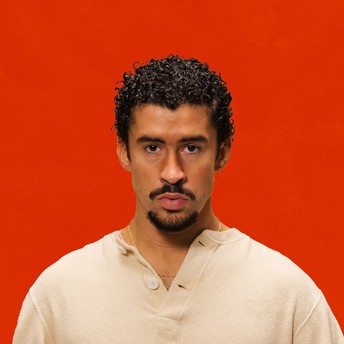
Bad Bunny was bagging groceries at a supermarket in Vega Baja and studying audiovisual communication at the University of Puerto Rico's Arecibo campus when the tracks he was uploading to SoundCloud between shifts reached DJ Luian, who signed him to Hear This Music in 2016. He was born Benito Antonio Martínez Ocasio in Bayamón in 1994 and grew up in the Almirante Sur barrio of Vega Baja.
The breakout was "Diles" in 2016, then "Soy Peor" that December, and by 2018 he was on Cardi B's "I Like It", a number one on the Hot 100. His albums run from X 100pre and YHLQMDLG through Un Verano Sin Ti, the year end number one on the Billboard 200 in 2022, to Debí Tirar Más Fotos, which in February 2026 became the first all Spanish language album to win the Grammy for Album of the Year. He also has "Callaíta", "Dakiti" and "Tití Me Preguntó" behind him, a summer 2025 residency at the Coliseo José Miguel Agrelot in San Juan, and a WrestleMania tag team match in 2021 that he and Damian Priest won.
Bad Bunny compares a past lover to a vacationer who only dropped by for the highlight reel: "En mi vida fuiste turista / Tú sólo viste lo mejor de mí" ("In my life you were a tourist / You only saw the best of me"). Over a steady reggaeton groove, he rattles off pleasant postcard memories like "una foto bonita" (a pretty picture), "un atardecer hermoso" (a gorgeous sunset), and "una bailadita" (a little dance). But behind all those sunny vacation vibes, he kept his real pain tucked away. He does not hold a grudge about it either, admitting frankly, "no te tocaba a ti curarlas" ("it wasn't your job to heal them").
The mood turns reflective as he admits to hiding his feelings out of fear of getting hurt worse: "Dime si viste la pena / De mi corazón roto / Que lleva así... muchos años" ("Tell me if you saw the sorrow / Of my broken heart / That's been like this... for many years"). Then he shrugs off the heavy thoughts with a casual Puerto Rican conversational phrase: "Si se da, pues, se da / Y si no, pues también" ("If it happens, well, it happens / And if not, that's fine too"). He accepts that this person simply came to have a good time ("Viniste a pasarla bien / Y la pasamos bien"), choosing to toast the beautiful night instead of dwelling on what never went deeper.
Bad Bunny gets straight to the point in this track, telling a story about the heartbreak of watching people get pushed out of his home island of Puerto Rico. He opens by framing the song as a dream about an island trying to smile through pain while facing heavy losses. He points fingers directly at political greed with lines like "No quería irse pa' Orlando / Pero el corrupto lo echó" ("He didn't want to leave for Orlando / But the corrupt person threw him out"). The song calls out outsiders taking over local spaces—"Quieren quitarme el río / Y también la playa" ("They want to take my river / And the beach too")—while older generations (abuelita) and younger families are forced to pack up and leave.
What makes this track stand out is its urgent plea not to lose local identity in the face of gentrification and displacement. Bad Bunny warns Puerto Ricans by pointing to what happened in Hawaii, where native locals were largely displaced from their own lands. He begs listeners, "No, no sueltes la bandera / Ni olvides el lelolai" ("Don't let go of the flag / Nor forget the lelolai"). The word "jíbaro" refers to the traditional Puerto Rican countryside folk, while "lelolai" is the signature melodic phrase used in Puerto Rican folk music (jíbaro music). By shouting out these roots, he turns the song into a call to stay, fight back, and hold on to home.
Puerto Rican superstar Bad Bunny frames heartbreak through the metaphor of a dance floor in "BAILE INoLVIDABLE". Instead of hiding his grief, he leans straight into it with the opening realization that he thought they would grow old together ("Pensaba que contigo iba a envejecer"), but now that dream only belongs in another lifetime. He compares life to a party that eventually ends, calling his lost love his unforgettable dance ("La vida es una fiesta que un día termina / Y fuiste tú mi baile inolvidable"). Even though he admits he can sleep with anyone he wants, he only actually wants to wake up next to this one person ("Yo con cualquiera me puedo acostar / Pero no con cualquiera quiero despertar").
Bad Bunny fills the track with playful Caribbean slang to contrast the heavy sadness. He switches to the formal "usted" (you) to show deep devotion before slipping into wild compliments, calling his ex "Mi diabla, mi ángel, mi loquita" [My devil, my angel, my crazy girl]. He also uses the Puerto Rican slang word "bellaquito" (horny or aroused) when remembering how she looked at him ("Cómo tú me mirabas, bellaquito me ponía"), proving that his memories are intensely physical as well as romantic. It is an honest, bittersweet track about carrying someone's memory forever because they were the one who taught you both how to love and how to dance ("Tú me enseñaste a querer / Me enseñaste a bailar").
Puerto Rican superstar Bad Bunny gives us the ultimate sad-boy breakup track with "Un Verano Sin Ti", mixing heavy heartbreak with moments that make you chuckle. While it is bright and sunny outside, he is stuck indoors feeling like it is raining in his room ("En mi cuarto está lloviendo y afuera está el sol"). He takes the blame for the split with a brutally honest apology: "Sorry por ser yo / Y no ser el hombre que te merecías / Yo quizá madure pero en otra vida" ("Sorry for being me and not being the man you deserved; maybe I'll mature in another life"). He admits that while he claims he is fine, her name still keeps him awake at night, thinking about broken plans and missed sunsets in Ibiza.
To cope, he throws himself into the nightlife scene, even though partying is not his normal routine. He uses Caribbean slang like jangueo (hanging out / partying) and teteo (a lively street party), admitting he only goes out hoping to spot his ex from across the room through the club smoke: "Mañana voy a terapia / Hoy voy pa'l teteo" ("Tomorrow I'm going to therapy, today I'm going to the party"). He even references Spanish pop legend Alejandro Sanz's famous 1997 heartbreak anthem Corazón Partío, joking that while Sanz had a broken heart, his own soul is shattered ("Alejandro Sanz con el corazón partido / Y yo con el alma rota"). It is a funny, honest look at dealing with an empty house and unsent draft messages in your phone notes when facing a lonely summer.
Bad Bunny drops all his tough-guy swagger here for something sweet and a little messy. It is three in the morning, he has had way too much to drink, and he openly admits he has two left feet: "enséñame a bailar, mami, yo no sé / pero ya estoy borracho y son las tres" ("teach me how to dance, mami, I don't know how / but I'm already drunk and it's three"). He is not trying to look cool on the dance floor. Instead, he just wants to follow his partner's lead until dawn ("tú y yo solitos y el sol" [you and me all alone and the sun]), completely caught up in how they move.
What makes the track pop is its warm Dominican flavor. When Bad Bunny drops phrases like "¿Qué lo qué?" ("What's up?") and "Que rico se pasa en Quisqueya" ("How great it is in the Dominican Republic"), he is shouting out the island by its indigenous Taíno name, Quisqueya. He sprinkles in local slang throughout the party, using "rulin" (chilling or having a blast) and offering to foot the bill no matter how wild things get: "rompe todo que yo pago" ("break everything, I'll pay for it"). It is a playful, late-night anthem about letting your guard down, getting bold with your crush, and letting music do the talking.
In "Desde El Corazón", Bad Bunny puts his pride for Puerto Rico front and center. He looks back at his quick rise from working as a supermarket grocery bagger ("Ayer era bagger" [Yesterday I was a bagger]) to becoming a global star with too much money to fit in Puerto Rico's largest bank ("Aunque en el Banco Popular no quepa mi dinero" [Even if my money doesn't fit in Banco Popular]). Even though he compares his high demand in music to NBA star Stephen Curry getting recruited by the Golden State Warriors, he insists on staying loyal to local Puerto Rican basketball teams like the Cangrejeros, Capitanes, and Vaqueros. He reminds everyone that no matter how rich he gets across cities from San Juan to Mayagüez, he will never forget his roots or where he wrote his very first track.
The song turns into an anthem of resilience and cultural pride, especially when he declares that he will stay on the island even when natural disasters hit ("Y yo me quedo en Puerto Rico aunque venga María" [And I stay in Puerto Rico even if Hurricane María comes]). He uses the local phrase "meter mano" (to put in hard work) and "tener cría" (to have guts and heart) to praise how tough Puerto Ricans are. He even pulls in an anime joke by calling his people "sayayines" with plenty of "Ki" (the Super Saiyan warriors and energy from Dragon Ball Z). He finishes by giving thanks to his mother for giving birth to him near the beach and the native coquí tree frog, shouting out the salsa and reggaeton legends who inspired his entire generation—including Héctor Lavoe, Tego Calderón, and Daddy Yankee.
Ever had an aunt who will not stop asking about your dating life? That is the exact setup for Bad Bunny's mega-hit "Tití Me Preguntó". In Puerto Rico and across the Spanish-speaking world, "tití" is an affectionate word for aunt. The song starts like a family gathering where an aunt asks how many girlfriends he has. Instead of giving a sensible answer, Benito turns it into a wild brag list. He flexes about having a different girl every day ("Hoy tengo una, mañana otra, pero no hay boda" [Today I have one, tomorrow another, but there's no wedding]) and rattles off names from kindergarten crushes to dates across Colombia, Mexico, and Spain.
Then the track flips the script. An older family member scolds him to settle down, and suddenly the party rhythm turns into an honest, downbeat confession. He admits he cannot fall in love ("Yo quisiera enamorarme / Pero no puedo" [I would like to fall in love / But I can't]) because he has serious trust issues—even with himself ("ni en mí mismo confío" [I don't even trust myself]). He bluntly warns anyone getting close that he is going to break their heart. It is funny, chaotic, and surprisingly self-aware all at once.
In "DtMF", Puerto Rican superstar Bad Bunny mixes tropical party energy with a sharp hit of regret. The song title stands for the central confession repeated in the chorus: "Debí tirar más fotos de cuando te tuve" ("I should have taken more photos when I had you"). Watching a sunset in San Juan, he thinks about an ex and kicks himself for not taking more pictures or giving more hugs while he had the chance. Instead of staying home to mope, he rallies his real-life crew (calling out friends like Roro, Julito, and Cristal) to tear up the streets, play dominoes with his grandfather, and head to Santurce for a wild night out.
The track is packed with local Puerto Rican slang and culture. When he mentions partying to "la salsa, la bomba y la plena", he is shouting out traditional Afro-Puerto Rican musical styles alongside modern reggaeton perreo. He admits he is drinking so much that someone else needs to drive ("Cabrón, guía tú" / "Dude, you drive"), and by the end, he stops everything to gather his entire circle for a group photo: "vamos pa' la foto, vengan pa'cá" ("let's take the photo, come over here"). It is a song about realizing that moments slip away fast, so you might as well hold your friends close, document the good times, and dance through the nostalgia.
Bad Bunny hits us with a messy holiday heartbreak story in "PIToRRO DE COCO". Instead of celebrating New Year's Eve, he is sitting around watching the clock tick past midnight while nursing a broken heart. Exactly a year ago, he was the one receiving that first midnight kiss. Now, he got nothing: "Ni una llamada, ni un sólo mensaje" (Not a call, not a single message). His friends are teasing him because he is completely lost in his feelings, or as he puts it, "en un viaje" (tripping out / spaced out). By four minutes past midnight, he is already crying into the coconut moonshine his grandfather gave him to party with, not to weep over an ex.
The lyrics mix holiday traditions with Puerto Rican domino slang to show how badly she outplayed him. He jokes that he asked both Santa and the Three Kings (Los Reyes) to bring her back, but neither delivered. Then he uses a classic game metaphor: "Con el doble seis y doble cinco, me trancaste el juego" (With the double six and double five, you locked the game on me). In Puerto Rican dominoes, "trancar el juego" means blocking the board so nobody can play, leaving the player with the heaviest tiles to lose. Even though he calls her toxic and admits he ignored the red flags just to keep kissing her, he still can't get her face out of his head as the new year starts.
Bad Bunny hits you with pure, bouncy reggaeton energy in "Efecto", comparing the intense rush of falling for someone to an overwhelming chemical high. In the hook, he admits his life outside might be a mess, but everything suddenly feels flawless the second she steps in: "Mi mundo está jodido / Y me siento perfecto / Porque estás tú, aquí" ("My world is messed up / And I feel perfect / Because you are here"). When she looks at him, he starts sweating and feels like he can fly, straight-up asking what substance she slipped into his drink because he has not been the same since that first night.
He leans heavy into bold Puerto Rican street slang to explain why he is hooked. He jokes that her ex lost her through sheer carelessness, rapping "El gatito tuyo te perdió por negligencia / Y yo que no creo en la abstinencia" ("Your guy lost you due to negligence / And me, I don't believe in abstinence"). He shouts out her home base of Carolina, Puerto Rico ("de Carola"), calls out a trip to Florence ("Florencia"), and notes how she acts stuck-up now ("se puso más bicha") without losing her real roots. Even with a whole list of party substances in the lyrics, he makes it clear she is the one running the show: "Eres tú quien me controla" ("It's you who controls me").
Bad Bunny is crushing hard here, but the girl he likes is not making it easy. He wants to be with her, singing "Yo estoy puesto pa' ti / Y tú te me quitas" ("I'm ready for you / And you pull away from me"). She has put her heart on ice for the season—literally "en la neverita" ("in the little cooler")—and decided to stay single all summer. Still, that does not mean she is lonely. Her inbox is flooded with messages ("El DM explotado"), and there is a whole line of guys waiting for her attention. Bad Bunny even jokes that she treats him like a joke, pleading "me tienes de meme" ("you've got me looking like a meme").
Puerto Rican slang really brings the beach setting to life throughout the track. When he shouts "Diablo, qué piquete la chamaquita" ("Damn, what swagger the young girl has"), he uses piquete to describe her cool confidence and chamaquita for a young woman. Instead of giving up, he keeps trying everyday summer pick-up moves. He offers to apply her sunscreen ("sunblock"), grab her a beer, and just hang out watching TikTok videos ("viendo TikTok"). It is a playful, self-deprecating track about chasing someone who is having far too much fun keeping her options open.
Essa música fala sobre um romance passageiro, e Bad Bunny usa uma metáfora perfeita para isso: um turista. Ele diz para a outra pessoa, "En mi vida fuiste turista" (Na minha vida, você foi turista), querendo dizer que ela só estava de passagem. Ela só viu o lado bom, os melhores momentos da vida dele, como um pôr do sol lindo ou uma dancinha gostosa. Ele admite: "Tú sólo viste lo mejor de mí / Y no lo que yo sufría" (Você só viu o melhor de mim / E não o que eu sofria).
Mas ele não guarda rancor por isso. Ele até diz que curar as feridas antigas dele não era papel dela. Em vez disso, explica que vem escondendo os sentimentos há muito tempo porque "Tengo miedo que me hagan más daño" (Tenho medo que me machuquem mais). A música tem esse clima tranquilo, sem cobrança. Ele meio que diz: se rolar mais alguma coisa entre a gente, ótimo. Se não rolar, tudo bem também. Por enquanto, é só aproveitar o momento, porque a noite está linda, mas como ele completa com carinho, "Pero no tanto como tú" (Mas não tanto quanto você).
Pesem govori o kratkem, a intenzivnem razmerju, za katerega Bad Bunny najde popolno metaforo: turistko. Sogovorki reče, "En mi vida fuiste turista" [V mojem življenju si bila turistka], s čimer pove, da je bila v njegovem življenju le kratek čas. Videla je samo lepe stvari, najboljše trenutke, kot je čudovit sončni zahod ali kratek ples, nikoli pa bolečine, ki jo je skrival. Sam prizna, "Tú sólo viste lo mejor de mí / Y no lo que yo sufría" [Videla si samo najboljše od mene / In ne tistega, kar sem trpel].
Kljub temu ni zagrenjen. Pravi celo, da ni bila njena naloga zaceliti njegovih starih ran. Namesto tega pojasni, da čustva dolgo skriva, ker "Tengo miedo que me hagan más daño" [Bojim se, da me bodo še bolj ranili]. Pesem ima sproščeno, sprejemajočo naravo. V bistvu pravi, če se med njima zgodi kaj več, odlično, če ne, je tudi to v redu. Za zdaj naj kar uživata trenutek, saj je noč lepa, čeprav, kot sladko doda, "Pero no tanto como tú" [Ampak ne toliko kot ti].
Bad Bunny kicks off this track with pure confidence, shouting "¿Quién dijo que no? Que no puedo / Yo hago lo que me dé la gana" ("Who said no? That I can't? / I do whatever I want"). He traces his climb from working for minimum wage—referencing Puerto Rico's old federal rate with "Yo pasé de cero a 7.25, después un millón" ("I went from zero to 7.25, then a million")—all the way to the top, warning that your head might spin if you peek at his bank balance. Along the way, he stacks up clever cultural references: he nods to salsa legend Héctor Lavoe's famous line "Todo tiene su final" ("Everything has its end"), demands baseball's top pitching prize with "Yo siempre picheo, denme el Cy Young" ("I always pitch, give me the Cy Young"), and even claims he could beat boxing champion Floyd Mayweather in a fight.
What makes the song fun is the playful, boastful energy mixed with local slang. When he says "Ninguno tiene el torque pa' guayar" ("None of them have the torque to grind/compete"), he uses Puerto Rican street slang to tell critics they simply cannot match his power. He laughs off his critics because even his haters ask for selfies when they spot him in person. The hook alternates between "El mundo es mío" ("The world is mine") and "El mundo es tuyo" ("The world is yours"), turning his personal victory lap into an invitation for you to claim your own space too.
Bad Bunny drops you straight into the humid, loud energy of a Latino summer in New York City with "NUEVAYoL". The track opens with a classic salsa-style hook: "Si te quieres divertir con encanto y con primor / Sólo tienes que vivir un verano en Nueva York" ("If you want to have fun with charm and beauty / You only have to live a summer in New York"). From there, he rolls through famous Dominican and Puerto Rican strongholds across the city. He shouts out the Bronx and cruising Washington Heights on the Fourth of July while feeling rulay (a Dominican slang term for partying, loose, and carefree). He stops at casa de Toñita—the famous social club in Williamsburg, Brooklyn—for a shot of cañita (homemade, unrefined Puerto Rican moonshine rum), bragging that right there, "PR se siente cerquita" ("PR feels close").
He uses the rest of the track to flex his dominance in music while stacking up cultural references. He compares his legacy to salsa legend Willie Colón ("me dicen el malo" ["they call me the bad guy"]) and art icon Frida Kahlo, claiming his records sell just like her paintings. He even asks how he became the king of pop using only "reguetón y dembow", comparing his heavy flow to Dominican rapper Lápiz Conciente and Bronx hip-hop giant Big Pun. Whether he is shouting out baseball star Juan Soto or talking about hitting home runs like the Yankees and Mets, the track turns into a pure party anthem. By the end, it boils down to flirting in the club over crisp hundred-dollar bills: "Tú tienes piquete, mami, yo también" ("You have swagger, mami, I do too").
In "Ojitos Lindos," Puerto Rican artist Bad Bunny teams up with Colombian band Bomba Estéreo for an unexpectedly sweet reggaeton track about falling completely head-over-heels. The narrator had spent a long time closed off from romance—admitting "Hace tiempo que no agarro a nadie de la mano" ["It's been a long time since I held anyone's hand"] and "Hace tiempo que no envío 'Buenos días, te amo'" ["It's been a long time since I sent a 'Good morning, I love you'"]—before crashing unexpectedly into someone new. Once those pretty eyes ("ojitos lindos") enter the frame, all emotional defenses crumble immediately. Bad Bunny drops his past romantic flings without a second thought, bluntly stating, "Bye-bye a los culos, ni me despedí" ["Bye-bye to the flings/booty calls, I didn't even say goodbye"].
What makes this track stand out is its joyful surrender to the moment, trading worldly status for simple dates. He mentions ignoring his luxury watch completely ("Cuando estoy contigo, yo no miro el Rolex" ["When I'm with you, I don't check the Rolex"]) in favor of hunting for seashells on the beach and dancing through two hundred songs. The central refrain ("Hoy he vuelto a nacer" ["Today I am reborn"]) celebrates the feeling of getting a fresh start with someone who makes mistakes feel harmless, proving that a single loving gaze can completely reset your life.
Puerto Rican superstar Bad Bunny flips the script on traditional club anthems with "Yo Perreo Sola" (I dance alone). The track kicks off with a blunt message to someone who ignored her in the past: "Antes tú me pichabas / Ahora yo picheo" (Before you ignored me / Now I'm ignoring you). In Puerto Rican slang, "pichear" means to ignore or brush someone off, and here the tables have completely turned. Now, she hits the dance floor on her own terms, making sure no sleazy guys ("babosos") get in her personal space while she dances.
The lyrics sketch out a woman who does not need anyone's permission to have a wild night. She climbs onto tables, stashes her blunts inside a luxury bag ("Los Phillies en las Louis Vuitton los guarda"), and embraces being single. Bad Bunny drops fun pop-culture references too, comparing her wild attitude to Nairobi from the TV show Money Heist ("Una malcriada como Nairobi") and her confidence to singer Natti Natasha ("Está bien dura como Natti"). She even stopped believing in romance after his own heartbreak hit "Amorfoda" ("No cree en amor desde Amorfoda"). Her motto is simple: "Vamos a perrear, la vida es corta" (Let's dance, life is short).
Cette chanson parle d'une romance passagère, et Bad Bunny trouve une image parfaite pour ça : le touriste. Il dit à l'autre personne, "En mi vida fuiste turista" (dans ma vie, t'as été une touriste), pour dire qu'elle n'a fait que passer. Elle n'a vu que les beaux moments, le meilleur de sa vie, comme un coucher de soleil magnifique ou une petite danse. Il l'admet lui-même, "Tú sólo viste lo mejor de mí / Y no lo que yo sufría" (tu n'as vu que le meilleur de moi / et pas ce que je souffrais).
Il ne lui en veut pas pour autant. Il dit même que ce n'était pas à elle de guérir ses vieilles blessures. Il explique plutôt que ça fait longtemps qu'il cache ses sentiments, parce que "Tengo miedo que me hagan más daño" (j'ai peur qu'on me fasse plus de mal). La chanson garde ce ton détendu, sans attente. En gros, il dit que si quelque chose de plus arrive entre eux, tant mieux, et sinon, c'est bien aussi. Pour l'instant, profitons de la nuit qui est devenue belle, mais comme il l'ajoute avec tendresse, "Pero no tanto como tú" (mais pas autant que toi).
Mía is a massive flex about mutual obsession and claiming your partner in front of everyone else. Bad Bunny and Drake team up to tell other guys to back off because their girl's attention is entirely locked on them. Bad Bunny opens by pointing out that while everyone is staring at her, she is only interested in him: "Todos están pendiente a ti, pero tú puesta pa' mí" ("Everyone is watching you, but you're focused on me"). The whole vibe is confident and possessive, built around the simple demand to tell the world who she belongs to: "Dile que tú eres mía, mía" ("Tell them that you are mine, mine").
The lyrics mix heavy romantic devotion with everyday swagger and street slang. Drake drops lines about how her eyes focus him like medication ("Tus ojos me concentran como Adderall" ["Your eyes focus me like Adderall"]) and boasts that he boosts her status in video game terms with "Contigo me sube el overall" ("With you, my overall rating goes up"). Bad Bunny throws in Puerto Rican slang, calling himself the favorite son-in-law of her mother ("El yerno favorito de tu mai'") and bragging that their bond goes back to high school ("desde la high"). He even jokes that he is her Romeo, but not bachata singer Romeo Santos ("Yo soy tu Romeo, pero no Santos"), while telling internet admirers to stop hitting the like button on her pictures. It is direct, playful, and completely hooked on romance.
Dákiti is an irresistible, late-night reggaeton anthem where Puerto Rican superstar Bad Bunny and Jhay Cortez flex their wealth, desire, and secret romance. The vibe is smooth and direct: they know their love interest wants them back, asking, "¿Y de nosotros quién va a hablar? Si no nos dejamos ver" ("And who's going to talk about us? If we don't let ourselves be seen"). Between designer labels like Dolce, Bulgari, and Louis Vuitton, the track lays out a lifestyle of luxury, cruising through San Juan's tourist-heavy district ("Dando vueltas por Condado" ["Driving around Condado"]), and showering someone with cash ("Toma cinco mil, gástalo en Sephora" ["Take five grand, spend it in Sephora"]).
What makes the lyrics fun is how they mix over-the-top devotion with local slang. Bad Bunny admits he is completely hooked ("Mami, me tienes juqueado" ["Mommy, you have me hooked"]), while Cortez describes a woman who broke away from past heartbreak to focus on her goals: "Estudiosa, puesta pa' ser doctora / Pero le gustan los títeres wheeleando motoras" ("Studious, focused on becoming a doctor / But she likes bad boys doing wheelies on dirt bikes"). From promising to wait up patiently in bed to telling her friends' opinions don't matter at all ("A mí sin cojones lo que digan tus amigas"), the track is all about total infatuation, zero drama, and private indulgence.
Otro Atardecer feels like that late-night text you know you shouldn't send, set to a warm reggaeton beat. Bad Bunny teams up with indie band The Marías to obsess over a past fling that ended before they got to know each other properly. He opens with an open bottle and an open door, singing "Aún quedan dos botellas de vino / Por si se juntan nuestros caminos" ("There are still two bottles of wine left / In case our paths cross"). He keeps replaying that one evening where he got totally distracted by her eyes as the sun went down ("Pero me perdí en tu mirada" ["But I got lost in your gaze"]), wondering what on earth she did to his brain because time keeps moving and he still cannot move on.
Then he drops all subtlety. He bluntly admits "Tú a mí me gustas más que el dinero" ("I like you more than money") and invites her over right away, telling her he is already dressed and waiting ("Búscame, ya estoy vestido" ["Come look for me, I'm already dressed"]). The Marías step in with slow, bilingual vocals about kisses starting at the belly button and going down to the toes ("Empieza en mi ombligo / Termina en mis pies"), turning the track into an intimate back-and-forth between two people who clearly want another shot at watching the sunset together.
In diesem Song geht es um eine kurze Romanze, und Bad Bunny findet dafür ein perfektes Bild: einen Touristen. Er sagt zur anderen Person, "En mi vida fuiste turista" (In meinem Leben warst du nur Tourist), und meint damit, dass sie nur kurz vorbeigeschaut hat. Sie hat nur das Schöne gesehen, die Höhepunkte seines Lebens, wie einen wunderschönen Sonnenuntergang oder einen kleinen Tanz. Er gibt zu, "Tú sólo viste lo mejor de mí / Y no lo que yo sufría" (Du hast nur das Beste an mir gesehen / Und nicht, was ich gelitten habe).
Böse ist er ihr deswegen aber nicht. Er sagt sogar, es sei nicht ihre Aufgabe gewesen, seine alten Wunden zu heilen. Stattdessen erklärt er, dass er seine Gefühle schon lange versteckt, weil "Tengo miedo que me hagan más daño" (Ich habe Angst, dass sie mir mehr wehtun). Der Song hat diese entspannte, akzeptierende Stimmung. Er sagt im Grunde: Wenn zwischen uns noch mehr passiert, schön. Wenn nicht, ist das auch okay. Für den Moment sollen wir einfach genießen, denn die Nacht ist wunderschön, auch wenn er liebevoll hinzufügt, "Pero no tanto como tú" (Aber nicht so sehr wie du).
Bad Bunny, der puertoricanische Superstar, gibt uns hier einen echten Sommer-Soundtrack für Herzschmerz. Der Song beginnt mit einer plötzlichen Trennung: „Otro amor que de repente fracasó“ (Eine weitere Liebe, die plötzlich gescheitert ist). Er fühlt sich innerlich schlecht, obwohl äußerlich alles gut scheint: „En mi cuarto está lloviendo y afuera está el sol“ (In meinem Zimmer regnet es und draußen scheint die Sonne). Er übernimmt die Schuld und entschuldigt sich dafür, nicht der Mann zu sein, den sie verdient hat, mit der ehrlichen, fast schon lustigen Zeile: „Yo quizá madure pero en otra vida“ (Vielleicht werde ich erwachsen, aber in einem anderen Leben).
Obwohl er versucht, eine gute Zeit zu haben, gibt er zu: „Pero a veces tu nombre no me deja dormir“ (Aber manchmal lässt mich dein Name nicht schlafen). Um sie zu sehen, hat er sogar seine Gewohnheiten geändert. Früher war er ein Stubenhocker, aber jetzt geht er jeden Tag aus, in der Hoffnung, sie zu treffen. Der Konflikt zwischen dem Wunsch, weiterzumachen, und dem Schmerz ist perfekt in der Zeile „Mañana voy a terapia / Hoy voy pa'l teteo“ (Morgen gehe ich zur Therapie / Heute gehe ich feiern) zusammengefasst. Er denkt an all die kleinen Dinge, die er vermisst, wie ihre gemeinsamen Sonnenuntergänge auf Ibiza, und fragt sich, wie ein Sommer ohne sie überhaupt sein kann.

