Learn Italian With Gigi D'Alessio with these 23 Song Recommendations (Full Translations Included!)
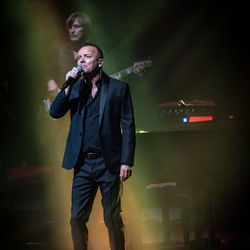
Gigi D'Alessio, born Luigi D'Alessio on February 24, 1967, in the Fuorigrotta district of Naples, Italy, is one of Italy's most beloved singer-songwriters. He grew up in a working-class family and started performing as a young pianist at weddings and local events before the Neapolitan song legend Mario Merola noticed his talent and brought him into the Naples music scene.
His debut album arrived in 1992, and within a few years he had become a household name across Italy, blending traditional Neapolitan melodies with mainstream Italian pop. Two appearances at the Sanremo Music Festival, in 2000 and 2001, helped cement his national fame, and he has gone on to sell more than 30 million records over his career.
D'Alessio also found success abroad, most notably with the duet "Un cuore malato" alongside Belgian-Sicilian singer Lara Fabian, and he later recorded a Portuguese-language version of one of his hits with Brazilian star Wanessa Camargo. Beyond music, he has appeared in films and hosted television shows in Italy.
Now in his fourth decade as a recording artist, Gigi D'Alessio remains active, still writing and releasing new music while touring across Italy and abroad.
"Buongiorno" is Gigi D'Alessio's love letter to Naples, built as a posse cut with a whole generation of Neapolitan rappers (Vale Lambo, MV Killa, LDA, Coco, Franco Ricciardi, Lele Blade, Enzo Dong, Clementino, Geolier, and Samurai Jay). Each artist takes a verse in dialect, so the song moves between D'Alessio's classic Neapolitan pop sound and the harder rap deliveries of the younger G-CREW generation.
The chorus greets the whole city, its streets, its people, even its rivals and exes, with the same simple "buongiorno" (good morning), turning an ordinary greeting into a statement of belonging. The verses trade the city's pride for its harder edges: hustling to make ends meet, friends who drifted apart, people who never had the chance to study while others did, and neighbors who work themselves to exhaustion.
Running through all of it is a call for solidarity, "vulimmece cchiu bene" (let's love each other more) and "stennimmece na mano" (let's lend each other a hand), a reminder that Naples looks out for its own no matter how far anyone has traveled. The closing verses widen into a farewell to someone no longer around, and a promise that no matter the distance, the singer's heart stays in the city that raised him.
¡Prepárate para un himno italiano al poder femenino! Gigi D'Alessio, un artista de Nápoles, nos trae "La Forza Delle Donne", una canción que celebra a las mujeres de una manera muy apasionada y, seamos sinceros, un poco exagerada. El estribillo lo deja claro desde el principio: "La forza delle donne / Non può finire mai" (La fuerza de las mujeres / no puede terminar nunca). Para él, la fuerza y el amor de las mujeres son eternos e incondicionales.
La canción recorre diferentes imágenes de la mujer. D'Alessio las describe como seres mágicos, casi divinos, diciendo que "Sono tutte un po' madonne" (Son todas un poco Vírgenes). También habla de su elegancia, su capacidad para ser madres "tra dolori e poesia" (entre dolores y poesía) y su poder para salirse siempre con la suya: "Dopo si fa sempre come vuoi" (Después siempre se hace como tú quieres). Es una declaración de amor y admiración que ve a las mujeres como el centro del universo del hombre, hasta el punto de decir que ellas "Fanno grande pure l'uomo che c'è in me" (Hacen grande incluso al hombre que hay en mí).
Gigi D'Alessio's "La Forza Delle Donne" is a huge, heartfelt tribute to women. The main idea is right there in the chorus: "La forza delle donne / Non può finire mai" (The strength of women / can never end). He sees this strength in everything they do, from how they handle breakups with quiet dignity to the experience of becoming mothers, which he describes as a mix of "dolori e poesia" (pain and poetry).
He lists all these different sides of women, almost like a checklist of classic Italian ideals. He says they are magical, comparing them to the Madonna ("Sono tutte un po' madonne"), and that they can be shy, blushing "se il vestito va giù" (if their dress slips down). For him, a woman is someone to be explored, "da scavare dentro per trovare di più" (to dig inside to find more). It's a very romantic and slightly old-fashioned celebration of femininity, arguing that a woman's love and power are the forces that make the world go round.
"Come Me" ("Like Me") is Gigi D'Alessio and Luchè singing about the fear of loving again after getting badly hurt.
The narrator remembers a relationship that once felt like flying away from every lie, only for it to end in nights full of regret, reduced to a photograph. He is scared of falling in love again because he already knows how much it can cost to lose it.
The chorus turns that fear into a lesson: you have to be able to say "I loved" and "I lost," like he did, if you ever want to feel that kind of love at all. The second verse gives the other side of the story, with the woman promising to protect their bond quietly, while he admits he kept pushing her away even while silently screaming that he loved her.
"L'immensità" ("The Immensity") is Gigi D'Alessio's ballad about holding onto love and belief across a vast, uncertain world. He compares hope to a drop of rain: each one that falls gives rise to a new flower, and a butterfly settles on it, small signs of life springing from something as ordinary as rain.
From there the song turns personal. The singer says he is sure that somewhere in this great immensity, someone still thinks of him, even just a little, and won't forget him. He admits he won't spend his whole life alone, and one day he'll find some love for himself too, even though right now he feels like nothing, a "nullità," against something so vast.
The chorus repeats "nell'immensità" (in the immensity) again and again, almost like the phrase is dissolving into the sky itself. It's a song about faith that you still matter, and that you're still remembered, even when you feel impossibly small against the size of the world.
Джиджи Д'Алесио е един от най-обичаните италиански поп изпълнители и тази песен е истински химн, посветен на жените. В „La Forza Delle Donne“ (Силата на жените) той възхвалява всичко, което прави жените толкова специални, от тяхната елегантност до невероятната им вътрешна сила.
Песента е пълна с красиви и понякога малко старомодни образи. Джиджи пее за жените като за „tutte un po' madonne“ (всички по малко мадони), сравнявайки ги с Дева Мария – символ на чистота и майчинство. Той описва как те преминават през „dolori e poesia“ (болка и поезия), за да станат майки, и как могат да накарат дори героите да се подчинят на волята им. Припевът е ясен и категоричен: „La forza delle donne / Non può finire mai“ (Силата на жените / никога не може да свърши). Това е една красива италианска серенада, посветена на безкрайната сила и любов на жените.
Điđi D'Alesio peva odu ženama u ovoj klasičnoj italijanskoj pop pesmi! To je velika, iskrena himna koja slavi sve ono što žene čini neverovatnim. Refren je vrlo jasan i ponavlja se kao mantra: „La forza delle donne / Non può finire mai“ (Snaga žena / Nikada ne može prestati) i „L'amore delle donne / Non ci abbandona mai“ (Ljubav žena / Nikada nas ne napušta). Za njega, ovo su dve fundamentalne istine o ženama: njihova snaga i ljubav su beskrajne.
Điđi zatim prolazi kroz različite aspekte ženstvenosti, skoro kao da pravi listu. On ih opisuje kao magična bića, „tutte un po' madonne“ (sve su pomalo Bogorodice), ali i kao stidljive i skromne, one koje „Si fanno rosse in viso se il vestito va giù“ (pocrvene u licu ako im haljina spadne). Pesma odaje počast njihovoj ulozi majki, koje prolaze kroz „dolori e poesia“ (bolove i poeziju) da bi donele novi život. Na kraju, on se obraća jednoj posebnoj ženi, govoreći joj da sve, od zalaska sunca do vazduha koji diše, ima više smisla sa njom. To je slatka i pomalo grandiozna pesma, tipična za italijanski pop, koja slavi žene kao stubove snage i ljubavi.
Это настоящая итальянская ода женщинам от Джиджи Д'Алессио! Вся песня — это признание в любви и восхищении. Припев сразу задаёт тон: «La forza delle donne / Non può finire mai» (Сила женщин / Никогда не иссякнет). Для певца женская сила и любовь — это вечные константы, которые никогда не покинут нас.
Джиджи перечисляет множество женских образов. Женщины у него — это и элегантные создания, которые «Con un tocco d'eleganza / Sanno dirti di sì» (С ноткой элегантности / Умеют сказать тебе «да»), и почти святые, «tutte un po' madonne» (все немного Мадонны). Он видит их силу в материнстве, описывая, как они становятся мамами «tra dolori e poesia» (между болью и поэзией), и в их способности управлять даже героями — «Sai tenere in pugno anche gli eroi» (Ты умеешь держать в кулаке даже героев). Это гимн многогранности, силе и магии, которые, по мнению артиста, есть в каждой женщине.
Talijanski pop pjevač Gigi D'Alessio u ovoj pjesmi slavi žene na jedan vrlo... talijanski način! To je velika, dramatična oda svemu onome što žene čini posebnima. Refren je jasan i ponavlja se kao mantra: "La forza delle donne / Non può finire mai" (Snaga žena / Nikada ne može prestati). Za njega je ženska snaga i ljubav vječna i neuništiva sila koja nas nikada ne napušta.
On opisuje žene kroz niz slika: one su elegantne, pomalo magične i svete poput Madone. Spominje njihovu sposobnost da se tiho povuku iz veze i ostave muškarca da se bori s duhovima sjećanja. Pjesma također dotiče i majčinstvo, opisujući žene "in corsia / Per diventare mamme tra dolori e poesia" (u bolničkom hodniku / da postanu majke između boli i poezije). Na kraju, pjevač priznaje da žena ima moć nad muškarcem, čak i nad junacima: "Sai tenere in pugno anche gli eroi" (Znaš držati u šaci čak i heroje). To je pjesma puna divljenja, koja slavi žensku kompleksnost i snagu.
Gigi D'Alessio, italijanski pop zvezdnik, v tej pesmi poje hvalnico ženskam. To je prava oda njihovi moči, ljubezni in skrivnostnosti. Osrednja misel je preprosta in močna, ponavlja se v refrenu: "La forza delle donne / Non può finire mai" (Moč žensk / se nikoli ne konča). Zanj je ta moč, skupaj z njihovo ljubeznijo, večna in nezlomljiva.
Pesem slika ženske v različnih vlogah in situacijah. So elegantne in zapeljive, a hkrati sramežljive, saj zardijo, "se il vestito va giù" (če obleka zdrsne dol). D'Alessio jih vidi kot čarobna bitja, skoraj svetnice, ko poje "Sono tutte un po' madonne" (Vse so po malem Madone). Posebej izpostavi njihovo vlogo mater, ki v porodnišnici prenašajo bolečino in ustvarjajo poezijo življenja. Na koncu pa z nasmeškom prizna, da imajo ženske vedno zadnjo besedo: "Donna, lo sai / Dopo si fa sempre come vuoi" (Ženska, saj veš / Na koncu je vedno tako, kot hočeš ti).
Tämä Gigi D'Alession kappale on suuri, mahtipontinen ja täysin vilpitön ylistyslaulu naisille. Kertosäe julistaa pääteeman heti kättelyssä: "La forza delle donne / Non può finire mai" (Naisten voima / Ei voi koskaan loppua). Laulaja näkee naisissa loputtoman voiman ja rakkauden lähteen, joka ei koskaan hylkää.
Säkeistöissä D'Alessio maalailee kuvaa naisista, jotka ovat sekoitus eleganttia mysteeriä, ujoa viehätystä ja äidillistä uhrautuvaisuutta. He osaavat lähteä suhteesta hiljaa ja tyylikkäästi, mutta jättävät silti jälkeensä muistojen haamun. He ovat kuin taikureita, "tutte un po' madonne" (kaikki vähän madonnia), jotka käyvät läpi synnytyksen tuskan ja runouden. Laulaja lisää mukaan myös henkilökohtaisen tason ja kertoo, kuinka hänen oma rakkaansa tekee hänestä paremman miehen: "Fanno grande pure l'uomo che c'è in me" (He tekevät suureksi myös sen miehen, joka minussa on). Kappale on klassinen italialainen serenadi, joka ihailee naista kaikissa tämän rooleissa.
Tohle je velká, dramatická italská popová óda na ženy od Gigiho D'Alessia. Refrén je naprosto jasný a opakuje se stále dokola, aby se vám vryl do paměti: „La forza delle donne / Non può finire mai“ (Síla žen / Nikdy nemůže skončit) a „L'amore delle donne / Non ci abbandona mai“ (Láska žen / Nás nikdy neopustí). Je to oslava ženské síly, lásky a všeho, čím jsou.
Zpěvák popisuje ženy z mnoha různých úhlů. Jsou elegantní, magické a trochu jako madony („un po' madonne“). Zmiňuje jejich roli matek, které procházejí bolestí a poezií, aby přivedly na svět nový život („Per diventare mamme tra dolori e poesia“). Zároveň jsou to bytosti, které je třeba prozkoumat do hloubky, aby člověk našel víc („Quella da scavare dentro per trovare di più“). Píseň končí hravým přiznáním, že nakonec je stejně vždycky po jejich: „Donna, lo sai / Dopo si fa sempre come vuoi“ (Ženo, ty víš / Potom se vždycky dělá tak, jak chceš ty).
See laul on suur ja südamlik ood naistele, mida laulab Itaalia popstaar Gigi D'Alessio. Ta laulab naiste lõppematust jõust ja armastusest, korrates refräänis: "La forza delle donne / Non può finire mai" (Naiste jõud / Ei saa kunagi otsa) ja "L'amore delle donne / Non ci abbandona mai" (Naiste armastus / Ei hülga meid kunagi). See on laulu peamine sõnum ja see jääb kummitama.
Salmid kirjeldavad naisi mitmest erinevast vaatenurgast. Ühelt poolt on nad müstilised ja peaaegu pühaklikud olendid: "Sono tutte un po' madonne / Con il nome Maria" (Nad on kõik natuke nagu madonnad / Nimega Maria). Teisalt on nad ka need, kes kannatavad valu, et emaks saada: "Donne in corsia / Per diventare mamme tra dolori e poesia" (Naised haiglapalatis / Et saada emadeks valu ja luule vahel). Laulja imetleb ka naise isiklikku mõju tema elule, öeldes, et isegi õhk maitseb paremini koos temaga ja et naine teeb temast parema mehe. See on üdini romantiline ja klassikaline Itaalia poplaul, mis ülistab naiselikkuse erinevaid tahke.
Gigi D'Alessio egy igazi olasz szívtipró, és ez a dal, a „La Forza Delle Donne”, tökéletesen megmutatja, miért. Ez egy hatalmas, érzelmes óda a nőkhöz, tele van drámával és szenvedéllyel, ahogy az a legjobb olasz popdalokhoz illik. A dal címe magyarul annyit tesz: „A nők ereje”, és a refrén egyértelművé teszi az üzenetet: „La forza delle donne / Non può finire mai” (A nők ereje / Soha nem érhet véget), és „L'amore delle donne / Non ci abbandona mai” (A nők szeretete / Soha nem hagy el minket). A dal szerint ez a két dolog végtelen és megingathatatlan.
De a dal nem áll meg itt. Gigi sorra veszi a nők különböző oldalait, szinte egy katalógust készít róluk. Vannak a szentek, akik „tutte un po' madonne” (mind egy kicsit Madonnák), a szégyenlősek, akik elpirulnak, ha lecsúszik a ruhájuk, és a hősök, akik a szülőszobán a fájdalom és a költészet között válnak anyává („Per diventare mamme tra dolori e poesia”). A dal szerint a nők egyszerre elegánsak, varázslatosak és összetettek. A legszebb sor talán az, amikor a dal azt mondja, hogy egy nő mellett a férfi is több lesz: „Fanno grande pure l'uomo che c'è in me” (Naggyá teszik a bennem lévő férfit is). Ez egy klasszikus, romantikus szerelmeslevél a női nemhez.
Gigi D'Alessio har skrevet en skikkelig hyllest til kvinner med denne sangen! Hele sangen er bygget rundt refrenget, som er en kraftfull erklæring: «La forza delle donne / Non può finire mai» (Kvinners styrke / kan aldri ta slutt). Han sier at deres kjærlighet og styrke er evig og aldri forlater oss. Det er en stor, romantisk italiensk poplåt som virkelig legger det tykt på.
Han beskriver kvinner som komplekse og nesten magiske vesener. De kan forlate et forhold i stillhet, men etterlater et dypt inntrykk. Han lister opp mange sider ved kvinner: de er elegante, de er som «madonne con il nome Maria» (madonnaer med navnet Maria), og de gjennomgår smerte og poesi for å bli mødre («per diventare mamme tra dolori e poesia»). Han avslutter med en litt ertende linje om at til syvende og sist får kvinner det som de vil: «Dopo si fa sempre come vuoi» (Etterpå blir det alltid som du vil).
Den här låten av den italienska popstjärnan Gigi D'Alessio är en storslagen hyllning till kvinnor. Refrengen är supertydlig och upprepas om och om igen: "La forza delle donne / Non può finire mai" (Kvinnors styrka / Kan aldrig ta slut) och "L'amore delle donne / Non ci abbandona mai" (Kvinnors kärlek / Överger oss aldrig). Det är en ganska traditionell syn på kvinnor, men den är framförd med mycket känsla!
Verserna målar upp en bild av kvinnan som en nästan magisk varelse. Hon är elegant, lite av en "madonna", och kan rodna om hennes klänning glider ner ("Si fanno rosse in viso se il vestito va giù"). Samtidigt beskrivs hon som den som går igenom smärta och poesi för att bli mamma ("Per diventare mamme tra dolori e poesia"). Sångaren menar att kvinnor har ett djup man måste utforska för att förstå dem helt, och att i slutändan får de alltid som de vill. Det är en klassisk italiensk kärlekssång som hyllar kvinnans styrka, kärlek och mystik.
Gigi D'Alessio, en af Italiens store popstjerner, hylder kvinder i denne sang. Titlen betyder "Kvinders Styrke", og det er præcis, hvad sangen handler om. Omkvædet er en direkte erklæring: "La forza delle donne / Non può finire mai" (Kvinders styrke / kan aldrig slutte) og "L'amore delle donne / Non ci abbandona mai" (Kvinders kærlighed / forlader os aldrig).
Sangen beskriver kvinder fra mange vinkler. De er elegante og magiske, næsten som "un po' madonne" (små madonnaer). De er også dem, der gennemgår smerte for at blive mødre, "per diventare mamme tra dolori e poesia" (for at blive mødre mellem smerte og poesi). D'Alessio synger også om kvindens komplekse indre, som man må "scavare dentro per trovare di più" (grave i for at finde mere). Det er en klassisk, romantisk hyldest til kvindens uendelige styrke, kærlighed og mystik.
Gigi D'Alessio, einer der großen Popstars Italiens, singt hier eine Hymne auf die Frauen. Der Titel sagt schon alles: „La Forza Delle Donne“ bedeutet „Die Stärke der Frauen“. Der Refrain ist eine kraftvolle Wiederholung dieser Idee: „La forza delle donne / Non può finire mai“ (Die Stärke der Frauen / Kann niemals enden) und „L'amore delle donne / Non ci abbandona mai“ (Die Liebe der Frauen / Verlässt uns niemals).
Der Song beschreibt Frauen aus vielen verschiedenen Blickwinkeln. Sie sind elegant, magisch und manchmal ein bisschen geheimnisvoll. Gigi vergleicht sie sogar mit Heiligen: „Sono tutte un po' madonne / Con il nome Maria“ (Sie sind alle ein bisschen wie Madonnen / Mit dem Namen Maria). Er singt auch über ihre Rolle als Mütter, die „tra dolori e poesia“ (zwischen Schmerz und Poesie) Kinder zur Welt bringen. In der zweiten Hälfte wird das Lied persönlicher und richtet sich direkt an eine geliebte Frau. Er sagt ihr, dass das Leben ohne sie bedeutungslos wäre und dass sie ihn zu einem besseren Mann macht. Es ist eine klassische italienische Liebeserklärung, voller Leidenschaft und Bewunderung.
İtalyan pop müziğinin sevilen seslerinden Gigi D'Alessio'dan kadınlara adanmış bir şarkı dinlemeye hazır mısın? "La Forza Delle Donne" tam anlamıyla bir övgü şarkısı. Nakaratı daha ilk dinleyişte akılda kalıyor: "La forza delle donne / Non può finire mai" (Kadınların gücü / Asla tükenmez) ve "L'amore delle donne / Non ci abbandona mai" (Kadınların aşkı / Bizi asla terk etmez). Şarkı, kadınların bu sonsuz gücünü ve sevgisini kutluyor.
D'Alessio, kadınların farklı yönlerini bir bir sıralıyor. Onlar zarafetle evet demeyi bilen, yeri geldiğinde utangaç, yeri geldiğinde ise kahramanları bile avcunun içinde tutabilen varlıklar. Şarkı, kadınların anne olmak için çektikleri acı ve bu sürecin şiirselliğinden de bahsediyor: "Donne in corsia / Per diventare mamme tra dolori e poesia" (Hastane koridorlarındaki kadınlar / Acı ve şiir arasında anne olmak için). Gigi D'Alessio, bir kadının hayatındaki erkeği nasıl daha iyi bir insana dönüştürdüğünü de ekliyor: "Fanno grande pure l'uomo che c'è in me" (İçimdeki erkeği bile büyütürler). Kısacası bu şarkı, kadınların hayatın her alanındaki çok yönlü gücüne ve etkisine bir saygı duruşu niteliğinde.
Ši daina – tai tikras itališkas himnas moterims! Gigi D'Alessio apdainuoja moterų jėgą ir meilę, kuri, pasak jo, niekada nesibaigia: „La forza delle donne / Non può finire mai“ (Moterų jėga / Niekada negali pasibaigti). Jis piešia moters portretą, kuri yra ir elegantiška, ir paslaptinga, ir net šiek tiek dieviška, palygindamas ją su Madona: „Sono tutte un po' madonne / Con il nome Maria“ (Jos visos šiek tiek madonos / vardu Marija).
Atlikėjas žavisi viskuo: nuo moters gebėjimo tyliai išeiti iš santykių, paliekant tik prisiminimus, iki jos galios tapti mama „tra dolori e poesia“ (tarp skausmo ir poezijos). Daina taip pat tampa labai asmeniška, kai jis kreipiasi į savo mylimąją, sakydamas, kad net oras tampa skanesnis būnant kartu su ja. Galiausiai, jis pripažįsta moterų galią valdyti situaciją ir net vyrus, teigdamas, kad jos „Sai tenere in pugno anche gli eroi“ (Moka laikyti kumštyje net herojus).
In dit lied brengt de Italiaanse zanger Gigi D'Alessio een ode aan vrouwen. De centrale boodschap is duidelijk en wordt vaak herhaald: "La forza delle donne / Non può finire mai" (De kracht van vrouwen / Kan nooit eindigen). Hij beschrijft vrouwen als complexe en magische wezens. Ze zijn elegant, een beetje mysterieus, en worden vergeleken met Madonna's: "Sono tutte un po' madonne / Con il nome Maria" (Ze zijn allemaal een beetje Madonna / Met de naam Maria).
Hij zingt over de verschillende rollen die vrouwen vervullen, van het moederschap, dat hij omschrijft als een mix van "dolori e poesia" (pijn en poëzie), tot hun vermogen om stil een relatie te verlaten en een spook van herinneringen achter te laten. Het lied is een lofzang op hun kracht, hun liefde en de diepgaande invloed die ze hebben op het leven van een man. Uiteindelijk, zo stelt hij met een knipoog, krijgen ze toch altijd hun zin: "Donna, lo sai / Dopo si fa sempre come vuoi" (Vrouw, je weet het / Uiteindelijk gebeurt het altijd zoals jij het wilt).
Gigi D'Alessio, un artist italian, ne oferă un imn dedicat femeilor cu piesa sa pop „La Forza Delle Donne”. Este o celebrare totală a puterii și iubirii feminine, pe care el le consideră nesfârșite. Refrenul este foarte direct: „La forza delle donne / Non può finire mai” (Forța femeilor / Nu se poate termina niciodată) și „L'amore delle donne / Non ci abbandona mai” (Iubirea femeilor / Nu ne abandonează niciodată). Cântecul nu vorbește despre o singură femeie, ci explorează diversele fațete ale feminității, creând un portret complex și plin de admirație.
Versurile descriu femeile ca fiind ființe pline de contraste și profunzime. Ele sunt elegante, dar și misterioase, fiind comparate cu Fecioara Maria: „Sono tutte un po' madonne / Con il nome Maria” (Sunt toate un pic Madone / Cu numele Maria). În același timp, pot fi timide, roșind „se il vestito va giù” (dacă rochia alunecă). D'Alessio menționează și experiența profundă a maternității, descriind femeile „in corsia / Per diventare mamme tra dolori e poesia” (pe coridorul spitalului / Pentru a deveni mame între durere și poezie). Cântecul se încheie cu o notă amuzantă și sinceră despre influența lor, sugerând că, în final, ele obțin mereu ceea ce își doresc: „Donna, lo sai / Dopo si fa sempre come vuoi” (Femeie, o știi / După aceea se face mereu cum vrei tu).
Ця пісня італійського співака Джіджі Д'Алессіо — справжній гімн жінкам! Він співає про те, що жіноча сила та любов — нескінченні. Приспів повторює це знову і знову: «La forza delle donne / Non può finire mai» (Сила жінок / Ніколи не може скінчитися) та «L'amore delle donne / Non ci abbandona mai» (Любов жінок / Ніколи нас не покине). Це дуже відверте і щире оспівування жінок, яких він описує як елегантних, магічних і навіть трохи святих, порівнюючи їх з Мадонною.
Джіджі перераховує різні образи жінок, які його надихають. Він згадує їхню здатність тихо йти, коли стосунки закінчуються, їхню сором'язливість, коли «si fanno rosse in viso se il vestito va giù» (вони червоніють, якщо сукня сповзає), і їхню неймовірну мужність у пологовому будинку, «per diventare mamme tra dolori e poesia» (щоб стати мамами серед болю та поезії). Для нього жінка — це та, «quella da scavare dentro per trovare di più» (в якій потрібно копатися, щоб знайти більше). Пісня також дуже особиста; співак зізнається, що жінка поруч із ним робить його кращим і навіть повітря стає смачнішим.

