Buscando El Mar Lyrics in English by Carlos Vives, Juan Luis Guerra 4.40
Ciénaga translates to "swamp" or "marsh". It's a less common word in everyday Spanish, making it stand out in the lyrics.
In "Buscando El Mar," Carlos Vives uses ciénaga metaphorically to describe the passage of time as a murky, slow-moving body of water: "Remo en la ciénaga del tiempo" (I row in the swamp of time). This imagery evokes a sense of being stuck or moving slowly through memories, adding a poetic depth to the song's theme of searching for the past and a lost love.
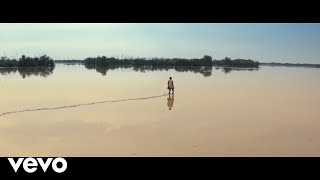
A man is rowing, and that is the whole opening image: Solo con mi fe y con mi silencio / Remo en la ciénaga del tiempo [Only with my faith and my silence / I row in the swamp of time]. What he is rowing toward is the sea, and the sea is standing in for a person: Yo sigo buscando el mar y tu corazón no está [I keep looking for the sea and your heart is not there]. Every time he gets close, she is gone again. Salí a buscarla, pero se escondió / Entre las nubes de un pasado incierto [I went out to look for her, but she hid / Among the clouds of an uncertain past]. Nothing in this song is ever found, and that is the point of it.
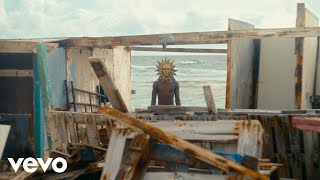
The second half moves the search into García Márquez country. Que nos abracemos como los almendros [May we embrace each other like almond trees] and Cambiar Macondo con algún invento [To change Macondo with some invention] put it in Macondo, where a boat lost in time is also a memory lost in time: Su vieja barca se perdió en el tiempo [His old boat was lost in time]. The best line is the plainest one, Siento que acabando solo vuelvo a comenzar [I feel that as soon as it ends, I just start again]. Then Vives hands the song over with Vamos, compadre Egidio / Juan Luis Guerra y los 4.40 [Come on, friend Egidio / Juan Luis Guerra and the 4.40], and it narrows to two words repeated until the fade: Te sigo buscando [I keep looking for you].