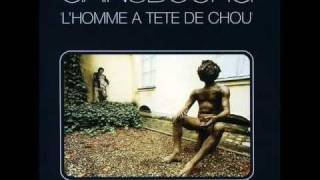
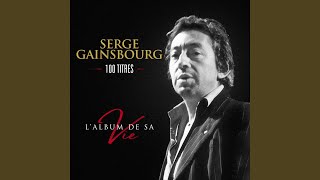
Baudelaire Lyrics in English by Serge Gainsbourg
Appareille comes from the verb appareiller, which means 'to set sail' or 'to depart', typically for a ship.
In this song, Gainsbourg uses it poetically to describe his 'rêveuse âme' (dreamy soul) setting sail 'pour un ciel lointain' (for a distant sky). It evokes a sense of journey, escape, and romantic longing, making it a more evocative and less common choice than a simple 'part' or 'go'.
This song is Serge Gainsbourg putting Charles Baudelaire’s sensual poetry into music, and you can really feel it. The lyrics are one long, slow look at a lover’s body, moving lazily and almost theatrically. He watches “Que j'aime voir chère indolente” [How I love to see you, dear lazy one] and compares her skin to “une étoffe vacillante” [a flickering piece of fabric] and her hair to “Mer odorante et vagabonde” [a wandering, fragrant sea]. It is not a realistic description at all, it is exaggerated, dreamlike, almost like he is slightly drunk on how she moves and smells.
The mood keeps slipping between admiration and something a bit dangerous. Her eyes are “deux bijoux froids où se mêlent l'or avec le fer” [two cold jewels where gold mixes with iron], beautiful but hard. Her walk looks like “un serpent qui danse au bout d'un bâton” [a snake dancing at the end of a stick], which is both hypnotic and unsettling. Even her laziness becomes huge and animal: her head moves with “la mollesse d'un jeune éléphant” [the softness of a young elephant]. In the end, when “l'eau de ta bouche remonte au bord de tes dents” [the water of your mouth rises to the edge of your teeth], he says he feels like he is drinking “un vin de Bohème” [a Bohemian wine], a bitter, victorious drink that turns his heart into “un ciel liquide” [a liquid sky] full of stars. It is a love song where the lover is not sweet or simple, but heavy, slow, dangerous, and completely fascinating.