Lo Tienes Todo Lyrics in English by Julion Alvarez Y Su Norteño Banda
Aplaqué is the past tense of the verb aplacar, which means "to calm," "to soothe," or "to pacify." It's a very expressive word that you don't hear every day.
In the song, the singer says, "Contigo me aplaqué," meaning "With you, I settled down." This suggests he might have had a wild or restless past, but his partner's love completely calmed him and changed him for the better. It's a powerful way to describe the transformative effect of love.
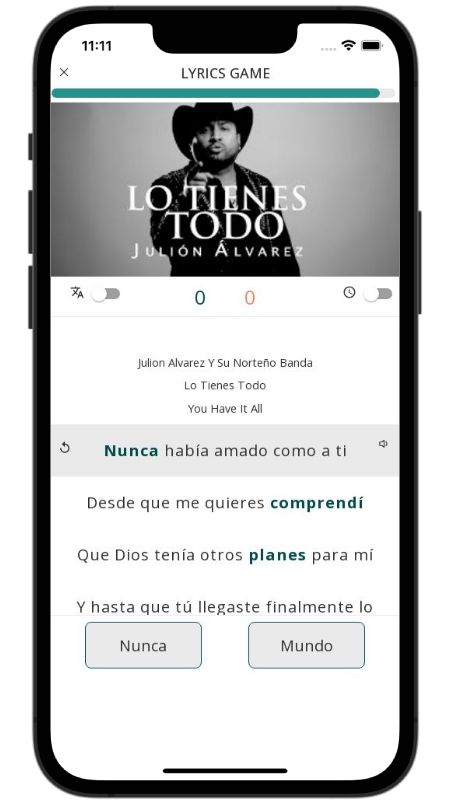
If you have ever felt your wild days evaporate the second the right person walked into your life, Julión Álvarez y Su Norteño Banda have the exact song for you. In "Lo Tienes Todo", Julión drops any tough-guy facade and admits that love completely reorganized his universe. He looks back at his life and realizes that every twist and turn led here: "Que Dios tenía otros planes para mí" ("That God had other plans for me"). Now, his heart physically feels too big to fit inside his ribcage ("Por ti mi corazón ya no me cabe aquí en el pecho" ["Because of you, my heart doesn't fit in my chest anymore"]).
The real charm of the track lies in its everyday Mexican slang. When he sings "Contigo me aplaqué, me hiciste a tu modo" ("With you, I settled down; you shaped me into your way"), he uses the verb aplacar, which literally means to calm down, tame, or rein someone in. He is happily admitting that his wild bachelor instincts are gone. Instead of playing it cool, he wants zero privacy about his feelings: "Me gusta que nos vean tomados de la mano / Que todo el mundo sepa que me tienes enamorado" ("I like people seeing us holding hands / Let the whole world know you have me in love"). It is sweet, loud, and completely unbothered by looking soft.