Learn Italian With Andrea Bocelli with these 23 Song Recommendations (Full Translations Included!)
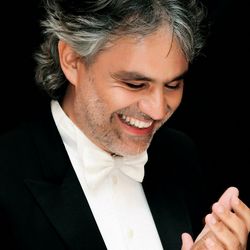
Andrea Bocelli, born on September 22, 1958, in Lajatico, Italy, is one of the world’s most celebrated tenors. Blind since the age of 12, Bocelli’s powerful voice and emotive performances have captivated audiences worldwide, blending opera with pop in a unique classical crossover style.
He rose to fame after winning the newcomers' section of the 1994 Sanremo Music Festival with "Il mare calmo della sera". Since then, Bocelli has recorded 15 studio albums and sold over 90 million records globally, with hits like "Con te partirò" becoming timeless classics. Honored with awards including a star on the Hollywood Walk of Fame, his remarkable journey combines passion, resilience, and extraordinary musical talent.
At first, you might think Andrea Bocelli and Giorgia are trading lines about a breathtaking romantic partner. Andrea confesses, "Vivo per lei da quando sai / La prima volta l'ho incontrata" ("I live for her since, you know, the first time I met her"), while Giorgia warns him not to get jealous because this "she" belongs to anyone who keeps a bedroom stereo on when they feel lonely. Then comes the reveal: "lei" (her) isn't a person at all. She is music itself. Andrea calls her a muse you touch through a piano keyboard ("Attraverso un pianoforte"), while Giorgia feels her expand out into the room through her own singing voice.
What makes this duet so charming is how physical they make this love affair sound. Music can be sweet, sure, but Andrea notes that sometimes she hits you right on the head: "A volte picchia in testa, ma / È un pugno che non fa mai male" ("Sometimes she pounds in your head, but it is a punch that never hurts"). It drags them from city to city and leaves them with no backup plan. Near the end, Andrea drops all the metaphors and says it straight: "Perché la musica lo sai / Davvero non l'ho mai tradita" ("Because music, you know, I truly have never betrayed her"). It is a grand, theatrical love declaration to melodies, rests, and the strange relief of having art keep you company against a blank wall.
Don't let the title fool you! "Time To Say Goodbye" isn't a sad song about a breakup. It's actually one of the most powerful songs about starting a new adventure with someone you love. The singer, Italian artist Andrea Bocelli, begins by describing a lonely life: "Quando sono sola / Sogno all'orizzonte / E mancan le parole" (When I'm alone / I dream on the horizon / And words fail me). This person is their light, their sun. Without them, there's no light in the room.
The "goodbye" is to that old, lonely world. The chorus announces a departure to new places: "Paesi che non ho mai / Veduto e vissuto con te / Adesso sì li vivrò / Con te partirò" (Countries I have never / Seen or experienced with you / Now, yes, I will experience them / I will leave with you). They are setting off on a journey to see the world, but only with this special person by their side. It's a song about how love can open up a whole new world.
Italian classical singer Andrea Bocelli teams up with pop superstar Ariana Grande for "E Più Ti Penso", and the whole track is an absolute masterclass in romantic melodrama. The lyrics drop you straight into late-night heartache: the singer lies in bed at night, hugging their pillow (stringo il cuscino) and pretending their lover is right beside them (sei qui vicino). As the hours tick on in the deep dark (è notte fonda), reality sets in. The core message repeats like an obsessive thought: E più ti penso, e più mi manchi ("And the more I think of you, the more I miss you").
Things get delightfully dramatic as the song builds. The lyrics say that without this person, the sun is completely gone (il sole più non c'è) and life feels empty. To describe that helplessness, they use a vivid image: Mi sento un pesce che non ha l'acqua per nuotare ("I feel like a fish that has no water to swim in"). It is completely over the top, especially when they declare that if they can never see their love again, they simply will not survive (non vivrei) and will die (morirei). If you have ever missed someone so badly that hugging your bedding seemed like a valid coping mechanism, this dramatic duet is your anthem.
This song is a pure, classic romance set in the gorgeous Italian fishing village of Portofino. Andrea Bocelli sings about a love so perfect, it feels like a dream. He believes fate brought him this person, singing about "Lo strano gioco del destino" (The strange game of destiny) that "A Portofino m'ha preso il cuor" (In Portofino, took my heart).
The whole song is a beautiful memory. He remembers his love arriving with the morning tide, singing "Il mare ti ha portato a me" (The sea brought you to me). He can still see their face and recall their kisses. This wasn't just a holiday romance; it changed his entire life. Before this, his path was sad, but now? "Non è più triste il mio cammino" (My path is no longer sad). Finding love in Portofino gave him a new, happy future.
Have you ever felt so conflicted about a romance that you wished the world around you would just make the decision for you? That's exactly what's happening in this classic song. The singer is having a very important conversation, not with a person, but with the city of Rome itself! He starts by begging the city, "Roma nun fa' la stupida stasera" (Rome, don't be stupid tonight), asking it to help him get a "yes" from his love. He wants Rome to pull out all the stops: bring out the brightest stars, a sliver of moon, chirping crickets, and even the "ponentino / Più malandrino" (the most mischievous little west wind).
But then, in a dramatic twist, he changes his mind completely! He asks Rome to help him say "no." He pleads with the city to "Spegni tutte le stelle" (Turn off all the stars) and "Nasconneme la luna se no so' guai" (Hide the moon or I'm in trouble). He's so torn that he needs the city's magic to either push him toward love or save him from it. It's a beautiful and relatable song about feeling completely powerless in the face of strong emotions.
Romanza takes you on a moonlit walk through the highs and lows of passion. Andrea Bocelli sings from the edge of a love that is slipping away; every tender touch is followed by a slow release, every stolen kiss is tinged with doubt. He wonders whose fault the unraveling might be, yet keeps reaching for the warmth of the other person. The repeated question “Ma la vita cos’è?” (“But what is life?”) turns the song into more than a breakup ballad—it becomes a search for meaning itself.
When Bocelli cries “E lo chiamano amor” (“And they call it love”), he paints love as both a thorn in the heart and an endless desert where people carry sand inside their chests. The song moves from intimate whispers to a whispered prayer, Ave Maria, showing how longing can lead us to hope for something larger than ourselves. In just a few minutes, Romanza sweeps listeners through yearning, resignation, and quiet devotion, capturing the bittersweet flavor of love that is as unforgettable as it is unpredictable.
Imagine waiting forever just to finally get someone all to yourself in a quiet room. That is the exact mood Italian tenor Andrea Bocelli and Ed Sheeran set right off the bat with "È troppo tempo che / Non siamo soli io e te" ("It has been too long that you and I haven't been alone"). Andrea does not hold back on the romantic drama either; he sings "Non chiedo luce ormai / Quindi il mio sole sarai" ("I don't ask for light anymore, so you will be my sun"), which is delightfully over-the-top, but that grand, classical delivery makes it work. The whole track is an open plea to drop the hesitation and just say the big words out loud: "Se cerchi le parole / Prova ti amo ancora" ("If you're looking for words, try 'I love you still'").
Notice the phrase "senza un perché" ("without a reason"). In English, we usually demand explanations for everything, but in Italian love songs, loving someone without a why is the ultimate compliment. It means affection without conditions, logic, or bargaining. Ed Sheeran slips in at the end in English with "This is the only time / That I won't be alone", echoing that sweet relief of finally being alongside the person you have dreamed about forever ("Da sempre sogno di noi" ["I've always dreamed of us"]). It is warm, direct, and completely devoted.
Italian tenor Andrea Bocelli starts this classical track in total quiet: "Quando sono solo e sogno all'orizzonte, e mancan le parole" ("When I'm alone and dream on the horizon, and words are missing"). He compares sitting alone in a room without his love to sitting in a place where the sun refuses to shine. But the mood does not stay quiet for long. He pleads to show his lit-up heart to the whole world right on the windows, and then he makes his giant promise in the chorus: "Con te partirò" ("With you I will leave"). Notice he uses the future tense partirò—he is packing his emotional bags right in front of you.
He is not just talking about catching an ordinary train, either. The dream gets delightfully dramatic: "Paesi che non ho mai / Veduto e vissuto con te / Adesso sì li vivrò" ("Countries that I have never / Seen and lived with you / Now yes, I will live them"). He even vows to sail on ships across seas that "non esistono più" ("no longer exist"). Calling his partner "mia luna" ("my moon") and "mio sole" ("my sun"), he turns an empty room into a fantastical voyage to lost oceans, all because he refuses to travel without them.
Qualcosa Più Dell'Oro is Andrea Bocelli's tender ode to a love so radiant it outshines treasure. From the very first line he invites someone special to stay close, promising that their presence turns the dark night into a brand-new dawn. When he sings "Tu vali sì per me qualcosa più dell'oro" (“You are worth more than gold to me”), we feel just how priceless this bond is. Images of the sky clearing, the night vanishing, and sunrise breaking through paint a picture of love as daylight itself—warm, hopeful, unstoppable.
In the second half, Bocelli lifts the romance to almost cosmic heights. Addressing his beloved as the one who “moves the world” and “blows the strong wind,” he hints that this love is a life-giving force, guiding seasons and stirring fields of grain. The message is clear: their connection is more than emotion; it is nature’s own heartbeat, carrying them “fino alla fine” (“until the end”). Wrapped in soaring melody, the song reminds us that real love is brighter than gold, stronger than night, and as boundless as the sky itself.
Andrea Bocelli's "Inno Sussurato" translates to "Whispered Hymn," and the song is exactly that: a prayer that grows from a whisper into a powerful call. It begins with a personal plea for strength during a hard time, which the lyrics call a "lungo inverno" (long winter). The singer asks a father figure, "Padre mio stammi accanto / Dammi forza per andare" (My Father, stay beside me / Give me strength to go on), expressing a feeling of being lost without this guidance.
But the song doesn't stay in that quiet place. The prayer builds until the singer commands their own voice to "Vola, più forte" (Fly, stronger). They find the divine everywhere, in both "silenzio" (silence) and "tempesta" (storm). This connection gives them a new purpose: to love and care for others. The song suggests that the true miracle is a human one, saying "Perché umano sia il miracolo / Perché è questo che vuoi tu" (So that the miracle may be human / Because this is what you want).
A primera vista, "Vivo Per Lei" parece un dueto de amor clásico. Andrea Bocelli y Giorgia cantan sobre una "lei" (ella) que es la razón de su existencia. Dicen: "Vivo per lei da quando sai / La prima volta l'ho incontrata" [Vivo para ella desde que, ya sabes / la conocí por primera vez]. Suena como si estuvieran enamorados de la misma mujer, ¿verdad? Pero a medida que la canción avanza, te das cuenta de que no están hablando de una persona.
En realidad, esta es una poderosa oda a la música. La "ella" a la que dedican su vida es la música misma, personificada como una musa y una amante. La describen como una fuerza que les hace "Vibrare forte l'anima" [vibrar fuertemente el alma] y la compañera que los lleva de gira por el mundo. La letra lo deja claro al final: "Perché la musica lo sai / Davvero non l'ho mai tradita" [Porque la música, sabes / nunca la he traicionado de verdad]. Es una declaración de amor total al arte que define sus vidas.
Hoewel de Engelse titel anders doet vermoeden, is dit klassieke duet tussen Andrea Bocelli en Sarah Brightman geen treurig afscheidsliedje. De Italiaanse tekst vertelt namelijk een heel ander verhaal! Het begint donker en eenzaam: Sarah zingt dat er geen zon in haar kamer schijnt als de ander er niet is ("In una stanza quando manca il sole / Se non ci sei tu con me" [In een kamer wanneer de zon ontbreekt / Als jij niet bij me bent]). Ze vraagt om de ramen te openen en het licht binnen te laten. Zodra Andrea invalt, verandert het gemis in een belofte: zelfs op afstand ben je er toch, als maan en zon aan de hemel.
De echte verrassing zit in het refrein. De beroemde kreet "Time to say goodbye" slaat op het achterlaten van het oude leven om samen te vertrekken. Andrea zingt vol overtuiging "Con te partirò" (Met jou zal ik vertrekken). Ze dromen van reizen op schepen over zeeën die volgens hen niet eens meer bestaan ("Su navi per mari / Che, io lo so / No, no, non esistono più" [Op schepen over zeeën / Die, ik weet het, nee, niet meer bestaan]). Het is een tikkeltje overdreven en theatraal, maar het idee dat je samen naar plekken vaart die je nog nooit hebt gezien, maakt het juist heerlijk om mee te zingen.
Andrea Bocelli'nin bu şarkısı, zor zamanlarda güç ve rehberlik arayan birinin içten bir duası gibi. Şarkı, "Padre mio stammi accanto" [Babacığım, yanımda kal] ve "Dammi forza per andare" [Gitmek için bana güç ver] gibi yalvarışlarla başlıyor. Konuşmacı, huzursuz uykularında bile bu baba figürünün sesinin kendisini sakinleştireceğine inanıyor. Şarkı, mevcut zorlukların sadece geçici olduğunu ve daha iyi günlerin geleceğini vaat ediyor: "È soltanto un lungo inverno / Primavera tornerà" [Bu sadece uzun bir kış / Bahar geri dönecek].
Şarkı ilerledikçe, fısıldanan bir duadan güçlü bir marşa dönüşüyor. Konuşmacı, sesinin yükselip uçmasını istiyor: "Vola, più forte sia con te la mia voce" [Uç, sesim seninle daha güçlü olsun]. Bu baba figürünün her yerde olduğunu, hem sessizlikte hem de fırtınada var olduğunu söylüyor. Şarkının en güzel kısımlarından biri, bu ilahi güç sayesinde konuşmacının başkalarına yardım edebileceğini ve daha çok sevebileceğini fark etmesi. Böylece "miracolo" [mucize], ilahi bir istek üzerine gerçekleşen bir "umano" [insani] eyleme dönüşüyor.
Esta canción de Andrea Bocelli es una oración que empieza como un susurro y termina como un trueno. El cantante le pide a una figura paterna, probablemente a Dios, que se quede a su lado: "Padre mio stammi accanto" [Padre mío, quédate a mi lado]. Busca fuerza en un momento difícil, que describe como "un lungo inverno" [un largo invierno], pero mantiene la esperanza de que "Primavera tornerà" [la primavera volverá].
La canción crece en intensidad, pasando de ser un "Inno sussurrato" [Himno susurrado] a una explosión de sonido. La voz del cantante se convierte en una fuerza poderosa que acompaña a este padre: "Vola, più forte sia con te la mia voce" [Vuela, que mi voz sea más fuerte contigo]. Al final, el cantante parece encontrar su propósito: hacer que el milagro sea humano a través del amor y el cuidado a los demás, porque "è questo che vuoi tu" [esto es lo que tú quieres].
¿Alguna vez has sentido que llevas una eternidad esperando un momento a solas con alguien? De eso va este tema. Andrea Bocelli une su voz clásica a la de Ed Sheeran en una balada directa y romántica. La canción arranca con una confesión muy clara: È troppo tempo che non siamo soli io e te ("Hace demasiado tiempo que no estamos solos tú y yo"). No hay rodeos. En lugar de pedir luz para ver el camino, le dice a su pareja il mio sole sarai ("serás mi sol"). Es una declaración total donde dos personas se reconocen firmes e independientes al cantar siamo gli stessi qui, decisi liberi ("somos los mismos aquí, decididos, libres").
El estribillo va al grano y casi le sopla la respuesta a la otra persona: Se cerchi le parole, prova ti amo ancora ("Si buscas las palabras, prueba con 'te amo todavía'"). Me hace gracia esa insistencia amable con el dillo anche tu ("dilo tú también"), como quien espera ansioso que le devuelvan el cumplido. La frase central, sei la sola senza un perché, amo soltanto te ("eres la única, sin una razón, solo te amo a ti"), muestra un afecto que no necesita explicaciones lógicas ni justificaciones. Al final, el verso en inglés this is the only time that I won't be alone ("esta es la única vez en que no estaré solo") cierra el círculo de esa soledad compartida que tanto ansiaban.
Hast du dich beim ersten Hören auch gefragt, welche Frau Andrea Bocelli und Giorgia da so leidenschaftlich besingen? Die Auflösung kommt ziemlich direkt im Text: Sie singen gar nicht über einen Menschen, sondern über die Musik selbst! Schon die ersten Zeilen stellen klar: „Vivo per lei da quando sai / La prima volta l'ho incontrata“ (Ich lebe für sie, seitdem ich ihr das erste Mal begegnet bin). Andrea beschreibt, wie sie seine Seele vibrieren lässt („mi fa vibrare forte l'anima“). Giorgia schaltet sich ein und beruhigt sofort alle Eifersüchtigen: „E tu non esserne geloso / Lei è di tutti quelli che / Hanno un bisogno sempre acceso“ (Sei nicht eifersüchtig, sie gehört all jenen, die ein brennendes Bedürfnis nach ihr haben) – wie der einsame Mensch, der die Stereoanlage in seinem Zimmer anstellt.
Die Musik wird als Muse dargestellt, die man durch die Tasten eines Klaviers berührt („Attraverso un pianoforte / La morte è lontana“ – Durch ein Klavier ist der Tod weit weg). Sie ist süß, schlägt einem aber manchmal auch vor den Kopf; doch dieser Schlag tut nie weh („È un pugno che non fa mai male“). Das Duett nimmt diese bedingungslose Hingabe völlig ernst: Sie reisen von Stadt zu Stadt, ertragen harte Tage („Anche in un domani duro“) und wissen, dass sie die Musik niemals betrogen haben („Davvero non l'ho mai tradita“). Am Ende steht ein klares Bekenntnis zu Pausen und Noten in Freiheit („Pause e note in libertà“): Gäbe es ein zweites Leben, würden beide es wieder ganz genau so leben.
“Fratello Sole Sorella Luna (Dolce È Sentire)” feels like stepping into a sun-kissed meadow while a soft breeze whispers that you belong to something wonderfully big. Andrea Bocelli sings about the sweet discovery of love blooming in his heart and the joyful realization that he is no longer alone but woven into “an immense life” that shines all around. The lyrics invite us to pause, breathe, and notice the generous gifts of nature: Brother Sun, Sister Moon, the sparkling stars, Mother Earth with her fruits and flowers, the warmth of fire, the rush of wind, and the purity of water.
Rooted in the spirit of Saint Francis of Assisi, this song is a hymn of gratitude. It encourages us to celebrate every element of creation and to see ourselves as part of one big family cared for by a boundless love. Listen with an open heart and you may feel that same humble, glowing wonder awakening inside you.
"Sarà settembre" is a quiet love song about distance and patience. A wind carries a message telling the singer to go back to the one they love, and the anxieties of the moment will fade once she finally reaches out for him again.
The title line, "e sarà già settembre," uses the turn of summer into autumn as a stand-in for time passing. The singer knows the season will change and the wait may be long, but he holds onto the dream that never dies and trusts the silence between them won't last.
By the end the promise is simple: he won't lose himself, and he will find his way back to her, no matter how much time the wind carries away.
Cette chanson est un duo incroyablement passionné sur le fait de ressentir un manque intense pour quelqu'un. Le titre dit tout : « E più ti penso, e più mi manchi » (Et plus je pense à toi, plus tu me manques). Les chanteurs décrivent une nuit solitaire, où la seule façon de se sentir proche de l'être aimé est de serrer un oreiller : « Stringo il cuscino sei qui vicino » (Je serre l'oreiller, tu es tout près). Sans cette personne, le monde semble vide et sombre, comme si « Il sole più non c'è » (Le soleil n'est plus là).
Le sentiment de désespoir est très fort. Les chanteurs utilisent des images puissantes pour décrire leur état. L'un se sent comme « un pesce che / Non ha l'acqua per nuotare » (un poisson qui / N'a pas d'eau pour nager), incapable de respirer sans son amour. La chanson se termine sur une note très dramatique : s'ils ne pouvaient plus jamais se revoir, ils sont certains de ce qu'ils feraient. Ils ne vivraient tout simplement pas, ils mourraient : « Morirei » (Je mourrais).
Vivere ("To Live") is a vibrant dialogue where Andrea Bocelli and Gerardina Trovato look into the mirror and confess their doubts, fears, and stubborn hopes. They admit to “ricopiando yesterday”—copying yesterday—while stumbling through life’s mess, loving love but not always loving people, and wondering why no one ever taught us how to live. The song travels from personal insecurity to social awareness, pausing at the image of a man sleeping in a cardboard box, then soaring back to the power of a single voice that can still create beauty.
Despite the melancholy, the chorus explodes with determination: life is worth singing even when it feels unrequested, half-lived, or borrowed from the past. "Vivere" invites us to chase the grande amore, live as if we might never die, and finally shout “Ho voglia di vivere!”—“I want to live!” It is both a gentle reminder and a joyful challenge to craft our own melody before the song is over.
À première vue, "Vivo Per Lei" ressemble à une chanson d'amour passionnée entre un homme et une femme. Andrea Bocelli chante qu'il vit pour « elle » depuis leur première rencontre : « Vivo per lei da quando sai la prima volta l'ho incontrata » (Je vis pour elle depuis que tu sais, la première fois que je l'ai rencontrée). Il dit qu'elle est entrée en lui pour y rester, et que vivre pour elle n'est pas un fardeau. C'est une déclaration d'amour totale !
Mais quand Giorgia commence à chanter, elle nous donne un indice. Elle dit qu'elle aussi vit pour « elle », et qu'il ne faut pas être jaloux car « Lei è di tutti quelli che hanno un bisogno sempre acceso » (Elle appartient à tous ceux qui ont un besoin toujours allumé). Cette « elle » n'est donc pas une seule personne ! Le secret est révélé plus tard : c'est une ode à la musique. Les artistes la décrivent comme une muse qui s'exprime à travers un piano ou leur voix. La musique est la véritable protagoniste de leur vie, celle pour qui ils voyagent, souffrent un peu, mais se sentent profondément vivants. La dernière ligne le confirme explicitement : « Perché la musica lo sai davvero non l'ho mai tradita » (Parce que la musique, tu sais, je ne l'ai jamais vraiment trahie).
Ali di Libertà (Wings of Freedom) invites you to look up at a glittering night sky and dream big. Andrea Bocelli’s powerful voice becomes a guiding star, encouraging us to keep our feet on the ground while fixing our gaze on the future. The song is a heartfelt pep-talk to remain authentic, cultivate a pure spirit, and gather the courage to chase visions that seem almost unreal. As the night “drops a star” to inspire his children, Bocelli celebrates the beauty of starting anew, no matter how daunting the journey may feel.
In the soaring chorus, those “wings of freedom” lift the soul over an open sea toward an uncertain tomorrow, reminding listeners that hope is the wind that keeps us aloft. Even when the world feels like it is holding us hostage, the song whispers that every dawn is a fresh chance to fly higher, explore wider, and face the universe with unshakable faith in what lies ahead.
Per Amore (For Love) is Andrea Bocelli’s heartfelt confession of just how far someone will go when genuine passion takes hold. The narrator speaks as if he knows every hidden corner of his lover’s life, from her private fears to the stones she kicks aside on her journey. He keeps asking one burning question: Have you ever done something purely for love? Each vivid image — challenging the wind, running breathless, gambling pride, even drowning in a sea of emotion — paints the extremes of devotion he is willing to face.
Behind the soaring melody lies a tug-of-war between vulnerability and determination. The singer admits that calling these sacrifices a “mania” may sound irrational, yet the power of love makes the impossible feel natural. He stays, without excuses, hoping she will recognize the depth of his feelings before the weight of unshared love breaks him. By the end, listeners feel both the grandeur and the ache of a love so intense it threatens to consume everything in its path.

