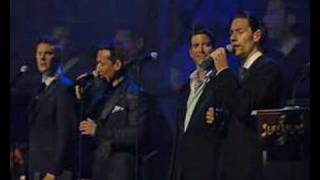
Senza Parole Lyrics in English by Il Divo
Lacrima means 'tear' in Italian. While seemingly simple, it's a poignant word in the context of this song, which is about a painful farewell.
The phrase "Senza una lacrima" (Without a tear) highlights the emotional detachment or perhaps the forced stoicism of the person leaving. It's a powerful image that conveys the depth of the heartbreak without explicitly stating it, making it an emotionally resonant word for learners.
"Senza Parole" is Il Divo doing what they do best — turning a breakup into something operatic. It opens quiet and almost conversational: "Come stai? Dove vai? Qualcosa che non va?" [How are you? Where are you going? Something wrong?] — the narrator already sees the goodbye coming before it's said out loud. What follows is a refusal to make a scene about it. The chorus repeats like a vow: "Senza parole, senza guardare mai, senza parole, senza una lacrima" [Without words, without ever looking back, without words, without a tear] — leaving with no explanation, no last glance, no tears.
The second verse imagines her with someone new, and even there the narrator won't stand in the way: "Chi c'è vicino a te? Ti dirà quanto ti amerà" [Who's close to you now? He'll tell you how much he'll love you] — generosity with a bitter edge underneath it. By the end the instruction is direct: "Non voltarti se vai via" [Don't turn around if you're leaving] — just go, and let "Addio" [Goodbye] be the last word, said once and left alone.