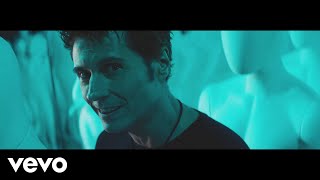
Vivendo E Aprendendo Lyrics in English by Capital Inicial
Tontura translates to "dizziness" or "vertigo." It's an interesting word because it describes a physical sensation that can also be used metaphorically.
In the song, the lyric "O céu azul me dá tontura" (The blue sky makes me dizzy) is particularly evocative. It suggests a feeling of being overwhelmed or disoriented by something that should be beautiful and calming, adding a layer of vulnerability and internal conflict to the narrative. This makes it a memorable and unique choice.
Capital Inicial built this one around a loop that never quite closes. The opening lines set the pattern right away: "Outra história com um outro rosto" [Another story with another face], "Um outro beijo com o mesmo gosto" [Another kiss with the same taste] — a new person shows up, and somehow it tastes exactly like the last one. By the second verse he's watching his own life on repeat: "O mesmo filme em todos canais" [The same movie on all channels].
There's a good physical image holding the middle of the song together. "Eu quero voar mas tenho medo de altura" [I want to fly but I'm afraid of heights], he sings, then right after: "Eu caio mas não chego ao chão" [I fall but I don't reach the ground]. He's stuck between wanting out and never actually landing anywhere. The chorus doesn't resolve that so much as shrug at it — "Se foi um erro, eu quero errar sempre assim" [If it was a mistake, I want to always make mistakes like this] is a strange thing to shout at the top of your lungs, and that's the point. The title line, "Vivendo e aprendendo a perder" [Living and learning to lose] / "a esquecer" [to forget], isn't about getting wiser. It's about getting good at losing.