Learn Spanish With Morad with these 23 Song Recommendations (Full Translations Included!)
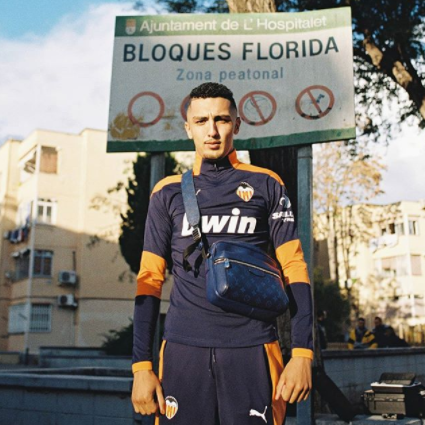
Morad El Khattouti El Horami, known simply as Morad, is a Moroccan-Spanish rapper and singer from L'Hospitalet de Llobregat, Catalonia, born in 1999. Rising from the streets of La Florida neighborhood, he began his music career at age 14 and quickly gained prominence with his raw and honest lyrics focused on street life and personal struggle.
Morad's music primarily blends hip-hop, drill, and afrobeats, popularizing the abbreviation "M.D.L.R" (Mec de la Rue) in Spain. He shot to national fame with hits like "Bzrp Music Sessions Vol. 47" and "Pelele," topping Spanish charts. His albums, including "M.D.L.R" (2019) and the critically acclaimed "Reinsertado" (2023), showcase his authentic voice as the most streamed emerging drill artist in Spain. Known for his iconic tracksuits and vibrant street style, Morad continues to break barriers and connect communities through his music.
In "Desespero", Spanish artist Morad links up with RVFV to talk about an ex who is playing mental games. The hook sets the whole mood: "¿Será que lo hace para ver si me desespero?" ("Could she be doing this to see if I get desperate?"). She flaunts a brand-new partner, yet neither guy truly believes she has moved on. Morad drops one of the cheekiest lines in the track when he claims, "Ella tiene un nuevo novio, pero a ese novio le pone mi cara" ("She has a new boyfriend, but she puts my face on him"). He even shrugs off any lingering jealousy by insisting his mother already takes up all the room in his chest ("mi madre ha llenado todo ese aforo").
Beneath the cocky swagger, though, the track flips back and forth between big talk and genuine longing. When RVFV jumps in, the tone gets much softer. He admits to losing sleep ("por ti me desvelo") and complains that she acts tough with "sentimientos de acero" ("feelings of steel"). The Spanish word "desespero" refers to that frantic, crawling-out-of-your-skin sense of despair when someone keeps leaving mixed signals—calling you over one minute, then ignoring you the next ("luego no quiere saber nada"). It is an honest, addictive ride through wounded pride, stubborn denial, and old feelings that refuse to die.
Get ready to dive into the world of Spanish rapper Morad with his track "Cuzi Cuza." The song paints a vivid picture of life on the streets, starting from the early morning. Morad describes a scene where young people are hustling and constantly under the watch of undercover police. The lyrics mention specific details like the "L" hand sign, representing his neighborhood La Florida, and everyone being dressed in Adidas, creating a strong sense of identity and community.
The chorus is built around the phrase "cuzi cuza," which refers to the shady business and hustling that defines this lifestyle. Morad compares his crew to the "Yakuza," a powerful Japanese criminal organization, to emphasize their seriousness and organized nature. He warns that in this world, there are no excuses for mistakes, and that deception is a common tool. The song isn't just about a single neighborhood; it mentions journeys from Barcelona to Seville and even to Marseille in France, showing the wide-reaching nature of this street life.
In "Lo Que Tiene", Spanish rapper Morad teams up with Beny Jr and Rvfv to obsess over a woman they just cannot get out of their heads. The title itself translates to "What She Has", and the whole track revolves around this magnetic pull. Morad admits he spends his days daydreaming about her, comparing the pain of missing her to being locked up: "Cuando no te veo yo siento una agonía / Como si estuviera esposándome un policía" ("When I don't see you I feel an agony / As if a police officer were handcuffing me"). What really hooks them is her fierce independence. She works for her own money and pays her own way ("Se gana lo suyo... Sola se mantiene" ["She earns her own... She supports herself"]), even as she dreams big of having two kids, a house, and a Mercedes.
The verses bring in classic street romance drama. Her parents dislike Morad, forcing secret hookups ("nos vemos a escondí'a" ["we see each other in secret"]), while Rvfv complains she finds him boring because he dislikes crowds and refuses to take her downtown (pa'l centro). Beny Jr jumps in with his signature rogue swagger, noting that her friends warn her that "el Beny es un bandido" ("Beny is a crook/bad boy"). He mentions carrying his "tola" (Spanish slang for a handgun or piece) and admits he struggles to stay, acting like a lone wolf (lobo solo). It is an addictive mix of flashy lifestyle dreams, street tensions, and total infatuation.
Spanish rapper Morad comes out swinging in "Pelele", and the title sets the whole mood right away: a pelele is a puppet, a pushover, or somebody who lets others control them. Morad directs that insult straight at mainstream rivals who talk tough but fold instantly in real life. While other acts need big studios—he mocks them with "Cuatro guitarrista' 17 que tienen orquesta / Para hacer un tema que no suena ni en la fiesta" ("Four guitarists, 17 people in an orchestra / To make a track that doesn't even play at the party")—Morad brags that he crafts hits in five clean minutes while rolling his own smoke. He draws a hard line between commercial radio (Los 40 Principales, Spain's biggest pop station) and his own sound, which lives directly on the block.
He spends the second half hunting down fake personas. He asks where his opponents are hiding, laughs at their crews, and points out that holding a weapon means nothing if you freeze: "Tú tienes una pistola pero no dispara'" ("You have a gun, but you don't shoot"). To drive the point home, he quotes Puerto Rican rapper Eladio Carrión: "No hay chaleco para la cara" ("There's no bulletproof vest for your face"). He also laughs at artists trapped in bad record deals ("con interés de disquera") while he stays completely independent and in control. Whenever these rivals run into him face-to-face, Morad says they panic and beg him to stop, leaving him laughing right in their faces.
Spanish drill star Morad lays down hard-won street rules in "Aprendí" (I Learned), looking back at how he survived poverty and distrust to make it out. From the opening bars, he makes one thing crystal clear: the only person whose advice he trusts is his mother. He remembers warning her, "Mamá, por favor, no abra' puerta a policía" ("Mom, please, don't open the door for the police"), and admits he used to plead with her because "no quiero centro" ("I don't want juvenile detention"). He watched fake friends multiply as soon as he gained momentum, bluntly noting how quick people are to betray each other: "no se escupe en la mano que da comida" ("you don't spit on the hand that feeds you"). Rather than pretending friendship is sweet, Morad states that walking solo is peaceful: "La vida solo, la vida más bonita" ("Life alone, the prettiest life").
What makes the track so good is how plainly he measures success through everyday neighborhood details. In Spain, chándal means a tracksuit, and Morad recalls stepping out ignored: "En chándal yo bajaba, miradas eran poca'" ("In a tracksuit I went downstairs, few people looked"). Back then, he couldn't afford wheels ("para las bici' no tenía ni poca" [for bikes I didn't even have a bit]), but now neighborhood kids handle car steering wheels and pay cash on the spot ("pagan todo a toca"). Cops used to call him a masochist during arrests, but now when they pull him over, their mouths drop open in surprise. Through the daily chaos, his ultimate motivation stays tiny and unbreakable: "Si mi madre sonríe entonces aquí yo seguiré" ("If my mother smiles, then I'll keep going right here").
Spanish rapper Morad kicks this track off with real match commentary celebrating football star Lamine Yamal's left-footed goal, setting up a sharp parallel between making it on the pitch and surviving on the pavement. Morad takes Yamal's jersey number and his neighborhood roots ("El 304 representando la calle" [The 304 representing the street]) to talk about loyalty, jealousy, and street smarts. He warns you to watch your back because "de espaldas vienen todas las balas" (all the bullets come from behind) and "hay pocos que lo hacen de cara" (few people confront you face to face).
Instead of bragging about luxury cars, Morad keeps it grounded in family and pride: "Mamá es de África, papá es de África" (Mom is from Africa, dad is from Africa) and notes that coming from the bottom is exactly where he gets his confidence ("Vengo de la calle, por eso tengo autoestima" [I come from the street, that is why I have self-esteem]). He points out fake friends who only show up when you win ("todos en el triunfo están al lado" [everyone is by your side during the triumph]), contrasts past poverty with current success, and reminds everyone that whether you are scoring goals in a stadium or dodging trouble on the block, staying true to your origins is the only win that counts.
Spanish drill star Morad doesn't mince his words in "Lo Niego", and right out of the gate, he sets the record straight: "No soy malo, lo niego" ("I'm not bad, I deny it"). People love to brand him as a villain, but he insists that putting up walls is just survival. He raps bluntly about trust issues, saying "Prefiero caminar solo a estar con gente que nunca quiere ver nada" ("I'd rather walk alone than be with people who never want to see anything"). In his world, fair-weather friends ask for handouts, but vanish the second things get tough: "Que esta gente te piden, pero a las malas nadie me ayudaba" ("These people ask you for things, but in bad times nobody helped me"). He even drops a biting warning about betrayal: "Cuidado si das comida porque hay gente que coge y te la escupe" ("Be careful if you feed people, because some will take it and spit it out").
What makes this track hit so hard is how matter-of-fact he stays about heavy realities. He talks about loyalty, facing trouble without flinching, and even brushes off being locked up: "La cárcel no es un sitio bonito, pero es real" ("Prison is not a nice place, but it's real"). Notice how he drops letters like a true street-level Spanish speaker, turning detenido (arrested) into deteni'o and toda into to'íta. He finishes on a gritty, self-reliant note, reminding us that good luck isn't coming to save anyone: "Tiempos mejores no nacen, se hacen" ("Better times aren't born, they're made"). You have to respect how direct he is.
If you have ever had an ex who only liked you when things were easy, this track will hit home immediately. Spanish rapper Morad teams up with DELLAFUENTE and Beny Jr to call out a fair-weather partner who vanished when times got rough. The main grievance is right in the chorus: “No estuviste en lo malo, dime, ¿por qué en lo bonito?” ("You weren't there through the bad times, tell me, why should you be there for the good?"). Morad drops cold, street-level honesty right away, rapping that he used to prefer hanging out with her over running from the law ("Me gustaba estar contigo más que estar metí'o en un delito" / "I liked being with you more than getting caught up in crime"). Still, he brushes off incoming notifications with zero guilt.
What makes the verses fun to unpack for language learners is the mix of vulnerable admissions and harsh Spanish slang. One minute they admit “No sé ni enamorarme” ("I don't even know how to fall in love"), and the next Beny Jr is bragging that he walks like a lone wolf on the hunt for pirate treasure. He bluntly drops street terms like "yola" (slang for cocaine) and shrugs off heat with "Londres en invierno, yo no sé ser tierno" ("London in the winter, I don't know how to be tender"). It is messy, bitter, and stubborn: they keep obsessing in private, but refuse to give an inch back in real life.
Spanish drill star Morad doesn't mince his words here. Straight out of the gate, the hook repeats "Odio a los azules, también los picolos" ("I hate the blues, also the picolos"). If you're learning Spanish slang, take notes: azules refers to the blue-uniformed National Police or local cops, while picolos is street slang for the Civil Guard (Guardia Civil). He shrugs it all off with the word "Normal" ("It's only natural"). Growing up in the tough La Florida neighborhood of Hospitalet de Llobregat—shouted out directly with "Hospitalet ciudad de inmortale'" ("Hospitalet, city of immortals")—clashing with law enforcement isn't a surprise to him; it's just daily routine.
What makes this track hit so hard is how he contrasts real street survival with fake internet bravado. Morad mocks online gangsters with "¿Y tú vas de chulo? De que tú eres un narco hablando por el WhatsApp / Y lo único que eres wasa-wasa" ("And you act cocky? Acting like a narco texting on WhatsApp / When all you are is empty chatter"). He talks about seventeen-year-old kids taking speedboats "mar adentro" (out into open sea) with three engines just to bring food home to their mothers, alongside friends running from cops until they get scratched up. There is pride in his crew—referencing his movement M.D.L.R. (short for the French phrase Mec de la Rue, or street kid)—which he calls "un clan y también la familia" ("a clan and also family"). He traded measuring grams on scales for holding a microphone to put dinner on the table, and to him, living this life honestly makes the hatred from the outside totally normal.
Morad's
This song is a straight-up declaration of love, or maybe obsession, after just one look. Morad sees a girl and is instantly hooked. He tells her, "Una mirada lo dice todo / Yo más te miro, más me enamoro" (A look says it all / The more I look at you, the more I fall in love). His main goal is simple: "Quiero que tú seas mi chula y yo ser tu chulo" (I want you to be my girl and I'll be your guy). He sees her as the solution to all his problems, saying that with her, the torment of his life disappears.
He builds a whole fantasy around her, even though he admits, "solo te he visto una ve'" (I've only seen you once). He imagines her getting jealous if he looks at other women and describes her unique beauty, comparing her brown eyes to a German winter and her skin tone to Italy. He pleads with her, "No te me hagas la dura, porque eres pa' mí" (Don't play hard to get, because you're for me), showing a bold confidence that she is meant for him. The song mixes this intense romantic fantasy with hints of a difficult life, mentioning "noches frías por Algecira, buscando talego" (cold nights in Algeciras, looking for money/jail), which makes his desire for her feel like a desperate search for an escape.
In "Niños Pequeños," which translates to "Little Kids," Spanish artist Morad paints a vivid picture of life on the streets. He describes a world where young people are "obsessed with committing crimes," like stealing cars. However, this isn't a celebration of crime for its own sake. Instead, Morad reveals the motivations behind this difficult lifestyle: a powerful sense of loyalty to friends and an even deeper devotion to family.
Throughout the song, Morad contrasts the harsh realities of the street with a strong moral code. He emphasizes helping friends without expecting anything in return and warns against showing off wealth. The ultimate obsession, he reveals, isn't crime itself, but providing for his mother. The lyrics shift to describe kids who are obsessed with helping their mom, paying her rent, keeping the fridge full, and dreaming of buying her a house. It's a raw and honest look at how the desire to care for family can lead people down a dangerous path.
Morad and Trobi's "Cómo Están?" is a high-energy track where Morad confidently asserts his rise from the streets to success, all while throwing shade at his detractors. He kicks things off by repeating "Mbappé, Mbappé, Mbappé, Mbappé" – a clear nod to the famous footballer, suggesting speed, skill, and being at the top of his game. He talks about his past, saying "solamente me gustaba en la calle las matemática'" [I only liked math in the streets], hinting at a street-smart approach to life.
Morad makes it clear that he's making "música para todos los barrios" [music for all the neighborhoods] and isn't changing his style. He challenges his haters directly, asking "¿Y cómo están? Hablan pero luego dime dónde están" [And how are they? They talk but then tell me where they are] and declaring "Ahora yo soy el que reparte el pan" [Now I'm the one who distributes the bread], meaning he's in control and providing for his people. He even describes how his rivals "se van por pata, y se van por coche, cogen un tren y se embalan" [they leave on foot, and they leave by car, they take a train and they pack up] when they see him, showing their fear. It's a bold statement of dominance and a warning to anyone who doubts him.
Morad's
Morad's "Carretera" [Road] takes us on a journey, literally and figuratively! He's all about moving forward, making it clear that "Lo que se te quita dudo que te vuelva" [What is taken from you, I doubt it will return]. This song is a declaration of carving your own path, doing things "de otra manera" [in another way], and not being just anyone. He talks about his car being a "hoguera" [bonfire], crossing borders and barriers, hinting at a life on the move, maybe even a bit illicit, as he mentions routes to Málaga, Algeciras, Granada, and Sevilla.
Morad also reflects on the tough realities of his neighborhood, where "niños ya no quieren costura" [kids no longer want to sew], suggesting a shift away from traditional work. He's learned to live with the bad, saying "Aprendí a vivir con to' lo malo" [I learned to live with all the bad], and to navigate things on his own. It's a blunt look at resilience and self-reliance, with a touch of defiance against those who talk big but can't back it up, like the line "No eres rey de leone', porque solo eres una gata" [You're not the king of lions, because you're just a cat].
Morad's "Mi Barrio" is a proud and honest story about where he comes from. He talks about growing up poor, with lines like "De pequeño nunca me llegaba para cocodrilo" (When I was little I could never afford the crocodile [Lacoste logo]) and having "Parches en rodillas" (Patches on my knees). But even when he was hungry, he says "te juro que no he comido solo" (I swear I haven't eaten alone), showing a deep loyalty to his community. He's not interested in being a fashion model; he bluntly contrasts that world with his own street knowledge, saying "No soy ni modelo... Pero si tú quieres, te enseño a como vestir un kilo" (I'm not a model... But if you want, I'll teach you how to dress a kilo).
This song is his answer to anyone who doubts him or talks about him. He knows people are watching his success, saying "Parece que les molesta, que el Morad sube, sube" (It seems to bother them that Morad is rising, rising). But he doesn't care. He finds his strength and identity in his neighborhood. The chorus is a powerful statement of belonging: "La vida es dura, pero menos en mi barrio" (Life is hard, but less so in my neighborhood). When people ask where he is, the answer is always the same: "¿Dónde está el Morad? Siempre está metido en su barrio" (Where is Morad? He's always in his neighborhood).
"Donde Están" is Morad asking one blunt question over and over: where did everybody go? The chorus keeps hammering it, "¿Dónde están los que dicen que estarían cuando no hay nada?" (Where are the ones who said they'd be there when there's nothing?). These are the people who swore they'd "tirar puño y bala" for him (throw punches and bullets, meaning fight for him no matter what), and now he looks around and "no veo nada" (I don't see anything).
The verses are colder and more personal. He grew up with nothing, he says he used to listen to Tego Calderón, the Puerto Rican reggaeton pioneer, "en el talego" (in jail, talego is Spanish street slang for prison), and he admits his ego is a problem: "muero por mi ego" (I'm dying for my ego). My favourite line is the dry math of it all: "Tengo menos amigos y más dinero" (I have fewer friends and more money). He forgives but doesn't forget, and he warns that help can be "un anzuelo" (a fishing hook), someone lifting you up only so the fall hurts more.
Watch for Morad's street Spanish: he drops final letters, so puño' and bala' are puños and balas, and pa' is para.
"Copenhague" is Morad stuck on someone he knows is bad for him. He opens with "Es que no es normal, ya no te tengo" (It's not normal, I don't have you anymore), and then hears she was seen walking around her neighbourhood with another guy. He admits he can't read her: "No entiendo tu juego" (I don't get your game), and she has him "en mareo", literally seasick, which is Spanish slang for dizzy and confused.
The hook is where the bitterness comes out. He talks about her in the third person: "No coge el teléfono" (She doesn't pick up the phone) and "Si me habla, le diré que no" (If she talks to me, I'll tell her no). It sounds tough, but a few lines earlier he admits "siendo tú la mala... de noche yo te veo" (you being the bad one, I still see you at night). The second verse throws shade at the new guy: "a él le falta ritmo" (he's got no rhythm). Petty, and pretty funny.
Learner tip: watch the -ndo forms stacked up: queriéndolo, amándolo, perdiéndolo (loving it, wanting it, wasting it). The pronoun sticks to the end of the gerund, so you get a written accent to keep the stress in place.
Morad's "Chandal" is a defiant anthem about staying true to yourself, no matter the situation. He's basically saying, "I'm wearing my tracksuit everywhere, and there's nothing you can do about it!"
He talks about going to the club, to a wedding, even to court, all in his tracksuit: "Si voy a una boda, en chándal, si voy al juzgado, en chándal" [If I go to a wedding, in tracksuit, if I go to court, in tracksuit]. It's a symbol of his identity and his crew, a "banda organizada" [organized band] that's always prepared. He even jokes about how they used to be denied entry to clubs in tracksuits, but now they're so successful, they get in no problem: "Antes discoteca en chándal, no nos daban la entrada / Ahora discoteca en chándal, seis números en adelantado" [Before, discotheque in tracksuit, they wouldn't let us in / Now, discotheque in tracksuit, six numbers in advance]. It's a fun, boastful track about loyalty, success, and sticking to your roots.
Morad's "De Nada" is a powerful anthem about staying true to yourself and your roots, no matter what. He starts by saying, "Si tú quieres te enseño a hacerlo / El que habla se le da pa'l pelo" [If you want, I'll teach you how to do it / The one who talks gets their hair pulled], which is a blunt warning against being a snitch or a traitor. He emphasizes that if you become a betrayer or disrespect your values, "No hay dinero que lo recupere" [There's no money that can recover it].
Morad makes it clear that his hustle is for his mom, stating, "Se busca solo pa' la mama / Ella se merece todo lo que gane" [He only looks for it for his mom / She deserves everything he earns]. He's proud to say, "A ninguno yo le debo de nada / Empecé yo solo de la nada" [I don't owe anything to anyone / I started alone from nothing], highlighting his self-made journey. He also touches on the envy he faced, with people watching him rise: "El que ennvidia a mí me deseaba / Veía como me elebava" [The one who envies me desired me / Saw how I was rising]. It's a real and honest look at loyalty, ambition, and remembering where you came from.
Morad's "Perezoso" is all about the hustle and staying true to yourself in the streets. He's constantly working, "Buscando peso a peso, no soy perezoso" [Searching peso by peso, I'm not lazy], making sure his crew is fed, "Los míos todos comen, tienen su pedazo" [Mine all eat, they have their piece].
He's also super wary of fakes and people who try to take advantage, like when he says, "Le di la mano a ese, me cogió to' el brazo" [I gave him my hand, he took my whole arm]. And when it comes to relationships, he's clear: "Esa quiere conmigo y yo no me caso" [She wants to be with me and I'm not getting married]. It's a blunt, no-nonsense look at street life, loyalty, and staying sharp.
Morad gets straight to the point in "Pensamientos" (which means "Thoughts"). He's talking about the difference between people who act tough online and the reality of street life. He sees right through the fakes, saying if you want, you can "explicarlo todo a las redes" (explain it all on social media), but where he's from, people are more about "callarlo / Y mirar lo que se mueve" (keeping quiet / and watching what's happening). He's not impressed by people who just want to look the part.
He makes it clear that getting into illegal business isn't for fun or glory; it's a way to get "Más De lo que en el bolsillo es normal" (More than what's normal in your pocket). But he warns about the real dangers. Talking about violence in his neighborhood can end badly: "a la calle o al hospital" (on the street or in the hospital). The song is a cold dose of reality from his perspective, a look at the motivations and serious consequences of the life he describes.
Morad names the problem in his first line and then spends the rest of the track explaining where it came from. Sigo viviendo con mi paranoia (I keep living with my paranoia), and the verses that follow read like a rulebook from the La Florida blocks of L'Hospitalet, rattled off fast and with no punchlines. Keep your phone on, because si apagado ya te echan por canalla (if it is off, they write you off as a lowlife). Never leave a friend on the run. Keep your word even when listening to the wrong person costs you. He remembers being small and watching the older kids lift perfume bottles and se montaban rápido en un Dacia (jump fast into a Dacia), which is a very particular kind of glamour. Not a getaway car. A Dacia.
The hook is where he stops defending himself. No juzgo porque peco (I do not judge, because I sin too) is the whole moral position of the song in four words, and it arrives right after he describes greed as the thing que rompe el saco (that bursts the sack) and leaves you in jail with no tobacco. He is just as blunt about the fame: No soy famoso, nunca he hecho una firma (I am not famous, I have never signed an autograph). Then the outro hands the song over to a chant against the Catalan police, repeated until the beat runs out, which tells you how much of the paranoia he built himself and how much of it was handed to him.

