Learn Spanish With Big Soto with these 21 Song Recommendations (Full Translations Included!)
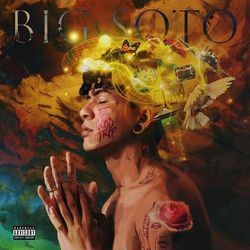
Gustavo Rafael Guerrero Soto, known professionally as Big Soto, is a pioneering Venezuelan rapper, singer, and songwriter born on October 19, 1996. Emerging from the urban music scene of Venezuela, Big Soto played a crucial role in introducing Latin trap to his country and has since become one of the genre's leading voices in Latin America.
Since beginning his musical journey in 2013, he has impressed fans with his dynamic blend of reggaeton, trap, and hip hop, releasing standout projects like Young Cream and The Good Trip. Signed to Rimas Entertainment, Big Soto continues to grow internationally, collaborating with artists across Latin music and captivating audiences with his authentic style and innovative sound.
In "Lloro :'(", Venezuelan artist Big Soto brings a totally honest, late-night confession over a bouncy reggaeton beat. The entire song kicks off with him staring at his phone and fighting the urge to text his ex: "Hay una lágrima que está saliendo / Mientras te estoy pensando / Y el celular tentando" ("A tear is falling / While I'm thinking of you / And my phone is tempting me"). Instead of making excuses or pointing fingers, he bluntly takes the blame for the breakup, admitting, "Sé que te hice daño" ("I know I hurt you") and "El culpable soy yo" ("I am the guilty one"). He even notices she looks better without him ("Tú estás más bonita, se ve que aprendiste" / "You look prettier, it shows that you learned"), making his regret hit even harder.
What makes this track stand out is the cozy, bittersweet imagery mixed in with the tears. Soto daydreams about finding her in his sleep: "Quizás te encuentre en mis sueños / Donde me haces cafuné" ("Maybe I'll find you in my dreams / Where you caress my hair"). Cafuné is a wonderful Portuguese loanword commonly used in South America that specifically means the act of running your fingers tenderly through someone's hair. It is a sweet, tender memory, but the illusion breaks the second he wakes up all alone in bed. He is left with nothing to do but watch the sunset and repeat the hook: "Y ahora lloro, lloro, lloro por ti" ("And now I cry, cry, cry for you").
In "ALERTA BB," Venezuelan artist Big Soto paints a picture of a modern, complicated relationship that's more physical than emotional. The song describes a memorable night of partying, dancing perreo, and sharing intimate moments. The connection is intense but fleeting, often happening "Entre cuatro paredes" (Between four walls) and communicated through explicit photos rather than love letters.
Despite the strong physical attraction, there's a sense of caution and a desire to avoid deeper feelings. Lines like "salta el amor y luego tomar vino en Copa" (skip the love and then drink wine from a glass) show a preference for pleasure without commitment. The singer admits he wants this person all to himself, yet also feels their connection is based on "solamente traiciones" (only betrayals), leaving him constantly on edge and, as the title says, on "alerta" (alert).
Big Soto invites us into that bittersweet hour when the sun slips behind the skyline and memories flood in. “CÓMO VAS?” paints the picture of a restless evening in the city: orange skies turning to night, ash drifting from a balcony, and a mind replaying old moments with a lost love. The Venezuelan rapper balances laid-back melodies with raw confession, admitting he hasn’t slept, lighting up “dos gallos” to cope, and still smiling at the thought of the one who left with the sunset.
Beneath the cool trap-R&B vibe lies a tug-of-war between glitzy distractions and genuine heartache. Parties, fast cars, and Dom Pérignon swirl around him, yet none of it fills the empty space where his ex once was. Six months have passed, another December is ending, and the neon lights still can’t reveal her face in the crowd. The song is a late-night postcard of nostalgia, loneliness, and the universal question sent across city streets and phone screens alike: “How are you doing?”
Big Soto and Suei build the whole song around one repeated line: "Espero que seas feliz" [I hope you're happy], answered every time by "Como sea, conmigo o sin mí" [either way, with me or without me]. It plays like a breakup handled with unusual care, the kind where nobody's really the villain. "Te suelto la mano y te dejo ir" [I'll let go of your hand and let you go] says exactly what it means, no metaphor needed.
Then, around the three-minute mark, the song turns into something else: a voicemail. "Sé que es muy tarde pa' llamar" [I know it's very late to call] opens a message that passes on hellos from his parents, promises "Prometo no molestar" [I promise not to bother you], and admits "Estoy en nuestro hogar pero sin ti" [I'm in our home but without you]. Different person, same wish: let them be okay, whatever that costs him to say out loud.
Feel the bass drop, the city lights glow, and Big Soto’s voice sets the mood. In La Noche Entera he teams up with Almighty to celebrate a night so intense it seems to last forever. Over a sleek Latin-trap beat, the Venezuelan rapper showers his lover with gifts (a designer bag that “fits her perfectly”), premium smoke, and nonstop affection. The chorus repeats like an irresistible chant: they want to “eat her up” the whole night, a playful way to say they are consumed by desire.
Beneath the sensual imagery, the song highlights loyalty and authenticity. Big Soto insists their bond is “real” and untouchable, shrugging off rumors on Instagram and ignoring other admirers. He is mesmerized by her natural beauty and promises protection: anyone who disrespects her will “start a mess.” The result is a steamy anthem about passion, status, and devotion, inviting listeners to lose themselves in love, luxury, and late-night vibes.
Big Soto's "Malibu" is a smooth, late-night vibe about a guy who just can't get a past lover out of his head. He's reminiscing about those intimate moments, how "Las horas parecían segundos" [The hours seemed like seconds] when they were together. Now that she's far away, he feels "algo moribundo" [somewhat dying], really missing her presence.
He's holding onto a camisón [nightgown] of hers, and he knows she still has his scent in her thoughts. He's at a party, drink in hand, probably a Malibu, thinking about her and how hard it is to find someone like her. He's even considering calling her, wondering if she'll pick up, and just hoping for a notification of her location. He admits, "Me gustas más de lo normal" [I like you more than normal] and wants to try something more, maybe a movie, a conversation, and then "en la cama experimentar" [experiment in bed]. It's a relatable story of longing and hoping for a second chance with someone who left a big impression.
Get ready to groove with Big Soto's "Flow Del Caribe"! This track is all about being completely captivated by someone special, someone who's truly one of a kind. The artists are head over heels for a woman with an irresistible "flow del caribe" [Caribbean flow], who looks great in her Jordans and doesn't follow the rules.
They can't get enough of her, even admitting, "Miro tanto tu Insta que parezco detective" [I look at your Insta so much I look like a detective]. It's a fun, flirty song about wanting to be with this amazing woman, traveling the Caribbean, and living together. They're so smitten, they even say, "Si eres mi sueño entonces te persigo" [If you're my dream then I'll chase you]! It's a confident and playful declaration of love and desire, celebrating a woman who's truly unforgettable.
The title is a pun you only really see written down. Split it and it reads lo sientes [do you feel it], run it together and it is lo siento [I'm sorry], and Big Soto spends the whole song refusing to pick one. He opens by trying to delete the evidence: "Quiero borrar tu nombre de mi historial" [I want to erase your name from my history]. It does not work. Two lines later he is at a party doing the least subtle thing a person can do, "Estoy aquí en el party viendo el celular" [I'm here at the party looking at my phone], and the signal he is waiting on never arrives.
Then Natt Calma answers, and she is not letting him off. Her verse points straight at the pattern: "Siempre lo dejamos en el intento" [We always stop at just trying]. She has been up all night over it, "Estoy desvelada, es por tu mirada" [I'm sleepless, it's because of your gaze], while the hook keeps circling back to the same accusation, "No lo niegues, tú también lo sientes" [Don't deny it, you feel it too], repeated until it stops sounding like a question and starts sounding like a verdict.
Have you ever felt like the bad guy in a love story, even if you had good intentions? In "El Villano," which means "The Villain," Big Soto and Pailita explore this exact feeling. The song is a heartfelt confession from someone who ended a relationship to avoid causing more pain. He declares himself the "villano que le puso el final a la historia" (the villain who put an end to the story), choosing to be remembered as the bad guy rather than hurting his partner further.
Despite taking the blame, the singer is filled with regret. He admits, "Te miento si digo que no me arrepiento" (I'm lying if I say I don't regret it), and reveals that his life now feels like a "camino tan estrecho" (a very narrow path). Even when he's with someone new, he sees his ex's face on the ceiling. It's a classic tale of a difficult choice in love: letting someone go for their own good, even if it breaks your own heart.
Big Soto opens by naming the rule he is about to break: "Aquí la escuela es ser callado, morir discreto" (Here the lesson is to be quiet, to die discreetly). Then he spends the rest of the song doing the opposite. He counts what he has and what he is still waiting on: "Aún no tengo un Patek pero brilla mi Phillie" (I still don't have a Patek but my Phillie shines). There is gold at his neck, champagne at LIV, and a steering wheel you have never touched. Then the hook lands, one line after the flex: "Y yo no quería sonar atorrante" (And I didn't want to sound like a show-off). He knows exactly how he sounds.
The second half opens a door: "Bienvenidos al mundo de Sotorius" (Welcome to the world of Sotorius), and the world turns out to be a Venezuelan childhood. Codeine goes into Frescolita, the cream soda every kid there grew up on, and he prefers it that way: "La prefiero así porque sabe más dulcita" (I prefer it like that because it tastes sweeter). After that it is all cartoons. Timmy has a godfather and Soto doesn't, the green he is burning is not Cosmo, the high leaves him "en Nickelodeon" (on Nickelodeon), and by the last bars he is Ichigo holding the sword. The brands are new. The reference shelf is the one he had at ten.
Escape to Tulum! In this sizzling reggaetón track, Venezuelan rapper Big Soto teams up with Puerto Rican star Lunay to invite a special girl on a secret getaway where “no one will find us.” With mezcal served en copa, the pair paint a picture of moonlit beaches, carefree dancing and passion that pushes every limit. Waves crash, clothes fall, and the night turns into a blur of laughter, desire and sun-kissed freedom.
Behind the playful flirtation there is a bittersweet warning: “Quizá no nos volvamos a ver” – maybe we will never see each other again. The song celebrates squeezing every drop out of a fleeting moment, leaving no evidence and no regrets. It is a sensual postcard of living for today, fueled by good music, warm sand and the electric thrill of what might be a once-in-a-lifetime encounter.
Big Soto and Neutro Shorty present “Joseando” as a boastful street-rap anthem about hustling, making money, and staying ahead of rivals. The title comes from josear, Venezuelan street slang for hustling or working hard to earn money. The repeated line “Sigo joseando, en lo mío yo estoy invirtiendo” [I keep hustling, I’m investing in my own thing] shows the main attitude: the money is growing, the bank account is multiplying, and the artists believe they have earned their position. When Soto says “Yo soy un diamante, lo sé” [I’m a diamond, I know it], he compares himself to something valuable that stands out from everyone else. “Mordiéndose” literally means “biting themselves,” but here it describes jealous people frustrated by his success.
The verses push this confidence into danger and excess. The narrator describes being stopped in a car, taken to court after police found drugs, and then getting out with a phone call. He looks back at running from the police and now laughs because he has moved from selling drugs to smoking what he once sold. The song also brings in threats, weapons, rival crews, nonstop activity, expensive fragrance, Palermo and Cali, and women chasing the artists. Some lines are deliberately extreme and explicit, especially the sexual boasts. The boxing reference “Esto está pegando, Manny Pacquiao” [This is hitting like Manny Pacquiao] compares their impact to the famous boxer’s punches. Altogether, the lyrics mix money talk, street codes, danger, luxury, and sexual bravado, with the chorus returning to one message: keep hustling, keep investing, and let the jealous ones talk.
Big Soto's "TANTO.." is a really honest look at a relationship that's clearly on its last legs, but neither person seems ready to fully let go. He starts by asking, "No hablas, ¿qué haces aquí?" [You don't speak, what are you doing here?] and "¿Qué haces lejos de mí?" [What are you doing away from me?], which immediately sets up this push-pull dynamic. There's a moment where he says, "Gracias por regresar, igual no, prefiero no hablar" [Thanks for coming back, but no, I prefer not to talk], showing that even though he appreciates her return, he's also tired of the drama.
He admits, "De que hace rato estoy mal, no es como si algo va a cambiar" [That I've been bad for a while, it's not like anything will change], which is a pretty blunt acceptance of their situation. You can feel the confusion when he sings, "Y no sé por qué estás llorando, ¿Fue mi culpa? ¿Qué estás hablando?" [And I don't know why you're crying, Was it my fault? What are you talking about?], and then, "No sé por qué me gritas tanto, Sólo estábamos hablando" [I don't know why you're yelling so much, We were just talking]. It really highlights how communication has broken down between them. He knows they've both caused pain, saying, "Sé que nos hemos dañado tanto" [I know we've hurt each other so much], and even admits, "Yo miento igual que tú y no lo sabes" [I lie just like you and you don't know it]. It's a raw and relatable song about the messy end of a relationship where both people are hurting and struggling to move on.
Big Soto and Eladio Carrión spend “EL FAVORITO DE MAMI” keeping score on how far they've come, and the hook says exactly what the score means: “Pa'l carajo el number one, me conformo con se' el favorito de mami” [To hell with number one, I'm happy being mom's favorite]. Chasing a title matters less than staying close to the person who mattered before any of this did. Everything else is proof of the distance travelled — “Yeah, yo fui de Old Navy pa' Louis brincamo', Versace y Armani” [Yeah, I went from Old Navy to Louis, we jumped straight to Versace and Armani] tracks the closet, and by the time he lands in Buenos Aires it's “me reciben como en la Bombonera a Cavani” [they welcome me like Cavani at the Bombonera].
The Venezuelan pride sits right next to the passport stamps. “Pero yo soy la trampa internacional” [But I'm the international trap] turns a hometown hustle into something that plays everywhere, and “México me quiere, me siento local” [Mexico loves me, I feel like I belong] says the same about a country that isn't even his own. Under the Cognac and the Cadillac, “el favorito de mami” is still the only title either of them is chasing.
Big Soto, Lasso, and Neutro Shorty team up for "Yo Le Creo" [I Believe Him/Her], a song that dives into the confusing, often painful world of a toxic relationship. It's all about that feeling when you know someone isn't being entirely truthful, but you want to believe them so badly.
The singer is stuck in a cycle, admitting, "No sé si es masoquismo" [I don't know if it's masochism] because he can't feel the same with anyone else. He knows he's being naive, saying, "Soy un iluso al pensar que vas hacer solo mía" [I'm deluded to think you'll only be mine], but he's so drawn to this person that he keeps going back into the "laberinto" [labyrinth]. Even when he finds out she's with someone else, he still gets jealous when she flirts with him. It's a raw look at how love can make you blind and lead you to ignore the truth, hoping that "todo valga la pena el día de mañana" [everything will be worth it tomorrow].
Big Soto and Santa Fe Klan bring us "Cuatro Paredes" [Four Walls], a song that really digs into the feeling of missing someone deeply after a breakup. The lyrics paint a picture of a love that blossomed within the intimacy of four walls, with lines like "Entre cuatro paredes yo te hice mía" [Between four walls I made you mine]. This isn't just about physical closeness; it's about how that person became everything to him: "Tú eres mi poesía, eres mi melodía" [You are my poetry, you are my melody].
Even though he's trying to focus on making money and moving forward, he can't stop thinking about her. He admits to past mistakes, saying "En el pasado cometí errores" [In the past I made mistakes], and now he's searching for peace by writing songs. But the loneliness is a heavy burden, as he sings, "La soledad ya no aguanto, no te demores" [I can't stand the loneliness anymore, don't delay]. It's a raw look at heartbreak, where even his room feels like a prison without her, and he's left wondering where the love they built together went.
Get ready for a blast of pure confidence with "Número 1" by Venezuelan trap artist Big Soto! This track is a bold declaration of success, where Soto charts his journey from a rebellious kid on the streets to a chart-topping star. He raps about his early days as a skater and being broke ("estaba en el hueso"), contrasting it with his current life of luxury, spending money on Gucci and Balenciaga. The song is an anthem for anyone who has ever proved their doubters wrong, as he directly addresses his haters, wishing them a long life so they can witness his continued success.
At its core, "Número 1" is about self-belief and living life on your own terms. Big Soto embraces his love for the streets ("me gusta la calle") and the wild side of life ("me gusta lo insano"). He sees himself as an unstoppable force, comparing his lyrical impact to the "Hiroshima bomb" and his ability to overcome obstacles to dodging bullets in The Matrix. It's a high-energy celebration of making it to the top, enjoying the moment, and being unapologetically yourself.
Ever had a one-night stand turn into something more? That's the question at the heart of Big Soto's track, "¿Que Hago?" which translates to "What Do I Do?" The song captures the dizzying feeling of catching serious feelings for someone you barely know after a wild night. The singer recalls dancing closely and having too many drinks, which led them back to her bed. Now, he's left wondering what comes next.
The lyrics are a direct plea to the woman he spent the night with. He admits, "I don't even know you and I feel like I don't want to share you." He's counting the hours until he can see her again, feeling like a kid with a crush. He puts the choice in her hands: if she feels the same, they should try to make it work, holding hands in public and being passionate in private. He doesn't care if they're "polar opposites" or if he has a reputation as a "villain"; he feels they have a real connection and is ready to risk it all for a chance at something real.
Have you ever heard the phrase "living well is the best revenge"? That's the entire mood of "Bonita [Remix]"! This song is a powerful anthem about a woman's transformation after a breakup. Instead of being sad, she decides to get even more beautiful—not for herself, but to make her ex, whom the singers call a "bobo" (fool), see exactly what he lost. The lyrics repeat that the love is dead and the door he left through is now permanently closed.
This isn't just about looking good; it's about a complete lifestyle change. She's deleted all their old photos, learned from her mistakes, and is now living her best life. She goes out with her elite friends, wears what she wants, and is the center of attention wherever she goes. The song celebrates her newfound independence and confidence, declaring that she's better off single because she feels better that way. It's a fun, confident track about turning a painful experience into a powerful comeback.
Ever been in that situation where you're not sure if someone wants something serious or just a good time? Big Soto, Farruko, and Kobi Cantillo totally get it in "Vacile"! This song is all about that moment when you need to know: "Háblame claro y avísame si no quieres nada serio" [Speak clearly to me and let me know if you don't want anything serious].
It's a direct conversation, asking if what you're looking for is just a "vacile" [a good time], with "Nada de amor ni salidas al cine" [No love or movie dates]. The artists are ready to be discreet and keep things casual, like when they say, "Tú por tu la'o, yo por el mío / Y para to' el mundo solo somo' amigo'" [You on your side, me on mine / And to everyone else, we're just friends]. But there's also a hint of something more, with lines like "Yo quisiera / Que tú me quisieras ver to' el tiempo así como yo a ti" [I wish / That you would want to see me all the time like I do you]. It's a fun and honest look at modern relationships and setting expectations right from the start!
Big Soto, Neutro Shorty, and Santa Fe Klan bring us a hard-hitting track about life on the streets and the relentless pursuit of money. From the jump, Big Soto tells us, "Yo soy de la calle, Yo crecí en la calle" [I am from the street, I grew up on the street], setting the scene for a life shaped by tough realities. He talks about the constant danger, saying, "La muerte se acerca es demasiado tarde" [Death is approaching, it's too late], but also about loyalty to his crew, his "perros" [dogs], who keep him from feeling fear.
The song is all about ambition and getting rich, no matter what. Big Soto declares, "No voy a parar hasta tener mas de un millón" [I won't stop until I have more than a million], dreaming of money in the bank and under his mattress. He even jokes about his past, saying, "A los 14 mi primer delito" [At 14, my first crime]. It's a blunt look at a life where money drives everything, and he's not apologizing for it, even if it means facing consequences. As he puts it, "Si el infierno es mi castigo yo no estoy arrepentido" [If hell is my punishment, I'm not sorry].

