Learn German With Die Toten Hosen with these 23 Song Recommendations (Full Translations Included!)
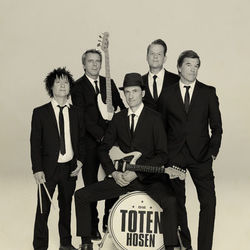
“Tage Wie Diese” (Days Like These) is Die Toten Hosen’s stadium-sized love letter to nights that feel too good to ever end. The singer has been counting the days, bursting out of the house and practically gliding over the pavement, magnetically drawn toward friends, music and the rush of the city. We follow the group as they weave through crowds, cross the Rhine and dive into a sea of sound where everything is loud, electric and perfectly out of control. It is a cinematic build-up that captures the pure thrill of finally meeting up at the exact spot, at the exact time, to kick off an unforgettable adventure.
Underneath the roaring guitars lies a simple, universal message: some moments are so full of joy that we wish they could stretch on forever. The chorus dreams of “Unendlichkeit” – infinity – because on nights like these, time feels limitless, gravity loses its grip and worries vanish. Friendship, music and the collective high of the crowd turn ordinary hours into an eternal snapshot of happiness. The song reminds listeners to seize those magical days, let themselves be carried by the current and celebrate as if there is truly kein Ende in Sicht – no end in sight.
„Tage Wie Diese“ („Dny jako tyhle“) je píseň o jedné dlouho očekávané noci, kdy se běžný svět rozběhne jako večírek. Vypravěč čeká celé týdny, tančí radostí po asfaltu a jde vyzvednout kamaráda přesně ve smluvený čas a na známém místě. Společně procházejí davem, známými uličkami a přes mosty až k Rheinterrassen, tedy k terasám u Rýna, kde hraje hudba. Výraz „wo alle drauf sind“ [kde jsou všichni pořádně rozjetí] neznamená, že jsou lidé „na něčem“ nutně doslova, spíš že jsou ve skvělé náladě; „abgeh'n“ [utrhnout se, pořádně to rozjet] zase popisuje divoké slavení.
Nejsilnější je refrén: „An Tagen wie diesen / Wünscht man sich Unendlichkeit“ [Ve dnech jako je tento / člověk si přeje nekonečno]. Na takovou noc podle písně není kam spěchat: mají „ewig Zeit“ [věčnost času] a chtějí, aby tento okamžik trval navždy, i když ve skutečnosti trvá jen do rána. Dav je unáší, plavou s proudem, krouží a „sind schwerelos“ [jsou beztížní]. Je to přímý, radostný obraz přátelství, hudby a noci, která slibuje to nejlepší a odmítá skončit: „Kein Ende ist in Sicht“ [Konec není v dohledu].
Picture this: after weeks of counting down the days, you finally step onto the city streets, unable to keep your feet from dancing on the pavement. "An Tagen wie diesen" captures that electric moment when everything clicks — friends reunite at the usual meeting spot, music pulses through narrow alleys, and the entire crowd moves as one. The lyrics paint a vivid scene of weaving through bustling people, crossing bridges toward pounding speakers, and feeling the night open up with endless possibilities.
At its heart, the song celebrates the rare nights that feel timeless — the ones where you swear you have "ewig Zeit" (forever) and nothing can pull you back to earth. It is an anthem of shared euphoria, promising protection, fearlessness, and weightlessness as you dive into the current of the moment. When Die Toten Hosen shout "Kein Ende in Sicht" (no end in sight), they remind us that these peak experiences might be fleeting, yet their memory stretches into a kind of infinity. This is a rallying cry to live loudly, love your friends fiercely, and let the music carry you until sunrise.
„Tage Wie Diese“ je oslava jednej výnimočnej noci, na ktorú rozprávač čaká celé týždne. Od radosti tancuje po asfalte, akoby ho ulicami niesol vlastný rytmus. S kamarátom či kamarátkou sa stretne presne ako naposledy, v rovnakom čase a na rovnakom mieste, potom sa spolu predierajú davom známou cestou cez uličky, mosty a k rýnskym terasám, teda na miesto pri rieke Rýn. Cieľom je hlučná hudba, kde všetci čakajú, aby sa noc mohla poriadne začať.
Najznámejšia myšlienka piesne znie: „An Tagen wie diesen / Wünscht man sich Unendlichkeit“ [V takéto dni si človek želá nekonečno]. Nie je to plán na celý život, skôr presvedčenie, že táto noc môže trvať večne, hoci iba „für heute“ [pre dnešok]. Dvojica sa nechá niesť davom, „schwimmt mit dem Strom“ [pláva s prúdom], krúži, stráca pocit gravitácie a nechce prestať. Keď refrén tvrdí „Kein Ende ist in Sicht“ [Koniec nie je v dohľade], znie to trochu prehnane, ale práve preto funguje: počas najlepšej noci sa zajtrajšok jednoducho nepočíta.
„Tage Wie Diese” nozīmē „Tādas dienas kā šī”. Dziesma sākas ar nepacietību: stāstītājs jau nedēļām gaida šo vakaru un priecīgi dejo pa asfaltu, it kā ielas pašas būtu ritms. Viņš dodas pakaļ draugam vai draudzenei tieši sarunātajā laikā un vietā, pēc tam abi izlaužas cauri pūlim pa ierasto ceļu līdz Reinas krasta terasēm un tiltiem, kur skan mūzika un gaida pārējie. Frāze „Wie ausgemacht” [kā sarunāts] ir vienkārša, bet tā parāda, ka šis vakars ir gaidīts un rūpīgi izplānots.
Pēc tam viss kļūst par vienu garu nakti, kurā neviens negrib apstāties. „An Tagen wie diesen wünscht man sich Unendlichkeit” [Tādās dienās kā šī cilvēks vēlas mūžību] ir dziesmas galvenā doma: šis mirklis šķiet tik labs, ka gribas to izstiept bez gala. Abi ļaujas pūlim, „schwimmen mit dem Strom” [peld pa straumi], griežas un jūtas „schwerelos” [bezsvara]. Īpaši jauka ir rūpju pilnā rinda „Hab keine Angst, ich gebe auf dich Acht” [Nebaidies, es par tevi parūpēšos]. Tā nav sarežģīta atmiņa vai noslēpumaina metafora, bet ļoti konkrēts vakars ar draugiem, skaļu mūziku, Rheinterrassen un sajūtu, ka šonakt beigas vēl neeksistē.
”Tage wie diese” betyder ”dagar som dessa”. Låten handlar om en efterlängtad kväll då allt känns möjligt. Berättaren har väntat i veckor och dansar nästan fram över asfalten, som om gatorna själva hade en rytm. Han möter en vän på den vanliga tiden och platsen, och tillsammans tar de den välkända vägen genom folkmassan, gränderna och över broarna till Rheinterrassen, terrasserna vid floden Rhen, där musiken och de andra vännerna väntar. Uttrycket ”abgeh'n” betyder här ungefär att festa loss och släppa kontrollen.
Refrängen säger: ”An Tagen wie diesen / Wünscht man sich Unendlichkeit” [På sådana här dagar önskar man sig oändlighet]. Det är en fin och lite överdriven tanke: just den här natten ska aldrig ta slut. De dansar hela natten, låter sig föras med av folkmassan och ”schwimmen mit dem Strom” [simmar med strömmen], alltså följer med utan att kämpa emot. När berättaren säger ”Komm, ich trag dich durch die Leute” [Kom, jag bär dig genom människorna] blir den stora festen också personlig: mitt i oväsendet håller de koll på varandra. För en stund är de ”schwerelos” [tyngdlösa], och framtiden verkar inte finnas. Bara den här natten återstår, med ”kein Ende in Sicht” [inget slut i sikte].
Το «Tage Wie Diese» («Μέρες σαν κι αυτές») είναι ένας ύμνος σε μια νύχτα που μοιάζει να μην πρέπει να τελειώσει ποτέ. Ο αφηγητής περιμένει εδώ και εβδομάδες αυτή τη μέρα και χορεύει από χαρά πάνω στην άσφαλτο, σαν οι δρόμοι να έχουν γίνει ρυθμός. Πηγαίνει να συναντήσει το αγαπημένο του πρόσωπο στο ίδιο σημείο και την ίδια ώρα όπως την προηγούμενη φορά. Μαζί περνούν μέσα από το πλήθος, από τα στενά και τις γέφυρες, μέχρι τις «Rheinterrassen», τις βεράντες δίπλα στον Ρήνο, όπου τους περιμένει η μουσική και η παρέα.
Η φράση «Wo alle drauf sind» [όπου όλοι είναι μέσα στο κέφι] και το «abgeh’n» [ξεφαντώνουν, τα δίνουν όλα] δείχνουν μια συναυλιακή νύχτα χωρίς φρένο. Οι δυο τους αφήνονται στο πλήθος, «schwimmen mit dem Strom» [κολυμπούν με το ρεύμα] και νιώθουν «schwerelos» [χωρίς βάρος, σαν να αιωρούνται]. Το ρεφρέν λέει την ευχή που γεννιέται σε τέτοιες σπάνιες στιγμές: «An Tagen wie diesen / Wünscht man sich Unendlichkeit» [Σε μέρες σαν κι αυτές / εύχεσαι την αιωνιότητα]. Δεν ζητούν πραγματικά να σταματήσει ο χρόνος· θέλουν αυτή η συγκεκριμένη νύχτα, με τη μουσική, τους φίλους και την αίσθηση ότι «kein Ende in Sicht» [δεν φαίνεται κανένα τέλος], να κρατήσει για πάντα. Η ιδέα «ewig für heute» [αιώνια για σήμερα] είναι υπέροχα παράλογη και ακριβώς γι’ αυτό ταιριάζει τόσο πολύ στο τραγούδι.
“Tage Wie Diese” (“Dias como estes”) acompanha a expectativa quase física por uma noite especial. A pessoa espera há semanas, dança de alegria pelo asfalto e vai buscar alguém no horário e no ponto de encontro combinados, como da última vez. Juntos, atravessam a multidão pelo caminho conhecido, passam pelas ruas, pelas pontes e pelas Rheinterrassen, terraços às margens do rio Reno, até chegar ao lugar onde a música está alta e todos querem se soltar. A expressão “Wo alle drauf sind” (“onde todo mundo está no clima”) indica uma festa intensa, com as pessoas prontas para perder a medida e começar a noite juntas.
O refrão transforma essa noite em algo enorme: “An Tagen wie diesen / Wünscht man sich Unendlichkeit” (“Em dias como estes / a gente deseja a eternidade”). Não é uma promessa para o futuro, e sim a vontade de esticar aquele instante perfeito. O casal se deixa levar pela multidão, “schwimmen mit dem Strom” (“nadar com a correnteza”), gira sem conseguir descer dessa sensação de leveza e passa “die ganze Nacht” (“a noite inteira”) sem parar. Quando o eu lírico diz “Ich gebe auf dich Acht” (“eu cuido de você”), a euforia também tem companheirismo: no meio da confusão, ele garante que a outra pessoa está segura. Para eles, “Das hier ist ewig / Ewig für heute” (“Isto aqui é eterno / eterno por hoje”): uma frase bonita e esperta, porque sabe que a eternidade pode durar apenas aquela noite.
„Tage wie diese” („Zile ca acestea”) este o invitație la o noapte în care bucuria nu mai încape în casă. Naratorul așteaptă de săptămâni ziua întâlnirii și dansează de fericire pe asfalt, ca și cum străzile ar avea propriul lor ritm. Se întâlnește cu cineva la aceeași oră și în același loc ca data trecută, apoi cei doi străbat mulțimea pe drumul lor obișnuit, până la terasele de pe malul Rinului, peste poduri și spre muzică. „Wo alle drauf sind” [unde toți sunt în formă, gata de petrecere] și „um durchzudreh’n” [ca să o ia razna] descriu o atmosferă fără prea multă reținere, exact genul de seară în care prietenii vor să înceapă distracția împreună.
Refrenul transformă o singură noapte într-o promisiune imposibil de frumoasă: „An Tagen wie diesen / Wünscht man sich Unendlichkeit” [În zile ca acestea îți dorești eternitatea]. Expresia „Tage wie diese” înseamnă aici momente rare, atât de pline încât ai vrea să nu se termine. Cei doi se lasă purtați de mulțime, „schwimmen mit dem Strom” [înoată odată cu curentul], se învârt în cercuri și ajung „schwerelos” [fără greutate], ca și cum noaptea i-ar fi ridicat de la pământ. Cântecul nu caută o lecție complicată: spune să ții strâns de o seară perfectă, chiar dacă „Kein Ende ist in Sicht” [nu se vede niciun sfârșit].
„Tage Wie Diese“ означава „Дни като тези“ и песента е за една дългоочаквана нощ, в която всичко сякаш се движи в ритъм. Разказвачът чака с нетърпение, танцува по асфалта и върви да посрещне приятел на уговореното място. После двамата преминават през тълпата по познатия път „entlang der Gassen, zu den Rheinterrassen“ [по уличките към терасите край Рейн]. Това са Rheinterrassen, места край река Рейн, а не някакъв таен израз. Там ги чака музика, шум и компания, готова да започне купона. Най-важният припев е: „An Tagen wie diesen / wünscht man sich Unendlichkeit“ [В дни като тези човек си пожелава безкрайност]. В тази конкретна нощ времето сякаш е спряло и има „ewig Zeit“ [вечност време, тоест усещане, че нищо не трябва да свършва].
Във втората част двамата се оставят на тълпата и на течението: „Wir lassen uns treiben“ [оставяме се да ни носи]. Те плуват заедно с хората, въртят се в кръг и стават „schwerelos“ [безтегловни]. Разказвачът обещава да пази другия, докато си пробиват път през множеството, а „die Nacht der Nächte“ [нощта на нощите] сякаш обещава най-доброто, без видим край. Това е песен за приятелство, музика и онези редки вечери, в които градските улици, реката, тълпата и любимият човек се събират в един огромен празник. И да, желанието „Das hier ist ewig, ewig für heute“ [Това е вечно, вечно за днес] е малко прекалено, но точно затова звучи толкова вярно за една незабравима нощ.
A „Tage Wie Diese” egy várva várt, közös éjszaka örömét követi végig. A narrátor hetek óta számolja a napokat, aztán „tanz vor Freude über den Asphalt” [örömömben táncolok az aszfalton]. A találkozó pontosan úgy történik, ahogy megbeszélték: ugyanabban az időben, ugyanazon a helyen, majd együtt átvágnak a tömegen a Rajna-parti teraszok, a hidak és a hangos zene felé. A „Wo alle drauf sind” [ahol mindenki teljesen be van indulva] itt azt jelenti, hogy a társaság felszabadult, bulizós hangulatban van.
A refrén nagy kívánsága egyszerű és nagyon emberi: bárcsak ez az éjszaka soha nem érne véget. „An Tagen wie diesen wünscht man sich Unendlichkeit” [Az ilyen napokon az ember a végtelenségre vágyik]. A barátok sodródnak a tömeggel, „sind schwerelos” [súlytalanok], és egy teljes éjszakára úgy érzik, nincs miért megállniuk. Az „Ewig für heute” [örökké, legalább mára] különösen jó sor: tudják, hogy az idő múlik, mégis úgy döntenek, hogy ezt a pillanatot örökkévalónak tekintik. A dal így egy hangos, szabad, közösen átélt éjszakát ünnepel, ahol tényleg úgy tűnik, hogy „kein Ende in Sicht” [nem látszik a vég].
“Tage wie diese” racconta una giornata attesa da settimane, fino al momento in cui la gioia diventa movimento: il narratore balla sull’asfalto, va incontro a una persona all’ora e nel luogo stabiliti, e insieme attraversano la folla seguendo il loro vecchio percorso. Passano per i vicoli, arrivano alle Rheinterrassen, le terrazze sul Reno, attraversano i ponti e raggiungono la musica, dove tutti aspettano di fare festa. “An Tagen wie diesen, wünscht man sich Unendlichkeit” [In giorni come questi si desidera l’infinito]: è il cuore della canzone, una frase semplice e enorme allo stesso tempo. Per una notte, il tempo sembra non finire mai.
La seconda parte rende la scena ancora più euforica: “Wir lassen uns treiben, tauchen unter, schwimmen mit dem Strom” [Ci lasciamo trasportare, ci immergiamo, nuotiamo con la corrente]. La folla diventa quasi un fiume, e i due amici si muovono senza paura, leggeri, “schwerelos” [senza peso]. Il narratore promette: “Komm, ich trag dich durch die Leute” [Vieni, ti porto attraverso la gente], una premura tenera dentro una notte rumorosa e scatenata. “Das hier ist ewig, ewig für heute” [Questo è eterno, eterno per oggi] dice tutto: non serve che la festa duri davvero per sempre. Basta che, in quella notte, nessuno riesca a vedere la fine.
“Tage Wie Diese” betyder “Dage som disse”, og teksten handler om én helt særlig dag og nat, hvor alting føles større end normalt. Fortælleren har ventet i ugevis, danser af glæde på asfalten og møder en ven på det aftalte sted, præcis som sidst. Sammen går de gennem menneskemængden ad den velkendte rute til Rheinterrassen, terrasserne ved Rhinen, hvor musikken spiller, og de andre allerede venter. Linjen “An Tagen wie diesen / Wünscht man sich Unendlichkeit” [På dage som disse ønsker man sig evighed] siger det ligeud: Når festen endelig er i gang, vil de ikke have, at natten slutter.
Resten af sangen føles som at miste tyngdekraften midt i en koncert. De bevæger sig med strømmen, drejer rundt og “kommen nicht mehr runter” [kommer ikke ned igen], som om de svæver gennem natten. Fortælleren lover også: “Hab keine Angst / Ich gebe auf dich Acht” [Vær ikke bange, jeg passer på dig], mens de sammen glider gennem menneskemængden. Det fine er, at ønsket om evighed både er stort og meget konkret: Det betyder, at “diese Nacht” [denne nat] skal føles uendelig, selv om den kun varer til morgenen. Derfor bliver omkvædets sætning “Das hier ist ewig / Ewig für heute” [Det her er evigt, evigt for i dag] sangens perfekte lille paradoks.
«Tage Wie Diese» («Такі дні») Die Toten Hosen перетворюють один особливий день на ніч, яку хочеться продовжити назавжди. Оповідач тижнями чекав на зустріч, а тепер танцює від радості просто на асфальті, ніби вулиці самі задають ритм. Він іде забрати близьку людину в домовлений час і в домовленому місці, а потім разом із нею пробирається крізь натовп знайомими провулками до Rheinterrassen, терас на березі Рейну, де вже звучить музика. Фраза «Wo alle drauf sind» [де всі на підйомі / всі відриваються] розмовна: йдеться про натовп, готовий шалено веселитися.
Приспів говорить про бажання зупинити час: «An Tagen wie diesen wünscht man sich Unendlichkeit» [У такі дні хочеться нескінченності]. У цю ніч друзі не стоять на місці: їх несе потік людей, вони кружляють, «пливуть за течією» і почуваються невагомими. Є навіть турботливий момент: «Komm, ich trag dich durch die Leute» [Ходи, я пронесу тебе крізь людей], тож гучне свято не скасовує близькості й уваги одне до одного. Найкраще тут те, що в пісні немає складного плану на майбутнє. Є ця ніч, музика, натовп і впевненість: «Kein Ende ist in Sicht» [Кінця не видно].
“Tage wie diese” betekent: “Dagen zoals deze”. De zanger wacht al weken op deze ene dag en danst van blijdschap over het asfalt, alsof een ritme hem door de straten trekt. Hij gaat iemand ophalen op de vertrouwde plek en op de afgesproken tijd. Samen lopen ze door de drukte, langs bekende steegjes en de Rheinterrassen, de terrassen aan de Rijn, tot ze bij de muziek en de wachtende groep komen. Daar wil iedereen losgaan. Het is een heerlijk concreet beeld: geen groot plan, gewoon vrienden, een stad vol mensen en een nacht die eindelijk begint.
Het refrein maakt van die nacht bijna een tijd zonder klok: “An Tagen wie diesen, wünscht man sich Unendlichkeit” [Op dagen zoals deze verlang je naar oneindigheid]. Toch gaat het niet om eeuwig leven, maar om het verlangen dat dit moment niet ophoudt. Ze hebben zogenaamd “ewig Zeit” [eeuwig de tijd], terwijl ze de hele nacht dansen, zich door de mensen laten meedrijven en “schwerelos” [gewichtloos] worden. De belofte “Kein Ende ist in Sicht” [Er is geen einde in zicht] klinkt uitbundig en een tikje overdreven, precies zoals je je kunt voelen wanneer een avond met vrienden veel te goed loopt. Vandaag is alles even eeuwig.
Dans « Tage Wie Diese », Die Toten Hosen racontent une nuit que l’on a attendue pendant des semaines. Le narrateur danse déjà « vor Freude über den Asphalt » [de joie sur l’asphalte], puis retrouve une personne au même endroit et à la même heure que la dernière fois. Ensemble, ils traversent la foule, suivent leur chemin habituel dans les rues, longent les Rheinterrassen, les terrasses au bord du Rhin, franchissent les ponts et rejoignent la musique. L’expression « alle drauf sein » [tout le monde est à fond] est familière : elle décrit une foule surexcitée, prête à faire la fête. On sent une soirée très concrète, avec ses rues, ses amis et son point de rendez-vous, pas une idée abstraite du bonheur.
Le refrain transforme cette nuit en moment presque sans fin : « An Tagen wie diesen wünscht man sich Unendlichkeit » [les jours comme ceux-là, on voudrait l’éternité]. Le groupe ne veut surtout pas rentrer ni redescendre sur terre. Le narrateur promet de protéger l’autre dans la foule, puis tous deux se laissent porter par le courant, « schwerelos » [en apesanteur]. La phrase « Das hier ist ewig, ewig für heute » [ce moment est éternel, éternel pour aujourd’hui] est la clé, avec son joli paradoxe : la nuit ne durera peut-être pas toujours, mais elle semble immense tant qu’elle continue. Et quand les paroles répètent « Kein Ende ist in Sicht » [aucune fin n’est en vue], on a envie de les croire et de chanter avec elles.
«Tage Wie Diese» («Такие дни») начинается с ожидания особенного дня: герой несколько недель ждал встречи и теперь от радости танцует прямо по асфальту. Его будто несут ритм и песня: «Als wär’s ein Rhythmus» [словно это ритм], «als gäb’s ein Lied» [словно есть песня]. Он идёт за близким человеком, как было договорено, в то же время и к тому же месту, а затем вместе с ним пробирается через толпу знакомым маршрутом к Рейнским террасам, мостам и музыке. Выражение «Wo alle drauf sind» здесь значит, что все уже на подъёме и готовы оторваться, а «abgeh’n» означает веселиться вовсю.
Главная мысль припева проста и очень заразительна: в такую ночь хочется остановить время. «An Tagen wie diesen / Wünscht man sich Unendlichkeit» [в такие дни хочется бесконечности], потому что сегодня «haben wir noch ewig Zeit» [у нас ещё целая вечность]. Друзья растворяются в потоке людей, кружатся, «kommen nicht mehr runter» [уже не могут приземлиться, успокоиться] и чувствуют себя невесомыми. Герой даже обещает: «Komm, ich trag dich durch die Leute» [иди сюда, я пронесу тебя через толпу]. Ночь обещает самое лучшее, и песня упрямо повторяет: «Kein Ende ist in Sicht» [конца не видно]. В этом и есть её прелесть: обычная встреча превращается в одну длинную ночь, которая «ewig für heute» [вечна на сегодня].
«Tage wie diese» betyr «dager som disse», og sangen handler om en kveld som føles så stor at den helst aldri skal ta slutt. Fortelleren har ventet i ukevis, danser av glede i gatene og møter en venn på det avtalte stedet, til samme tid som sist. Sammen går de gjennom folkemengden, langs smugene og over broene til Rheinterrassene, før de finner musikken og vennene som venter. «An Tagen wie diesen / Wünscht man sich Unendlichkeit» [På dager som disse ønsker man seg evighet] sier alt: Dette er en kveld der de vil fryse tiden.
Så blir byen og festen til én lang bevegelse. Fortelleren lover å passe på vennen gjennom menneskemengden, og de lar seg drive med strømmen, «Schwimmen mit dem Strom» [svømme med strømmen]. De danser, mister følelsen av bakken og blir «schwerelos» [vektløse]. «In dieser Nacht der Nächte» [på denne natten over alle netter] lover det beste, og refrenget gjentar at ingen slutt er i sikte. Det er en enkel og herlig idé: Når man står midt i en perfekt natt sammen med andre, kan noen timer føles som om de varer evig.
“Tage Wie Diese”, birlikte yaşanan tek bir gecenin nasıl sonsuzmuş gibi hissedilebildiğini anlatıyor. Anlatıcı haftalardır o günü bekliyor; sevinçten asfaltın üzerinde dans eder gibi yürürken sanki sokaklar onu bir şarkının ritmiyle buluşmaya götürüyor. Kararlaştırdıkları saatte ve aynı buluşma yerinde arkadaşını almaya gidiyorlar. Kalabalığın içinden alıştıkları yoldan geçip Rheinterrassen’e, yani Ren Nehri kıyısındaki teraslara, köprülerin üzerinden müziğin ve insanların toplandığı yere ulaşıyorlar. “An Tagen wie diesen / Wünscht man sich Unendlichkeit” [Böyle günlerde insan sonsuzluk diliyor] sözü, gecenin bitmesini istemeyen o çok tanıdık coşkuyu açıkça söylüyor.
Sonra tempo daha da yükseliyor: Anlatıcı arkadaşına kalabalıkta eşlik ediyor, “Hab keine Angst / Ich gebe auf dich Acht” [Korkma, sana göz kulak olurum] diyor. İkisi insan akışına bırakılıyor, onunla birlikte yüzüyor ve “Sind schwerelos” [Ağırlıksızız] diyerek kendilerini neredeyse havada gibi hissediyorlar. Şarkının en güzel fikri şu: Bu gece gerçekten sonsuz değil, ama o anda “Das hier ist ewig / Ewig für heute” [Bu sonsuz, bugünlük sonsuz] demek mümkün. Biraz abartılı, evet, ama tam da bu yüzden eğlenceli: müzik sürerken, herkes birlikteyken ve “son yok” gibi görünürken zamanın durduğuna inanmak.
“Tage wie diese” presenta una noche esperada durante semanas, de esas que empiezan antes de llegar al lugar de la fiesta. La persona que canta baila de alegría sobre el asfalto y camina para encontrarse con alguien, tal como habían acordado: a la misma hora y en el mismo punto que la última vez. Juntos atraviesan la multitud por calles conocidas, cruzan los puentes y llegan a las terrazas del Rin, llamadas en la letra Rheinterrassen. Allí los espera la música, el ruido y un grupo listo para salir y perder un poco la cabeza. La frase “An Tagen wie diesen” [“En días como estos”] resume esa sensación: una noche tan perfecta que parece que el tiempo se ha detenido.
La segunda parte se vuelve casi física: el narrador promete cuidar de la otra persona mientras avanzan entre la gente, se dejan llevar por la corriente y dan vueltas “como si no pudieran volver a bajar”, ligeros, sin peso. “An Tagen wie diesen / wünscht man sich Unendlichkeit” [“En días como estos / uno desea la eternidad”] no habla de una eternidad abstracta, sino de prolongar esta noche concreta. “Das hier ist ewig / ewig für heute” [“Esto es eterno / eterno por hoy”] es una frase estupenda y un poco exagerada: saben que la noche terminará, pero mientras dura, quieren que no tenga final. La repetición de “Kein Ende in Sicht” [“No se ve el final”] convierte ese deseo en un estribillo de celebración compartida.
Ova pjesma slavi onu posebnu noć kojoj se tjednima unaprijed raduješ. Pripovjedač pleše po asfaltu dok ide po prijatelja ili prijateljicu, na dogovoreno mjesto i u isto vrijeme kao prošli put. Zajedno prolaze kroz gužvu poznatim ulicama, preko mostova do Rheinterrassen, terasa uz Rajnu, gdje ih čeka glazba i društvo. Stih „An Tagen wie diesen / Wünscht man sich Unendlichkeit“ [U danima poput ovih / čovjek poželi beskonačnost] pogađa samu srž pjesme: kad je noć savršena, želiš da sat prestane raditi.
A onda zabava stvarno krene. „Wir lassen uns treiben / Tauchen unter / Schwimmen mit dem Strom“ [Prepuštamo se struji / zaranjamo / plivamo s tokom] opisuje osjećaj da te mnoštvo i glazba nose, dok ste „schwerelos“ [bestežinski], kao da više ne morate nigdje stići. „Die Nacht der Nächte“ [noć nad noćima] obećava najbolje, a „Kein Ende ist in Sicht“ [kraju nema na vidiku] namjerno zvuči pomalo pretjerano i baš zato veselo. Za danas je sve „ewig“ [vječno], cijela noć pripada njima.
Die Toten Hosenin ”Tage Wie Diese” kertoo päivästä ja yöstä, joita on odotettu viikkoja. Kertoja tanssii asfaltilla ilosta, kulkee sovittuun tapaamiseen ja löytää ystävänsä tuttujen katujen kautta. Ihmisjoukko johdattaa heidät Rheinterasseille, eli Reinin rannalla sijaitseville terasseille, siltojen yli kohti paikkaa, jossa musiikki soi kovaa ja kaikki ovat valmiina juhlimaan. Lause ”An Tagen wie diesen wünscht man sich Unendlichkeit” tarkoittaa: ”Tällaisina päivinä toivoo ikuisuutta.” Se on laulun ydin: täydellinen ilta tuntuu niin hyvältä, ettei sen haluaisi päättyvän koskaan.
Yö muuttuu vauhdikkaaksi yhteiseksi seikkailuksi. Kertoja lupaa kantaa toista väkijoukon läpi ja pitää tästä huolta, kun he vain ajelehtivat mukana, ”schwimmen mit dem Strom” [uivat virran mukana]. He pyörivät ympyrää, eivät pääse takaisin maan pinnalle ja ovat hetken ”schwerelos” [painottomia]. Ilmaus ”Kein Ende ist in Sicht” [loppua ei näy] toistuu yhä uudelleen, koska tässä yössä kaikki tuntuu jatkuvan ikuisesti. Hauskinta on, että ikuisuus on samalla hyvin konkreettinen ja lyhyt: ”Das hier ist ewig, ewig für heute” [tämä on ikuista, ikuista tämän päivän ajan].
„Tage Wie Diese” on ootusärev laul ühest erilisest õhtust, mida on nädalaid oodatud. Jutustaja tantsib lausa mööda asfalti, justkui veaks nähtamatu rütm teda läbi tänavate. Ta läheb sõbrale või kallimale vastu, täpselt nagu kokku lepitud: samal ajal ja samas kohtumispaigas nagu eelmisel korral. Koos liigutakse läbi rahvamassi tuttavat rada mööda Rheinterrassen’ide poole, mis on Reini jõe äärsed terrassid Düsseldorfis, ning sealt edasi muusika ja peo keskele. „Wo alle drauf sind” [kus kõik on täies hoos] ja „um durchzudreh’n” [et täiesti pööraseks minna] on kõnekeelsed väljendid: keegi ei istu vaikselt nurgas, vaid pidu läheb täie tempoga käima.
Refräänis muutub üks öö peaaegu lõputuks ajaks: „An Tagen wie diesen / wünscht man sich Unendlichkeit” [sellistel päevadel soovitakse lõpmatust]. Laul räägib sellest haruldasest tundest, kui ei taheta hommikut ega lõppu mõelda. Sõbrad lasevad rahvamassil end kanda, „schwimmen mit dem Strom” [ujuvad vooluga kaasa] ja muutuvad otsekui kaalutuks. Kõige armsamalt otsene on lubadus „Hab keine Angst / Ich gebe auf dich Acht” [ära karda, ma hoolitsen sinu eest], samal ajal kui öö „der Nächte” [ööde öö] lubab kõike parimat. See on suur, natuke pöörane ja väga nakkav ühislaul hetkest, mil „Das hier ist ewig / ewig für heute” [see siin on igavene, täna igavesti].

