Learn French With Indila with these 23 Song Recommendations (Full Translations Included!)
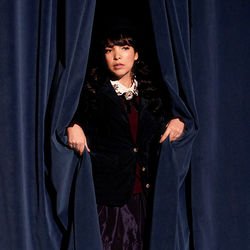
Indila, born Adila Sedraïa on June 26, 1984, in Paris, France, is a celebrated French singer-songwriter known for her unique blend of French pop, orchestral pop, and world music influences. With a rich cultural heritage that includes Algerian, Cambodian, Indian, and Egyptian roots, Indila brings a global touch to her emotive melodies and heartfelt lyrics.
She burst onto the music scene with her hit single "Dernière danse" in 2013, a song that became the first French-language track to exceed one billion views on YouTube by 2023. Her debut album, Mini World (2014), was a commercial success in France and internationally, earning critical acclaim and multiple awards, including the MTV Europe Music Award for Best French Artist in 2014. Known for her distinctive alto voice and poetic storytelling, Indila continues to captivate audiences with her soulful sound and evocative performances.
Indila tells a dramatic pop story about a man who refuses to let go of a lost romance. He spends his days standing still with a single flower, waiting in front of an old photograph: "Une rose à la main / A part elle il n'attend rien" [A rose in hand / Apart from her, he waits for nothing]. Other people probably think he has lost his mind, but she insists "Il n'est pas fou / Il l'aime c'est tout" [He is not crazy / He loves her, that is all]. For him, reality has faded away, and this memory is the only thing keeping him alive.
As the song shifts perspective, we hear direct pleas filled with guilt and desperate promises. The speaker begs for comfort ("Prends ma main / Promets moi que tout ira bien" [Take my hand / Promise me everything will be fine]), while admitting "J'ai été trop bête" [I was too foolish/stupid; "bête" literally means "beast" or "animal," but in everyday French it means "silly" or "foolish"]. The devotion turns absolute with dramatic offers of gold, waiting by the harbor, or even giving up a final breath: "Je t'offrirais mon dernier souffle de vie" [I would offer you my last breath of life]. With big lines like "L'amour fait d'un fou un roi" [Love makes a king out of a madman], Indila turns this stubborn, painful waiting into a full romantic myth.
Indila canta aquí dos historias que se cruzan. La primera es la de un hombre que espera a una mujer que ya no está, con los ojos clavados "Devant cette photo d'antan" (delante de esa foto de antaño). Sigue vivo, pero casi no habla: "Il vit mais parle à peine" (vive pero apenas habla). Cualquiera lo tomaría por loco, y el estribillo le contesta a todo el mundo: "Il, il n'est pas fou" (no, no está loco) y "Il l'aime c'est tout" (la ama, eso es todo). Ese "c'est tout" lo vas a oír muchísimo en francés, y equivale a nuestro "y punto". La imagen que se queda es la de él esperándola de pie, "Une rose à la main" (con una rosa en la mano).
A mitad de la canción entra otra voz, la de ella, y es mucho más desordenada. Pide perdón con "J'ai été trop bête" (he sido demasiado tonta), confiesa "J'n'sais plus aimer" (ya no sé amar) y enseguida salta a promesas enormes, como esperarlo en el puerto o darle "mon dernier souffle de vie" (mi último aliento de vida). Es un poco exagerado, y justo por eso funciona: suena a alguien que ya no sabe qué más ofrecer. Fíjate en "J'n'sais": es "je ne sais" tal como se dice en la calle, con las vocales tragadas. Y la mejor frase llega casi al final, "L'amour fait d'un fou un roi" (el amor convierte a un loco en rey), que le responde de lado al "no está loco" del principio.
Indila gives dramatic, cinematic energy right from the start in "Dernière Danse" (Last Dance). She opens by addressing her pain directly: "Oh ma douce souffrance" (Oh my sweet suffering), treating heartache like an unwelcome guest that just refuses to leave. Wandering alone in the Paris subway, she calls herself "un peu paro" (a bit paranoid) without her person, admitting that life feels like an empty backdrop that merely shines without any real meaning ("un décor qui brille / Vide de sens").
Instead of collapsing into sadness, she chooses motion. She literally decides to dance with the wind and rain ("Je danse avec le vent, la pluie") to outrun her grief. Paris becomes her personal stage where she runs through the noise and flies away ("je m'envole"). It is dramatic, grand, and turns the heavy feeling of loss into one big, sweeping theatrical escape.
¡Esta es una canción con una fuerza increíble! La cantante francesa Indila nos lleva de viaje por un París lleno de dolor y esperanza. La letra describe a una persona que se siente perdida y sola tras la ausencia de un ser querido. Dice: "Sans lui je suis un peu paro" [Sin él estoy un poco paranoica] y que su vida no es más que "un décor qui brille, vide de sens" [un decorado que brilla, vacío de sentido].
Para escapar de su "douce souffrance" [dulce sufrimiento], ella tiene un remedio: bailar. Pero no es un baile cualquiera. Ella literalmente "danse avec le vent, la pluie" [baila con el viento, la lluvia] en un intento desesperado por olvidar su pena. El baile se convierte en un vuelo, una forma de abandonarse y sentirse libre por toda la ciudad, mientras grita que su corazón es inmenso y que es una "enfant du monde" [niña del mundo].
Já se sentiu tão triste que a única coisa a fazer era dançar? É exatamente sobre isso que a cantora francesa Indila canta em "Dernière Danse". A letra descreve uma dor tão profunda que ela a chama de "ma douce souffrance" [minha doce sofrência]. Ela se sente pequena e perdida sem alguém especial, dizendo: "Sans lui je suis un peu paro" [sem ele eu sou um pouco paranoica] e que sua vida "n'est qu'un décor qui brille, vide de sens" [é apenas um cenário que brilha, vazio de sentido].
Para escapar, ela se joga em uma última dança desesperada. E não é uma dança qualquer. Ela imagina que pode mover o mundo: "Je remue le ciel, le jour, la nuit / Je danse avec le vent, la pluie" [Eu movo o céu, o dia, a noite / Eu danço com o vento, a chuva]. Ela corre pelas ruas de Paris, abandona-se à música e sente que pode voar para longe de sua dor. É uma canção sobre encontrar uma força quase mágica dentro da própria tristeza e usar a dança como uma forma de libertação.
„Love Story“ von der französischen Künstlerin Indila erzählt eine Geschichte von zwei Seiten. Zuerst lernen wir einen Mann kennen, dessen „L'âme en peine“ [Die Seele leidet]. Er wartet auf seine Liebe, schaut auf ein altes Foto und hält „Une rose à la main“ [Eine Rose in der Hand]. Die Leute denken vielleicht, er sei verrückt, aber der Text sagt uns: „Il, il n'est pas fou / Il y croit c'est tout“ [Er, er ist nicht verrückt / Er glaubt daran, das ist alles]. Er ist völlig in seiner eigenen Welt, in seiner Liebesgeschichte, und wartet auf sie.
Dann wechselt die Perspektive. Eine Frau scheint voller Reue zu sein. Sie gibt zu: „J'ai été trop bête“ [Ich war zu dumm] und fühlt, dass sie nicht mehr lieben kann. Doch ihre Liebe ist genauso stark. Sie verspricht alles, was sie hat: „Je serais riche et / Je t'offrirai tout mon or“ [Ich wäre reich und / würde dir all mein Gold anbieten] und sogar „mon dernier souffle de vie“ [meinen letzten Atemzug]. Am Ende geht es darum, wie die Liebe alles verändern kann, denn „L'amour fait d'un fou un roi“ [Die Liebe macht aus einem Narren einen König]. Es ist nicht nur seine oder ihre Geschichte, sondern ihre gemeinsame „love story“.
Indila abre esta canción comparándose directamente con una hoja seca tirada junto a una puerta: «Tout comme une feuille morte / Échouée près de ta porte» (Como una hoja muerta / Varada cerca de tu puerta). En lugar de rendirse, se sienta bajo un sauce llorón («Sous un saule pleureur») a esperar que el viento y la esperanza la levanten. Para ella, el frío de verdad no es el clima de fin de año, sino la soledad: lo deja claro cuando canta «Ton absence est mon seul hiver» (Tu ausencia es mi único invierno).
Toda la letra avanza al compás de las cuatro estaciones. Aunque empieza con la melancolía del otoño, la llegada de la otra persona trae el calor de vuelta con «Le printemps et l'été rayonnent» (La primavera y el verano resplandecen). Al final, la espera da frutos: ya no cuenta las horas y siente que «Il fait moins froid dehors» (Hace menos frío afuera). Es un tema pop dulce sobre tener paciencia y aguantar los días grises sabiendo que el sol siempre regresa.
French singer Indila tells a dramatic story about falling hard for someone the rest of the world looks down on. She begins by describing a working-class stonemason with dark hair, tanned skin, and roughed-up hands: Il taillait la pierre, fils d'ouvrier [He carved stone, the son of a worker]. When onlookers laugh at his humble status, she snaps back at their arrogance, calling them fake and shallow: Vous êtes faussement heureux, vous troquez vos valeurs [You are falsely happy, you trade your values]. To her, he is everything. Yet she keeps her feelings hidden while he is around, admitting, J'aimerais tellement lui dire mais je n'ose pas [I would love to tell him so much, but I dare not].
Then the mood crashes into grief. The man is suddenly gone, and she spirals completely out of control. That dizzy collapse powers the huge French chorus: Tourner dans le vide [Spinning in the void / spinning into emptiness]. In everyday French, le vide literally means an empty space or a vacuum, so she feels like she is spinning into nothingness with no ground beneath her feet. Later, she calls him mon beau soldat [my handsome soldier] and dreams of meeting him again dans l'au-delà [in the afterlife]. It turns a simple love story into a huge, dizzying waltz of longing, loss, and bitter memories stuck like tears she cannot wipe away.
¡Tienes que escuchar este temazo de Indila! La cantante francesa nos cuenta una historia de amor tan apasionada como dolorosa. Nos habla de un chico sencillo, un escultor de piedra de piel morena con las manos dañadas por el trabajo: "Il taillait la pierre, fils d'ouvrier" (Tallaba la piedra, hijo de obrero). Aunque la gente a su alrededor se burla de él por su origen humilde, para ella él lo es absolutamente todo. Ella defiende su esfuerzo frente a los que son superficiales y no entienden nada del corazón ni del trabajo duro.
Todo da un giro triste cuando él desaparece. La frase central del estribillo, "Tourner dans le vide" (Girar en el vacío), describe esa sensación de mareo y desesperación cuando el mundo se te viene abajo. Ella canta que desde que él se marchó no ha podido levantarse, guardando una lágrima atrapada en sus ojos mientras sueña con reencontrarse con su "beau soldat" (bello soldado) en el más allá: "J'espère le revoir là-bas dans l'au-delà" (Espero volver a verlo allá en el más allá). Es un tema dramático, directo y lleno de fuerza.
French singer Indila wastes zero time on subtle hints here: right from the jump, she is sending an emergency distress signal into the void. The chorus hits hard with "C'est un SOS, je suis touchée je suis à terre" ("It's an SOS, I'm hit, I'm on the ground") and asks the empty room, "y'a t-il quelqu'un" ("is there anyone there"). In French, saying you are à terre literally means knocked down to the dirt, but here it speaks to complete exhaustion. She walks away from everything because she felt detached from her own identity—"je n'étais plus moi" ("I wasn't myself anymore")—only to end up invisible, fighting what she calls the cold and the void.
What makes this track stand out is its dramatic, almost theatrical solitude. She declares herself royalty over her own misery with the line "J'ai toute ma peine comme royaume" ("I have all my sorrow as a kingdom"). Yet, right next to that melodramatic kingdom, she spots hope through prison bars: "Voir la lumière entre les barreaux / Et regarder comme le ciel est beau" ("Seeing the light between the bars / And looking at how beautiful the sky is"). She feels reduced to "un objet sans éclat" ("an object without shine" or an unpolished, dull object, using éclat to mean radiance or spark). Even when she feels like a total nobody, her voice keeps calling out across the distance to make sure someone, somewhere, is listening.
Piesa „Dernière Danse” a artistei franceze Indila transformă o stare de tristețe profundă într-o descărcare de energie pură. Refrenul este o adevărată explozie: personajul alege să ignore suferința și să danseze cu forțele naturii, spunând „Je danse avec le vent, la pluie” (Dansez cu vântul, cu ploaia) și cerând doar „Un peu d'amour, un brin de miel” (Puțină dragoste, un strop de miere). În ciuda acestei energii ritmate, versurile vorbesc direct despre un gol imens cauzat de o absență, o lume care devine doar „un décor qui brille, vide de sens” (un decor care strălucește, lipsit de sens).
Îmi place mult contrastul dintre melancolie și mișcare. Cântăreața rătăcește singură prin metrou și pe străzile capitalei franceze: „Dans tout Paris, je m'abandonne / Et je m'envole” (În tot Parisul, mă abandonez / Și îmi iau zborul). În text apare și un termen de argou francez interesant: „Sans lui je suis un peu paro” (Fără el sunt puțin paranoică), unde cuvântul paro este o prescurtare colocvială pentru „paranoică”. Deși își numește durerea „douce souffrance” (dulce suferință), piesa transmite o dorință clară de eliberare, declarând cu mândrie: „Je suis une enfant du monde” (Sunt un copil al lumii).
¡Prepárate para sentir! En "S.O.S.", Indila nos lleva a un viaje emocional profundo. La canción es un grito de ayuda, una llamada desesperada de alguien que se siente completamente perdido y solo. Imagina a alguien que ha llegado a un punto de quiebre, "C'est un SOS, je suis touchée je suis à terre" [Es un SOS, estoy herida, estoy en el suelo], y se pregunta si hay alguien que pueda escuchar su angustia.
La letra nos cuenta la historia de una persona que lo ha dejado todo, "J'ai tout quitté, mais ne m'en veux pas" [Lo dejé todo, pero no me culpes], porque ya no se reconocía a sí misma. Se siente tan hundida que nadie la ve, "Je suis tombée tellement bas / Que plus personne ne me voit" [Caí tan bajo / Que ya nadie me ve]. Es una lucha contra el vacío y el frío, deseando volver pero sin poder lograrlo. La soledad es tan grande que su pena es su único reino, "J'ai toute ma peine comme royaume" [Toda mi pena como reino]. Pero incluso en esa oscuridad, hay un pequeño rayo de esperanza, "Voir la lumière entre les barreaux / Et regarder comme le ciel est beau" [Ver la luz entre los barrotes / Y mirar qué hermoso es el cielo]. Es una canción que te hará reflexionar sobre la vulnerabilidad y la búsqueda de conexión.
Francuska wokalistka Indila zabiera nas w podróż przez pory roku, zaczynając od jesiennego chłodu. Utwór otwiera mocne porównanie: artystka czuje się niczym opadły liść, który wylądował pod drzwiami bliskiej osoby (Tout comme une feuille morte / Échouée près de ta porte – [Zupełnie jak zwiędły liść / Wyrzucony pod twoimi drzwiami]). Czeka pod płaczącą wierzbą na wiatr i nadzieję, które pozwolą jej wzbić się wyżej. Samotność jest tu prawdziwym mrozem, co doskonale oddaje wers Ton absence est mon seul hiver [Twoja nieobecność to moja jedyna zima].
Ta melancholia nie trwa jednak wiecznie, bo rytm piosenki napędzają zmieniające się barwy (Mille et une couleurs / Qui font battre mon cœur – [Tysiąc i jeden kolorów / Które sprawiają, że moje serce bije]). Gdy w tekście wreszcie nadchodzi wyczekiwana wiosna i lato, pojawia się ukochana osoba i nagle Il fait moins froid dehors [Na zewnątrz robi się mniej zimno]. To ciepła, pełna cierpliwości opowieść o tym, jak czyjaś obecność potrafi rozgonić największy chłód.
Esta canção da artista francesa Indila é uma história de amor dramática e cheia de emoção. Ela nos apresenta um homem com a "L'âme en peine" (A alma em sofrimento), que espera por sua amada segurando uma rosa. Para o mundo, ele pode parecer louco, mas a letra nos diz: "Il, il n'est pas fou / Il l'aime c'est tout" (Ele, ele não é louco / Ele a ama, é só isso). Ele a vê em todos os lugares e vive por essa espera, indiferente a tudo ao seu redor. É uma imagem de devoção total, quase tirada de um filme antigo.
De repente, a perspectiva muda e ouvimos a voz de uma mulher, talvez a pessoa que ele espera. Ela parece arrependida, admitindo "J'ai été trop bête" (Eu fui tão tola) e que não sabe mais amar. Ela promete lutar por esse amor, oferecendo tudo o que tem, até mesmo seu "dernier souffle de vie" (último sopro de vida). A canção termina com uma mensagem poderosa sobre como o amor pode transformar tudo, afirmando que "L'amour fait d'un fou un roi" (O amor faz de um louco um rei) e que vale a pena lutar pela sua própria "love story".
In this graceful French pop track, French singer Indila compares herself to a dried-up fallen leaf stranded right on someone's doorstep: "Tout comme une feuille morte / Échouée près de ta porte" (Just like a dead leaf / Washed up near your door). Instead of giving in to gloom, she sits beneath a weeping willow and patiently waits for a gust of wind to lift her up toward better days. She literally tracks her feelings through the weather. Coldness and autumn mirror being apart, spelled out in the striking line "Ton absence est mon seul hiver" (Your absence is my only winter). It is a clever twist: physical winter does not bother her half as much as an empty room.
There is also a sweet, whimsical side to her waiting game. She describes daydreaming with her head in the clouds, humming along whenever church bells chime: "Tête en l'air je fredonne / Quand les carillons sonnent" (Head in the clouds I hum / When the chimes ring). In French, the idiom avoir la tête en l'air literally means having your head in the air, meaning you are scatterbrained or daydreaming. As sunny days roll in, she greets her companion and decides that a whole lifetime feels as short as a single day on earth ("Toute une vie n'est qu'un seul jour sur terre"). By the final lines, she loses count of the hours under her willow tree, rocked until dawn because it simply feels warmer outside.
Fransız şarkıcı Indila'nın pop tarzındaki bu şarkısı, eski bir fotoğrafa bakıp giden sevgilisini bekleyen bir adamın hikayesiyle başlıyor. Şarkıda adam için "L'âme en peine" (Ruhu kederli) ve "Il vit mais parle à peine" (Yaşıyor ama neredeyse hiç konuşmuyor) deniyor. Çevresindekiler onun aklını kaçırdığını düşünebilir, ama sözler durumu çok net açıklıyor: "Il n'est pas fou, il l'aime c'est tout" (Deli değil o, sadece seviyor hepsi bu). Elinde bir gülle, boş gözlerle öylece bekliyor.
Sonrasında sözler çaresiz bir yalvarışa ve büyük vaatlere dönüşüyor. Pişmanlıklar ortaya saçılıyor: "Comme je regrette, non, je ne voulais pas tout ça" (Nasıl da pişmanım, hayır, bütün bunları istememiştim). Aşk için her şeyi feda etmeye hazır; hatta limanda beklemeyi ya da son nefesini vermeyi bile göze alıyor. Şarkının en can alıcı kısmı ise umudu anlatan şu sözler: "Une bougie peut illuminer la nuit" (Bir mum geceyi aydınlatabilir) ve "L'amour fait d'un fou un roi" (Aşk bir deliyi kral yapar). Kısacası karşılıksız kalsa bile sonuna kadar direnen, insanın gözünü karartan bir sevdayı dinliyoruz.
Run Run by the French singer Indila is a vibrant wake-up call to anyone stuck in the never-ending race for success. The lyrics paint a picture of someone sprinting after the jackpot—working nonstop, chasing promotions, and measuring life in paychecks. Indila warns that this pace can “break you in a moment,” draining your days, years, and even your health. The catchy chorus—“you run, run, run, never stop”—isn’t just a hook; it’s a flashing red light telling us to slow down, breathe, and stop sacrificing everything for a job.
In the second half of the song, Indila closes her eyes and imagines a sweeter reality: a cloud, an island, a ukulele, and zero stress. By contrasting this dream with the grind of métro, boulot, dodo (commute, work, sleep), she reminds us that life’s simple joys are waiting once we step off the hamster wheel. At its heart, Run Run encourages balance—work hard, yes, but leave space to love, laugh, and truly live.
Эта песня рассказывает историю любви, которая кажется почти сказкой. В ней есть два героя. Сначала мы знакомимся с мужчиной, чья душа полна печали: «L'âme en peine» (Душа в печали). Он живёт, но почти не говорит, и всё время ждёт свою возлюбленную, глядя на её старую фотографию. Окружающие могут подумать, что он сошёл с ума, но песня говорит нам: «Il, il n'est pas fou / Il y croit c'est tout» (Он, он не сумасшедший / Он просто верит, вот и всё). Он стоит с розой в руке, и ничто другое в мире для него не имеет значения.
Затем история переключается на женский голос. Возможно, это та самая женщина, которую он ждёт. Она полна сожалений и неуверенности. Она просит его взять её за руку и обещать, что всё будет хорошо, но тут же признаётся: «J'n'sais plus aimer» (Я больше не умею любить). Она готова отдать всё своё золото и даже «mon dernier souffle de vie» (последний вздох жизни), чтобы всё исправить. Песня заверяет нас, что любовь может творить чудеса, превращая безумца в короля, и что за свою историю любви стоит бороться.
Francuska wokalistka Indila w popowym utworze „Love Story” opowiada historię człowieka całkowicie pochłoniętego wspomnieniem dawnej miłości. Zaczyna się od bardzo plastycznego, smutnego obrazu: mężczyzna stoi samotnie ze starą fotografią w dłoni („Devant cette photo d'antan” [Przed tym dawnym zdjęciem]) i różą („Une rose à la main” [Z różą w ręku]). Ludzie wokół mogą myśleć, że postradał zmysły, bo rozmawia z kimś, kogo fizycznie nie ma, ale tekst tłumaczy to prosto: „Il, il n'est pas fou / Il y croit c'est tout” (On nie zwariował, po prostu w to wierzy). Cały otaczający go świat traci znaczenie, a on po prostu uparcie czeka na ukochaną.
W dalszej części perspektywa miesza się z pełnym żalu wyznaniem, gdzie padają słowa o zagubieniu: „J'n'sais plus aimer” (Już nie potrafię kochać) oraz „Comme je regrette” (Jak bardzo żałuję). Obietnice stają się wręcz skrajne, bo bohater deklaruje, że odda całe złoto, będzie czekać w porcie („Je t'attendrais sur le port” [Poczekam na ciebie w porcie]), a nawet odda swój ostatni oddech („mon dernier souffle de vie”). Zwróć uwagę na piękne francuskie przysłowiowe porównanie pod koniec: „L'amour fait d'un fou un roi” (Miłość robi z szaleńca króla). To opowieść o uczuciu tak wielkim, że zamienia zwykłą samotność w dramatyczną, niemal baśniową walkę o pamięć o drugiej osobie.
Piesa Love Story a artistei franceze Indila începe cu o imagine dramatică și foarte clară: un bărbat care abia mai vorbește („Il vit mais parle à peine” [Trăiește, dar abia vorbește]) și își așteaptă iubita pierdută în picioare, ținând un trandafir în mână („Une rose à la main” [Un trandafir în mână]), în fața unei fotografii vechi. Indila repetă că omul nu a înnebunit, ci pur și simplu o iubește și o vede peste tot („Il, il n'est pas fou / Il l'aime c'est tout” [Nu e nebun, o iubește și atât]). Atmosfera devine rapid sufocantă în jurul lui, iar prezentul își pierde sensul complet fără ea.
Pe măsură ce melodia înaintează, perspectiva se schimbă brusc spre dialog și regrete directe. Vocea cere iertare și recunoaște propria stângăcie: „J'n'sais plus aimer / J'ai été trop bête” [Nu mai știu să iubesc / Am fost prea prost / proastă]. Urmează promisiuni disperate, de la aur până la așteptarea în port sau chiar sacrificiul suprem: „Je t'offrirais mon dernier souffle de vie” [Ți-aș oferi ultima mea suflare de viață]. Spre final, piesa lasă totuși loc speranței prin versul optimist „Une bougie peut illuminer la nuit” [O lumânare poate lumina noaptea], amintindu-ne că dragostea poate transforma un nebun într-un rege („L'amour fait d'un fou un roi”).
In „Tourner Dans Le Vide“ nimmt uns die französische Sängerin Indila mit in eine dramatische Geschichte über eine große, ungleiche Liebe. Sie singt über einen Mann mit dunklem Teint und vom Steineschlagen zerschundenen Händen: „Il taillait la pierre, fils d'ouvrier“ („Er behauene Steine, Sohn eines Arbeiters“). Während andere über seine Herkunft lachen, verteidigt sie ihn leidenschaftlich gegen die oberflächliche Gesellschaft: „Vous êtes faussement heureux, vous troquez vos valeurs“ („Ihr seid falsch glücklich, ihr tauscht eure Werte ein“). Für sie war dieser fleißige Arbeiter schlichtweg ihr ganzes Universum.
Doch aus der Liebe wird ein Schmerz, der sie völlig aus der Bahn wirft. Nachdem er verschwindet oder stirbt – sie nennt ihn später „mon beau soldat“ („mein schöner Soldat“) und hofft auf ein Wiedersehen im Jenseits („dans l'au-delà“) –, bricht ihre Welt zusammen. Die namensgebende Wendung „tourner dans le vide“ bedeutet wörtlich „sich im Leeren drehen“: Sie beschreibt das Gefühl, haltlos im Kreis zu taumeln, wie ein Schwindel („les vertiges“), wenn ein Mensch plötzlich eine unerträgliche Leere hinterlässt.
In Indilas Hit „Dernière Danse“ geht es um eine Frau, die mit einem riesigen Schmerz kämpft. Sie beschreibt ihr Leid als „ma douce souffrance“ [mein süßes Leiden] und fragt sich, warum es immer wiederkommt. Ohne eine bestimmte Person fühlt sie sich verloren und unbedeutend: „Sans lui je suis un peu paro“ [Ohne ihn bin ich ein bisschen paranoid]. Sie wandert allein durch die Pariser Metro und ihr Leben fühlt sich an wie „un décor qui brille, vide de sens“ [eine glänzende Kulisse, leer an Sinn].
Ihre einzige Flucht ist das Tanzen. Aber das ist kein gewöhnlicher Tanz in einem Club. Sie tanzt, um ihren Schmerz zu vergessen, und wird dabei zu einer Naturgewalt. Sie singt: „Je remue le ciel, le jour, la nuit / Je danse avec le vent, la pluie“ [Ich bewege den Himmel, den Tag, die Nacht / Ich tanze mit dem Wind, dem Regen]. Durch diesen Tanz will sie sich befreien und wegfliegen, um alles neu zu beginnen. Es ist ein dramatischer und kraftvoller Song über den Versuch, sich aus tiefem Kummer herauszutanzen.
¡Prepárate para sentir! Indila, una artista francesa, nos trae una canción que es pura emoción. "Tu Ne M’Entends Pas" [Tú no me escuchas] es la historia de alguien que lo ha dado todo en una relación, pero siente que sus palabras y lágrimas caen en saco roto. La letra nos muestra a una persona que ve a su pareja tan absorta en el trabajo y en la "carrera por el oro" que se olvida de sí misma y de la relación. ¡Es un grito desesperado por ser vista y escuchada!
La cantante repite una y otra vez: "Y j'ne fais que parler, parler, parler, parler de toi / Ton nom j'l'ai crié, crié, crié sur tous les toits" [Y no hago más que hablar, hablar, hablar, hablar de ti / Tu nombre lo he gritado, gritado, gritado por todos los tejados]. Pero todo eso no sirve de nada si la otra persona no escucha. Es una canción sobre el amor incondicional, la frustración de no ser correspondido en la misma medida, y el miedo a ser olvidado. ¡Te va a encantar!

