Farfalle Lyrics in English by sangiovanni
Farfalle literally means "butterflies" and is the title of this massive hit song.
While we have a similar idiom in English ("butterflies in your stomach"), sangiovanni puts a unique spin on it. He first sings "Non volano farfalle" (Butterflies don't fly) to say his love isn't just a simple crush, but then creates a new poetic image: "Volano farfalle sulle lampadine" (Butterflies fly on the lightbulbs), comparing his attraction to an irresistible pull towards a bright light.
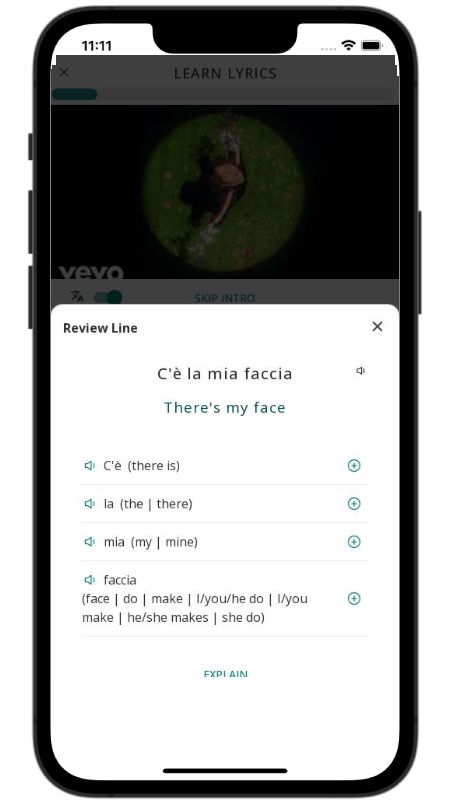
Italian artist sangiovanni takes a break from the outside world in this upbeat dance track, pulling us right into a cozy, cramped apartment. He laughs at seeing his own face plastered all over photos stuck on the fridge: "C'è la mia faccia e mi fa ridere" ("There's my face and it makes me laugh"). Even with bright city lights buzzing outside, the couple keeps the window shutters rolled down ("con le tapparelle chiuse"), hiding away in their own bubble. He is head-over-heels in love, admitting "non l'ho detto a nessuno che ho perso la testa" ("I haven't told anyone that I've lost my mind"). The modern world feels suffocating to him, so finding someone who feels like fresh air is everything.
The chorus flips a familiar phrase on its head. Instead of having butterflies in his stomach, he sings "non volano farfalle" ("butterflies aren't flying"), explaining that he feels numb and asks his partner to help him recover his feelings: "ho perso le emozioni me le ritrovi tu?" ("I lost my emotions, will you find them for me?"). He backs that up with the great idiom "non sto più nella pelle", literally meaning "I can no longer fit inside my skin," which is how Italians say they are bursting with excitement. For him, this partner is a literal lifeline. When he calls her "una botta di ossigeno in mezzo all'industria" ("a shot of oxygen in the middle of the industry"), you realize this dance beat is really about surviving a toxic, exhausting daily grind by running toward the only person who makes breathing easy.