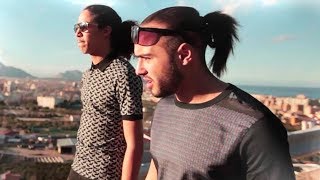
Baraque Au Bled Lyrics in English by Djadja & Dinaz
Bled is a fascinating and culturally rich word that literally translates to "homeland" or "village," often referring to one's ancestral village or country of origin, particularly in North Africa.
In "Baraque Au Bled," Djadja & Dinaz use it to express a common aspiration within their community: to build "baraques au bled" (houses in the homeland). This signifies a desire for success and a return to their roots, investing in their family's origins. It's a word that carries deep cultural meaning beyond a simple translation.
The hook is a wish list from the Meaux tower blocks: "On veut des baraques au bled" (We want houses back home), "Avoir le bif d'un Qatari" (To have a Qatari's money), and a promise to a girl that comes with a deadline, "Attends encore deux-trois ans" (Wait two or three more years). The bled is the family's home country, and a house built there is the classic proof that the money made in France was real. The chorus answers from the other side of that dream: "Y a plus d'cœur sous l'pare-balles" (There's no heart left under the bulletproof vest), a narrator who can hurt people if he has to but says that for now he's doing things right.
The verses fill in how he got here. Djadja & Dinaz list the schools they passed through in Meaux, then the street job that replaced them: "J'étais mineur, j'tenais un terrain" (I was a minor, I ran a dealing spot). A phone call gets traced to a building at Fleury-Mérogis, the prison south of Paris, and the verse closes on a garden image, "Y a grave des plantes qu'ont fané" (A lot of plants have withered) / "Et y a un coin du jardin qu'a fleuri" (And one corner of the garden has bloomed): most of the people he grew up with didn't make it out, and a few did.