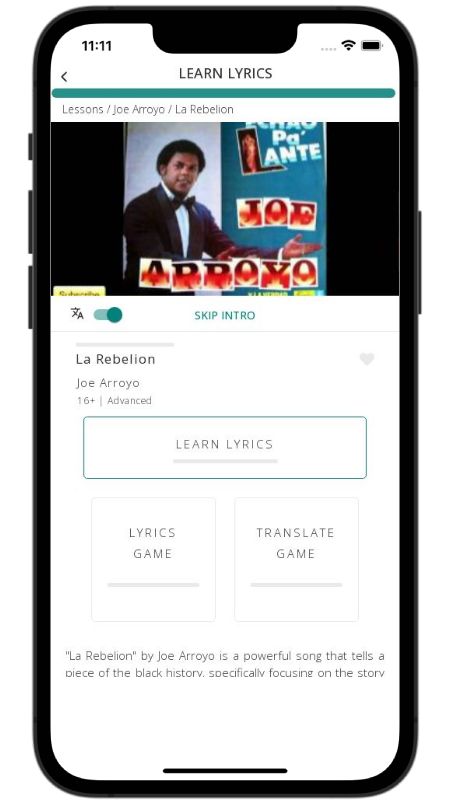
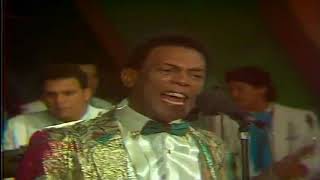
La Rebelion Lyrics in English by Joe Arroyo
Chapetón is an old Caribbean term for a Spaniard freshly arrived in the colonies, often associated with power and oppression.
Joe Arroyo shouts it at the abusive slave-owner, turning the word into a sharp accusation that captures the song’s rebellion against colonial injustice. Its historical flavor and striking sound make it a memorable, conversation-starting word to learn.
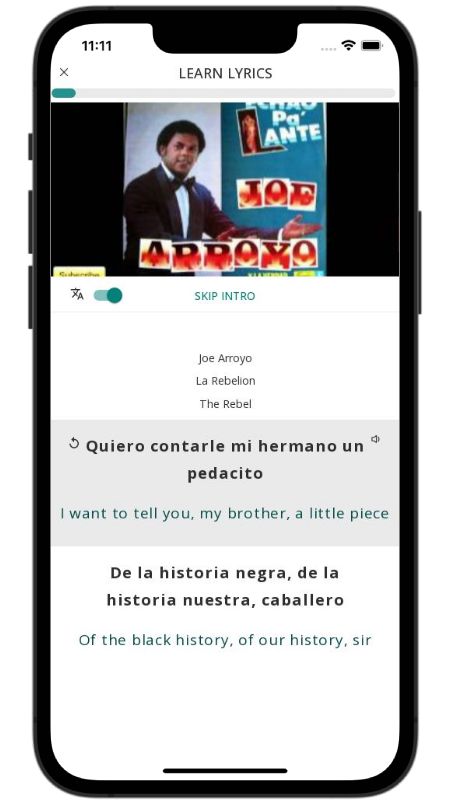
Colombian salsa legend Joe Arroyo starts this track by telling you straight out: he wants to tell "un pedacito de la historia negra, de la historia nuestra" [a little piece of Black history, of our history]. The story rewinds to the 1600s in Cartagena, where enslaved Africans arrived in chains to face "esclavitud perpetua" [perpetual slavery]. But this is not a history textbook; it is a story about a married African couple whose Spanish master mistreats them. When the master strikes the wife—"y a su negra le pegó" [and he hit his Black woman]—the husband refuses to take it. He snaps, fights back, and defends his love.
That brings us to the line everyone shouts at the top of their lungs across Latin America: "¡No le pegue a mi negra!" [Don't hit my Black woman!]. Joe uses distinct regional vocabulary throughout the track. He calls the Spaniard a "chapetón", an old colonial slang term used in South America for newly arrived Spaniards, and mocks him as having an "alma prieta" [dark soul]. He also shifts between words for woman, jumping from "negra" to the Caribbean street slang "jeva" [girl / girlfriend], while demanding respect ("esa negra se me respeta" [that Black woman must be respected]). Between the wild brass breaks and calling out his pianist Chelito de Castro, Joe turns a dark colonial memory of Cartagena's beaches into an explosive shout for dignity and payback.