Learn Spanish With Los Dos Carnales with these 23 Song Recommendations (Full Translations Included!)
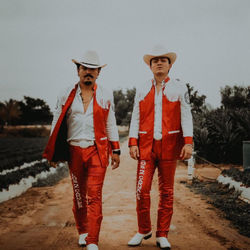
Los Dos Carnales bring us a song of regret and moving on with "Ya Pa' Que" [Why now?]. It's a story told from the perspective of someone who was left behind but has since found new love and perspective. The singer reflects on a past relationship where they held on tight, even forgetting their own arms, and hoped their ex would return.
But time changes things, and the singer now asks, "¿Ya para qué?" [Why now?] They admit, "ya no siento lo mismo" [I don't feel the same anymore] and that what they once felt for their ex, they now feel "por alguien más" [for someone else]. It's a blunt message: the ex had their chance and "perdiste la oportunidad" [you lost the opportunity]. The singer even says, "yo no merezco el bien que solamente jugar a la puerta grande" [I don't deserve someone who only plays the big door], implying they deserve someone who's all in, not just playing games. It's a powerful song about realizing your worth and moving forward.
This song, "Le Compre La Muerte A Mi Hijo" by Los Dos Carnales, is a really sad story about a father's regret and loss. It starts with a dedication to Beto Quintanilla and La Raza del Norte, especially from Reynosa. The father describes buying his son a beautiful, fully equipped truck, a "camarón" [shrimp], that only needed to talk. He remembers the envy it caused in the neighborhood when his son drove it.
But then the mood shifts dramatically. The father realizes, with heartbreaking clarity, "nunca pensé que yo a mi hijo la muerte le había comprado" [I never thought I had bought death for my son]. His son was only 15, and the father recalls seeing "alas" [wings] on the truck when his son drove it, wishing his "pollo no tenía plumas y yo quería que volara" [chicken didn't have feathers and I wanted him to fly]. The joy turns to tragedy when he receives news of a fatal accident. He blames himself for giving his son everything, saying, "sin alas yo pa que se las ponía" [without wings, why did I put them on him?]. He reflects that things have their time, and by wanting to give his son everything, he might have failed him, suggesting that instead of giving them everything, parents should prepare their children.
Get ready to ride into a story about a legendary figure! Los Dos Carnales kick things off by proudly shouting out San Pedro, Coahuila, and then jump right into a tale about Francisco Villa.
This song is all about honoring Francisco Villa, a man they say "hizo mucho por las pobres que hizo mucho su nación" [did a lot for the poor, who did a lot for his nation] and was the "brazo derecho" [right arm] of the Revolution. The lyrics describe a dramatic moment when Huerta tried to have Villa assassinated, sending him to the firing squad. Two shots were fired, but amazingly, "ninguna le pegó" [none hit him]! What saved him? A telegram from Don Francisco I. Madero. The song then reveals the surprising reason for this whole near-death experience: "esa muerte discusión fue por cuestión de una yegua" [that death discussion was about a mare], a horse Villa valued as much as his famous Siete Leguas. It's a fascinating look at how even a small thing can lead to big drama for a historical hero!
Get ready to dive into "El Duba" by Los Dos Carnales! This song is a cool, honest look at a hardworking life, where the singer isn't "presumido" [presumptuous] but always on the grind. They're bringing the heat, "llevamos la lumbre" [we carry the fire], and know that some people might not like it. It's all about facing challenges head-on, like taking "al toro por los cuernos" [the bull by the horns].
There's a real sense of loyalty and respect here, especially for a "viejo respetable amigo" [respectable old friend] and a compadre named Salvador Chaco, who's in heaven. The lyrics talk about earning a living "muy honradamente" [very honorably] and having a distinct style, which includes "rayas en mi cuerpo" [stripes on my body] – maybe tattoos? – and a silver chain. The singer makes it clear they're not looking for trouble, "no he sido de pleito" [I haven't been one for fights], but they won't be pushed around either, because that's what their dad taught them. It's a song about staying true to yourself and your roots.
Get ready to dive into "La Vida Bonita" by Los Dos Carnales! This song is a heartfelt look at life, friendship, and family. The singer starts by talking about having "dudas en mi pecho bajo las 57 lentes" [doubts in my chest under the 57 lenses], hinting at a past that wasn't always easy. But despite that, he's standing strong, surrounded by good friends who have always supported him. He makes it clear that he's the kind of person who gives without expecting anything in return: "cuando alguien me necesita vamos dale de mi mano sin esperar nada a cambio" [when someone needs me, I give them my hand without expecting anything in return].
It's a song about staying true to yourself and your roots. He mentions "la puerta de zacate siempre con queso y pan su casa" [the door of Zacatecas always with cheese and bread at his house], which sounds like a warm, welcoming home. He also talks about overcoming challenges, remembering an accident in 2011 that "marcado" [marked] him, but he's still "parado" [standing]. The song ends with a beautiful shout-out to his family, especially his mother, saying "sabes que la quiero mucho y ella le debo la vida" [you know I love her very much and I owe her my life]. It's a powerful message about gratitude and living life with your head held high.
In "Mi Vida," which translates to "My Life," Los Dos Carnales tell a powerful story of rising from humble beginnings. The singer contrasts his past struggles with the lives of those who have only known wealth, asking, "What do you know about poverty if you've lived among riches?" He reflects on a time when he was seen as "the crazy guy on the block," dealing with stress and sadness fueled by others' insults. Through it all, he remained resilient, determined not to be just another face in the crowd.
The song is also a tribute to loyalty and staying true to your roots. The singer celebrates the partner who stood by him through everything and the real friends who arrived when the time was right. He acknowledges his success with a powerful image: even though he can now afford meat, he never forgets the days of eating beans—a symbol of never forgetting where you came from. Ultimately, "Mi Vida" is a personal corrido, a musical story inviting listeners who have faced similar struggles to identify with his journey of perseverance and loyalty.
Los Dos Carnales' "Home Run" is a fantastic song about overcoming people who doubted you. The singer talks about how when he had nothing, people treated him badly, like their "perro" [dog]. They wanted him to stay down, thinking he'd always be "batallando por lo mismo" [struggling with the same things].
But now things are different! He's found success, thanks to God, and he's not shy about telling those who "me humillaron y me hicieron menos" [humiliated me and made me feel small] to "miren dónde estoy" [look where I am]. He uses a great baseball metaphor, saying they wanted to see him "ponchado" [struck out], but instead, "en una rectita, les metí un home run" [on a straight pitch, I hit a home run]! He's got "casa llena" [bases loaded] now, and he's just leaving his haters "viendo" [watching] as he moves forward. It's all about hard work paying off and proving people wrong.
This song tells a story from the perspective of a person in prison. The lyrics paint a vivid picture of life in a cold cell, where the singer has lost count of the days and feels forgotten by many people on the outside. Time seems to blur, as they've missed many birthdays and their sense of time has faded.
The strongest theme is the deep longing for family. The singer describes the pain of reading letters from their mother, which are stained with tears. They miss everything about their family, even their father's scolding, and lose their appetite when they think of their brothers. The only visitors they have are their loved ones, and the hope of one day being with them again is what keeps them strong.
Los Dos Carnales and Los Rieleros Del Norte team up for "Capricho Maldito," a song about a man completely regretting a bad decision. He's in a "cuarto vacío" [empty room] with "botellas tiradas" [bottles thrown around], crying his heart out. He blames himself, saying "ese es mi destino y es mi merecido por haber herido a quien más me amaba" [this is my destiny and I deserve it for having hurt the one I loved most].
He left a good woman, who was with him through thick and thin, for someone he calls an "aventurera" [adventurer] – someone who just played with him. He calls this mistake a "capricho maldito" [cursed whim] and a "locura de un rato" [momentary madness]. Because of this bad choice, he lost "lo más bonito que Dios me había dado" [the most beautiful thing God had given me]. Now he's just lost, crying for his children and his partner. It's a pretty direct and emotional story of regret!
Ever felt like life didn't turn out exactly how you imagined it as a kid? That's the heart of "Los Caminos De La Vida" (The Paths of Life). The singer reflects on how he used to think life was easy, but has now discovered its paths are "muy difícil de andarlos" (very difficult to walk). He contrasts his carefree childhood, when his mother worked tirelessly to provide everything he needed, with the harsh realities of adulthood.
Now grown up, the singer sees his mother is tired from a lifetime of sacrifice for him and his brother. The song becomes a powerful promise to her. He feels it's his turn to take care of her, declaring, "por mi vieja lucharé hasta el fin" (for my old lady, I will fight until the end). It's a touching story about growing up, realizing the sacrifices our parents make, and the deep desire to repay their love and hard work before it's too late.
In "100pre," which sounds like the Spanish word for "always," the singer tells a powerful story of rising from humble beginnings. He emphasizes that his success isn't an accident; it's the result of hard work and gratitude for his parents and God. The lyrics paint a picture of a difficult journey, but one where he never gave up. He uses a beautiful metaphor to describe his resilience against those who doubted him: "Me enterraron pero soy semilla" (They buried me, but I am a seed), meaning that their attempts to stop him only made him grow stronger.
The song also shares some hard-earned wisdom. The singer values life itself more than material things, declaring that what truly matters is waking up to a new day. He has learned to be careful about who he trusts, noting that while many people are around during good times, they often disappear when things get tough. Because of this, he now keeps a smaller circle, choosing his friends wisely and confiding his deepest feelings only to God. It's a declaration of strength, faith, and the will to always keep moving forward.
Get ready for "El 13" by Los Dos Carnales! This song is a declaration of strength and a warning to anyone who might underestimate the singer. He's got "escuela del gallero" [school of the rooster fighter], meaning he's tough and knows how to handle himself in a fight, born and raised in Tijuana. He's not afraid of anything, and while he might not look impressive, his word is his bond: "no creen que está impreso bien pero vale mi palabra" [they don't think it's well-printed but my word is worth it]. He emphasizes the need to be smart in his line of work, not to brag about being brave, but he's definitely not someone to mess with, whether it's "por las buenas o por las malas" [by good ways or by bad ways].
He also talks about being cautious, because "las envidias nunca valgan" [envy is never worth it]. He mentions his sister and cousins watching over him from heaven, calling them his "ángeles de batalla" [battle angels]. He thanks his mentors and God for their advice and teachings, which have kept him on the right path. The song ends with a shout-out to Tijuana and its brave people, and a thanks to the "señor de los gallos" [lord of the roosters] for getting him into the fight. It's a powerful track about loyalty, resilience, and respect.
Have you ever just felt grateful to be alive and wanted to celebrate it? That's exactly what Los Dos Carnales are doing in "Sigo Vivo" [I'm Still Alive]! It's a song about appreciating life and all the people who have helped you along the way. The singer reflects on his life, thinking about his dad's lessons and asking his mom for forgiveness if he wasn't the best son, but knowing she always loved him anyway.
He's ready to "festejar porque estamos vivos" [celebrate because we are alive]! He wants to have a drink with his loved ones and keep moving forward, no matter what. It's a really positive message about living life to the fullest, being thankful for what you have, and trusting that God is always with you. "Vida solo hay una y mira, sigo vivo" [There's only one life and look, I'm still alive] – it's a great reminder to make the most of every day!
Get ready for a song that's perfect for those bittersweet holiday moments! Los Dos Carnales kick things off by wishing everyone happy holidays, but then they quickly dive into a tale of longing and lost love. The singer is facing Christmas and New Year's with a heavy heart, worried that the new year will only bring "nuevas tristezas" [new sadness] and "soledad" [loneliness].
He hopes his former love is happy, but he also wishes that "algún recuerdo de mi amor este llegará" [some memory of my love will reach you]. He imagines her perhaps finding comfort in someone else's arms, even forgetting him over time. But if fate grants him one wish, he asks for a "regalo un día de reyes" [Three Kings' Day gift]: to hold her close again. He even says he'd "descartó la vida" [discard life] for that moment! It's a dramatic, heartfelt plea, imagining a future where, if she's unhappy, she'll return to him, finding his arms waiting for her at "una cruz en el final del camino" [a cross at the end of the road]. Talk about a powerful image of enduring devotion!
Get ready to meet Don Arturo! This song by Los Dos Carnales introduces us to a powerful and respected figure, almost like a legend. He's a man who commanded the seas, earning the title "señor de los mares" [lord of the seas] because of all the ships that arrived. He was a force everywhere, from "el agua por la tierra por el aire" [by water, by land, by air], and he brought in "kilotoneladas" [kilotons] from Colombia.
But Don Arturo isn't just about power; he's a family man. The lyrics tell us he "puso el pecho y no le importa dar la vida" [put his chest out and didn't care about giving his life] for his family. He also didn't tolerate betrayal and always defended what was just. He sounds like a true leader, someone who knew how to use his money well, sharing it because he understood its purpose. We even get a glimpse of his luxurious life with "más de 100 aviones boludos carros de lujo y sábanas" [more than 100 planes, fancy cars, and sheets], and how even famous artists lined up to greet him. This song really paints a picture of a man who was larger than life!
In "Ranchero De Más," Los Dos Carnales deliver a powerful anthem about staying true to your roots. The singer proudly declares he's a ranchero (a man from the countryside) through and through. He doesn't need a Rolex watch or Gucci clothes to feel valuable; he's perfectly happy wearing his traditional huaraches (sandals), even if others look down on them. While he now has new cars, successful businesses, and even a private jet, he insists that wealth will never change who he is at his core.
This song is also a story of overcoming the odds. The singer reflects on his difficult youth, when he was seen as a nobody. Through relentless hard work, he turned his life around, proving wrong everyone who doubted him. But even with all his success, his priorities remain clear. He states that more than any mountain of gold, his true treasure is his family. This track is a celebration of humility, hard work, and remembering where you come from.
Ever made a late-night call you probably shouldn't have? That's the heart of this song by Los Dos Carnales. The singer makes a drunken phone call to his ex after 5 AM, admitting he lost control after seeing photos of her with another man. The title, "Se Me Soltó El Hocico," is a very informal Mexican phrase that literally means "my snout came loose." It's a colorful way of saying he couldn't keep his mouth shut and said everything he was feeling without a filter.
Fueled by alcohol and jealousy, the singer tells his ex that he knows she's not being honest. She claims the new guy is "just a friend," but the singer isn't buying it. He sees her giving the new guy hugs and kisses and recognizes the same "tricks" she used when they first met. While he apologizes for the late call, it's clear he called to vent his anger and hurt, unable to hold back his true feelings any longer.
Get ready to party with Los Dos Carnales and their song "La Fiesta"! This track is all about letting loose and having a good time, even if it means being a bit of a borracho [drunkard]. The singer is ready to throw a party and wants everyone to join in, especially one special person he's trying to win over.
He's not afraid to admit he's a "borracho pero buen muchacho" [a drunkard but a good guy] and he's totally smitten. He's trying to convince this person to give him their heart, not a fancy car like a jeepeta or a force atenta. He just wants to embrace them and tell them how much he cares. Even when his friends want to leave, he stays because he wants to be with this person. It's a fun, heartfelt plea to just enjoy the moment and maybe, just maybe, fall in love at the fiesta!
Los Dos Carnales bring us a classic tale of heartbreak and trying to forget someone in "Otra Botella." Our singer is really going through it after a breakup, feeling like he's been through a battle: "saliendo la bronca de esa que tú me metiste" [coming out of the mess you put me in]. He's trying to move on, even telling himself, "prohibido extrañarme y te quiero consciente que tú eso y si se hay qué bonito mentiste" [it's forbidden to miss me and I want you to be aware that you... oh, how beautifully you lied].
To cope, he turns to his friends and, you guessed it, another bottle. He's trying to drown his sorrows, saying "otra botella para olvidarme bella doncella" [another bottle to forget you, beautiful maiden]. He even imagines her beauty being washed away with wine, a pretty vivid image! He admits that she's "muy compartibles" [very shareable], which is a blunt way of saying she's moved on. Despite the pain, he still offers his heart, even if it's a bit broken: "el corazón te regalo" [I give you my heart]. It's a relatable story of trying to heal after a tough breakup, even if it means leaning on a few drinks.
Ever been in a relationship where a ringing phone or a social media notification leads to a huge fight? That's the world of "La Tóxica." The singer describes a love affair full of jealousy and suspicion, all centered around his phone and social media activity. His partner questions every call, every WhatsApp message, and every "like" he gives on Facebook. He calls her "tóxica," or toxic, for her constant jealousy and angry outbursts, which have even resulted in a broken iPhone!
Despite the drama, the singer declares that he loves her just the way she is. He finds her constant accusations tiring, but he's willing to put up with it all for her smile, her eyes, and her kisses. He even offers to delete his social media to prove his love. The song captures that complicated feeling of being in a difficult, fiery relationship but choosing to stay because the good parts feel worth it.
Get ready to dive into "La Vida De Rancho" by Los Dos Carnales, a song that tells a powerful story of humble beginnings and hard work. The lyrics kick off by introducing us to the singer, the sixth of seven brothers, born on a ranch. He shares how his family's support and their inherent humility have always been with him, even as he carries "tiro en la cartera" [money in his wallet] now.
This song is a journey through memory, recalling the tough but cherished times working "en la cueva" [in the cave] just to earn enough for tortillas. It's a reminder that every struggle has served a purpose, leading them from nothing to where they are today. They started from scratch, even selling sand "para pagar nuestra escuela" [to pay for our school], all to escape poverty. It's a song about living life to the fullest because, as they say, "esta vida tan sólo un rato" [this life is only for a moment]. The singer also gives a shout-out to his family, especially his father, for teaching him how to fight for life. And yes, he admits he loves games, especially watching horses race, because "al final de todo nada nos llevamos" [in the end, we take nothing with us].
Have you ever been so heartbroken that you just want to tell your ex exactly how it is? That's the vibe of Los Dos Carnales' "No Estaré Aquí" [I Won't Be Here]. It's a powerful song about a love that went wrong, where one person is left picking up the pieces.
The singer looks back at the good times, like the first roses he gave and the first kiss he stole, remembering how his kisses used to
Get ready to shake off your worries with Los Dos Carnales and their song "El Estrés"! This track is all about living life to the fullest, celebrating successes, and not letting anything get you down. The singer tells us, "en esta noche me quito el estrés" [tonight I shake off the stress], making it clear that good times are a priority.
He shares his philosophy: "la vida para mí es un juego" [life for me is a game], and he enjoys the good things, surrounded by a small, trusted circle of friends. He's humble, saying "mi pasado fue discreto no me avergüenza decir de dónde vengo" [my past was discreet, I'm not ashamed to say where I come from], and he's not afraid of risks. Whether he's flying in "avionetas" [small planes] or riding a "buen caballo" [good horse] with a great woman by his side, he's living life on his own terms. It's a fun reminder to enjoy the journey and not let stress win!

