Learn Spanish With Los Alameños De La Sierra with these 17 Song Recommendations (Full Translations Included!)
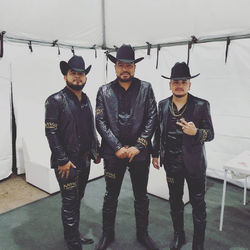
This song, "El '01' (En Vivo)" by Los Alameños De La Sierra, introduces us to a powerful figure, known as "El 01." He's someone who has earned his place through courage, as the lyrics say he "ha llegado a donde está por su valor" [has gotten to where he is because of his valor]. He's well-respected and takes care of his people, as the song repeats, "atiende muy bien su gente" [he takes very good care of his people].
The song also hints at a life lived with a certain kind of protection, noting that "el gobierno los protege en todos sus movimientos" [the government protects them in all their movements]. It's a look into the world of someone who is both feared and respected, with a strong sense of loyalty and a powerful presence.
This song by Los Alameños De La Sierra is a really interesting look at how people change when they get money. The singer talks about how he's still the same person, even though he now has "dinero" [money] and "acero" [steel, perhaps symbolizing wealth or power]. He says his "escuela de cero" [school of zero] means he came from nothing, and that keeps him grounded. It's a blunt reminder that true value comes from who you are, not what you have.
He also talks about people who only come around when things are good, saying he doesn't want them near him "tras que las malas que fueron" [after how bad they were]. He's learned to stand up for himself, declaring "ya se me acabó es el miedo" [that fear is over for me]. The image of the "costal lleno de piedras" [sack full of stones] is really powerful, suggesting he's carrying the weight of past experiences or perhaps the burdens of his new success. It's a song about staying true to yourself and recognizing who your real friends are, even when your circumstances change dramatically.
Get ready to dive into "El Caballero" by Los Alameños De La Sierra! This song feels like a heartfelt goodbye, as the singer is "tomando trabajando con ser de despedida" [drinking, working, with a sense of farewell]. It's a moment of reflection, sharing with "amigos y compañeros" [friends and companions].
He talks about the "diferencia en mi gobierno con lo poquito que tengo" [difference in my rule with the little I have], but he's proud that he "nunca los presos" [never imprisoned them]. There's a sense of honesty here, as he says "soy sincera" [I am sincere] and admits, "no cuento con mi arma" [I don't count on my weapon]. It's a song about being true to yourself and your friends, even when things are winding down.
This live performance, titled "Popurri Variado," which translates to "Varied Medley," is a high-energy mix of different song snippets and live stage talk. The band encourages the audience to dance and have a good time, saying they've created the right atmosphere: "para bailar para pasarla / Mejor" ("to dance to have a / Better time").
Throughout the medley, the lyrics jump between different poetic images. We hear lines about aspiration, like being a "planta que quiere alcanzar" ("plant that wants to reach"), and a call for creativity where "La inventiva baila en este espacio" ("Inventiveness dances in this space"). The song is a whirlwind of energy, designed to get the crowd moving and enjoying the live show.
This live version of "La Canelera" by Los Alameños De La Sierra kicks off with some fun banter, as the band warms up and jokes about the cold weather. They're clearly having a good time, getting ready to play for the crowd.
The song itself is a playful warning to a love interest. The singer tells this person, "no te quiero ver con otro niño antes de carrera" [I don't want to see you with another guy before a race], implying a sense of possession and a desire for loyalty. He even says, "si hay alguno que ese pique porque te trate, con este manual para esa madre mía los dolores" [if there's someone who gets mad because he treats you, with this manual for that mother of mine the pains], which is a pretty blunt way of saying he's ready to fight for them! It's all about staking a claim and making sure everyone knows it. The song ends with the band moving on to more melodies, keeping the party going.
This song is a powerful goodbye, a moment of walking away from a relationship where the singer feels misunderstood and unappreciated. They believed this love would last forever, even calling it a "amor del fuero de toda la vida" [love of a lifetime], but now they realize it's not enough.
The singer is blunt, saying "no tuviste el valor de ver quién soy" [you didn't have the courage to see who I am]. They're not going to cry or say they don't deserve this, because they admit it's "probable que lo merezco pero no lo quiero" [probable that I deserve it but I don't want it]. It's a sad farewell, but one made with a sense of self-respect and the hope for something better, as they declare, "me despido de ti y me voy" [I say goodbye to you and I'm leaving].
This song tells a thrilling story of escape! It starts right in the middle of the action, at "las 2 de la mañana" [2 in the morning], when a famous man named Rodrigo breaks out of prison. The lyrics mention he was taken "con los jueces de más atrás" [with the judges from behind], suggesting a legal battle he was ready to face.
But Rodrigo isn't one to stay put! He wants to be "libre como es el viento" [free as the wind]. We learn that his beloved wife was waiting for him, leaving "la camioneta con la máquina en sentido" [the truck with the engine running] – talk about a getaway plan! With the help of a friendly guard, Rodrigo successfully escapes, leaving "atrás quedaba al presidio" [the prison behind]. He's off to the mountains, knowing "la ley donde quiera ahorita me buscas" [the law will look for me everywhere now], but he's free!
Los Alameños De La Sierra are here to tell it like it is in "La Envidia (En Vivo)"! This song is a straightforward look at how envy can mess things up, especially when money gets involved. The lyrics talk about how quickly things can change, reminding us, "Ahorita estarás arriba, mañana quien sabe" [Today you'll be on top, tomorrow who knows]. It's a blunt warning about not getting too comfortable because danger is always lurking, even from those closest to you.
They really hit home with the idea that sometimes "la familia se convierte en enemigo" [family turns into an enemy] when money enters the picture. The song also points out those fake friends who pretend to be on your side but are really just waiting "para mirarte en el suelo" [to see you on the ground]. It's a reminder to stay humble and remember that life gives double to those who are generous, not those who are greedy. This track is a real wake-up call about the harsh realities of envy and betrayal.
Have you ever messed up so badly that you just can't stop thinking about it? That's exactly where the singer of Los Alameños De La Sierra's "El Tropezón" is. He's spending all day and night "maldiciendo" [cursing] because he doesn't have his love anymore. He misses her so much, calling her "mi vida" [my life] and "mi mujer" [my woman].
He totally owns up to his mistakes, saying "reconozco que yo te he fallado" [I recognize that I have failed you] and he's really sorry if he hurt her. He feels like he's paying a high price for comparing "la sal con la miel" [salt with honey]. He desperately wants her to know that what happened was just "un tropezón" [a stumble] and not that he actually changed her for someone else. He's begging for another chance, promising "nunca más te fallaré" [I will never fail you again] and that he'll "portar bien" [behave well]. He even fondly remembers their first time together "allá en el arroyo" [there by the stream], when she told him he was everything and she'd never lose him. It's a really heartfelt plea for forgiveness and a second chance!
Get ready to dive into the emotional world of Los Alameños De La Sierra with "Los Compromisos"! This song is a dramatic plea from a partner who feels neglected and suspects infidelity. The lyrics open with a direct accusation: "Fernando nunca quieres pasar tiempo conmigo prefieres estar en tus negocios o en tus cenas pero seguro tienes un amante total" [Fernando, you never want to spend time with me, you prefer to be at your businesses or at your dinners, but surely you have a lover]. Ouch!
Despite the accusations, the singer is desperate to reconnect and offers everything: "déjame tomarte de la mano déjame mirarte a los ojos" [let me take your hand, let me look into your eyes]. They promise deep intimacy, asking to know "donde guardas tus secretos los más oscuros y los más bellos" [where you keep your secrets, the darkest and the most beautiful]. The generosity is immense, offering comfort and strength: "Te regalo mis piernas me cuesta tu cabeza en ella" [I give you my legs, rest your head on them] and "te regalo mil fuerzas con salas cada que no tenga" [I give you a thousand strengths, wings whenever you don't have them]. It's a powerful declaration of undying love and commitment, even amidst the pain: "te voy a llamar hasta morir" [I'm going to call you until I die]. The song even ends with a desperate, repeated cry: "Fernando Fernando Fernando Fernando no me cuelgues Fernando" [Fernando, Fernando, Fernando, Fernando, don't hang up on me, Fernando], really driving home the raw emotion.
Get ready to party with Los Alameños De La Sierra's "La Pachanga"! This song drops us right into a private fiesta in the Durango mountains, a big wedding where important guests from Juliana and Chihuahua are arriving. The bride and groom are already kissing, and the party is in full swing.
It sounds like quite the gathering! The lyrics mention "carrocería blindada para proteger al pesado" [armored car body to protect the heavy one], suggesting some serious people are in attendance. Guests are arriving arm-in-arm with the women they love, and a "polvo blanco" [white powder] is also mentioned as something that's never missing from the tables. The band is playing corridos, and everyone is celebrating the happy couple and this amazing "pachanga" [party]!
Get ready to meet a very special burro in Los Alameños De La Sierra's "La Burra Orejona (En Vivo)"! This song is a fun, lively description of a donkey that's quite a character. The singer describes their burro as having "dos orejas" [two ears] and being "muy orejona" [very big-eared], which is where the song gets its name.
What makes this burro so unique? Well, it's got a mischievous spirit! The lyrics tell us that when it bows down, it's like it's pulling out a pistol, "sacó la pistola" [pulled out the pistol], and if it doesn't walk, they "esfuerzo la cola" [force its tail]. Plus, this burro has "la misma mirada que tú" [the same look as you] and sometimes "se revuelve igualita que tú" [gets mixed up just like you], adding a playful comparison to a person. And get this: the burro even has "garrapatas" [ticks] on its ears and "juanetes de las cuatro patas" [bunions on all four feet]! It's a humorous and detailed portrait of a beloved, if a little quirky, animal.
Get ready to move with Los Alameños De La Sierra's "Son Habladas (En Vivo)"! This live track is all about the joy of dancing and the lively atmosphere of a party. The singer talks about what "the man wants in his palm" [lo que quiere el hombre en la palma], referring to the music and the rhythm that makes everyone want to dance.
He mentions knowing a "guitar player, comrade of heart" [guitarrero camarada de corazón] and encourages everyone to "dance, dance, dance" [baila, baila, baila] to this "tasty rhythm" [ritmo sabroso]. The song also playfully repeats the line "I don't want the grated coconut" [no quiero el coco rayado], which seems to be a fun, nonsensical phrase that adds to the lighthearted party vibe. It's a call to let loose and enjoy the music, especially with the mention of Guadalajara, suggesting a lively Mexican party scene.
This song is all about missing someone so much it hurts! The singer is really struggling without their love, saying, "me falta todo en la vida" [I lack everything in life]. It's a feeling of desperation, wondering what to do because they miss them so much they're going crazy: "me extrañó tanto que voy a enloquecer" [I miss you so much that I'm going to go crazy].
They're pleading for their love to come back, calling them "amor divino" [divine love] and hoping they'll return soon. Even though there's a fear that their love might never come back ("a veces pienso que tú nunca vendrán" [sometimes I think you will never come]), they're determined to wait, believing that destiny will bring them back together eventually. It's a powerful declaration of longing and hope, wanting to see, have, and kiss their love, and give them their whole heart: "quiero verte tenerte y besarte y entregarte todo mi corazón" [I want to see you, have you, and kiss you, and give you all my heart].
Get ready to meet Sayed in this corrido! Los Alameños De La Sierra sing about a man from Chihuahua, Mexico, specifically from Parral, who was born to good parents. He's a hard worker, always looking after his ranch and fields.
Sayed is a passionate guy who loves flying planes and working with cattle. You might even see him riding his horse around the fields! He's also a loyal friend, always there for his team, and he has friends everywhere thanks to his helpful nature. The song also touches on a sad moment in his family's past, mentioning a cross on a hill that marks a tragic accident where his father lost his life. It's a song that really celebrates Sayed's life, his work, and his connections.
Get ready to dive into the world of "La Costurera" by Los Alameños De La Sierra! This song tells the story of a young man who grew up without much, remembering how on Christmas Day, December 25th, his tree had no surprises, and on January 6th, he waited for the Three Kings, but they never arrived. His mother, a seamstress, couldn't afford clothes for him, making exclusive dresses and shirts for others while her own son went without.
But this isn't a sad story for long! The song quickly shifts to how this young man, at ten years old, was already imagining what he would do. His father gave him the tools to start making money, and he quickly developed a strong character and style. He's a sharp guy, making deals with "los gringos" and always having a plan. He's smart about his business, keeping track of suppliers and quantities, and he's not afraid to get his hands dirty. He enjoys the simple things, like a little bag of "Don Julio 70" and old music. He's a man who solves problems with "23 palabras" [23 words] and doesn't tolerate disrespect. Though the song doesn't give his name, it paints a clear picture of a man who respects his mother and makes sure she doesn't suffer anymore.
Get ready to meet the person behind "El De Charay"! This song is all about the singer's journey and who he is today. He makes it clear from the start that he's a "gente viva" [lively person] and that he's got his "playera bien puesta" [shirt on right], ready to win. He's known as "gente de los mejores" [one of the best people] and he's proud of his last name.
He tells us about his past struggles, how he had to "batallar" [fight] and that he grew up with just his mom. He traveled "por las fronteras para poder progresar" [through the borders to progress], working hard to get where he is. Now, he's at the service of Iván, ready to do whatever is commanded, and he's got people to "pelear y también para ayudar" [fight and also to help]. He also gives a shout-out to Juan, who offered him friendship, and to everyone who stands with him "en las buenas y en las malas" [in good times and bad]. He's heading to "rancho las brasas para empezarme a festejar" [the ranch Las Brasas to start celebrating] – sounds like a well-deserved party!

