Learn Italian With gIANMARIA with these 16 Song Recommendations (Full Translations Included!)
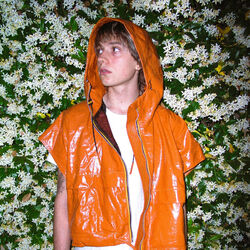
"Io Ti Conosco" is about connecting with someone you've never actually met, through a voice on the radio. The singer describes himself as just a sound coming from the end of a bar, a small station lost in a big city, but he believes it still reaches the one person who needs it.
The chorus repeats a simple exchange: I know you, you know me, you tolerate me, you remind me. It's the strange intimacy of a listener who feels truly understood by a stranger's voice, even from far away, even when it hurts that they can't be there in person.
By the end, that distance closes. The singer sings his way toward the person listening until they're finally together, lips against lips, and neither of them is alone anymore. It's a quiet love story built entirely out of sound.
POPOLARE feels like gIANMARIA standing in the middle of a buzzing Italian piazza, hands cupped around his mouth, yelling one big question: “How do I reach every single one of you?” The song is a lively tug-of-war between the dream of being “popular” and the deeper hunger to speak a universal language that anyone—shy neighbor, lost traveler, night-shift worker—can understand. He pictures himself as the city fog, quietly slipping into every home, ready to bring comfort and connection while still keeping his roots as a small-town kid with big thoughts.
Each beat bounces between hope and doubt. He invents new words, begs listeners to “shout if you can’t hear me,” and wonders if he’ll become the problem among the crowd. Behind the catchy hook lies a heartfelt message: real popularity is not about flashing lights but about being heard, understood, and never feeling alone. “POPOLARE” invites you to shout back, share your own homemade language, and build a place where every voice can echo.
"Testamento" is written like a literal last will. The narrator moves through the people in his life one by one, Anna, Luce, Christian, Mati, telling each "vado via" (I'm leaving) and leaving them a small piece of himself: a hug, a smile, a comfort, a promise. He's not settling money or property. He's handing out memories and asking the people left behind to pass them along to each other.
Under the goodbyes runs a colder, more personal ache. The chorus keeps circling the same wound: "E premi dove mi fa male" (you press right where it hurts), and no matter how far he tries to walk away, he can't remember where he was even going. By the end he's "much colder," still writing his will, still stuck between leaving and staying.
Read as a breakup rather than a literal death, the song is about how hard it is to really let go of someone. Giving away your things is the easy part. Giving away the memory of them is the will nobody can actually write.
gIANMARIA’s MOSTRO invites us into the restless diary of a young man who keeps moving but cannot outrun his own thoughts. He kisses someone on the forehead, shrinks himself to avoid trouble, even drives onto the lawn just to get home sooner. Meanwhile life keeps shifting; his sister is now a mother, new rooms and beds replace the old ones, and he suddenly realises he might have missed something important because he was 'distracted by me.'
In the chorus he pleads, Do I look like a monster? The question is part apology, part self-doubt. He is afraid that by following everyone else he will leave himself behind, yet solitude also scares him. The song jumps between urgent bursts of action and quiet confessions, mirroring that push-and-pull. Far from being a horror story, MOSTRO is a candid reflection on growing up, making mistakes, and learning that the real monster is often just our own uncertainty.
What happens when the scariest thing in the room is your own reflection? In Paura di me gIANMARIA transforms that fear into a raw, rhythm-driven confession. Through images of sleepless, smoke-filled nights and friendships he has literally set on fire, the young Italian artist admits he often attacks the people who care about him and ignores his own wellbeing. The chant-like “Paura di me” (“I’m afraid of myself”) becomes a warning siren: he is both the culprit and the casualty of his self-made chaos.
Yet beneath all that self-sabotage flickers a stubborn spark of hope. gIANMARIA pictures a future birthday surrounded by regrets, wonders if he should kneel and forgive himself, and recalls how boredom and a curious heart once pushed him to explore the world. By the final refrain he chooses to leave the wreckage behind and face forward, trembling but determined. The result is an addictive anthem that turns vulnerability into a sing-along battle cry, inviting every listener to stare down their own inner monsters and step into the unknown anyway.
This song is about feeling emotionally worn down after giving too much of yourself to people who didn't deserve it, and finally putting up a wall.
The verses are raw and a little self-destructive: a soul "soaked in oil," memories nailed to a wall, still missing a thousand pieces of himself. He remembers being happy but not the moment it fell apart, and he's not sure who he even is anymore once you strip away everything time has changed.
The chorus, "tieni giu le mani" ("keep your hands off"), is the turning point. After settling for "another thousand mouths" instead of something real, he's done letting people touch what's left of him.
The second verse admits the ugly parts too: being awkward, being an ass, drinking to make peace with the wrong person, giving someone all his strength only to watch them take it and move on. The repeated chorus at the end isn't anger so much as a boundary he's finally willing to hold.
"Non Dovevo Farlo" ("I Didn't Have To Do It") follows one night between two strangers who meet by chance and end up walking home together in the rain, sharing a taxi search, soaked shoes, and the kind of closeness that only seems to exist after midnight.
The song builds its whole feeling around the contrast between night and day. Under the moon, the narrator is honest and open, ready to talk about this person all night. Once the sun comes up, that same voice goes silent. The chorus keeps flipping between "I shouldn't have done it" and "but I had to," which captures exactly how it feels to be pulled toward someone even while doubting the whole thing.
There is also a running idea of masks: the person the narrator was the night before is gone by morning, and now it feels like the other person is the one wearing it. By the end, there is a small, uncertain hope that tomorrow they might find each other again, but the song never fully resolves whether the night meant something real or was simply a moment that could not survive daylight.
"Tutto Quello Che Ho" ("All I Have") is gIANMARIA's diary of a breakup that won't let go. He can't sleep, the city feels too crowded to breathe in, and every day still turns back to her, who is now, quite literally, all he has left.
The chorus repeats that thought like a wound he keeps pressing on: looking for her is pointless since she's moved to another country, yet she still lives inside him, in the off-key songs he used to sing just for her.
In between, he pictures the expected path to "becoming a man": no questions asked, an unhappy marriage, a steady job, and rejects it, choosing solitude and the ache of missing her over that quiet, resigned kind of adulthood.
gIANMARIA sings about the quiet kind of loneliness that shows up even when someone is close by. He describes feeling hollow, "a piece of glass" that people can see straight through, while a partner tells him he'll never change or grow up.
The chorus turns that loneliness over, wondering if being alone is something he deserves, or just what keeps happening to him. By the end, he realizes his partner has lost just as much time as he has, so the ache isn't his alone. It's a song about feeling emotionally invisible in a relationship, and finding a small, sad kind of comfort in shared exhaustion.
"Sassi Alla Finestra" ("Stones At The Window") is about the push and pull of an early relationship, torn between wanting to see someone and being scared to.
The title image comes from an old, low-tech way of getting someone's attention at night: throwing a small stone at their window instead of calling out loud. The singer imagines doing exactly that, then losing his nerve and running off before she even comes outside. He would rather have a quiet, empty city ("la città spenta") than actually face her.
Around that central image are scenes of ordinary life getting in the way: family dinners, long days, and the awkwardness of sneaking out late just to be alone together. He also admits to going looking for her, half worried, half like a child looking for his mother, and to losing his temper instead of just listening.
By the end he is tired of throwing stones with nothing to show for it, but the chorus keeps repeating, showing he is stuck in the same loop of wanting to get close and then backing away.
“Migliore Amico” is a heartfelt conversation gIANMARIA holds with the one person who never really leaves his side: himself. Wandering through a city he finds uninspiring, squeezed between strangers and barking dogs on a tram, he notices how alien he feels among the daily hustle. Rather than escaping into a bar or following the crowd, the singer turns inward, admitting that life’s usual script has always kept him at arm’s length. Amid loneliness, crushed expectations, and the search for attention, he discovers unexpected comfort – “my best friend is me.”
The song paints a vivid picture of the ups and downs of self-companionship: crying on his own shoulder, telling himself little lies, sulking in silence, then making up by taking himself out to dinner. These playful yet vulnerable images highlight how we can be both our harshest critics and our strongest supporters. In the end, gIANMARIA transforms isolation into self-acceptance, reminding listeners that taking care of ourselves – arguments, reconciliations, and all – can be the first step toward finding real belonging in the world.
"Falliro" is gIANMARIA's honest look at self-doubt and the fear of letting people down. He keeps circling back to the word "Fallirò" ("I will fail"), even as someone close to him insists he won't.
The verses paint a restless, late-night city life: crowded rooms, awkward conversations, and a sense that adulthood hasn't turned out the way he expected. A story about his grandfather, who gave up his own ambitions and never got a pension, becomes a quiet symbol for the pressure to succeed and the cost of chasing a dream that might not pay off.
By the end, the song sits with that uncertainty instead of resolving it. Believing in someone doesn't erase their fear of falling short, and gIANMARIA lets that tension stay unresolved.
"Disco Dance" is a bittersweet portrait of a young woman who stays home alone every Saturday night while everyone else goes out. The title is ironic: instead of dancing, she is stuck in her room staring at the ceiling, keeping secrets, and filling the boredom any way she can.
Underneath the loneliness is a wariness about trust. She has been let down by promises that never held up, and she no longer believes a boy's words easily. She dreams of getting away from it all, even as she quietly judges herself for not managing to feel as free as everyone else seems to.
It is a song about isolation hiding in plain sight, about wanting connection while protecting yourself from being hurt again, and about the quiet ache of watching the world have fun without you.
"Astronauti" uses space as a metaphor for a relationship that has drifted apart. The narrator describes floating alone, short of air, in a room stripped of anything alive - no rain, no warmth, nothing left.
He admits that choosing his career over the relationship left him isolated long before the breakup, and that he might have been better off without her.
The chorus imagines two astronauts locked in a dying capsule, each having to choose who survives and who is left behind. It's a dramatic way of saying that staying together the way they are means one of them has to give something up.
The final verses look back at the relationship itself: two people forced together, unsure if any of it was real, who never really let anyone else in. The song ends on the same impossible choice repeated - choose him, choose her - with no easy answer.
CUORE invites you to a dance party where the strobe lights are memories and the beat is a stubborn heart that refuses to quit. Over a pulsing pop-rock backdrop, gIANMARIA paints the picture of a lanky, off-beat lover who keeps stepping on his partner’s toes — literally and emotionally — yet cannot stop asking her to stay. Every verse flips between witty self-mockery and raw confession: he lowers the TV just to hear the neighbors, books a dream trip for two even though he is traveling alone, and imagines his ex dancing right on top of the heart she just ripped out.
The song’s core message is a playful paradox. Heartbreak hurts, but it also makes us move. gIANMARIA shows that even when days end in darkness, when radios and parties feel pointless, the heart keeps searching for rhythm and connection. By daring his ex to “take the heart and dance on it,” he turns vulnerability into a challenge: go ahead, break me again — my heart will still find its way back. It is a catchy reminder that love’s bruises rarely stop us from lacing up for one more song.
"Rapporti&Piante" ("Relationships & Plants") builds its whole song around one extended metaphor: love and family ties are living things that need tending, and they can wither just like the plants gIANMARIA keeps mentioning.
He opens by comparing himself and the people around him to ants and seedlings, fed on "water and sugar" until "some pesticide" kills them off — a bleak, almost fatalistic way of saying how fragile and small we all are. From there he moves into a specific relationship: someone who plants roots in him ("mi pianti," which is also a pun on "mi piangi," "you cry on me") and then leaves him in a "nursery with the other guys," passed around like just another plant among many.
The chorus leans hard into that double meaning of "piante" (plants) and "pianti" (cries/tears), tying growth and grief together. A grandmother's plant dying stands in for a family loss, and the cramped, high-rise apartment life he describes — plants stuck "on the sixth floor in an industrial area" — mirrors how boxed-in and disconnected he feels in his relationships, even while living surrounded by people.
By the end, the song settles into a quieter, more reflective tone: two people touching without really connecting, imagining a future where they meet again as strangers. It's a song about how relationships, like plants, need real care to survive — and about what's left when that care runs out.

