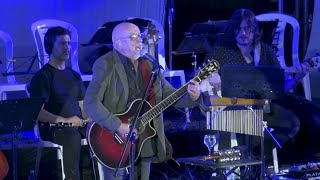
Junio Lyrics in English by Juan Carlos Baglietto, Lito Vitale
Pedregosa translates to "stony" or "rocky". It's a descriptive word that evokes a strong visual and tactile image, making it more interesting than common adjectives.
In the song, the lyric "el corazón que está latiendo en cada uno es una sed pedregosa" (the heart that is beating in each one is a stony thirst) uses pedregosa metaphorically. It suggests a deep, unquenchable thirst that is hard and unyielding, like a rocky terrain, conveying a sense of struggle and difficulty in satisfying one's desires or needs.
This song, "Junio," feels like a powerful, almost stream-of-consciousness reflection on memory, loss, and the harsh realities of life, especially in winter. The singer talks about how what's happening today feels like it already happened a long time ago: "lo que va a pasar hoy pasó hace tanto" [what's going to happen today happened so long ago]. There's a sense of foreboding, of not seeing "las predicciones del espanto" [the predictions of horror] that would steal his sleep.
The lyrics paint a picture of a tough winter, where a loved one's comforting presence is far away. The line "junio mirad el rojo aquí en la espalda" [June, look at the red here on my back] is really striking, suggesting a wound or a burden. He talks about the "cárcel de yo vista" [prison of self-view] and how everyone has their own struggles, but "la cruz de todos es la misma" [everyone's cross is the same]. The song also touches on social themes, mentioning "el rojo de piquete" [the red of the picket line] and a "apellido muerto de 20 años" [a dead surname of 20 years], which hints at a history of struggle and perhaps political or social unrest. It's a raw, emotional journey through personal pain and shared human experience, all wrapped up in a longing for a lost love to return: "para que vuelva mi enamorada" [so that my beloved returns].