Learn Spanish With Virlan Garcia with these 23 Song Recommendations (Full Translations Included!)
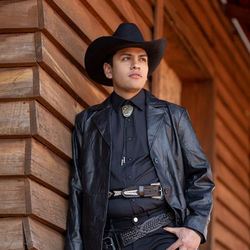
Virlán García was born Jesús Virlán Báez García in Guasave, Sinaloa, in 1997, and put out his first album, Pobre o Criminal, in 2015. He sings, plays guitar and writes his own material, and guitarist Carlos Gómez was part of his group from the start.
He moves between norteño, sierreño, banda and corridos, and has also written songs for Gerardo Ortiz. His albums include Y Cambió Mi Suerte (2016), Te Comparto (2018), Híbrido (2021), his first release with Sony Music México, and Corridos Alternativos (2023). His best-known songs include "En Dónde Está Tu Amor" and "Quiero Reintentarlo", which came out as a single in 2018.
In "Mi Entorno," Virlan Garcia reflects on how success has changed his life and the people around him. He sings about consciously improving his surroundings ("Mi entorno he mejorado") by carefully choosing who he keeps close—a chosen family that he considers sacred. He notices that people who once ignored him now greet him because he has money ("Ya me saludan porque hay billete"), and he questions why they seek him out now when he no longer needs them.
Despite this, the song carries a strong message about his core values. His main project in life is ensuring his family is well, and his religion is simply to be a good person, knowing that God is watching ("Dios me vigila"). He advises listeners to help true friends, because you never know what the future holds. Ultimately, he embraces a carefree attitude, letting time run its course while he focuses on his path and enjoying life before "la flaca"—a slang term for Death—comes to call.
В этой песне мексиканский артист Вирлан Гарсия говорит о том, как изменился его круг общения и его взгляд на жизнь. «Mi entorno he mejorado» [Я улучшил своё окружение], а люди рядом с ним стали «familia que uno escoge» [семьёй, которую выбираешь сам]. Он замечает, что некоторые начали здороваться с ним только потому, что у него появились деньги: «Ya me saludan porque hay billete» [Теперь со мной здороваются, потому что есть деньги]. Слово billete здесь значит не просто «банкнота», а деньги вообще. А выражение «engordo la paca» [я утолщаю пачку денег] звучит как разговорный способ сказать, что он зарабатывает и увеличивает свои накопления.
При этом герой не хочет забывать о доброте. «Por eso es bueno echarle la mano» [Поэтому хорошо протянуть руку помощи] означает помочь другу или брату, ведь «no sabes qué hay debajo del surco» [ты не знаешь, что находится под бороздой]. Это образ того, что за внешностью человека и его обстоятельствами может скрываться многое. Его главная цель проста: «Que esté bien la familia» [Чтобы с семьёй всё было хорошо]. Он старается быть хорошим, потому что верит, что Бог за ним наблюдает, и не пытается полностью контролировать завтрашний день. В финале появляется чёрный юмор: «Antes de que por mí venga la flaca» [До того как за мной придёт костлявая]. La flaca, буквально «худая», здесь означает смерть. Поэтому песня звучит одновременно уверенно и трезво: идти своим путём, беречь выбранных близких, помогать людям и успеть пожить, пока время идёт.
Dans « Mi Entorno », Virlan García parle de l’entourage qu’il a choisi et de la vie qu’il essaie d’améliorer. « Mi entorno he mejorado, los que cargo a mi lado » [J’ai amélioré mon entourage, ceux que je garde à mes côtés] : pour lui, les personnes proches comptent davantage que les simples connaissances. Il avance, gagne de l’argent avec « engordo la paca » [je fais grossir la liasse de billets], tout en sachant que le temps passe. « Antes de que por mí venga la flaca » [avant que la Maigre ne vienne me chercher] est une façon familière de parler de la mort, presque avec un sourire noir.
Le morceau devient plus méfiant quand il remarque que certaines personnes le saluent maintenant qu’il a de l’argent : « Ya me saludan porque hay billete » [maintenant, ils me saluent parce qu’il y a de l’argent]. Il répond à leurs reproches en gardant ses distances, mais il défend aussi la solidarité : « Por eso es bueno echarle la mano » [c’est pour cela qu’il est bon de donner un coup de main]. La phrase « Porque no sabes qué hay debajo del surco » [car tu ne sais pas ce qu’il y a sous le sillon] rappelle qu’on ne connaît pas les difficultés cachées derrière la vie de quelqu’un. Sa priorité reste claire : « Mi proyecto en la vida, que esté bien la familia » [mon projet dans la vie, c’est que ma famille aille bien]. Il appelle sa famille choisie « sagrados » [sacrés], place la bonté au centre de sa religion et laisse l’avenir entre les mains du temps, avec une dernière idée assez drôle : les personnes qui ne se tourmentent pas sont « de la mente bien avanzados » [très avancées dans leur façon de penser].
In “Mi Entorno” kijkt de Mexicaanse zanger Virlan García naar de mensen om hem heen en naar de keuzes die hij onderweg maakt. De titel betekent “Mijn omgeving”. Hij zegt: “Mi entorno he mejorado” [Mijn omgeving is verbeterd], omdat hij bewuster kiest wie dichtbij hem blijft. “Los que cargo a mi lado” [Degenen die ik aan mijn zijde meedraag] gaat niet alleen over vrienden, maar ook over de zelfgekozen familie die voor hem heilig is. Tegelijk merkt hij dat sommige mensen hem nu groeten omdat hij geld heeft: “Ya me saludan porque hay billete” [Nu groeten ze me omdat er geld is]. Dat klinkt droog en een beetje spottend. Volgens hem is hij niet veranderd, maar zijn de mensen om hem heen veranderd.
De song heeft ook een duidelijke levensles: help anderen, want je weet nooit wat er onder het oppervlak speelt. “Por eso es bueno echarle la mano” [Daarom is het goed om iemand een handje te helpen] kan zowel een vriend als een broer betekenen. Zijn eigen plan is eenvoudig: dat het goed gaat met zijn familie, goed zijn omdat God meekijkt, en de tijd laten lopen zonder zich overal druk over te maken. Tussen het geld verdienen door denkt hij ook aan de dood: “Antes de que por mí venga la flaca” [Voordat de magere vrouw voor mij komt], een speelse bijnaam voor de dood. Daardoor krijgt zijn boodschap extra vaart: volg je pad en zorg voor je mensen, maar vergeet niet dat morgen nooit helemaal vastligt.
Virlan García’nın, Meksikalı bir sanatçı olarak seslendirdiği “Mi Entorno” başlığı “Çevrem” ya da “Etrafımdaki insanlar” demek. Şarkı, anlatıcının yanında taşıdığı insanları değiştirdiğini ve artık çevresini daha seçici kurduğunu söylüyor: “Mi entorno he mejorado, los que cargo a mi lado” [Çevremi iyileştirdim, yanımda taşıdığım insanları seçtim]. Ona göre kendisi değişmemiş, insanlar para kazandığını görünce yaklaşmaya başlamış: “Uno no cambia, cambia la gente / Ya me saludan porque hay billete” [İnsan değişmez, insanlar değişir / Artık para var diye bana selam veriyorlar]. “Billete” burada kâğıt para, yani maddi durum anlamında kullanılan günlük bir ifade. “Engordo la paca” [Para destesini büyütüyorum] da kazancını artırma imgesi; “la flaca” [zayıf kadın] ise ölümün kişileştirilmiş, biraz kara mizahlı hâli. Anlatıcı, ölüm gelmeden önce yoluna devam edip parasını artırmak istiyor.
Şarkının en sıcak tarafı, seçilmiş ailesine verdiği değer: “Familia que uno escoge / Que pa’ mí son sagrados” [İnsanın seçtiği aile / Benim için kutsaldırlar]. Hayat projesi oldukça açık: “Que esté bien la familia” [Ailenin iyi olması]. Ayrıca başkalarına yardım etmeyi öğütlüyor: “Por eso es bueno echarle la mano” [Bu yüzden yardım elini uzatmak iyidir]. “Echarle la mano”, birine destek olmak için kullanılan Meksika İspanyolcası bir deyim. “Porque no sabes qué hay debajo del surco” [Çünkü oluğun altında ne olduğunu bilmiyorsun] dizesi ise toprağın altında ne saklı olduğunu bilemeyeceğimizi söyler; yani insanların görünmeyen yüklerini ya da hayatın ne getireceğini hemen bilemeyiz. Sonunda anlatıcı yarını kontrol etmeye çalışmak yerine “Dejo que el tiempo corra” [Zamanın akmasına izin veriyorum] diyor. Para, ölüm, seçilmiş aile ve Tanrı’nın onu izlediğine dair inanç aynı sözlerde buluşuyor: biraz sert, biraz komik, ama aile konusunda son derece net bir yaşam anlayışı.
I ”Mi Entorno” berättar Virlan García, en artist från Mexiko, om hur hans omgivning har förändrats när han fått mer pengar och valt noggrannare vilka han har nära sig. I raden ”Ya me saludan porque hay billete” [”Nu hälsar de på mig eftersom det finns pengar”] är billete ett vardagligt ord för pengar. Han tycker att människor lätt ändrar inställning när någon får det bättre, men svarar torrt: ”Uno no cambia, cambia la gente” [”Man själv förändras inte, det är människorna som förändras”]. När han sjunger ”engordo la paca” [”jag gör penningbunten tjockare”] och nämner ”la flaca” [”den magra”], är döden personifierad som en mager kvinna som en dag kommer och skrattar åt att ingen slipper undan.
Det viktigaste för honom är ändå de människor han själv har valt: ”Familia que uno escoge” [”familj som man väljer själv”]. Han vill att familjen ska må bra, ser det som sin livsuppgift att vara god och säger att Gud vakar över honom. Samtidigt uppmanar han lyssnaren att hjälpa andra: ”echarle la mano” [”räcka någon en hjälpande hand”], oavsett om det gäller en vän eller en bror. Den lite gåtfulla bilden ”no sabes qué hay debajo del surco” [”du vet inte vad som finns under fåran”] påminner om att man inte känner till vad som ligger bakom en annan människas situation. Mellan pengar, misstänksamma bekanta och tankar på morgondagen väljer han att följa sin väg och låta tiden gå.
„Mi Entorno” to piosenka o zmianie własnego otoczenia i o tym, kto naprawdę zasługuje na miejsce obok. Podmiot mówi: „Mi entorno he mejorado” [Poprawiłem swoje otoczenie], a ludzi, których ma przy sobie, nazywa wybraną rodziną i osobami świętymi. Jednocześnie zauważa, że niektórzy zaczęli go pozdrawiać dopiero wtedy, gdy pojawiły się pieniądze: „Ya me saludan porque hay billete” [Teraz mnie pozdrawiają, bo są pieniądze]. Brzmi to trochę jak wyrzut, ale też jak chłodna obserwacja: kiedy człowiek się zmienia, zmieniają się również ludzie wokół niego.
W tekście jest sporo meksykańskiego, potocznego języka. „Engordo la paca” [Powiększam plik pieniędzy] oznacza zarabianie i odkładanie gotówki, a „la flaca” [chuda] to żartobliwe określenie śmierci, która może przyjść w każdej chwili. Dlatego bohater idzie swoją drogą, dba o rodzinę i przypomina: „Por eso es bueno echarle la mano” [Dlatego dobrze jest komuś pomóc]. Wyrażenie „echarle la mano” znaczy podać komuś pomocną dłoń. Dodaje też, że nie wiadomo, „qué hay debajo del surco” [co znajduje się pod bruzdą], czyli że nie znamy trudów i historii ukrytych pod powierzchnią. Jego życiowy plan jest prosty: żeby rodzinie dobrze się wiodło, być dobrym, bo „Dios me vigila” [Bóg mnie obserwuje], a przyszłość zostawić czasowi.
In „Mi Entorno“ schaut Virlan García auf die Menschen und Werte, die ihn heute umgeben. Er sagt: „Mi entorno he mejorado“ [Mein Umfeld hat sich verbessert] und meint damit vor allem die Leute, die er an seiner Seite hält. Manche grüßen ihn jetzt, weil er Geld hat: „Ya me saludan porque hay billete“ [Jetzt grüßen sie mich, weil Geld da ist]. Das klingt ziemlich direkt und ein bisschen bitter. Er bleibt nach eigener Aussage derselbe, während sich die Menschen um ihn herum verändern. „Engordo la paca“ bedeutet wörtlich, dass er das Geldbündel dicker macht. Zusammen mit „antes de que por mí venga la flaca“ [bevor die Dürre zu mir kommt] ist das eine scherzhafte, makabre Anspielung auf den Tod: Er will seinen Weg weitergehen und vorsorgen, solange er noch Zeit hat.
Besonders schön ist sein Bild von der selbst gewählten Familie: „Familia que uno escoge“ [Familie, die man sich aussucht]. Für ihn sind diese Menschen heilig, und sein Lebensprojekt ist schlicht, dass es der Familie gut geht. Seine persönliche Religion beschreibt er so: „ser bueno“ [gut zu sein], weil Gott ihn beobachtet. Außerdem bittet er darum, anderen zu helfen, ob Freund oder Bruder, denn „no sabes qué hay debajo del surco“ [du weißt nicht, was unter der Furche liegt]. Das ist ein bildhafter Hinweis darauf, dass man nie weiß, was jemand unter seiner Oberfläche oder in seiner Geschichte trägt. Die Botschaft bleibt dabei angenehm bodenständig: nicht auf jedes Gerede hören, die richtigen Menschen bei sich behalten, helfen, wenn man kann, und die Zukunft Gott und der Zeit überlassen.
Virlan Garcia's "MMXX's" is a sweet, romantic song all about wanting to build a life with someone special. He dreams of waking up every day and seeing his love's eyes, giving them a meaningful kiss, and caressing their face. He wants to tell them that "el tiempo me sobra si se trata de ti" [time is abundant when it comes to you].
He's not just looking for a casual connection; he wants to have "muchos hijos contigo" [many children with you] to witness their happiness. He wants to be her constant companion through sadness, sharing his joy and joining their hearts. He imagines being her guide on a journey, not a fantasy, but a real adventure to "recorrer el mundo" [travel the world] and remember their 2020s together through photographs, from January to December, someday. It's a beautiful vision of a lasting, happy life together.
"Bonita Casualidad" is built around a simple idea: love as pure chance. Virlán García opens by naming two separate people, "Tú sólo puedes ser tú" [You can only be you] and "Yo sólo puedo ser yo" [I can only be me], before admitting neither of them can explain how their paths crossed. He doesn't reach for a big metaphor. He just calls it what it is: "La más bonita casualidad" [the most beautiful coincidence].
That shrug becomes the whole hook. "Vale la pena contigo estar" [it's worth being with you], he sings, even when the moment barely lasts: "Y aunque dure sólo un segundo" [even if it only lasts a second]. By the time he circles back to "No niego que de ti me enamoré" [I don't deny that I fell in love with you], the song has made its case: sometimes you don't need a reason to fall for someone, just a moment you didn't see coming.
Virlan Garcia's "Lluvia De Grises" is a powerful song about the bitter aftermath of a breakup, told from the perspective of someone who was left behind. He sings about the difficulty of accepting that his ex is gone, but even harder, loving someone who didn't appreciate him. He remembers all the quality time he gave, hoping she'll realize what she lost when she doesn't have his arms to turn to anymore.
He recalls her leaving without warning, bringing a "lluvia de grises" [rain of grays] into his nights. Now, he imagines her wanting to call and beg, but he won't be there because it's too late – he's busy fixing the mess her departure left behind. The bluntness of lines like "Tú que me dijiste / Que no te importaba / Que no dolía nada" [You who told me / That it didn't matter to you / That nothing hurt] really hits hard. He points out the irony: she's now sad and crying, even though she was the one who ended things. It's a classic tale of regret, but with a satisfying twist of the tables turning.
In "Noruega," Virlan Garcia reflects on a life of early success and the challenges that came with it. He sings about being involved in "the scene" before he was even twenty and earning his first million. This brought a life of constant parties and attention from women, but he's now trying to live a more relaxed life. Despite betrayals and people who have wronged him, he remains resilient, declaring, "I'm still on my feet."
The song contrasts the past with the present. The singer now travels to other continents, like Norway, where the beautiful views make him feel like he's in "another dimension." He also touches on the burdens of success, feeling responsible for his family and noting that people now seek him out for money. Through it all, he holds onto a core belief: "you only live once." And while he may admire many women, he reveals that only one truly holds his heart.
Get ready to dive into a world of luxury and ambition with "Abundan Los Billetes," which translates to "The Bills Are Abundant." The song paints a vivid picture of a life transformed by success. The singer describes a lifestyle where money is no object, filled with:
- Private jets for business trips
- Designer clothes from Dior
- Fast Lamborghinis
- Trips to Paris
But this isn't just a song about spending money. It's also about the hustle behind the wealth. The lyrics mention being "always ready to work" and making business deals on airplanes. The singer has powerful connections and operates in a high-stakes environment, yet he manages to keep a low profile, suggesting a smart and discreet approach to his success. It's a celebration of achieving a lavish lifestyle through hard work and strategic connections.
Virlan Garcia's "Corazón Frío" tells the story of a man whose heart has turned cold after a painful breakup. He admits, "Frío el corazón por tu partida" [My heart is cold because you left], and he's become someone he barely recognizes. He wasn't always this way, but the heartbreak made him a drunk who doesn't believe in love anymore. He doesn't care if he makes others cry, even those who might truly love him.
The lyrics reveal his inner struggle as he wonders how he'll explain to his heart that her energy won't be there anymore, or how he'll cope with not having her close to kiss and caress. He's tired of pretending to be happy, and his smile is exhausted from faking it. Even though he knows she's leaving and "nada es para siempre" [nothing is forever], it still hurts him deeply. He even admits to dreaming of her and thinking about going back, but ultimately decides he's worth more than an infidelity. He declares, "por nada del mundo he de volver" [for nothing in the world will I return], even though the pain is real.
Have you ever been so deep in a relationship that you couldn't see how bad it was until it ended? That's exactly what Virlan Garcia sings about in "El Día Que Te Fuiste" [The Day You Left].
He opens up about the sadness and betrayals he felt, saying, "Sí me invade la tristeza, Sí me duelen las traiciones" [Yes, sadness invades me, Yes, betrayals hurt me]. But the real twist comes when he realizes that the day his partner left, he actually became happy! He admits he was an "idiota" [idiot] for not seeing through her perfect smile. It's a powerful song about finding freedom and healing after a tough breakup, realizing that sometimes, the end of one chapter is the beginning of a much happier one.
"Cuando Te Marchaste" is Virlán García's take on heartbreak after a breakup he never fully got over.
He opens by asking if she really thought he'd move on that easily. He admits he tried: forgetting her a little at a time, drinking tequila alone to dull the pain. But the war inside him never really ends, and he knows deep down she wasn't happy with him.
The chorus is the emotional core: he still catches himself forgetting her with every promise he makes, writing verses to a guitar and crying over what's gone. He says the people around him only see the surface. They don't understand the love they shared, or the pain she left behind when she walked away.
Ever been so stubborn in love that you just won't give up? That's the heart of Virlan Garcia's song, "Aferrado," which literally means "stubborn" or "clinging."
The singer tells a story of unrequited love and desperation. He's hurt because the person he loves won't even say hello to him on the street, and their parents clearly disapprove—her mom doesn't like him and her dad is furious. He sees this person as his "misfortune" and it's driving him to act out.
He makes a heartfelt plea, promising to change his ways and give up partying ("dejo la peda") if they'll just give him their love. But until that happens, he's coping by drinking beer until sunrise. He fully admits he's being stubborn, but he doesn't care. He's even willing to get drunk and sing a serenade, all in the hope of winning their love back.
Virlan Garcia's "RM" is a bold declaration of success and power, straight from the streets. He's got a Richard Mille watch on his left and something else on his right, saying, "El que quiere, puede, me tengo de ejemplo a mí" [He who wants to, can; I am an example of myself]. It's clear he's worked hard for what he has, even admitting, "Cuando hago más dinero es cuando no puedo dormir" [When I make more money is when I can't sleep].
This song is all about showing off that power and warning anyone who might challenge him. He talks about sending people "pa'l infierno con mi compa Lucifer" [to hell with my friend Lucifer] and having "La tabla rompehuesos que los quiere conocer" [The bone-breaking board that wants to meet them]. He's not afraid to fight, saying, "No siento remordimiento cuando el pedo es personal" [I don't feel remorse when the problem is personal]. He's the boss, one of "Los jefes del desierto y los reyes de la ciudad" [The bosses of the desert and the kings of the city].
In "Por La Ciudad," Virlan Garcia paints a picture of a man who has achieved success through sheer hard work, or as he puts it, by "chipping away at stone" for a long time. He's not just anyone; he has earned respect and made a name for himself. The song's narrator is a boss, and he wants everyone to know it. He cruises through the city in a fast truck, with a presidential-style security detail of three more trucks following him. This isn't just for show; he carries a Glock for protection and makes it clear: "And just so you know, I'm the boss here."
This powerful status comes with a certain mindset. He prefers filling his wallet to filling his life with friends, aware that anyone can be disloyal. He's confident in his ability to generate wealth, so much so that he doesn't even bother counting his money. The song is a bold declaration of power, success, and self-reliance, describing a lifestyle where being the boss comes naturally and constant vigilance is a part of the job.
Virlan Garcia's "El Caminito" is all about his journey and growth, a real look at how he's learned from his mistakes. He sings about chasing his dreams, saying, "Voy caminando atrás de mis ambiciones" [I'm walking behind my ambitions]. He admits to stumbling and making errors when he was too impatient, but he's learned that those are just lessons. It's a cool message about not letting the bad stuff stick around and filling his mind with knowledge instead.
He's also pretty blunt about who he lets into his life, saying, "el que no venga a sumar que ni se acerque" [whoever doesn't come to add, don't even come near]. He's not a fan of two-faced people, but he also acknowledges the friends who stick by him. And he really loves his family, calling his women "lo más bendito" [the most blessed]. It's clear he's focused on staying on the right path, even giving up vices, because he wants to win the prize for his "caminito" [little path].
Have you ever been so smitten with someone that you just had to know if they felt the same way? That's exactly where Virlan Garcia is in "Enamorarte." He's wondering, "¿Qué hay que hacer pa' enamorarte?" [What do I need to do to make you fall in love?] and promises to do his part. He's really putting himself out there!
It's clear he's completely captivated, even admitting, "Me desespera mirarte sin poder acariciarte" [It drives me crazy to look at you without being able to caress you]. He's also a little scared, asking, "¿En qué momento fue a pasar que de ti me enamorara?" [When did it happen that I fell in love with you?]. But he's hopeful, dreaming of toasting with the moon and stars. He just needs to know if their love already belongs to someone else, or if the other person is just scared. He's pretty sure, though, that "Pero te gusta" [But you like it]! It's such a relatable feeling when you're head over heels for someone.
Get ready to dive into a world of success and celebration! "Coronamos," which translates to "We made it" or "We crowned," is an anthem about reaching the top and enjoying the high life. The song paints a vivid picture of someone who has achieved great success and now lives a life of luxury, danger, and constant celebration. From cruising in expensive cars like a Lamborghini Urus and a Mustang to wearing designer shoes like Gucci and Louboutin, the singer makes it clear that life has worked out perfectly.
But this isn't just about wealth; it's about a lifestyle that's both lavish and risky. The lyrics mention wild parties at the ranch with big bands and celebratory gunshots. The singer moves cautiously, always prepared for trouble with an armored truck and powerful weapons by his side. It's a story of living on the edge, captured in the line, "Me porto mal, me cuido bien," which means "I misbehave, but I take care of myself well." The song is a bold declaration of having overcome obstacles to finally enjoy the rewards, no matter how dangerous the path was.
In "Llega La Feria," Virlan Garcia and GAEL GALLEGOS tell a story of overcoming hardship and achieving success. The singer reflects on a past where he was "walking" and has now learned to "run," symbolizing a move from a difficult life to a prosperous one. He confidently declares, "I wasn't born to be broke," a mantra he told his reflection in the mirror. This success is now visible through his expensive jewelry, but he also credits his mother's prayers, showing that his roots and faith are still important to him.
Despite his new life, the singer hasn't forgotten where he came from or the people he's lost. He looks to the sky and remembers his friends, some in prison and others who are no longer around. This memory fuels a desire for revenge, as he states, "My vendetta is Italian, they are going to pay." The song captures a powerful mix of celebration for how his luck has changed and a solemn promise to settle old scores, creating a complex picture of a man who is moving forward without forgetting his past.

