Learn Spanish With Pedro Infante with these 11 Song Recommendations (Full Translations Included!)
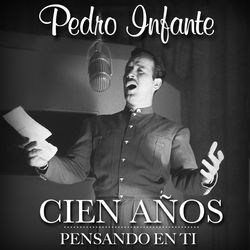
Mexican singer Pedro Infante brings serious swagger to this classic tune, which feels like a playful serenade packed with cheeky romantic advice. Right away, he spots a pair of dark eyes descending from the mountains: De la Sierra Morena, cielito lindo, vienen bajando un par de ojitos negros ("From the Sierra Morena, pretty darling, a pair of dark eyes is coming down"). He calls them de contrabando ("smuggled" or "contraband"), treating this woman's gaze like contraband snuck across a border because of how dangerously charming it is. Then comes that famous chorus: Canta y no llores, porque cantando se alegran, cielito lindo, los corazones ("Sing and don't cry, because singing makes hearts happy, pretty darling"). It is a straightforward, upbeat nudge to shake off bad feelings with music instead of tears.
From there, Infante gets very specific and territorial about her face. He sings, Ese lunar que tienes, cielito lindo, junto a la boca, no se lo des a nadie... que a mí me toca ("That beauty mark you have near your mouth, pretty darling, don't give it to anyone... because it belongs to me"). Claiming dibs on a facial mole sounds funny when you isolate it, but the phrasing makes it pure flirtation. By the end, he offers a little bit of practical caution: Siempre que te enamores, mira primero... donde pones los ojos... no llores luego ("Whenever you fall in love, look first where you set your eyes, so you don't cry later"). It is part pick-up line, part friendly warning, delivered with a wink.
Have you ever fallen for someone slowly, almost without realizing it, only to find yourself completely hooked? That's exactly what Pedro Infante sings about in "Despacito, Muy Despacito" [Slowly, Very Slowly]. He describes how this person "Se fue metiendo en mi corazón" [went getting into my heart] with a mix of "mentiras y cariñitos" [lies and little affections]. He knew she wasn't good for him, but his passion grew "despacito, muy despacito" [slowly, very slowly], and he gave her everything, "sin condición" [without condition].
Now, he's in a tough spot because he wants to stop loving her, but "No responden las fuerzas de mi alma" [The forces of my soul don't respond]. He can't forget her, even though the happiness they shared is gone, leaving only memories. It's a classic tale of falling hard and fast, even when you know better, and then struggling to break free from that powerful connection.
Get ready to feel some serious emotion with Pedro Infante's "El Plebeyo"! This song tells the story of Luis Enrique, a humble man, or "plebeyo," who is deeply in love with an aristocratic woman. The lyrics describe the city streets at night, covered in a "negro crespón" [black crepe], with artificial light creating shadows that hide "tristeza y traición" [sadness and betrayal]. This sets a dramatic scene for Luis Enrique's return to his "humilde hogar" [humble home] after work.
He's suffering under an "infamante ley" [infamous law] because he loves someone from a higher social class. But Luis Enrique isn't just going to accept it! He sings with trembling emotion, declaring that "El amor siendo humano tiene algo de divino" [Love, being human, has something divine about it] and "Amar no es un delito porque hasta Dios amó" [To love is not a crime because even God loved]. He questions why anyone would want to steal the faith from his heart, arguing that his "sangre aunque plebeya también tiñe de rojo" [blood, though plebeian, also stains red] and that their hearts are not different. He directly asks, "Señor por qué los seres no son de igual valor" [Lord, why aren't beings of equal worth?]. It's a powerful and moving protest against social inequality in love.
Get ready to meet a charming rascal in Pedro Infante's "Dicen Que Soy Mujeriego"! This song is a playful confession from a man who admits, "dicen que soy mujeriego no lo puedo remediar" [they say I'm a womanizer, I can't help it]. He's a bit of a heartbreaker, even saying, "por eso sufre reniego fatigado voy a negar" [that's why I suffer, I deny it, I'm tired].
He jokes about marriage, saying "el matrimonio es tan bueno que consuela todo mal" [marriage is so good it comforts all ills], but then quickly adds a cheeky "no con amor de dos" [not with love for two]! He even compares himself to a "gavilán" [hawk], a bit of a predator, and mentions a "chatita" [sweetheart] he wants to dance with. But despite all his flirtations, there's one special lady: an "abuela" [grandmother] or "viejita muy linda" [very sweet old lady] who "me quiere sin rencor" [loves me without resentment]. It's a fun, lighthearted look at a man who loves to flirt but has a soft spot for true affection.
Pedro Infante's "Dios Nunca Muere" [God Never Dies] is a beautiful and reflective song about facing the end of life with hope. It starts by acknowledging that everything, even the sun, eventually fades, and life's quick pace leads us all to death. But the singer finds comfort in knowing that even though he will share this common end, "Dios nunca morirá" [God will never die].
It's a really touching message about finding peace in faith. He sings about leaving behind everything he loves, including "La tierra ideal que me vio nacer" [The ideal land where I was born], but he's sure that after death, he will find joy and peace with God. The song suggests that life truly begins when we think it ends, and that "todo aquel que llega a morir / Empieza a vivir una eternidad" [everyone who dies / begins to live an eternity]. It's a powerful reminder that even in the face of mortality, there's a promise of something more.
Get ready to feel some serious emotion with Pedro Infante's classic, "Vaya Con Dios"! This song is a heartfelt farewell, as our singer faces the moment of separation. He tells his love, "Se llegó el momento ya De separarnos" [The moment has come now For us to separate], and you can almost hear the sadness in his voice. Even the church bells sound mournful, seeming to echo his goodbye with "Las campanas de la iglesia suenan tristes Y parece que al sonar también te dicen Vaya con Dios mi vida Vaya con Dios mi amor" [The church bells ring sadly And it seems that as they ring they also tell you Go with God my life Go with God my love].
But it's not all sorrow! There's a beautiful promise in this song too. He assures his beloved, "A donde vayas tú Yo iré contigo En sueños siempre junto a ti estaré" [Wherever you go I will go with you In dreams I will always be by your side]. He believes their connection is so strong that she'll hear his voice and think of him, just as he'll think of her. It's a sweet, hopeful message that even though they're parting ways physically, their love will keep them together in spirit. It's a true classic for a reason!
Pedro Infante's "Flor sin retoño" is a beautiful, melancholic song about a love that just wouldn't grow. He tells us he "Sembré una flor sin querer" [I planted a flower without wanting to], almost by accident, just to see if it was serious. But after only three days of not watering it, he returned to find it "seca, ya no quiso retoñar" [dry, it didn't want to sprout anymore]. It's a sad metaphor for a relationship that withered away so quickly.
He really tried to keep that flower alive, saying "Yo la regaba con agua que cae del cielo y la regaba con lágrimas de mis ojos" [I watered it with water that falls from the sky and I watered it with tears from my eyes]. His friends, seeing his heartbreak, told him, "Ya no riegues esa flor, esa flor ya no retoña, tiene muerto el corazón" [Don't water that flower anymore, that flower won't sprout anymore, its heart is dead]. It's a blunt but honest assessment of a lost cause, and you can really feel the pain in his voice as he sings about this love that, like the flower, just couldn't come back to life.
Get ready to swoon! Pedro Infante's "Amor De Mis Amores" is a beautiful, heartfelt declaration of love that will make you feel all warm and fuzzy inside. He starts by literally putting his hand over his heart, saying, "Poniendo la mano sobre el corazón" [Putting my hand over my heart], to tell his beloved that she is his life and he breathes the same air she does. How romantic is that?
He calls her the "Amor de mis amores" [Love of my loves] and "Sangre de mi alma" [Blood of my soul], which are incredibly intense ways to say she means everything to him. He asks her to "Regálame las flores De la esperanza" [Give me the flowers of hope], showing he wants a future with her. The song is a pure, sweet serenade, full of deep affection and a little bit of dramatic flair, perfectly capturing the feeling of being completely smitten.
Get ready for a dramatic tale of love, betrayal, and revenge in "Efigenio El Sombrerudo"! The song kicks off with a declaration from someone who's now mayor, but used to be quite the ladies' man, saying "y vuelta alcalde tengo de no tener ganas de lo que tantas buenas tengo" [and I'm mayor again, not wanting what I have so much good of]. He then invites us to listen to a story of love that started with bloodshed.
We meet Matilde, a flirtatious woman who, at a dance, makes a play for someone else. While she's with Captain Aquiles, his nephew, Efigenio El Sombrerudo, is also there, described as wearing "su sombrero con buen fútbol" [his hat with good football]. The Captain hires some men, but things go wrong, and a shootout erupts. The song tells us Matilde changes her mind about Efigenio when he's dying, and the Captain drags him away. It's a wild ride with a tragic end, leaving Efigenio deeply hurt and hanging onto his hat.
Get ready to meet Nana Pancha! This song is a fun, lively tribute to a woman who truly knows how to live it up. The singer introduces her by name, asking, "¿cómo se llama luis y yo ponché mancha como milán a como su mano similar en la pacha buen oído hablar de ello?" [what's your name, Luis, and I'm Pancha, like Milan, like her similar hand in the pacha, good to hear about it?]. He then explains there's even a song about her!
Nana Pancha is a party animal, plain and simple. "Mi nana pancha le da vuelo a la hilacha le gusta la guaracha la rumba y el danzón" [My Nana Pancha lets loose, she likes guaracha, rumba, and danzón]. She's always in the cantinas, causing a ruckus, and when she's out on the town, "no hay nadie que el agua que poniéndose a tomar y es una fiera moviendo la cadera ping an elephant era también para la pelea amarilla no hay día es que en la policía a la comisaría que quiera remitir" [there's no one to stop her from drinking, and she's a beast moving her hips, like an elephant, she's also ready for a fight, there's no day the police want to send her to the station]. She never gives up, even when she gets a fine, she just pays it and goes right back out. It sounds like she's quite the character!
Pedro Infante’s “Luna De Octubre” begins with a lovely idea: October’s moon is the most beautiful because it reflects “la quietud de dos almas” [the stillness of two souls]. These are two young people who want to be happy together, held close by the gentle comfort of youth. The heart in the song has felt “el calor de una linda mujer” [the warmth of a lovely woman], and it has learned both how to love and how to suffer. There is no pretending that love is always easy. The singer has faced pain, yet now that life is beginning again, even yesterday’s cruel punishment seems to have died away when he thinks his love is being revealed.
Then comes the tender twist: he might leave, but he does not want to destroy the other person’s “risueña ilusión” [smiling dream] or the “sueños dorados” [golden dreams] they share. He explains that leaving is not simply a way to escape or stay far away. His love will continue with the same passion he felt from the day he first saw this person and dreamed, “que serías para mí” [that you would be mine]. The song holds two ideas together beautifully: a possible goodbye, and a love that refuses to disappear.

