Learn Italian With Giorgia with these 23 Song Recommendations (Full Translations Included!)
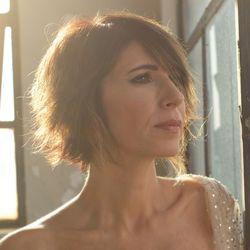
Giorgia Todrani, known simply as Giorgia, is a celebrated Italian singer-songwriter born in Rome in 1971. Nicknamed "the Italian Whitney Houston," she is renowned for her impressive vocal range and soulful belting. Since her debut in 1993, Giorgia has released ten studio albums, many of which topped the Italian charts, earning her widespread acclaim across Europe.
With over 25 million records sold worldwide and multiple Sanremo Music Festival victories, Giorgia has cemented herself as one of Italy's most influential pop and R&B artists. Her music blends contemporary R&B, pop, and soul, showcasing both her deep musical roots and innovative style. Giorgia continues to inspire with her powerful voice and emotive songwriting, making her a true ambassador of Italian music.
“Scelgo Ancora Te” is Giorgia’s vibrant declaration that love is a daily decision, not a one-time promise. She sings from the viewpoint of someone who knows every flaw, every bump in the road, yet still looks her partner straight in the eyes and says, “Io scelgo te” – “I choose you.” The lyrics move through moments of doubt, apologies, and the courage to give each other space, all while underscoring the belief that two people can fall and rise together.
The song’s heartbeat is resilience. Even when “non è facile, non è sufficiente / abbracciarsi un po’” (it’s not easy, a hug is no longer enough), Giorgia reminds us that true intimacy means risking the possibility of losing one another in order to genuinely stay connected. Each chorus feels like pressing the reset button on the relationship: despite mistakes and regrets, the singer chooses love again – passionately, stubbornly, joyfully. The result is an empowering pop-soul anthem that celebrates commitment as both a challenge and a beautiful act of freedom.
Ever tried giving a textbook definition to falling in love? Giorgia and Eros Ramazzotti open this bright pop track by doing exactly that, tossing around scientific ideas: Combinazione chimica / O è fisica attrazione ("Chemical combination / Or is it physical attraction"). But they quickly throw their hands up because, honestly, non ci sono spiegazioni ("there are no explanations"). The whole track runs on the realization that love is not a puzzle you can solve with logic. Even if you try to lock the door and isolate yourself—Anche se ti chiudi dentro ("Even if you lock yourself inside")—it catches you anyway. Hiding is useless; it is just a matter of time.
What makes the song fun is how blunt it gets about the physical, messy side of romance. Love is described as something so blazing hot that più rovente non c'è ("there is nothing hotter"), and running straight into it feels like a literal crash: Sbatterci contro è inevitabile ("Crashing into it is inevitable"). It drives you crazy enough to lose your mind, or as the lyrics say, uscire fuori di te (literally "to go outside of yourself," an Italian idiom for losing your temper or completely losing your head). By the end, they admit there is nothing profound left to figure out; you just stop fighting it and let it take over.
Italian pop singer Giorgia turns personal grief into poetry with Gocce di memoria (Drops of Memory). Right from the opening, she compares fresh tears to falling drops of recollection: Sono gocce di memoria / Queste lacrime nuove (These new tears are drops of memory). She walks through an empty home where someone's absence has practically become a physical presence, singing La tua assenza che mi appartiene (Your absence that belongs to me). The song does not hide the sting of loss. Time moves on whether we want it to or not, leaving her stranded in a reality where Questo tempo ci ha tradito (This time has betrayed us) and promises shatter like rain.
Even with that chill, the track is really about fighting to stay connected across an impossible distance. She runs forward with cold clarity (Con il gelo nella mente / Sto correndo verso te [With the freeze in my mind, I am running toward you]) and desperately asks how to reach them right now (E dimmi come posso fare / Per raggiungerti adesso [And tell me what I can do to reach you now]). When reality falls short, she vows to keep their story alive through imagination: Racconterò di te / Inventerò per te / Quello che non abbiamo (I will tell of you, I will invent for you what we do not have). It is an honest, bittersweet look at holding onto someone who is gone by rebuilding what was lost with words.
Giorgia’s “Vanità” peels back the glittery surface of modern life and asks a daring question: what are we really chasing? Over a soulful, dramatic melody, she watches a world where people hate without regret and love without truly listening. Everyone sketches their own destiny, yet those plans echo back like a shout against a wall. The real ruler here is vanity—a seductive illusion that promises power, fame, and eternal youth. We bow to the “best god” of the moment, believing it is love, but Giorgia exposes it as just another clever trick that ends up breaking her heart.
The song becomes a mirror for us all. Giorgia calls humans “unique atoms” and “migrants hidden in evolution,” reminding us that despite our dazzling differences, we stay surprisingly distant. Winning and losing, loving and hating, we risk trading the raw privilege of being alive for empty trophies. “Vanità” invites listeners to step back from the noise, question the idols we serve, and search for a more authentic connection before the echo fades.
What if every whisper about you turned into a tiny splash of ink on your skin? In “Oronero,” Italian powerhouse Giorgia sings about those inky judgments that strangers throw around so easily. She lists a parade of characters – the “fragile” friend who still walks tall, the man branded a “stronzo,” the woman labeled “senza cuore,” and even herself, accused of being unlovable. Each rumor is glittering on the surface yet dark at its core, like oro nero (black gold): it looks precious, but it stains. Giorgia flips these labels on their head, reminding us that words are weapons, worth more care than casual gossip ever gives them.
Ultimately the song is a rallying cry for self-acceptance and empathy. Giorgia rejects the toxic shine of oronero and chooses real, luminous gold – genuine connection, a gentle touch, the courage to stand beside one another when “we have everyone against us.” By the final chorus, she urges us to talk with each other, not about each other, and to let our words be true gold rather than blackened imitations. It is a fierce, soulful invitation to silence the noise, love ourselves, and protect the people we care about from the weight of reckless opinions.
This song is a powerful declaration of independence at the end of a relationship. Giorgia isn't crying over a lost love; she's telling her partner a hard truth: he doesn't actually love her. She sings, "Non sono io l'immagine che hai di me" (I'm not the image you have of me), explaining that he loves a fantasy he created. The real problem is his need for power. She points it out directly: "cerchi / Il controllo sui pensieri e su me / E perdi me" (you seek / control over my thoughts and over me / And you lose me). It's this controlling behavior that proves his feelings aren't real love, leading her to the simple, repeated conclusion: "Non mi ami" (You don't love me).
She looks back on the relationship, realizing how much she gave and how much he expected. He thought she would be his "L'aria la scusa / La lealtà / Purezza illusa" (The air, the excuse / The loyalty / Deluded purity). But she's done with that role. She's moving on, deciding, "Spengo le lacrime / Ora è possibile" (I turn off the tears / Now it's possible). The song ends with a sense of finality and strength. She's no longer a "nodo fatto su di te" (a knot tied onto you) and is ready for a future that he will not be a part of.
Giorgia shrugs off her past bruises and cuts straight to what matters in this track. She opens by admitting mistakes and literally says she still wears the marks: Ne porto i lividi ("I carry the bruises from them"). People call her crazy and claim she lacks ambition, but she considers that the fair price for being honest and loving without demands (È il prezzo di amare senza pretesa). Instead of obsessing over spreadsheets, milestones, or rules, she lays down the central truth in the chorus: È l'amore che conta / Non solo i numeri, e neanche i limiti ("It's love that counts / Not just numbers, and not limits either"). Life is not a neat spreadsheet, and love certainly is not comfortable.
The real punch comes when she treats love not as soft daydreaming, but as practical backbone. The path is messy and illogical (È una strada contorta / E non è logica, e non è comoda), yet she gives one firm rule to survive it: impara anche a dire di no ("learn also to say no"). Setting boundaries keeps her self-respect intact, keeping her dignity fresh even when time slips away. She pushes back directly against a world made of fury and hard pavement (D'ira e di cemento), choosing warmth and honest connection over cold ambition every single time.
Come Neve paints a delicate picture of two voices that melt together like the very snow they sing about. Giorgia and Marco Mengoni use the image of neve – soft, silent, yet powerful – to talk about how we can learn to “fall” in life without making a noise, cover up our past missteps, and ease the weight we place on other people’s hearts. As the snow quietly blankets the world, the singers thank a guiding presence who has lit up their dark, wintry nights and taught them that stumbling is not failure; it is part of a graceful transformation.
Behind the gentle melody lies a deeper message: true strength often hides in softness. Snowflakes drift, erase distance, and leave a clean slate, just as love and understanding can hush the loudest fears. By the end of the song, the repeated plea “Neve, insegnami tu come cadere” becomes an anthem of humility and growth. Instead of fearing the fall, the duo shows us how to embrace it with elegance, warmth, and renewed hope.
In diesem Pop-Track zieht Giorgia einen klaren Schlussstrich und rechnet mit einer ungesunden Beziehung ab. Sie stellt direkt klar: „Non sono io l’immagine che hai di me“ (Ich bin nicht das Bild, das du von mir hast). Ihr Gegenüber wollte die Kontrolle über ihre Gedanken („cerchi il controllo sui pensieri e su me“; du suchst die Kontrolle über meine Gedanken und über mich), doch damit hat er sie letztlich nur verloren. Besonders stark ist das Bild „Ero un nodo fatto su di te“ (Ich war ein Knoten, der um dich geschlungen war). Sie war völlig an ihn gebunden, doch diese Verstrickung löst sie jetzt endgültig auf.
Der Song lebt von einer befreienden Ehrlichkeit: Es tut vielleicht weh, aber sie weint keine Träne mehr hinterher („Spengo le lacrime / Ora è possibile / Ne ho sprecate per te“; Ich schalte die Tränen aus / Jetzt ist es möglich / Ich habe zu viele für dich verschwendet). Giorgia weigert sich, für den anderen die bequeme Ausrede („la scusa“) oder die naive Projektionsfläche zu sein. Am Ende steht der schonungslose Refrain: „Non mi ami [...] No tu non mi ami così“ (Du liebst mich nicht [...] Nein, so liebst du mich nicht). Ein Song über Selbstbehauptung, der direkt ins Ohr geht!
Giorgia schaut in diesem Popsong ohne Reue auf ihre Vergangenheit zurück. Sie hat Fehler gemacht, die blaue Flecken hinterlassen haben («Di errori ne ho fatti / Ne porto i lividi» – Fehler habe ich gemacht, ich trage ihre blauen Flecken), aber sie grübelt nicht mehr darüber. Manche Leute nennen sie verrückt oder sagen, sie sei nicht ehrgeizig genug. Ihr ist das egal. Für sie ist Ehrlichkeit wichtiger als das Gerede der anderen, selbst wenn das bedeutet, Chancen verpasst zu haben.
Die Hauptbotschaft steckt im Refrain: Am Ende zählt nur die Liebe («È l'amore che conta»), nicht bloße Zahlen oder Grenzen («Non solo i numeri, e neanche i limiti»). Dieser Weg ist kurvig, unlogisch und unbequem («È una strada contorta / E non è logica, e non è comoda»). Giorgia gibt dir dabei einen ganz direkten Rat mit auf den Weg: Verliere dich nicht selbst und lerne, auch mal Nein zu sagen («Non ti perdere, impara anche a dire di no») – besonders zu einer Welt voller Wut und Beton («D'ira e di cemento»).
“L’UNICA” feels like a late-night confession set to a pulsating beat. Giorgia paints the scene of dancing alone in her living room, mascara-streaked tears mixing with neon lights and swirling synths. She has not slept for days, yet she refuses to let heartbreak swallow her; instead, she cranks up the stereo, allowing music to become both therapist and partner on the empty dance floor. The echo of her ex’s voice haunts every corner, but she still clings to a briciolo di fantasia—a tiny spark of imagination—that keeps her moving.
The song is a roller-coaster of pain, affection, and fierce self-resilience. Giorgia admits she loved “like a madwoman,” remembers summer drives in her old Toyota, and acknowledges the crack inside her chest that “kills and then hugs” her. Still, she knows another summer will come, and with it the promise of healing. “L’UNICA” captures that bittersweet moment when sorrow and strength coexist: you cry, you dance, you sing at the top of your lungs, and you start to believe that life after heartbreak might be louder, brighter, and ultimately yours to reclaim.
Tornerai is Giorgia’s intimate daydream of a long-awaited return. The singer imagines a lover stepping back through the door, sharing late-night coffee, and whispering parole nuove that lift them both beyond the window and far from the city’s noise. In this suspended space, they toss old truths to the wind and taste the freedom of being "soli, soli" for as long as the moment lasts.
Yet the song is more than a romantic reunion. The visitor becomes a mirror of Giorgia’s own hidden side—at once the wall that must crumble and the spark that restores her faith. For just one day, plans change, secrets surface, and they stand figuratively naked with no way back, like a wave that reaches the shore and never returns. Hopeful and bittersweet, Tornerai celebrates the fragile magic of believing in second chances while knowing they may vanish as quickly as they arrive.
Giorgia's "Diamanti" is a beautiful song about hope, resilience, and the enduring power of love and connection. It's like a warm hug, reminding us that even after difficult times, life can return, "Vestita di parole e saper vivere" [Dressed in words and knowing how to live].
The song looks forward to a future where we are strong and pure, like "diamanti" [diamonds], unblemished by time or hardship. It celebrates the deep bond between people, suggesting that even if everything else fades, the heart remains close. The lyrics, "Le ferite cucite d'amore" [Wounds sewn with love] and "Siamo terra bagnata ad un fiore" [We are earth wet for a flower], beautifully illustrate how love heals and nurtures. It's a promise to ourselves and to others to embrace who we truly are, "Di essere soltanto me, soltanto me" [To be only me, only me], and to find joy and belief again, even if it's just for a moment, "Il tempo di cantare una canzone" [The time to sing a song].
Get ready for a sonic road trip full of sunshine, starlight, and electric optimism! In “Il Mio Giorno Migliore” Giorgia sings as if she is behind the wheel of a convertible, racing from beaches to galaxies just to reach the person she loves. The news may talk about the price of love or the cost of war, yet she brushes all that aside, announcing that today is the best day because a simple smile and a spark from the soul can turn ordinary hours into a festival of possibility.
Beneath the upbeat groove, the lyrics paint love as both a journey and a refuge. Giorgia imagines traveling endless miles, or even staying in her room, as long as she can meet the one who makes her heart “light up and dance.” She contrasts the weight of conflict with the lightness of affection, showing that hope wins whenever two people choose connection. Every “dimmi cos’è” (tell me what it is) repeats the wonder of finding a feeling so bright that it literally smooths out “the folds of the soul.” By the final chorus, you can almost see fireworks in the sky: today is her day—and, if you listen closely, it might become yours too.
“La Cura Per Me” by Giorgia is a heartfelt journey through the highs and lows of love, sung by one of Italy’s most soulful voices. The title means “The Cure for Me,” and the narrator confesses that only one person can soothe her deepest fears. Throughout the lyrics she drifts between hope and despair: tender caresses suddenly feel empty, memories ride “up and down like an elevator,” and every daring act of passion seems as ordinary as breathing. Yet even while she insists that this special someone is “the cure,” her instinct is to pull away the closer they come.
What makes the song so captivating is its raw portrait of loneliness. Giorgia paints vivid images of eyes that glow like the moon, a dark room that magnifies her solitude, and tears hidden in a wounded sea. She spends countless nights waiting, swallowing her fear of being alone, until she finally decides to switch off that fear herself. The ultimate revelation is both empowering and bittersweet: the cure she has been chasing outside might actually live within. Wrapped in lush melodies and soaring vocals, the song reminds listeners that while love can feel like a life-saving medicine, true healing often begins in our own hearts.
Giorgias «Scelgo Ancora Te» handler om å velge kjærligheten, selv når det er vanskelig. Hun synger om å se partneren sin på en måte ingen andre gjør: «Io ti guardo, io ti vedo / Come nessun altro fa» [Jeg ser på deg, jeg ser deg / Slik ingen andre gjør]. Selv om partneren ber om plass, er hun villig til å gi det. Sangen anerkjenner at forhold ikke alltid er enkle; man faller sammen, men reiser seg også sammen: «Che si cade in due e in due ci si rialzerà» [At man faller som to, og som to vil man reise seg igjen].
Midt i anger og tilgivelse velger hun ham igjen og igjen: «Tra mille rimpianti ed il perdono / Io scelgo te / E scelgo ancora te» [Blant tusen anger og tilgivelse / Jeg velger deg / Og jeg velger deg igjen]. Hun innrømmer at hun ikke er en enkel person, men understreker at hun aldri tar noe for gitt og ville dø for den hun elsker: «Io non sono un tipo semplice / Questo io lo so però / Non do niente per scontato mai / E per te morirei» [Jeg er ikke en enkel type / Det vet jeg, men / Jeg tar aldri noe for gitt / Og for deg ville jeg dø]. Det er en ærlig og rørende sang om å kjempe for kjærligheten, selv når det er utfordrende, og om å velge hverandre hver dag.
V písni Scelgo Ancora Te („Znovu si vybírám tebe“) Giorgia zpívá o vztahu, který není jednoduchý, ale přesto ho nechce vzdát. Vypravěčka tvrdí: „Io ti guardo, io ti vedo“ [Dívám se na tebe, vidím tě] a dodává, že druhého vnímá tak, jako nikdo jiný. Zároveň respektuje jeho potřebu odstupu: „Tu mi chiedi spazio / E sì, ne avrai“ [Žádáš mě o prostor / A ano, budeš ho mít]. Není to tedy slepá romantika. Jsou tu chyby, lítost, odpuštění i vědomí, že pouhé objetí někdy nestačí. Přesto se vrací k jednoduchému, pevnému rozhodnutí: „Io scelgo te / E scelgo ancora te“ [Vybírám si tebe / A znovu si vybírám tebe].
Nejzajímavější je, že toto rozhodnutí platí právě dnes, kdy je všechno těžké. „Non è facile, non è sufficiente / Abbracciarsi un po’“ [Není to snadné, nestačí se jen trochu obejmout] zní až překvapivě střízlivě. Láska tu není kouzelná zkratka, která automaticky napraví každý omyl. Dva lidé mají hledět „Occhi negli occhi“ [Očima do očí], zůstat spolu a každý den znovu riskovat, že se přestanou nacházet. A pak přijde naléhavá prosba: „Abbracciami“ [Obejmi mě]. Právě v tom je síla písně: i když odpuštění nepřepíše minulost a vypravěčka znovu chybuje, pořád si vybírá stejného člověka.
In “Scelgo Ancora Te” zingt Giorgia over een liefde waarvoor iemand steeds opnieuw kiest, ook wanneer samen zijn moeilijk wordt. De verteller zegt: “Io ti guardo, io ti vedo” [Ik kijk naar je, ik zie je], alsof zij deze persoon echt begrijpt, op een manier die niemand anders doet. Tegelijk krijgt de ander ruimte: “E tu mi chiedi spazio, e sì, ne avrai” [En jij vraagt me om ruimte, en ja, die zul je krijgen]. Dat maakt de liefde minder zoet en meer herkenbaar: er zijn spijt, fouten en momenten waarop de ander niet naast haar staat. Toch blijft de kernzin terugkomen: “Io scelgo te, e scelgo ancora te” [Ik kies jou, en ik kies jou opnieuw].
De keuze klinkt niet als een makkelijke belofte. Ze weet dat ze geen eenvoudig type is en zegt zelfs: “Per te morirei” [Voor jou zou ik sterven], een bewust grote, dramatische uitspraak. Daarna wordt het beeld rustiger: “Occhi negli occhi, fino a domani” [Ogen in de ogen, tot morgen]. Ze wil samen blijven, dag na dag, met het risico elkaar toch kwijt te raken. Alleen een korte omhelzing is soms niet genoeg: “Non è facile, non è sufficiente abbracciarsi un po’” [Het is niet makkelijk, een beetje omhelzen is niet voldoende]. Daarom eindigt het lied met een eenvoudig verzoek: “Abbracciami” [Omhels me].
„Scelgo Ancora Te” Giorgii, włoskiej wokalistki, jest piosenką o świadomym wyborze bliskiej osoby mimo żalu, błędów i trudnych dni. Podmiot liryczny mówi: „Io ti guardo, io ti vedo” [Patrzę na ciebie, widzę cię] i dodaje, że dostrzega tę osobę „come nessun altro fa” [tak, jak nikt inny]. Jednocześnie szanuje jej potrzebę przestrzeni: „Tu mi chiedi spazio, e sì, ne avrai” [Prosisz mnie o przestrzeń i tak, dostaniesz ją]. To nie jest prosta opowieść o idealnej miłości. Padają słowa o pomyłkach, żalu i przebaczeniu, a nawet bardzo mocne „per te morirei” [umarłabym za ciebie]. Najważniejsza decyzja brzmi jednak: „Io scelgo te, e scelgo ancora te” [Wybieram ciebie i wciąż wybieram ciebie].
W refrenie Giorgia przypomina, że sama czułość nie zawsze wystarcza: „non è facile, non è sufficiente abbracciarsi un po’” [nie jest łatwo, nie wystarczy trochę się przytulić]. Para musi patrzeć sobie w oczy, odzyskiwać dawną siłę i każdego dnia ryzykować, że może się już nie odnaleźć. To brzmi szczerze, a chwilami nawet bezlitośnie, bo miłość nie zostaje tu przedstawiona jako wygodna nagroda. Mimo wszystko decyzja powraca: „E scelgo ancora te” [I wciąż wybieram ciebie], a na końcu prośba „Abbracciami” [Przytul mnie] pokazuje, że po całej tej rozmowie podmiot liryczny nadal chce bliskości.
V pesmi »Scelgo Ancora Te« italijanska pevka Giorgia govori osebi, ki jo vidi tako pozorno, kot je ne vidi nihče drug: »Io ti guardo, io ti vedo« [Gledam te, vidim te]. Toda njun odnos ni preprost. Druga oseba prosi za prostor in pripovedovalka ji ga je pripravljena dati. Hkrati verjame, da se v paru padci in vstajanje delijo: »Si cade in due e in due ci si rialzerà« [Ko padeva, bova skupaj tudi vstala]. Med obžalovanjem, napakami in odpuščanjem se vedno znova odloči za isto osebo: »Io scelgo te, e scelgo ancora te« [Izbiram te in še vedno izbiram te].
Najlepši del pesmi je prav njena neposrednost. Pripovedovalka ve, da ni preprost človek, da se spet zmoti in se včasih znajde sama, brez drugega ob sebi. Tudi majhen objem ni vedno dovolj: »Non è facile, non è sufficiente abbracciarsi un po’« [Ni lahko, ni dovolj, da se malo objameva]. Zato si želi pogled iz oči v oči, moč, da ostaneta skupaj, in pogum za vsak nov dan, čeprav obstaja nevarnost, da se nekoč ne bosta več našla. Zaključek »Abbracciami« [Objemi me] je kratka, skoraj nujna prošnja. Ljubezen tukaj ni predstavljena kot lahka odločitev, temveč kot nekaj, kar je treba znova izbrati, tudi danes.
İtalya’dan Giorgia’nın söylediği “Scelgo Ancora Te”, adıyla bile şarkının merkezindeki kararı açıkça söylüyor: “Seni yine seçiyorum.” Anlatıcı, karşısındaki kişiyi herkesin gördüğünden farklı gördüğünü söyler: “Io ti guardo, io ti vedo / Come nessun altro fa” [Sana bakıyorum, seni görüyorum / Kimsenin görmediği gibi]. İlişkide alan ihtiyacı da var; karşı taraf “spazio” [alan] istiyor ve anlatıcı bunun ona verileceğini kabul ediyor. Sonra aşkın kolay bir denklem olmadığını itiraf ediyor: “Si cade in due e in due ci si rialzerà” [İki kişi düşülür, iki kişi ayağa kalkılır]. Pişmanlıklar ve bağışlama arasında, yine aynı kişiyi seçiyor.
Şarkının en güçlü yanı, bu seçimin romantik sözlerle süslenmemesi. Anlatıcı kendisinin kolay biri olmadığını biliyor, bazen yeniden hata yapıyor ve sevdiği kişiyi yanında bulamıyor. Yine de “Anche oggi che non è facile” [Bugün bile, kolay değilken] diyerek kararını tekrarlıyor. Sadece biraz sarılmanın yeterli olmadığı günlerde, göz göze kalmayı, yarının gücünü bulmayı ve her gün birlikte kalmayı denemeyi istiyor. “Abbracciami” [Bana sarıl] diye biten sözler, uzun açıklamalardan daha doğrudan: Bu ilişki kusursuz değil, fakat anlatıcı bütün zorluğuna rağmen hâlâ “E scelgo ancora te” [Ve seni yine seçiyorum] diyor.
Giorgian “Scelgo Ancora Te” on rakkauslaulu päätöksestä valita sama ihminen yhä uudelleen, vaikka yhdessäolo ei ole helppoa. Kertoja sanoo näkevänsä toisen tavalla, johon kukaan muu ei pysty: “Io ti guardo, io ti vedo” [Katson sinua, näen sinut]. Toinen pyytää tilaa, ja kertoja lupaa antaa sitä. Hän tietää myös, ettei itse ole helppo ihminen, mutta ei pidä mitään itsestään selvänä. Siksi laulun nimi, “Valitsen sinut yhä uudelleen”, kuulostaa sekä romanttiselta että päättäväiseltä.
Suhteessa on riitoja, katumusta ja anteeksiantoa. Kertoja uskoo, että kaadutaan yhdessä ja noustaan yhdessä, mutta myöntää samalla: “Sbaglio di nuovo e non ti ritrovo accanto a me” [Teen taas virheen enkä löydä sinua viereltäni]. Pelkkä halaus ei aina riitä, vaikka juuri läheisyyttä hän pyytää: “Abbracciami” [Halaa minua]. Erityisen kaunis on ajatus katsoa silmiin huomiseen asti ja löytää takaisin eilisen voima. Laulu ei lupaa helppoa suhdetta, vaan sanoo suoraan, että yhdessä pysyminen sisältää myös riskin: “Restare insieme ogni giorno e rischiare di non trovarsi più” [Pysytään yhdessä joka päivä ja otetaan riski, ettemme enää löydä toisiamme]. Silti valinta tehdään uudestaan, juuri tänään.
Em “Scelgo Ancora Te”, Giorgia canta sobre escolher a mesma pessoa mesmo quando o relacionamento está cheio de falhas, distância e pedidos de espaço. A narradora diz: “Io ti guardo, io ti vedo / Come nessun altro fa” [Eu olho para você, eu vejo você / Como ninguém mais vê], mostrando uma intimidade muito particular. Ao mesmo tempo, ela reconhece que não é fácil conviver com ela: “Io non sono un tipo semplice” [Eu não sou uma pessoa simples]. A letra não transforma o amor em algo perfeito. Há erros, arrependimentos e momentos em que ela acorda e percebe: “Sbaglio di nuovo e non ti ritrovo accanto a me” [Eu erro de novo e não encontro você ao meu lado].
O centro da música está na decisão repetida do refrão: “Io scelgo te / E scelgo ancora te” [Eu escolho você / E escolho você de novo]. Esse “ainda” importa: a escolha acontece justamente quando um abraço já não resolve tudo, quando é preciso olhar nos olhos até o dia seguinte e tentar recuperar a força de antes. “Restare insieme ogni giorno e rischiare / Di non trovarsi più” [Ficar juntos todos os dias e correr o risco / De não se encontrarem mais] é uma forma bem direta de falar sobre continuar tentando sem garantia. No fim, o pedido “Abbracciami” [Abrace-me] é simples, quase urgente: depois de tantos conflitos, ela ainda quer proximidade.

