Ausência Lyrics in English by Marília Mendonça
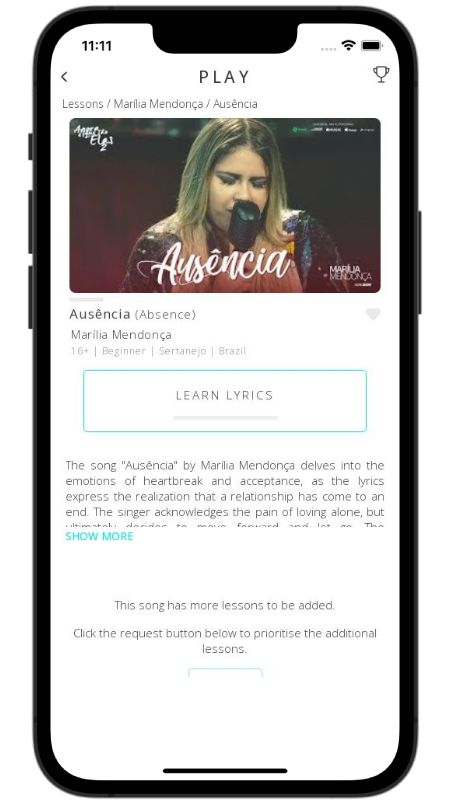
Ausência translates to "absence". It's a beautiful and poignant word that captures the feeling of someone or something being missing.
In this powerful ballad, the singer realizes her relationship has ended not through words, but through her ex's silence. The song's hook is a clever twist on a famous proverb: "Pra um bom entendedor, meia ausência basta" (For a good listener, half an absence is enough). This line powerfully suggests that their absence is a message in itself, making ausência a truly memorable and poetic word.
Have you ever stared at a silent phone and realized the silence itself was your answer? In "Ausência", Brazilian sertanejo superstar Marília Mendonça delivers a masterclass in accepting a breakup with your pride intact. Instead of begging for another chance, she drops one of the sharpest one-liners in modern Brazilian music: "Não receber mensagem, também é mensagem" (Not getting a message is a message, too). It hurts, and as she admits, "o pra sempre virou pó" (forever turned to dust), but she isn't in denial. She carried the weight of the relationship by herself—"Amei sozinho, mas por dois" (I loved alone, but for two)—and now she is done waiting.
The chorus is wonderfully blunt and petty in the best way possible. She repeats "Preocupa não" (Don't worry) like a sarcastic promise: she will not knock on your gate, and your caller ID will never light up with her name again. She also uses a fantastic everyday idiom when she says "vou tomar vergonha na cara" (literally "I'll take shame on my face," which means getting some self-respect and snapping out of it). To seal the deal, she twists an old Portuguese proverb (pra bom entendedor, meia palavra basta / to a good listener, half a word is enough) into a clever punchline: "Pra um bom entendedor, meia ausência basta" (To a good listener, half an absence is enough). If you pull away even a little bit, she gets the hint, and she walks.