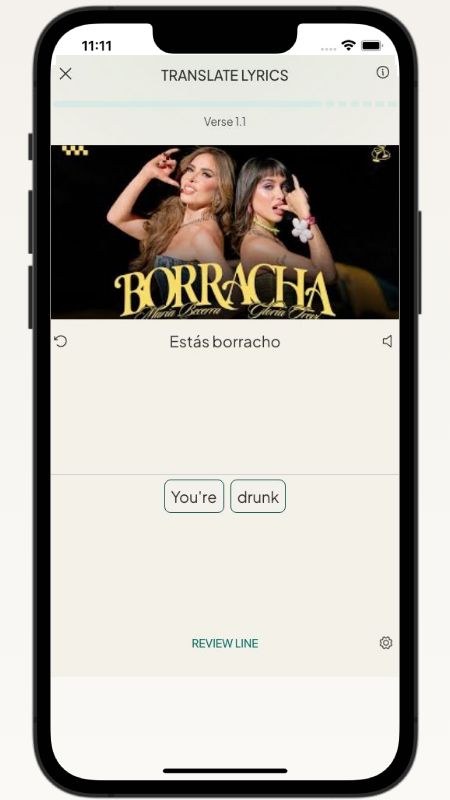
BORRACHA Lyrics in English by Maria Becerra, Gloria Trevi
Me pusieron los cachos literally translates to "they put the horns on me". It's a classic and colorful idiom used across the Spanish-speaking world to express that someone's partner was unfaithful.
In this defiant anthem, Maria Becerra sings this to explain the real reason she's drinking, creating a powerful image of betrayal. Learning this common phrase is a huge step towards understanding the dramatic and emotional expressions used in real-world Spanish.
Maria Becerra and Gloria Trevi aim this one at a man who only finds the nerve to call after a few drinks. The opening jab is blunt: "Me llamas porque sobrio no eres tan macho" (You call me because when you're sober you're not that macho). She knows he cheated, so she asks a friend for "una copa bien honda" (a very big drink) "Para olvidar que me pusieron los cachos" (To forget that he cheated on me). "Poner los cachos", literally "to put the horns on" someone, is everyday Latin American slang for cheating, and a good one to learn.
The twist is that she gets drunk too, just for a different reason. The second verse says it straight: "Si tomo no es para borrar tu espejismo" (If I drink it's not to erase your mirage). She's celebrating, not mourning. The chorus piles up "llorar, llorar, llorar" (cry, cry, cry) for him while she swears "que no soy tu mujer" (that I'm not your woman), and the last word comes in Argentine "vos" form: "Vos no sos macho, vos sos infiel" (You're not macho, you're unfaithful).