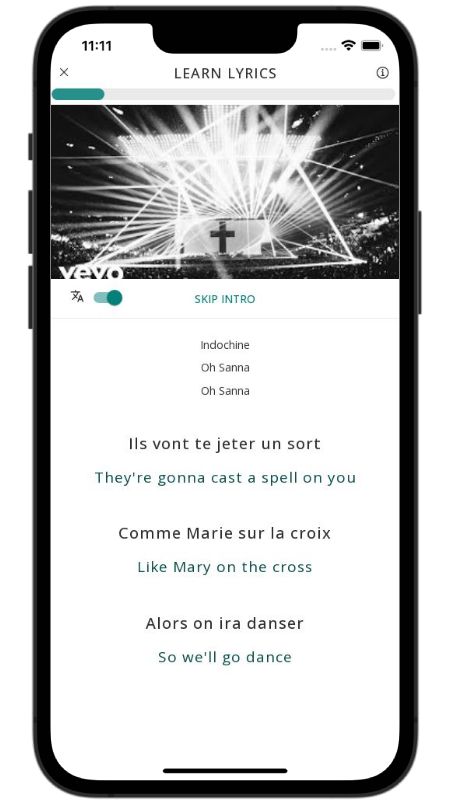
Oh Sanna Lyrics in English by Indochine
Corps à corps literally translates to "body to body" and is often used to mean "hand-to-hand combat". It's a powerful phrase that evokes a sense of intense, physical closeness.
In the song, the singer promises, "Moi je te suivrai au corps à corps" (I will follow you, body to body). He uses this term not to describe a fight, but to express an unbreakable, intimate bond, vowing to stay by her side through any struggle, as close as one can possibly be. It's a beautiful, poetic use of a strong phrase.
Indochine’s “Oh Sanna” throws us into a restless, neon-lit tale of rebellion. Society is painted as hostile spell-casters, ready to “crucify” anyone who dares to shine too brightly. References to La Maman et la Putain and “Indians in the trains” expose a world where kindness is rare and outcasts ride the margins. In this bleak landscape, Sanna blazes across the night like a meteor, and the singer invites us to dance in the rain and in the gold, defiantly celebrating life while the crowd mutters its judgments.
At its heart, the song is a vow of protection and freedom. The narrator refuses to join the chorus of condemnation, promising to follow Sanna “to the ends of the earth”. He begs her to run, stay true to herself, and never change because “they do not deserve you.” Religious imagery mingles with raw romance, turning “Oh Sanna” into both a love letter and a rallying cry for every listener who has ever felt misunderstood. It urges us to stand by our own meteors, dance through the downpour, and let the emptiness of the world burn itself out while we keep moving forward.