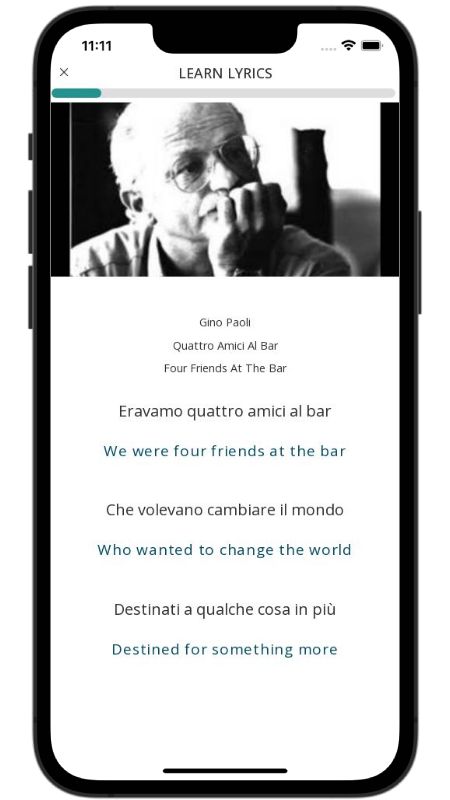
Quattro Amici Al Bar Lyrics in English by Gino Paoli
Guai translates to "troubles" or "woes". It's a classic Italian word that feels more personal and evocative than the more direct problemi (problems).
The song tells the story of friends who dreamed of changing the world, but eventually drifted apart. In the final, poignant line, the singer reflects that they'll all end up "a rincorrere i suoi guai" (chasing after their own troubles), a powerful image of youthful idealism giving way to the reality of adult life.
This song tells a story that feels so real, it's almost a short film. It starts with four young friends in a bar, full of big ideas. They weren't just any friends; they were "quattro amici al bar / Che volevano cambiare il mondo" (four friends at a bar / Who wanted to change the world). They felt they were destined for more than just "una donna ed un impiego in banca" (a woman and a job in a bank). They talked about huge concepts like anarchy and freedom over coffee and Coca-Cola.
But then, life happens. One by one, the friends drop out. First, one gets that very bank job they looked down on. Then another leaves for a woman. The group shrinks from four, to three, to two, and finally, the singer is left all alone at the bar. The funniest and saddest part is what happens next: four new kids walk in, sit down, and he overhears them making their own plans to change the world. It’s a perfect look at how youthful dreams either fade away or get passed on to the next generation. The song ends wondering if they'll ever meet again, maybe as stars at the famous Roxy Bar, or if they'll just be scattered, each one "a rincorrere i suoi guai" (chasing their own troubles).