Ce Qu’on Devient Lyrics in English by Feu! Chatterton
Fou-dingue is a vibrant and expressive compound adjective that literally translates to "crazy-mad" or "utterly insane." It's a more intense and slightly informal way to say "crazy" (fou).
In the song, the phrase "Du même amour fou-dingue" (With the same crazy-mad love) describes a love that is passionate, intense, and perhaps a little wild or irrational. This word is particularly enticing because it's not a common, everyday term, offering a unique glimpse into French colloquial expression and the depth of emotion conveyed in the lyrics.
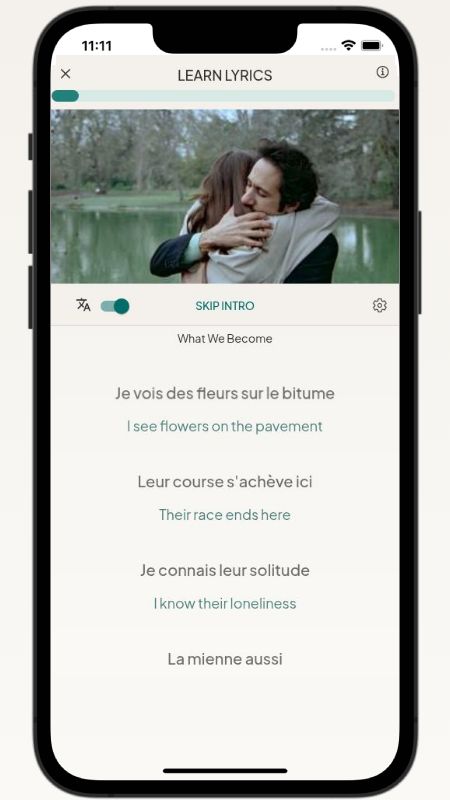
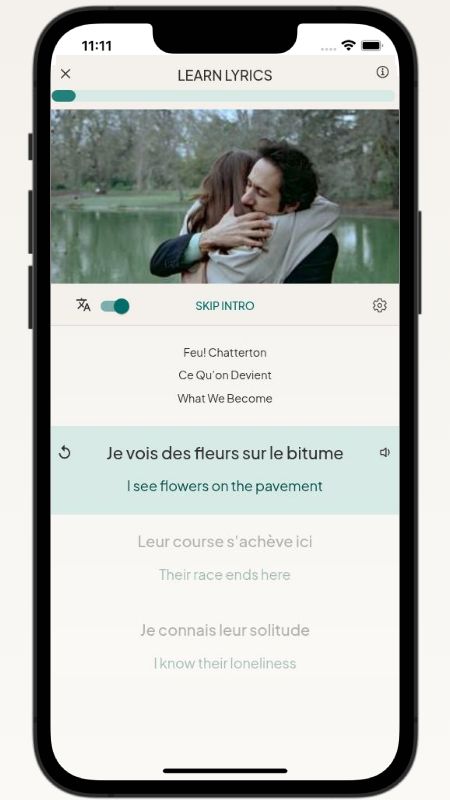
Have you ever felt lost, wondering what the future holds for you and a relationship? Feu! Chatterton's "Ce Qu’on Devient," which translates to "What We Become," perfectly captures this feeling. The singer wanders through a city at night, feeling as lonely and out of place as a flower growing on the pavement. He grapples with the passing of time and a loss of identity, asking the powerful question: "Dis-moi ce qu'on devient" (Tell me what we become).
But this song isn't just about feeling lost; it's a beautiful plea for hope and renewal. Amidst the confusion, the singer holds onto a "crazy love" and dreams of a return to simpler, happier times. He uses powerful images to describe this desire: finding a lost key at the bottom of a well, cleaning a beautiful pearl covered in soot, and, most movingly, rediscovering the innocent joy of dancing in the rain like a child. It’s a poetic journey from despair to a fragile, yet persistent, hope for the future.