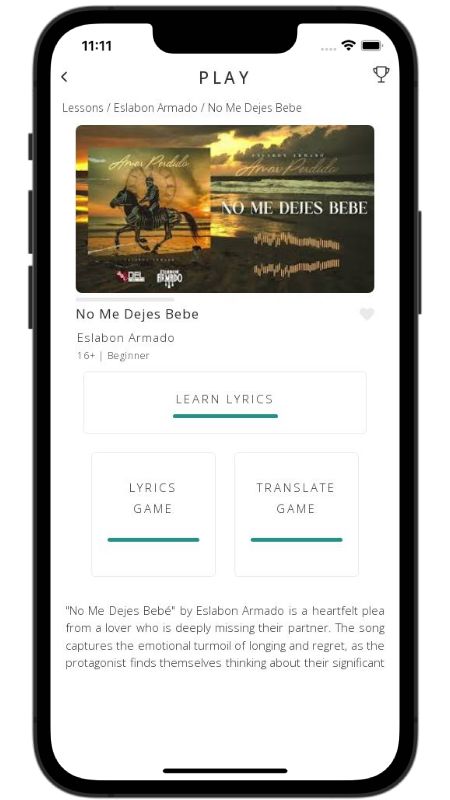
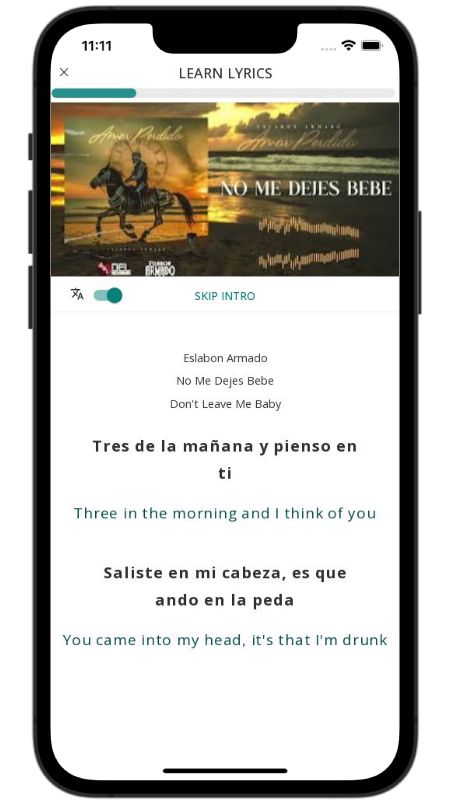
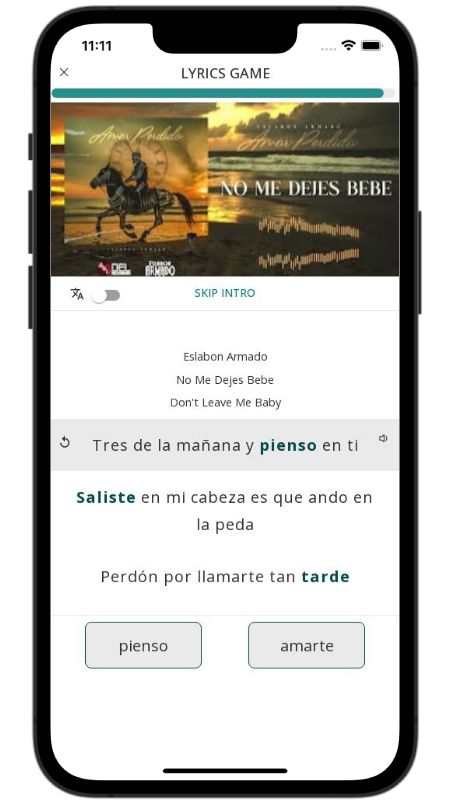
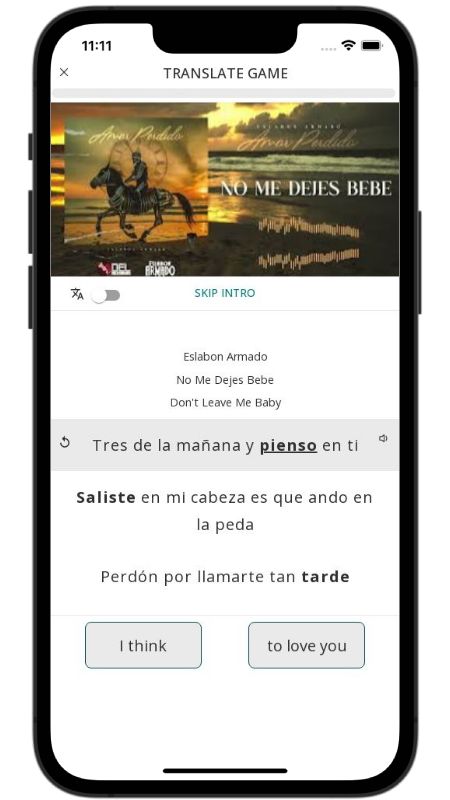
No Me Dejes Bebe Lyrics in English by Eslabon Armado
Peda is a colloquial and very common slang term in Mexico, meaning 'drunk' or 'a drinking party'. It's a word you'll hear frequently in informal settings and popular music, but it's not typically taught in formal Spanish classes.
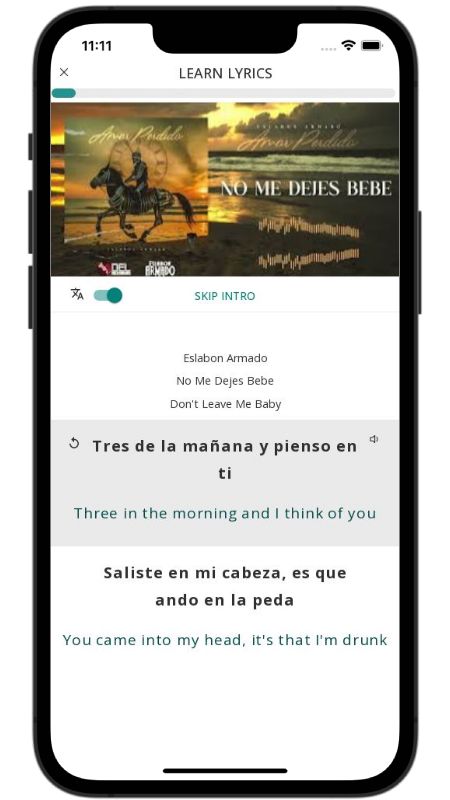
In the song, the singer says, "Saliste en mi cabeza, es que ando en la peda" (You popped into my head, it's because I'm drunk/partying). This word immediately sets a casual, relatable, and slightly mischievous tone, making it an enticing choice for learners interested in authentic, everyday Spanish.
“No Me Dejes Bebé” is the sound of a 3 a.m. voicemail that overflows with love, tequila, and regret. Eslabon Armado’s singer finds himself tipsy, scrolling through Instagram photos, and suddenly overcome by the need to hear his ex’s voice. He confesses that she is his “persona favorita,” the other half of his heart, and even the family dog misses her. Wrapped in vivid images of late-night phone calls, cloudy days, and a header photo he refuses to delete, the lyrics paint a relatable picture: when love ends, every corner of life still whispers the other person’s name.
Beneath the catchy sierreño guitars lies a sincere promise of change. He reminds her of the flowers, letters, and chocolates he once gave and insists he can’t imagine being with anyone else. The chorus becomes a pleading mantra—“No me dejes, bebé” (“Don’t leave me, baby”)—that captures the universal moment where heartbreak meets hope. Whether you’ve been the caller or the one receiving that call, this melody turns late-night vulnerability into a sing-along that feels both painfully honest and oddly comforting.