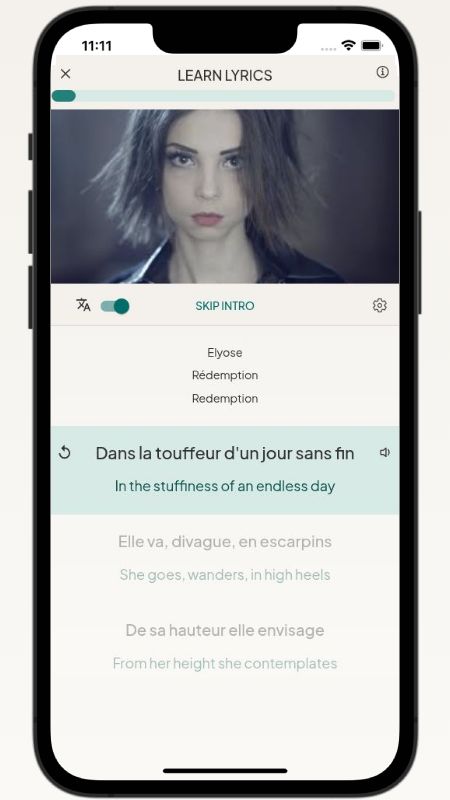
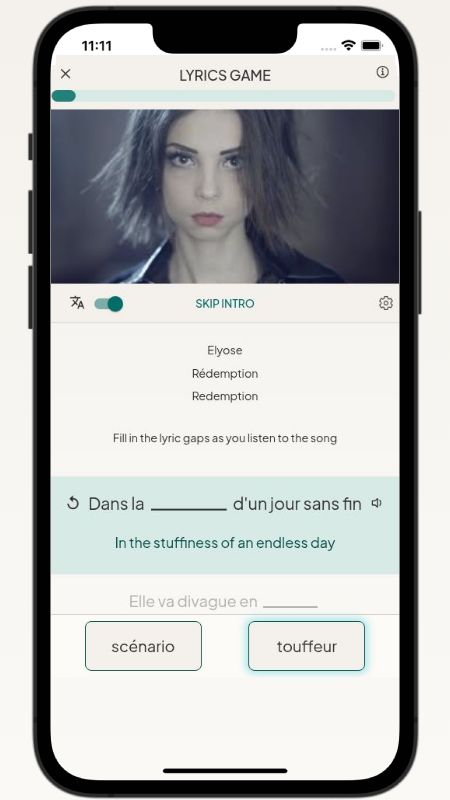
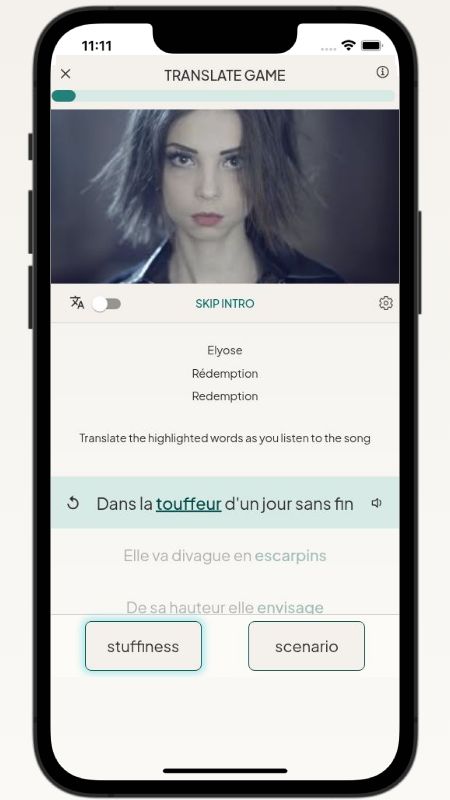
Rédemption Lyrics in English by Elyose
Rédemption means 'redemption' or 'salvation'. It's a powerful and profound word that immediately suggests a deep narrative of struggle, atonement, and perhaps a quest for forgiveness.
In the context of this song, which features themes of punishment, defiance ("Moi, je suis une femme qui maudit / Moi, je suis une femme qui punit"), and intense emotion, the word rédemption stands out as the central theme. The singer declares, "Je ne crois qu'à la rédemption" (I only believe in redemption), making it the core concept around which the song's dark and dramatic story unfolds. It's a word that promises a rich, meaningful, and intense lyrical experience.
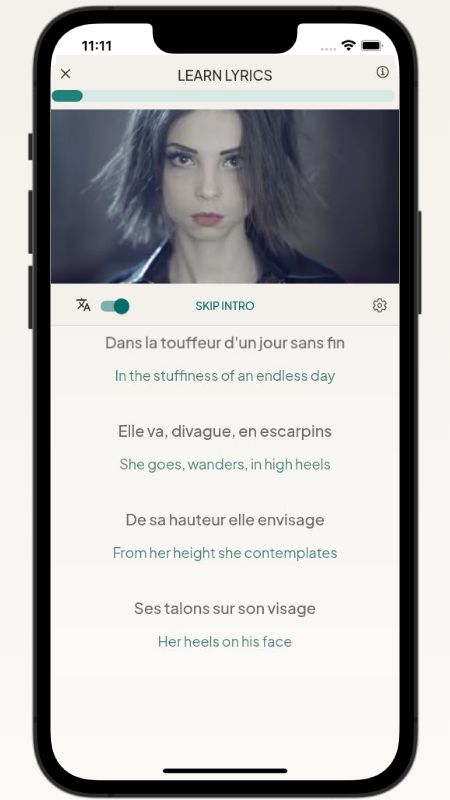
Get ready for a powerful story of transformation and revenge! Elyose's "Rédemption" introduces us to a woman who is done with being passive. The song paints a vivid picture of her turning the tables on someone who has hurt her. She walks tall in her high heels, no longer willing to "abandon" or "forget" herself.
She embraces a new role: a dominant figure who "curses" and "punishes." The central theme is redemption, but it's not for her. Instead, she believes the only way for the person who wronged her to find redemption is through the punishment she delivers. It's a dark and intense anthem about reclaiming power, where she finds a strange beauty in their tears and her control over the situation.