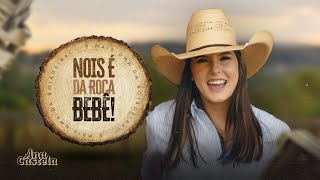
Não Para Lyrics in English by Ana Castela, Belle Kaffer, Charles New
Boiadeira literally translates to "cowgirl". It's a unique and culturally specific term in Brazil, referring to a woman who works with cattle or embodies the rural, country lifestyle.
In the song, Ana Castela, known as the "Boiadeira", embraces this identity, blending traditional country elements with modern funk music. The word is central to her persona and the song's theme, making it very enticing for learners to understand the cultural context.
Não Para is a high-octane anthem where Ana Castela proudly mixes two Brazilian worlds that rarely share the same dance floor. On one side we smell “terra molhada” – fresh country soil – and see belt buckles, wide-brim hats, and sleek mangalarga marchador horses. On the other side thumps the heavy beat of Rio’s baile funk. When Ana shouts that the boiadeira (cowgirl) has turned maloqueira (street-party rebel), she is saying, “I can ride a horse and still shake the city’s biggest dance club.” The lyrics celebrate breaking free of reins, blending modão (classic sertanejo) with booming speakers, and keeping the party in perpetual motion.
The refrain “Não para” – “Don’t stop” – is both a command and a promise. Whether she is in dusty boots or a cropped pair of shorts, the singer vows to keep galloping, keep dancing, keep living at full volume. The song invites everyone to drop labels, fuse styles, and move their rabão (booty) until dawn. In short, it is a joyful declaration that energy knows no borders: countryside or city street, the party only ends when the music cuts out – and this track refuses to let that happen.







![Só Não Deixa Saudade [Ao Vivo] Lyrics Translation](https://img.youtube.com/vi/xk_RO-5KLWQ/mqdefault.jpg)





![Alerta De Golpe [Ao Vivo] Lyrics Translation](https://img.youtube.com/vi/IgG1ekanyFQ/mqdefault.jpg)