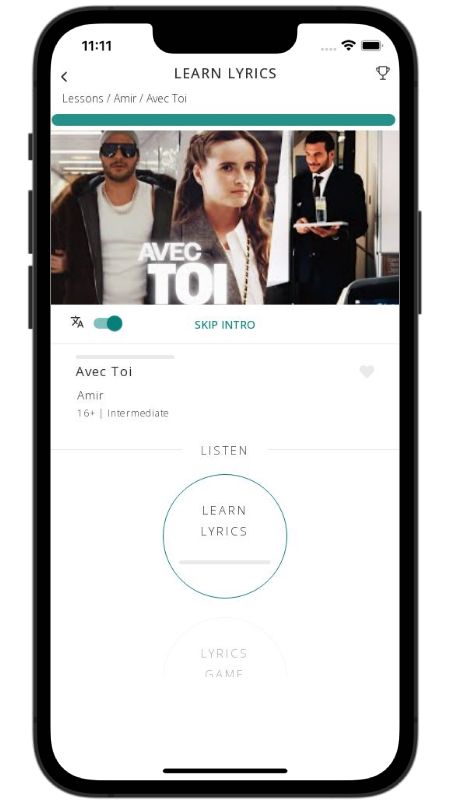
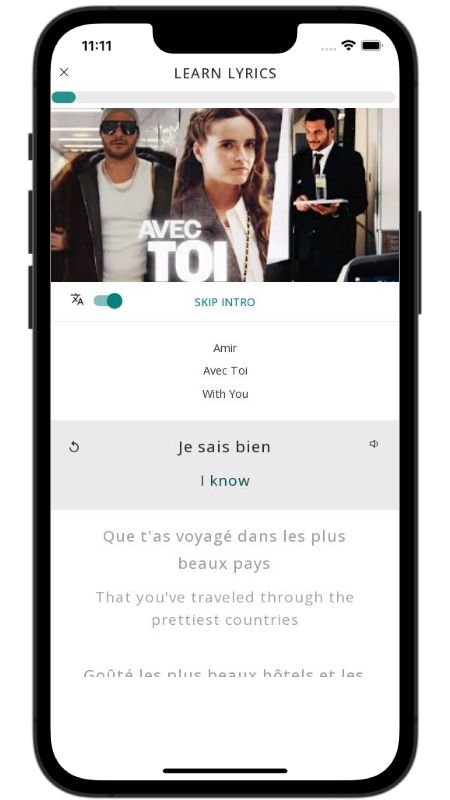
Avec Toi Lyrics in English by Amir
Parures translates to 'finery', 'adornments', or 'matching sets of jewelry'. It is an elegant, sophisticated French noun that goes beyond simple accessories to describe truly luxurious, expensive decorations.
In the song, Amir sings about a wealthy rival who dresses his love interest in "bijoux, de parures" (jewels and finery). He uses this descriptive word to highlight the superficial, material wealth of the other man, beautifully contrasting it with the simple, genuine love he offers instead.
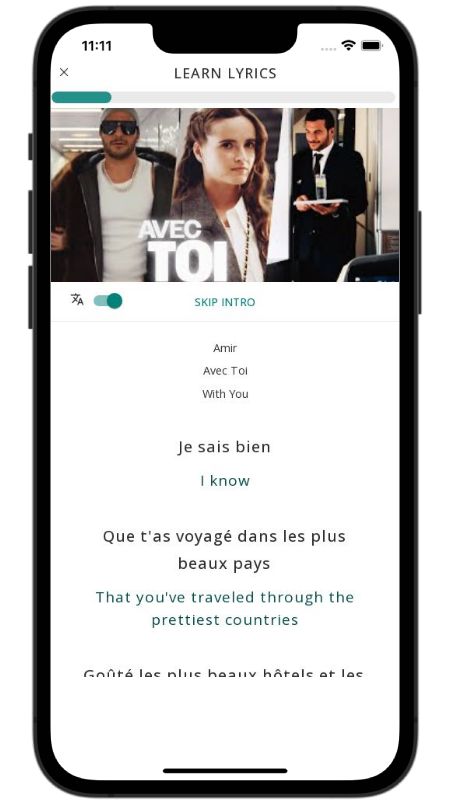
This song is a classic love triangle story, but with a twist! Amir is singing to someone who is with a wealthy partner. This other person provides a life of luxury: traveling to beautiful countries, staying in fancy hotels, and living in "l'plus bel appart de la rue" (the most beautiful apartment on the street). He buys them expensive jewels and clothes.
Amir's pitch is that he offers something much better than money. He cleverly turns his simpler life into a romantic advantage. Sure, "notre lit sera plus petit" (our bed will be smaller), but that's only "parce que j'veux que tu sois plus proche de mes bras" (because I want you to be closer to my arms). He argues that material things fade, saying "les bijoux, ça s'abîme" (jewels get damaged), and the only one that truly matters is "l'anneau à ton doigt" (the ring on your finger). It's a bold and sweet attempt to win someone over with pure love instead of wealth.