Amour Lyrics in English by Claude
Kwijt means that something is lost, gone or no longer with you.
In the lyric "Zijn we 't kwijt?" Claude questions whether their love has slipped away, giving the word an emotional punch. Its quirky spelling and rhyme with “white” make it a standout, memorable term for learners.
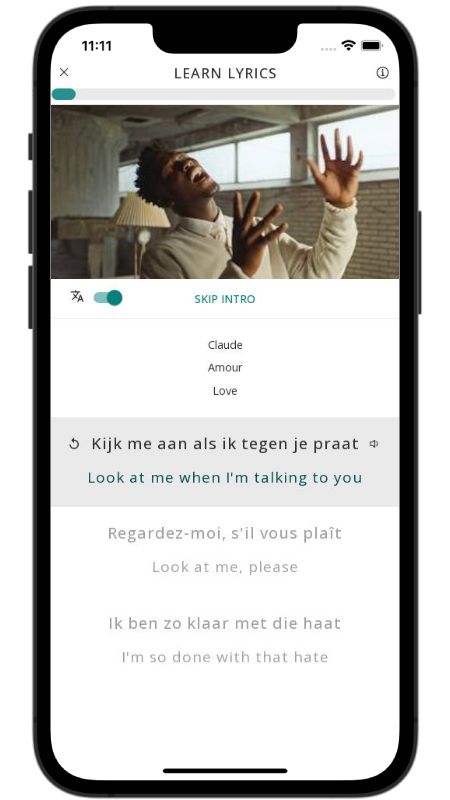
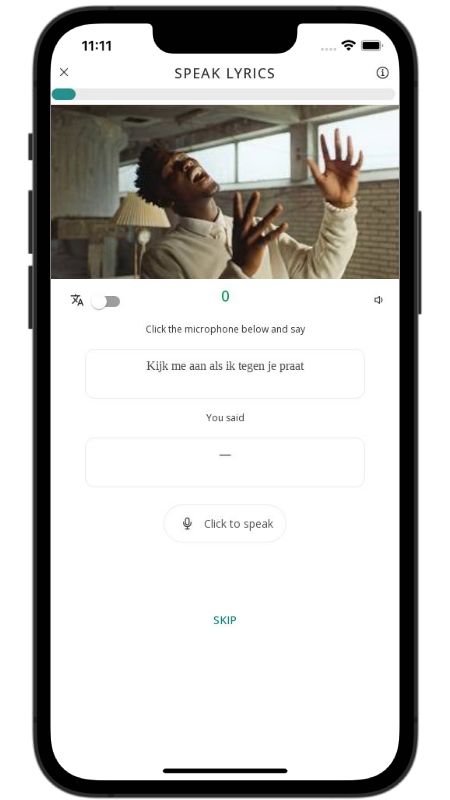
Ever felt like you're not being heard in a relationship? That's the feeling at the heart of Claude's song "Amour". He starts by pleading directly with someone, mixing Dutch and French to get their attention: "Kijk me aan als ik tegen je praat" (Look at me when I talk to you) and "Regardez-moi, s'il vous plaît" (Look at me, please). He's tired of the negativity and just wants to know if there's any hope left for them, asking, "Zijn we verloren? Zijn we 't kwijt?" (Are we lost? Have we lost it?).
He feels so overwhelmed that he explains he has to use multiple languages to get his feelings out: "Er is zoveel wat ik wil zeggen / Dus ik zeg het in iedere taal" (There is so much I want to say / So I say it in every language). The whole song is a search for an answer to the question, "Waar is de liefde, liefde?" (Where is the love, love?). He makes it clear he can't live without it and will never stop looking for it, repeating "Ik blijf altijd zoeken / Cherche pour toujours" (I will always keep searching / Search forever).