 LYRICFLUENT
LYRICFLUENTHow To Recognize A Dystopia Lyrics by Addison Anderson
Below, you will find the lyrics for How To Recognize A Dystopia by Addison Anderson.
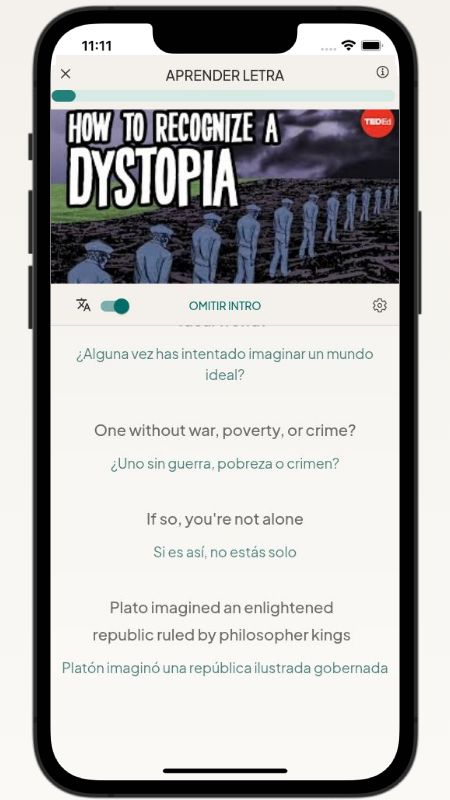
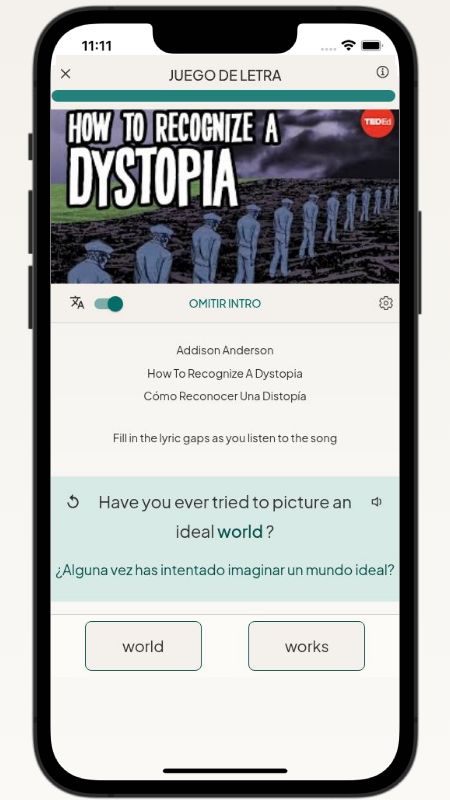
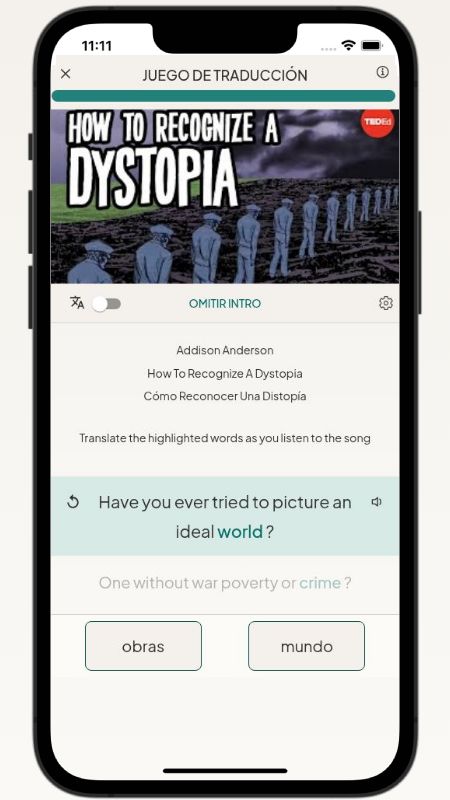
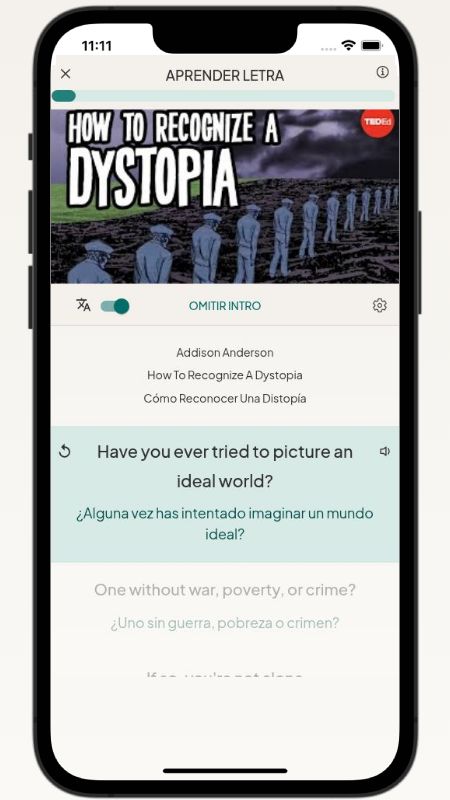
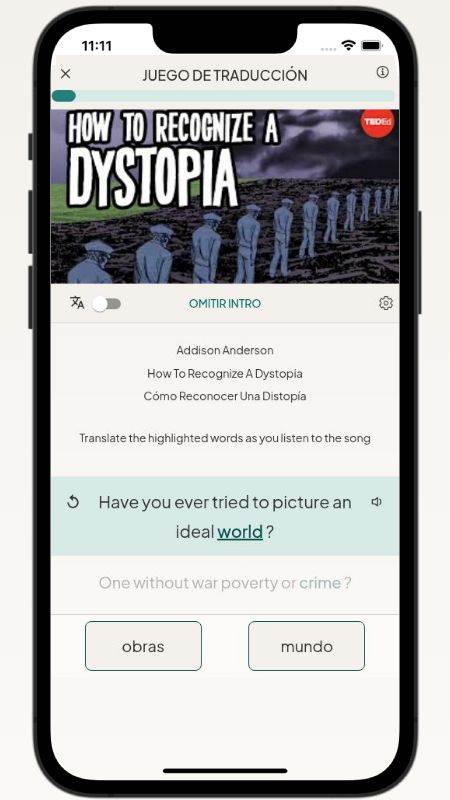
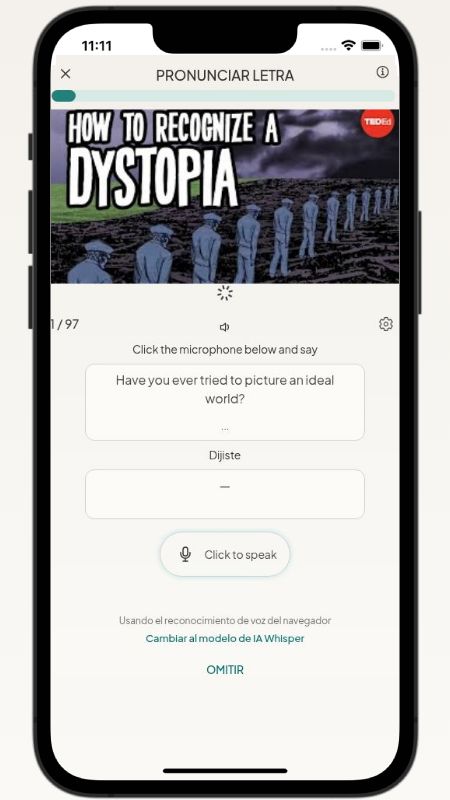
Have you ever tried to picture an ideal world?
One without war, poverty, or crime?
If so, you're not alone
Plato imagined an enlightened republic ruled by philosopher kings
Many religions promise bliss in the afterlife
And throughout history
Various groups have tried to build paradise on Earth
Thomas More's 1516 book 'Utopia' gave this concept a name
Greek for 'no place.'
Though the name suggested impossibility
Modern scientific and political progress
Raised hopes of these dreams finally becoming reality
But time and time again, they instead turned into nightmares
Of war, famine, and oppression
And as artists began to question utopian thinking
The genre of dystopia, the not good place, was born
One of the earliest dystopian works is Jonathan Swift's
'Gulliver's Travels.'
Throughout his journey, Gulliver encounters fictional societies
Some of which at first seem impressive
But turn out to be seriously flawed
On the flying island of Laputa
Scientists and social planners pursue extravagant and useless schemes
While neglecting the practical needs of the people below
And the Houyhnhnm who live in perfectly logical harmony
Have no tolerance for the imperfections of actual human beings
With his novel, Swift established a blueprint for dystopia
Imagining a world where certain trends in contemporary society
Are taken to extremes
Exposing their underlying flaws
And the next few centuries would provide plenty of material
Industrial technology that promised to free laborers
Imprisoned them in slums and factories, instead
While tycoons grew richer than kings
By the late 1800's, many feared where such conditions might lead
H. G. Wells's 'The Time Machine' imagined upper classes and workers
Evolving into separate species
While Jack London's 'The Iron Heel' portrayed a tyrannical oligarchy
Ruling over impoverished masses
The new century brought more exciting and terrifying changes
Medical advances made it possible to transcend biological limits
While mass media allowed instant communication
Between leaders and the public
In Aldous Huxley's 'Brave New World'
Citizens are genetically engineered
And conditioned to perform their social roles
While propaganda and drugs keep the society happy
It's clear some crucial human element is lost
But the best known dystopias were not imaginary at all
As Europe suffered unprecedented industrial warfare
New political movements took power
Some promised to erase all social distinctions
While others sought to unite people around a mythical heritage
The results were real-world dystopias
Where life passed under the watchful eye of the State
And death came with ruthless efficiency to any who didn't belong
Many writers of the time didn't just observe these horrors
But lived through them
In his novel 'We', Soviet writer Yevgeny Zamyatin described a future
Where free will and individuality were eliminated
Banned in the U.S.S.R., the book inspired authors like George Orwell
Who fought on the front lines against both fascism and communism
While his novel 'Animal Farm' directly mocked the Soviet regime
The classic '1984' was a broader critique of totalitarianism
Media, and language
And in the U.S.A., Sinclair Lewis's 'It Can't Happen Here'
Envisioned how easily democracy gave way to fascism
In the decades after World War II
Writers wondered what new technologies
Like atomic energy, artificial intelligence, and space travel
Meant for humanity's future
Contrasting with popular visions of shining progress
Dystopian science fiction expanded to films, comics, and games
Robots turned against their creators
While TV screens broadcast deadly mass entertainment
Workers toiled in space colonies above an Earth of depleted resources
And overpopulated, crime-plagued cities
Yet politics was never far away
Works like 'Dr. Strangelove' and 'Watchmen' explored
The real threat of nuclear war
While 'V for Vendetta' and 'The Handmaid's Tale'
Warned how easily our rights could disappear in a crisis
And today's dystopian fiction continues to reflect modern anxieties
About inequality
Climate change
Government power
And global epidemics
So why bother with all this pessimism?
Because at their heart, dystopias are cautionary tales
Not about some particular government or technology
But the very idea that humanity can be molded into an ideal shape
Think back to the perfect world you imagined
Did you also imagine what it would take to achieve?
How would you make people cooperate?
And how would you make sure it lasted?
Now take another look
Does that world still seem perfect?
Did you like this lyrics translation?
Learn English with lessons based on this song!





Rated 4.9 · Join 250,000+ learners
Apple and App Store are trademarks of Apple Inc.
Google Play and the Google Play logo are trademarks of Google LLC.
MORE LYRICS










MORE ADDISON ANDERSON
Languages
Learn English with musicLearn Spanish with musicLearn French with musicLearn Portuguese with musicLearn Italian with musicLearn German with musicLearn Korean with musicLearn Russian with musicLearn Dutch with musicLearn Romanian with musicLearn Ukrainian with musicLearn Turkish with musicLearn Polish with musicLearn Swedish with musicLearn Finnish with music