 LYRICFLUENT
LYRICFLUENTA Brief History Of Alcohol Lyrics by Addison Anderson
Below, you will find the lyrics for A Brief History Of Alcohol by Addison Anderson.
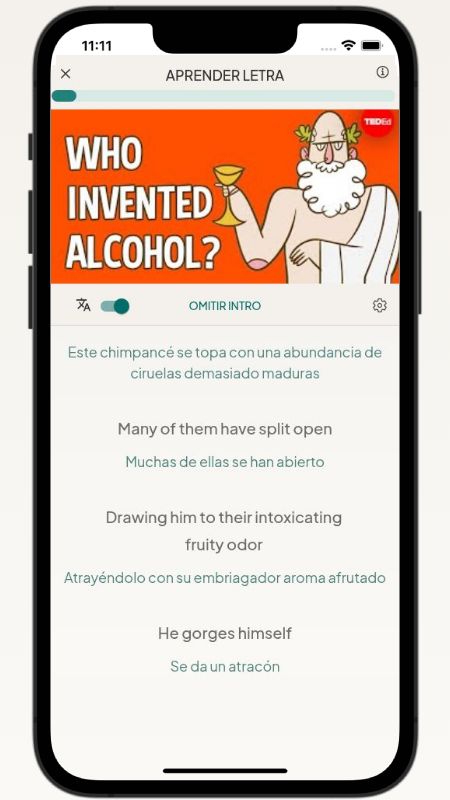
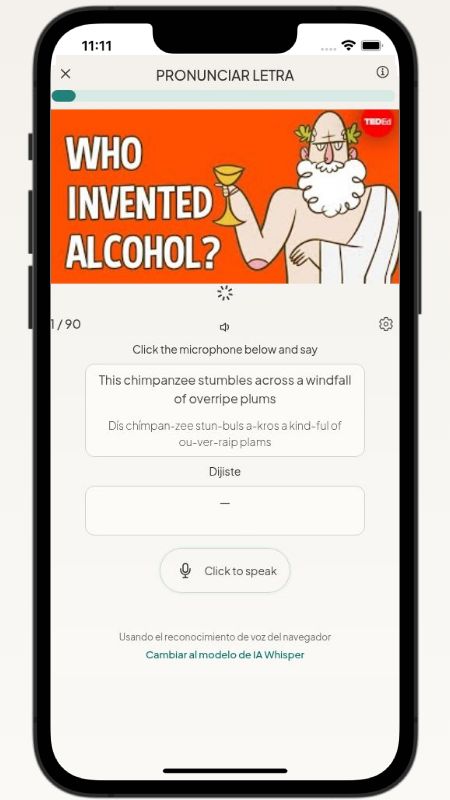
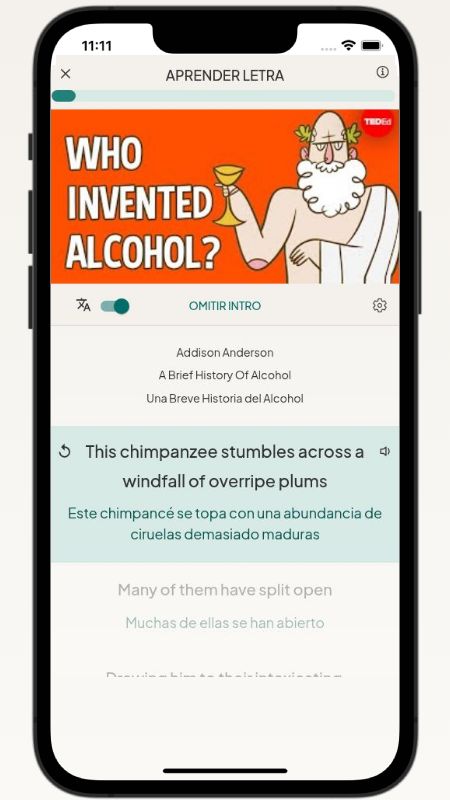
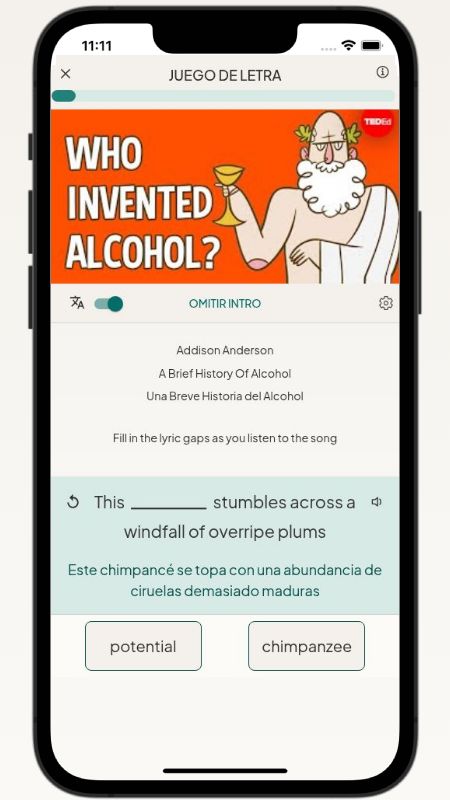
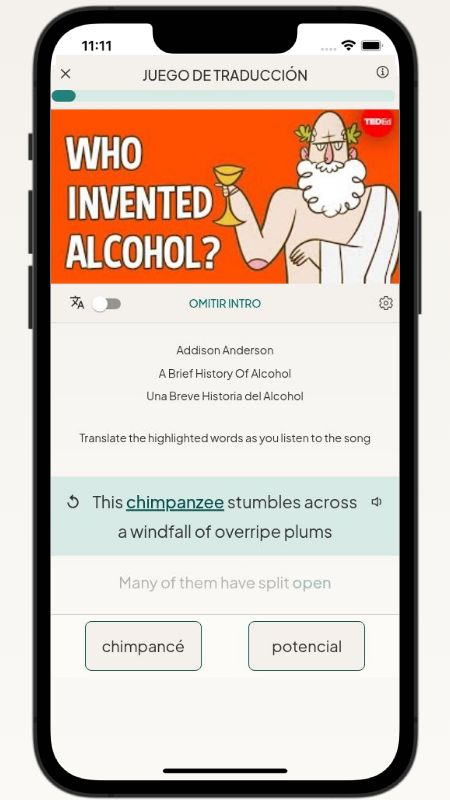
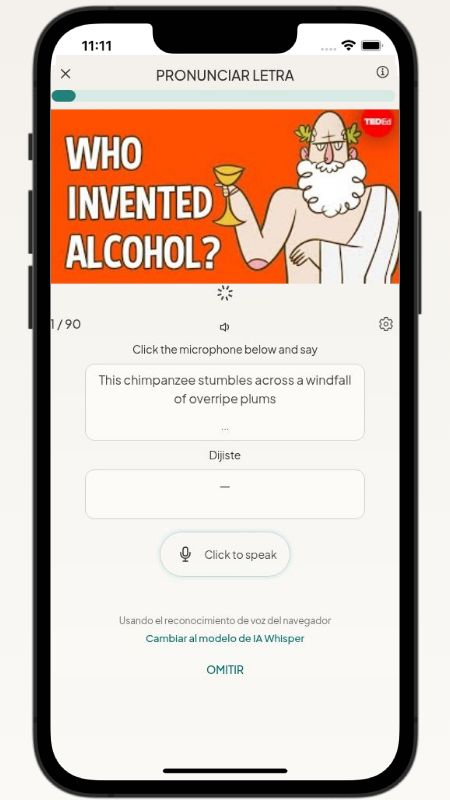
This chimpanzee stumbles across a windfall of overripe plums
Many of them have split open
Drawing him to their intoxicating fruity odor
He gorges himself
And begins to experience some strange effects
This unwitting ape has stumbled on a process
That humans will eventually harness
To create beer, wine, and other alcoholic drinks
The sugars in overripe fruit attract microscopic organisms
Known as yeasts
As the yeasts feed on the fruit sugars they produce
A compound called ethanol—
The type of alcohol in alcoholic beverages
This process is called fermentation
Nobody knows exactly when
Humans began to create fermented beverages
The earliest known evidence comes from 7,000 BCE in China
Where residue in clay pots
Has revealed that people were making an alcoholic beverage
From fermented rice, millet, grapes, and honey
Within a few thousand years
Cultures all over the world were fermenting their own drinks
Ancient Mesopotamians and Egyptians made beer throughout the year
From stored cereal grains
This beer was available to all social classes
And workers even received it in their daily rations
They also made wine
But because the climate wasn't ideal for growing grapes
It was a rare and expensive delicacy
By contrast, in Greece and Rome, where grapes grew more easily
Wine was as readily available as beer was in Egypt and Mesopotamia
Because yeasts will ferment basically any plant sugars
Ancient peoples made alcohol
From whatever crops and plants grew where they lived
In South America, people made chicha from grains
Sometimes adding hallucinogenic herbs
In what's now Mexico, pulque, made from cactus sap
Was the drink of choice
While East Africans made banana and palm beer
And in the area that's now Japan, people made sake from rice
Almost every region of the globe had its own fermented drinks
As alcohol consumption became part of everyday life
Some authorities latched onto effects they perceived as positive—
Greek physicians considered wine to be good for health
And poets testified to its creative qualities
Others were more concerned about alcohol's potential for abuse
Greek philosophers promoted temperance
Early Jewish and Christian writers in Europe integrated wine into rituals
But considered excessive intoxication a sin
And in the middle east, Africa, and Spain
An Islamic rule against praying while drunk
Gradually solidified into a general ban on alcohol
Ancient fermented beverages had relatively low alcohol content
At about 13% alcohol
The by-products wild yeasts generate during fermentation
Become toxic and kill them
When the yeasts die
Fermentation stops and the alcohol content levels off
So for thousands of years, alcohol content was limited
That changed with the invention of a process
Called distillation
9th century Arabic writings describe boiling fermented liquids
To vaporize the alcohol in them
Alcohol boils at a lower temperature than water
So it vaporizes first
Capture this vapor, cool it down, and what's left is liquid alcohol
Much more concentrated than any fermented beverage
At first, these stronger spirits were used for medicinal purposes
Then, spirits became an important trade commodity
Because, unlike beer and wine, they didn't spoil
Rum made from sugar
Harvested in European colonies in the Caribbean
Became a staple for sailors
And was traded to North America
Europeans brought brandy and gin to Africa
And traded it for enslaved people, land
And goods like palm oil and rubber
Spirits became a form of money in these regions
During the Age of Exploration
Spirits played a crucial role in long distance sea voyages
Sailing from Europe to east Asia and the Americas could take months
And keeping water fresh for the crews was a challenge
Adding a bucket of brandy to a water barrel kept water fresh longer
Because alcohol is a preservative that kills harmful microbes
So by the 1600s
Alcohol had gone from simply giving animals a buzz
To fueling global trade and exploration
Along with all their consequences
As time went on
Its role in human society would only get more complicated
Did you like this lyrics translation?
Learn English with lessons based on this song!





Rated 4.9 · Join 250,000+ learners
Apple and App Store are trademarks of Apple Inc.
Google Play and the Google Play logo are trademarks of Google LLC.
MORE LYRICS















MORE ADDISON ANDERSON
Languages
Learn English with musicLearn Spanish with musicLearn French with musicLearn Portuguese with musicLearn Italian with musicLearn German with musicLearn Korean with musicLearn Russian with musicLearn Dutch with musicLearn Romanian with musicLearn Ukrainian with musicLearn Turkish with musicLearn Polish with musicLearn Swedish with musicLearn Finnish with music