Learn Spanish With Lil Naay with these 13 Song Recommendations (Full Translations Included!)
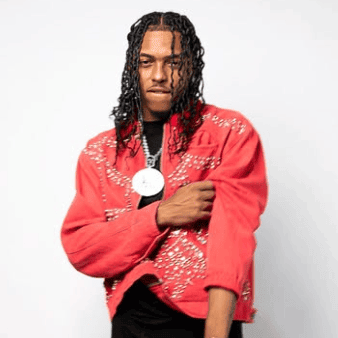
"Pa Tripea" starts with a sweet, familiar English soul sample about crystal raindrops and rainbows before taking a sharp left turn into Dominican street drill. Lil Naay and Huan62 jump straight into neighborhood drama, boastful hookups, and gun talk. Lil Naay brags about sneaking around with someone who already has a partner, dismissing the rival outright: Ese palomo que se acueste ("Let that fool go to bed"). In Dominican street slang, a palomo is a gullible guy or a pushover, someone Naay claims poses zero threat because tiene esa Glock cogiendo mojo ("he has that Glock gathering rust"). He rolls up to her block with Hennessy and a blunt, backed up by Huan62, who brings extra firepower (el peine grandote, referring to an extended magazine).
The track runs on wild contrast. Between loops of romantic English lines about wanting to spend time together, Huan62 describes taking a Percocet, smoking until his eyes are red, and joking that he will hold a prayer vigil for a woman's body (Ese culo le voy a hacer una hora santa ["I am going to hold a holy hour for that ass"]). The lyrics treat chaos, late-night calls, and danger like routine weekend fun. It is reckless, blunt, and packed with fast Dominican slang.
Dominican artist Lil Naay keeps things completely straightforward in "Mami." There are zero grand romantic promises here; in fact, he outright begs for no feelings at all: "Mami contigo quiero hacer una saga / Pero sin sentimientos" ("Mami, with you I want to make a saga / But with no feelings"). The track is an invitation to hang out, light up, and replay some messy late-night history. He remembers listening to his own music together while she warned him not to catch feelings because she is trouble ("Tú me decías a mí que no me ilusione' / Que tú eres una mala" [You told me not to get my hopes up / That you're a bad girl]). Lil Naay simply fires back that he is bad news too, so they might as well skip the excuses.
What makes the song fun is how heavily it leans into everyday Dominican street slang. When he calls himself a "chucky" ("Tú sabes que soy un chucky, mami, desde nacimiento" [You know I've been a troublemaker, mami, since birth]), he is using local slang for a wild, restless rebel who lives life fast. The track sets a vivid scene of him killing time: "En una mano el blon', en la otra una Presidente" ("In one hand the blunt, in the other a Presidente"). Presidente is the national beer of the Dominican Republic, and holding one while scrolling through his crush's social media stories instantly triggers a late-night urge to pull up to her block.
Dominican rapper Lil Naay brings pure street confidence to "Perfect", a track where he refuses to let an ex move on. She might be with someone new, but Naay writes off the new boyfriend as a "pariguayo" (a Dominican slang term for a goofy, gullible, or harmless guy) and warns that having another man "no corre" ("doesn't fly"). Backed by heavy trap energy, he brags that she still secretly prefers a genuine bad boy like him, boldly claiming "Tú sabes que soy tu malo, mami, no te hagas" ("You know I'm your bad boy, baby, stop pretending"). He treats her current relationship as a joke and even threatens violence against the rival, declaring "A mí me da lo mismo llenarlo de balas" ("It makes no difference to me to fill him with bullets").
The lyrics are explicit, cocky, and totally blunt. Naay hypes her up as a top-tier "Barbie", repeating the hook "Ese culo está perfect, botando lava" ("That ass is perfect, spilling lava"), while insisting she does not look as happy now as she did when they were together. He fantasizes about taking her out by the ocean—"Yo quisiera darte frente al mar, yo fumando, ella bebiendo alcohol" ("I'd like to hit it by the sea, me smoking, her drinking alcohol")—while pulling up to the club in designer clothes with extended 30-round clips ("el peine 30"). It is an intense, boastful anthem built on rivalry, ego, and refusing to step aside.
“Una Mala” throws you straight into an after-hours whirlwind where lust, bravado, and heavy dembow drums collide. Lil Naay—Mongolia’s rising urban star—joins forces with Yomel El Meloso, Chael Produciendo, and Huan62 to celebrate la mala: a bold, thrill-seeking woman who owns the dance floor, the bedroom, and everyone’s attention. From the first line, the singers invite her to light up, ride out, and unleash her wilder side, painting the scene with vivid Spanish slang, booming bass, and cheeky shout-outs to “peine’ 30” (extended clips) that underline the streetwise swagger of the track.
Under the neon haze of clubs, weed smoke, and fast cars, the song pulses with raw sensuality. The chorus crowns her as “una sádica malvada”—a wickedly fun partner who flips from innocent to daring in a heartbeat—while the verses boast about doggy-style antics, scratched backs, and stolen glances that only fuel the chemistry. Beyond its explicit bravado, “Una Mala” is a playful anthem of mutual pleasure and unfiltered confidence, capturing that electrifying moment when two partners embrace their “bad” sides and make the night entirely their own.
This song is all about a classic mismatch. Lil Naay lays out a situation where he's involved with a woman who wants a serious relationship, but he's made it crystal clear that's not what he's looking for. He's brutally honest from the start, telling her, "Yo le dije que yo soy muy bandido" (I told her I'm a real outlaw/player), but she doesn't seem to care. She's dreaming of running away with him, while he's just focused on the physical side of things.
The whole track is a back-and-forth between her desires and his. She says she's "falta de amor" (lacking love), and he bluntly replies that he's "falta de sexo" (lacking sex). He's not trying to trick her; in fact, he keeps repeating his position. When she starts talking about getting serious, he's just thinking about smoking: "Está hablando que me quiere pa' serio / Y yo voy por dos bluntes y medio" (She's talking about wanting me for something serious / And I'm on my second and a half blunt). He warns her directly that if she gets attached, it's going to end badly for her, saying "te va a dole' si te suelto" (it's going to hurt you if I let you go).
Lil Naay's "UNA BABY EN SANTIAGO" throws us right into a wild story about a guy and a girl who are definitely playing with fire. He calls it "a man's world," and he's living by his own rules.
The song is all about this girl who's totally into him, even though she has a boyfriend who she claims is a "gánster" [gangster]. But our guy isn't worried, saying, "Puede ser lo que sea, pero que nunca me falte" [He can be whatever, but she should never be missing from me]. She's always telling him, "Papi, ven que quiero pilonearte" [Daddy, come, I want to grind on you], and he's clearly got her attention. He even admits he had another girl, but he's all about this one now, wanting to "detonarte" [detonate you]. It's a high-energy, no-holds-barred look at a secret affair, with a bit of danger and a lot of passion.
“El Río Sonó” plunges us into the buzzing streets where rumors travel faster than the beat itself. The title plays on the Spanish saying “Si el río suena, es porque agua lleva” – if the river makes noise, something is coming. Lil Naay rides this idiom like a wave: whispers say someone was hit, others doubt it, but the mere sound of talk means trouble is on the horizon. Over a swaggering Latin-urban groove, the Mongolian artist swings between Spanish slang and street bravado, reminding everyone that he is a bandido who still “carries it” yet keeps an ear out for danger.
Beneath the tough pose lies a tug-of-war between survival and self-redemption. Lil Naay is tired of the mud of his past and craves “limpiarme y tener mi cualto” – to clean up and stack real money. Fake friends lurk everywhere, loving you only for what you have, disappearing once they take your secrets, then begging for half of the cake you baked alone. His warning is clear: he will unload on anyone who tests him, but the ultimate goal is freedom from the cycle. The song becomes an anthem of vigilance, loyalty, and ambition, all delivered with the catchy hook of a rumor-filled river that just keeps on flowing.
This one is a warning label set to a dembow beat. Lil Naay opens by telling a girl she has changed: "cuando yo te conocí tú no eras así" (when I met you, you weren't like this). Now she wants to be all over him every day, and he is not having it.
The hook is the whole attitude in four lines: "Ma, no te enamores de mí, que tú vas a sufrir" (girl, don't fall for me, you're going to suffer) and "Yo no ando en amor" (I'm not doing love). He'll leave, and "así hablamos después" (we'll talk later), which is the brush-off the title is built on. Notice "ma", short for "mami", used like "girl" or "babe".
The verses are pure street bragging: "dos botes de lean y un pote de ron" (two bottles of lean and a jar of rum), "el 30 en la cartera Louis V" (the 30 in the Louis Vuitton wallet), and "Y yo pinto narco" (and I look like a narco). It is blunt and a bit much, which is exactly the point. The song closes switching to English: "Baby, if you give it to me, I'll give it to you."
Lil Naay teams up with Puerto Rican heavyweight Eladio Carrión for a steamy Latin-trap confession in “Mami [Remix]”. The lyrics revolve around a push-and-pull romance where both partners proudly label themselves malo and mala (bad boy and bad girl). Over smoky beats, the narrator can’t resist inviting his lover over to “prender par de blone’” (light a couple of joints), reminiscing about wild nights when his own songs were the soundtrack to their passion. The message is clear: it’s an intense, physical connection with zero room for fairy-tale feelings — he wants her body “pa’ mí” while she warns him not to “illusionarse” (get his hopes up).
Despite that warning, the chemistry is undeniable. References to telepathy, Lord of the Rings-style “saga,” and playful boasts about unrivaled intimacy highlight a mutual addiction that feels almost mythical. Weed smoke, late-night texts, and hypnotic reggaeton drums set the scene for a no-strings-attached fling that still manages to feel epic. In short, the song is a bold celebration of lust, swagger, and the thrill of two self-proclaimed “villains” who can’t keep away from each other.
“Ella” captures the rush of a relationship that thrives on adrenaline, luxury and pure chemistry. Lil Naay and producer Chael throw us into a world of fast cars, designer watches and late-night smoke sessions where she always calls the shots. The lyrics reveal a fearless woman who jumps from a boyfriend to the singer’s arms, eager to test every boundary: she films their escapades, dreams of having his child and knows every line of his music. Her scent of “zaza” (strong weed) hangs in the air while the pair cruise in a Mercedes and party until sunrise, proving that danger can be seductive and love can be unapologetically raw.
Beneath the flashy boasts and explicit imagery lies a surprising tenderness. Lil Naay admits he has “tried a thousand loves” but never expected to fall for someone who cares more about him than his money. Amid the swagger, he hints at loyalty, mutual empowerment and a shared desire to escape routine—she “de-programs” him from his everyday grind. “Ella” is both a celebration of indulgence and a nod to the rare connection that can bloom in the unlikeliest, wildest places.
In “Me Gustan Las 2,” Lil Naay teams up with OG Jeffersson to confess a love triangle that spins out of control. The narrator admits he had two women and liked them both, savoring a double life until reality crashes in: one partner discovers the betrayal and her heartbreak forces him to face his own flaws. The lyrics swing between bold self-confidence and raw remorse, painting him as a charismatic bandido who insists he can change, even while acknowledging that temptation is always around the corner.
The song captures that tug-of-war between passion and loyalty, freedom and commitment. Lil Naay’s verses reveal guilt and a desire for redemption, while OG Jeffersson’s hook echoes the wounded lover’s tears and accusations of heartlessness. Together they deliver a candid snapshot of modern relationships where ego, desire, and genuine affection collide—leaving everyone to wonder if a “bad boy” can truly settle down or if the cycle of love and lies will keep spinning.
“Lo Malo Malo Malo” is a high-octane Spanish trap anthem where Mongolian artist Lil Naay slips into the role of the ultimate “bad boy.” From the very first line, he brags about being the life of the party and the magnet for every daring girl in the club. The chorus’ hypnotic repetition of “malo, malo, malo” drives home one simple idea: some people are irresistibly drawn to danger. Drugs, flashy deliveries, street showdowns, and steamy encounters all swirl together, painting a picture of nightlife where thrill outranks caution.
Listen closely and you will spot a playful cat-and-mouse storyline. Lil Naay dismisses the girls’ “nice” boyfriends, promises a scare for any rival, and proudly flaunts his outlaw credentials. Yet beneath the swagger, the lyrics hint at a tug-of-war between curiosity and risk. The song isn’t just praising recklessness; it is shining a neon light on why the image of a rebellious rule-breaker can be so alluring. Get ready for punchy slang, rapid-fire boasts, and an unapologetic celebration of the wild side.
“Eso E Eso” throws you straight into a neon-lit night where danger, desire, and swagger collide. Mongolian artist Lil Naay teams up with Dominican hit-maker Shadow Blow to craft a Spanish trap anthem about a woman who only has eyes for real gangsters—the kind who keep a pistol close and rules even closer. Over a booming beat, Lil Naay brags about mixing pleasure with risk: secret hook-ups, loaded weapons, and mind-bending substances all swirl together as he vows to “give it with respect,” even while breaking every other rule in the book.
Beneath the flashy bravado lies a tug-of-war between power and vulnerability. She plays the bad girl role, yet he reminds her he’s badder, ready to “punish” any flirtation with full-throttle passion. The chorus—“Eso e eso” (“That’s just how it is”)—captures the track’s unapologetic attitude: no regrets, no apologies, only raw chemistry and adrenaline. Think of it as a soundtrack for a night when lust, street cred, and recklessness feel like the only languages worth speaking.

