Learn Italian With Biagio Antonacci with these 10 Song Recommendations (Full Translations Included!)
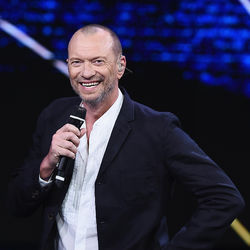
Biagio Antonacci is one of Italy's most successful singer-songwriters. Born in Milan in 1963, he broke through in the early 1990s with albums like Liberatemi, and has spent more than three decades writing warm, melodic pop songs about love, loss and self-reflection. He has also written hit songs for other major Italian artists, most famously his longtime collaborator Laura Pausini, and remains one of the country's best-selling recording artists.
This track features Franco Battiato, the celebrated Sicilian singer-songwriter, composer and painter nicknamed "Il Maestro" for his restless work across pop, electronic music and even opera. Battiato's lyrics were known for weaving in philosophy, mysticism and Eastern spiritual traditions, themes that come through clearly in "Aria di Cambiamento." He passed away in 2021, but remains one of the most influential figures in Italian music.
Step inside In Questa Nostra Casa Nuova and you will find more than freshly painted walls. Biagio Antonacci and Laura Pausini welcome us into a new home that symbolizes the start of a hopeful chapter in love. Behind the doors there is a peaceful harmonia where ordinary details—a sip of water shared with the swallows, a quick photo, a garden fence—feel almost miraculous. The duet swaps perspectives, each singer praising the other’s hidden gift, that “qualcosa dentro di te” which keeps the relationship blooming and repairs cracks whenever life looks ready to crumble.
The house becomes a warm refuge from the world and for each other, reminding us why we build homes in the first place: to protect joy, to press reset, and to come back stronger together. Every return “in tempo” shows that even the most complicated hearts can sync when love provides the rhythm. By the final chorus, you can almost smell fresh flowers and wet plaster while the pair reassure us that, with the right person, every day feels like moving day—full of optimism, laughter, and the sense that anything broken can be fixed.
This song feels like a deep, philosophical conversation about finding peace in a crazy world. The singers start by saying they "Chiudo gli occhi per non vedere / Le follie del mondo" (I close my eyes so as not to see / The follies of the world), which is a mood we can all understand! They describe us as "esseri senzienti / Prigionieri" (sentient beings / Prisoners), stuck in the rush of modern life and longing for a simpler, happier time.
But it's not a sad song. It's full of hope for a big shift, an "Aria di cambiamento" (Air of change). The lyrics suggest the way to find freedom is through self-knowledge and letting go of attachments. The path forward is guided by "L'amore supremo" (The supreme love) and a kind of knowledge that is "Al di là del pensiero" (Beyond thought). It’s a beautiful reminder that even when things are dark, change is coming, and peace can be found within.
Imagine love as something so vivid it feels like you can touch it from every angle. Tridimensionale spins a cinematic tale of two souls who share the same “particles,” yet constantly tease each other with snippets of different languages and playful doubts. Through memories of teenage bike rides, first kisses, mandarins peeled in sun-drenched piazzas, and talk about tickets and open-heart surgery, Biagio Antonacci and Benny Benassi paint romance as an adventure that shouldn’t stop at a bedroom door. It is a feeling that keeps moving, just like the sky-high journey from sunshine to starlight they sing about.
At its core, the song asks a simple question: If love costs as much as a ticket, why not make the ride unforgettable? The chorus celebrates a relationship so intense it sends you soaring only to let you drift back down in a sweet, safe crash. That push-and-pull, the youthful wonder, and the promise to keep living even when the other fades, combine into a love that is truly tridimensional—full of depth, height, and width, impossible to flatten into a single moment.
Lights, camera, passion! In “Telenovela,” Italian songwriter Biagio Antonacci turns a rocky love affair into a riveting soap-opera episode. The narrator admits he has played the traitor “like Judas,” begging forgiveness at her door, only to watch his lover slip away again. Their story swings between apologies and fresh wounds, candlelit dances and seaside betrayals, just like the dramatic twists you would see on late-night TV.
Antonacci paints love as a rose with an unavoidable thorn: it dazzles, then delivers a sting. Jealousy flares, half-truths circulate, and a once-splendid girl is “ruined in the space of a full moon.” When the poison of love finally drifts off, what remains is a thirst for revenge fit for a cliff-hanger finale. “Telenovela” is a cinematic reminder that passion can be addictive, messy and irresistibly entertaining—no remote control required!
"Le Donne Sole" ("Lonely Women") follows a group of single women out for the night, driving in twos and threes to cold city streets, fixing their hair in the bathroom, and coming back to the table looking their best. Biagio Antonacci watches them hoping for a compliment, telling half-true stories to feel a little less alone.
He wishes he could gather them up, hold them close, and make them laugh, because so many of the men in their lives can't be bothered to try. He imagines telling them "I'm here, I'm here," insisting that it wouldn't take much for someone to actually pay attention. It's a gentle, sympathetic song about the loneliness that can hide behind a night out, and about wanting to be the one who notices.
"Ti Saprò Aspettare" is a quiet promise wrapped inside a love song. Biagio Antonacci sings about a woman who feels almost too much to take in: her smile becomes a kind of cage, and she's tall enough that she seems closer to the sky than to him. Instead of trying to change her, he decides to wait.
The chorus keeps the promise plain and repeated: I will know how to wait for you, there will be things to do, I will wait for you. It reads less like a grand declaration and more like a steady, everyday one, patience treated as its own form of love.
Later he watches her draw shapes in the dust, symbols she reads slowly and with effort, and notices that time doesn't really change her so much as explain her. The song closes on that same idea: whatever there is to work through, he'll still be there waiting.
"Buongiorno bell'anima" is Biagio Antonacci's playful ode to a morning after. The song opens mid-scene: someone is about to slip out the door, and the narrator asks for just a little more time together, a coffee, a few more minutes before the day takes over.
The title line, which repeats as the song's hook, is a small daily ritual turned into an endearment: "good morning, beautiful soul, coffee?" It captures how ordinary moments (sharing coffee, teasing, staying in bed a little longer) can carry real tenderness.
Underneath the light tone, Antonacci lets in a more reflective verse about old fears and doubts ("questi fantasmi ancora in noi", these ghosts still in us) that are older than either of them, and how this new closeness quiets them. The song ends up being about wanting to stay, not just for one morning, but for good.
Biagio Antonacci builds this whole song around one blunt warning: "Non hai capito che l'amore muore" (You haven't understood that love dies). He repeats it so many times it stops sounding like a lyric and starts sounding like someone shaking you by the shoulders. The other refrain is darkly funny: "Accendi un cero che l'amore muore" (Light a candle, because love dies). Lighting a candle, accendere un cero, is what Italians do in church for someone, and it is also a jokey way of saying "say a prayer, you'll need it".
The verses are a list of reasons to be worried. There are "troppi detti inutili" (too many useless sayings) in bars "che fanno la politica" (that talk politics), "sempre poco sonno" (always too little sleep) and "sempre case in fiamme" (always houses on fire). Then he turns on the listener: "Hai fatto i conti simulando perdite" (you did the math pretending to have losses). That is a sharp line about someone who plays the victim to come out ahead.
The ending changes tone completely. It becomes a letter, "Come stai?" (How are you?), written "da quest'angolo di questo paradiso detto Africa" (from this corner of this paradise called Africa), where he says "ho ritrovato la mia anima" (I found my soul again) and talks to God "come con mio padre" (like with my father). After all that noise, the answer to love dying seems to be stepping far away from it.
"Ricordati Chi Sei" is Antonacci talking to someone who keeps losing herself. The title line, "Ricordati chi sei" [Remember who you are], opens the song as both a plea and a command, set against "Dimentichi chi sei" [You forget who you are]. The two lines trade places throughout the song, like he's holding up a mirror she won't look into. He compares himself to something that keeps surviving her: "Ti taglio e tu ricresci" [I cut you and you grow back], "Tu sei canna di bambù" [You're a bamboo cane], then turns it dark with "Che palude in me ti nutre" [Some swamp inside me feeds you]. He's the ground she keeps growing out of, and it isn't healthy for either of them.
The bridge draws her as someone found in bad shape: "Ti ho trovata infreddolita" [I found you freezing], "I capelli erano stanchi" [Your hair was weary], "Vagabonda e nuda" [Wandering and naked], and in the same breath, "Composta e immortale" [Poised and immortal]. The Spanish "No me olvides" [Don't forget me] breaks into the Italian lyric like a separate voice begging not to be left behind, and by the closing "Ricordati, ricordati chi sei" [Remember, remember who you are] the song has stopped being gentle about it.
Biagio Antonacci's "Quanto tempo e ancora" opens at a party, running into someone he didn't expect to see: "Tra tanti amici, non ti aspettavo qui" (Among so many friends, I didn't expect you here). The old feeling comes rushing back — "E ti accompagnava un'emozione forte" (And a strong emotion came with you) — and the chorus becomes the whole song's question, repeated three times over: "Ma quanto tempo e ancora, ti fai sentire dentro" (How much longer, and still, will you make yourself felt inside me), "Quanto tempo e ancora, ti metti proprio al centro" (How much longer, and still, do you put yourself right at the center). He isn't over her, and the song never pretends otherwise.
By the second verse he's chosen distance instead: "Sì, forse è meglio, così non mi vedrai" (Yes, maybe it's better, that way you won't see me), followed by "Piangere poi ridere, poi, prenderti un po' in giro" (Crying, then laughing, then teasing you a little) and "Fingere davanti a tutti, di aver dimenticato" (Pretending in front of everyone that I've forgotten). The title's own question — how much longer — never actually gets answered.

