Learn Italian With Salmo with these 12 Song Recommendations (Full Translations Included!)
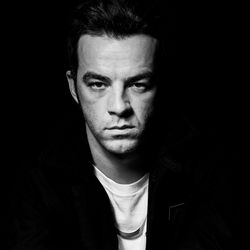
Salmo opens with a list of what he sees around him: new trends, gangs, flex boys, Barbie and Ken, white sneakers, dirty hands, purple syrup. It reads like scrolling a feed, where each image is a costume somebody is wearing.
The chorus is where he draws his line. Everyone is playing at being dangerous, so he says the plainest thing he can: he is not like them, and he is not a criminal. The word "criminale" keeps returning, and the more it repeats the emptier it sounds, which is the point.
In the second verse he says what actually bothers him. Nobody cares about the music anymore. It has become a dance for TikTok, a film with no soundtrack. His complaint is not really about crime, it is about people treating a craft as a costume.
The closing section turns into a prayer, and it is the sharpest part of the song. "Forgive us, honest criminals" leads into asking a saint to bless our weapons, temper our knives and direct our bullets. Salmo borrows the shape of a religious litany to show how easily violence gets dressed up as something righteous.
This unplugged version takes the beat away and leaves the words exposed, which makes the irony harder to miss.
"Il Senso Dell'Odio" is Salmo looking back at a life full of "should have, could have, wanted to" and turning that regret into fuel instead of letting it sit. He talks about the fear of waking up with no clear "next," the nights he never came home before three, and the version of himself that skipped school and dreamed, half seriously, of a normal university life instead.
The title line is the key: he says he "loves the sense of hate, corroded," almost proud that he'll never be conventionally famous, because in Italy fame just means how much you sell, and that's not the game he's playing. He'd rather write.
The chorus turns that bitterness into something almost hopeful. "All that's left is hate when everything ends, you'll still find me here" isn't despair, it's defiance: as long as you can still feel something that sharp, you know you're alive. He wishes he could rewind time like the internet legend John Titor, just to live it all the same way again, mistakes included.
By the end he widens the lens to his whole city: half the people around him feel exactly what he feels, but nobody can put it into words. Writing, for him, is what finally does.
In "Falsità & Cortesia," which translates to "Falseness & Courtesy," Italian rapper Salmo delivers a powerful critique of the music industry and the critics who judge him. He challenges anyone who thinks they know him, asking, "What do you know about me?" He accuses them of being hypocrites who are only interested in his money while claiming that his success is killing his art, or "poetry." Salmo turns this idea on its head, suggesting their obsession with wealth will be their own downfall.
Throughout the song, Salmo paints a picture of his identity as an artist who has achieved fame but hasn't forgotten his roots. He describes himself walking a "red carpet" with "mud on his shoes," a perfect image of someone who feels like an outsider even in the world of success. He declares his unstoppable drive and confidence, comparing himself to a free-spirited "gypsy." Ultimately, he sees the world around him, especially his nation, as defined by a toxic mix of "falseness and courtesy"—a polite surface hiding a fake reality.
Get ready for a masterclass in Italian rap battles! "DOVE VOLANO LE PAPERE" is what's known as a "diss track," where one artist verbally attacks another. In this song, Salmo takes direct aim at fellow Italian rapper Luchè, holding nothing back in a relentless series of insults and accusations.
From the very first line, Salmo declares "Luchè rest in peace" and proceeds to dismantle his rival's career, reputation, and even his connection to his hometown of Naples. He calls Luchè a "mommy's boy," mocks his live performances, and accuses him of being the lesser member of his old group, Co'Sang. Salmo even uses Luchè's own Neapolitan dialect against him with the insult "'Kitemmuort'." The title, which translates to "Where the Ducks Fly," is a clever way of saying that Luchè is all talk and no substance, full of empty chatter.
This is Salmo's unplugged reworking of "Il Cielo in una Stanza," the classic Italian love song, turned into something rawer and more personal.
The song is about being completely undone by someone. Salmo closes the sky into the room with them, shutting out the whole world so it's just the two of them, and admits that loving this hard makes him feel foolish, even a little unhinged. He punches doors, loses his mind, and says the world tilts on its axis when she's near.
There's tenderness under the bravado too. He calls her a poem he never got to write and a song that doesn't exist, and promises he could watch her for hours. The "sky closed into the room" from the title becomes his own version: love as something so overwhelming it rewrites the room around you.
"La Prima Volta" (Italian for "The First Time") is Salmo looking back at growing up on the streets of Olbia. Each verse strings together a list of memorable firsts: the first rap rhyme he ever heard, his first crush, his first fight, the first funeral he ever saw, the first joint he rolled with friends on a wall.
The chorus turns those memories into a wish: he hopes every "first time" still ahead of him is worth more than oro nero, his phrase for something more precious than money. It is less about wealth and more about wanting each new milestone in life to feel as real as those early ones did.
The second verse returns to the same streets with older eyes: police chases, cold winters, and the same restless question of whether this moment might be the last one worth remembering. The song treats nostalgia as fuel rather than sadness, a reminder to keep chasing firsts that matter.
Salmo raps about the cost of the life he chose. He was born ready for a hard world ("born with gills" in the sewer), and now that he's famous he still feels like he's fighting for air, calling fame "hell" and admitting he sometimes wants to disappear.
The chorus is the heart of the song: "people like me will die alone." He pictures himself as a wolf howling at a storm, wrapped in his own darkness, pushing everyone else away rather than let them in.
The second half gets more personal and darker, touching on doubt, temptation, and the fear that this restless drive might destroy him before it's done anything good. Music becomes his way of staying alive: writing, dying, and coming back to life through it, over and over, one more "Monday" at a time.
"MARLA / BLACK WIDOW" is Salmo's portrait of a woman who is as dangerous as she is magnetic. He compares her to a black widow caught up in her own emotions, and to old Hollywood glamour, but always circles back to how impossible she is to look away from.
Underneath the seduction, the song shows her wounds too: old scars from broken trust, anxiety, impostor syndrome, nights spent alone. She hides behind a tough exterior even while her eyes still give away a childlike vulnerability.
The chorus keeps returning to her name, Marla, almost like a spell he can't shake. In the second half, Salmo widens the picture with fragments of her past, a stolen photo, an escape from home, and draws a parallel between her chaos and his own life, both of them tangled in the same trouble.
Salmo turns Italy into a stadium and the whole country into a match that never really ends. Over ninety minutes he walks through the things he grew up around: a school run by nuns, a football team he loves without question, work that never arrives, and a dialect so thick he cannot always follow it himself. Nothing here is postcard Italy. It is the version you only get from someone who lives in it.
The verses stack the contradictions on purpose. The mafia keeps working through August while everyone else takes a holiday. The news does not inform. Racists listen to hip hop. Banks open accounts while ports close. People smile with cuts on their wrists, and it all gets turned into another TV series. His answer is not a slogan, just a small and very hard instruction: before you try to be a real Italian, try to be human.
Then the chorus arrives and the whole thing becomes a show. Sit down, get comfortable, it is like flying economy without the sick bags. Faces come looking for a fight and get applause instead, and that applause is the sting of the song. Ninety minutes of clapping for a performance nobody actually wanted to watch.
For learning Italian, this is a rich and very current listen. You get everyday spoken forms like frate' for brother and 'sti for these, the useful phrase qualcosa non torna for something does not add up, and plenty of blunt street vocabulary. Be warned that the language is strong throughout.
MATRIOSKA is a love song, but the person it is sung to is not a person. Salmo and Noyz Narcos address a drug the way you would address someone you cannot stop going back to, and they never once name it.
The clues are all in the small details. The singer waits for a call "as Christians await the Messiah", says he has been "on this shit since '98", and admits he took her "around the pharmacies". The chorus is pure high: tu mi fai sentire in volo, you make me feel like I'm flying, vedo molto meglio da qui, I can see much better from here. Then the comedown arrives in the same breath, e ora che mi lasci da solo, and now you leave me alone, and the whole thing collapses into one question asked three times over: where are you?
The verses fill in what that costs. He drives the wrong way down the lane, rolls over in bed alone even when she is there, and loses his temper the moment she is missing. Noyz Narcos takes it back to school toilets and a first criminal charge, which turns the habit into something that has been growing quietly for decades rather than a bad night.
The title carries the idea. A matryoshka is a doll with another doll inside it, and another inside that. Every time he opens one up hoping to find the thrill again, there is only a smaller version of the same thing waiting.
Estate Dimmerda is Salmo’s fiery rant against the clichéd, carefree image of summertime. Under the blazing Italian sun, he paints a picture of suffocating heat, crowded beaches, and relentless commercial vibes that turn the season into a sweaty prison. Instead of the usual sunny optimism, Salmo fires off sharp lines about social fears, fake luxury, conspiracy theories, and bad news on TV, showing how real life keeps intruding on the supposed “vacation mood.”
Yet the song is not all gloom. Salmo’s answer to every frustration is simple: “Vabbè, balliamo!” — “Whatever, let’s dance!” The hook becomes a playful survival tactic, a rebellious invitation to shake off anxiety, failure, or heartbreak on the dance floor. By mixing dark humor, social commentary, and irresistible energy, Salmo turns a “sh*tty summer” into a sardonic party where dancing is both protest and release.
Get ready for a wild ride with "Non Esco Mai," which translates to "I Never Go Out." This track is a powerful anthem about choosing to stay inside, away from the chaos of the world. The rappers explain their reasons through vivid, often dark, and boastful lyrics. The chorus captures the core feeling perfectly: waking up overwhelmed with guilt and confusion after a wild night, as if a bomb went off. It's a classic case of morning-after regret, where the fun of the previous night looks very different in the light of day.
Each rapper brings their own unique flavor to the theme. They paint a picture of a rockstar lifestyle filled with parties, women, and substances, but also a deep sense of disillusionment. They drop an incredible number of pop culture references, name-checking everyone from Elvis and Mike Tyson to Kurt Cobain and characters from Blade Runner. The song is a showcase of lyrical skill, with each artist trying to outdo the others with clever wordplay and aggressive boasts, positioning themselves as untouchable figures in the rap game. It's a dark, cynical, and witty look at why sometimes, staying home is the best option.

