Learn Italian With Ligabue with these 23 Song Recommendations (Full Translations Included!)
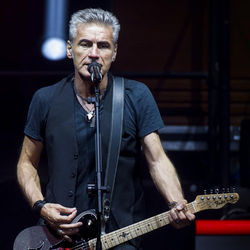
Ligabue, whose full name is Luciano Ligabue, is one of Italy's most beloved rock singers. Born in 1960 in Correggio, a small town in the Emilia-Romagna region, he started his music career with his self-titled debut album in 1990 and has been a major force in Italian rock ever since.
His 1995 album "Buon Compleanno Elvis" made him a household name, and his song "Certe Notti" is still considered one of the defining Italian songs of the 1990s. In 2005, he played a legendary concert in his hometown area that drew around 180,000 fans, setting a European record at the time.
Beyond music, Ligabue is also a writer and filmmaker. He wrote and directed the film "Radiofreccia," which won several major Italian film awards, and he has published acclaimed short stories as well.
More than three decades into his career, he remains one of Italy's most popular rock artists, known for lyrics that mix everyday emotion with a rebellious, working-class spirit.
Tu Sei Lei is Ligabue’s love-letter to that one special person who never stops taking his breath away. Even after “all these years,” the singer keeps catching himself staring wide-eyed at her quirks, her flaws, the way she dreams, and the way her very presence perfumes the room. The song celebrates the thrill of discovering that the person beside you is still full of surprises, still capable of making your heart race like the first time.
At its core, the track is a rock ballad about recognition and destiny. Among “so many people,” she is unmistakably the one: the woman who has saved him “from many different deaths,” guided him with honesty, and proven that the universe really does have a plan when it brings two souls back together. By repeating the refrain “Tu sei lei,” Ligabue turns a simple declaration into an anthem of enduring devotion—an invitation to believe that true love not only survives the years, it keeps on shining brighter.
Ever have one of those days where something small goes wrong and it somehow makes everything else feel right? That's the heart of this song. Ligabue isn't really panicking about losing his keys. Instead, he uses it as an excuse to stop and think. He sings, "Oggi ho perso le chiavi di casa / Oggi resto qui fuori un po' con me" (Today I lost my house keys / Today I'll stay out here a bit with myself). It's a moment of unexpected freedom, a chance to just sit with his own thoughts without the usual distractions of life.
This small problem opens the door to some big questions. He wonders about the lines between people, asking "Dov'è comunque che / Finisco io e cominci tu?" (Where is it anyway that I end and you begin?). He even questions the very nature of good and evil. But being locked out isn't a lonely or scary experience. It's a moment of peace and clarity. He feels that "va tutto bene com'è com'è" (everything is fine just as it is), finding comfort in just being with himself. It's a great rock song about how sometimes, losing your way for a minute is the best way to find yourself.
¿Alguna vez te has quedado fuera de casa por perder las llaves? A la mayoría nos daría un ataque de rabia, pero el rockero italiano Ligabue le da la vuelta por completo. En «Oggi Ho Perso Le Chiavi Di Casa» convierte ese despiste cotidiano en la excusa perfecta para frenar: «Oggi ho perso le chiavi di casa / Oggi resto qui fuori un po' con me» («Hoy perdí las llaves de casa / Hoy me quedo aquí afuera un rato conmigo»). Quedarse tirado en la puerta se vuelve un respiro inesperado donde todo parece encajar mejor: «Oggi sento che va tutto bene» («Hoy siento que todo va bien»).
Entre guitarrazo y guitarrazo, la letra suelta preguntas filosóficas muy directas, como «Dov'è il cartello che / Han messo fra il bene e il male?» («¿Dónde está el cartel que han puesto entre el bien y el mal?»). También se burla con ironía de quienes creen tener la vida resuelta o el amor calculado en números: «In quale banca, quale conto / Che interessi avrà?» («¿En qué banco, qué cuenta, qué intereses tendrá?»). Y para rematar, manda a paseo a los pesimistas con un rotundo «Si fotta chi non lo farà» («Que se joda quien no lo haga»), señalando que quien dice saber siempre el futuro tiene la mirada apagada. Es un tema relajado y fresco para aprender que, a veces, quedarse encerrado afuera es el mejor plan del día.
“Piccola Stella Senza Cielo” paints the picture of a brilliant yet fragile soul who shines brightly in a crowded world. The singer notices how many people are drawn to her light: some are dazzled, others try to pull her into their own darkness. He warns that her glow could make her burn out, like a meteor streaking across the sky, but at the same time he cannot look away from her hypnotic beauty. The chorus repeats the image of a “little star without a sky,” suggesting someone who has not yet found her place and risks being supported by only “a thread.”
Under the rock-ballad energy lies an affectionate plea: Hold on to yourself, believe in your light, and don’t let anyone dim it. Ligabue’s lyrics mix admiration with concern, turning the song into both a love letter and a protective lullaby for anyone who feels extraordinary yet exposed. It reminds us that even the brightest stars need a safe sky to keep shining.
This song is built around one powerful idea: finding something, anything, and using it to feel better. The title line, "Mi ci pulisco il cuore" (I clean my heart with it), repeats over and over. Ligabue isn't talking about big, life-changing events. He cleanses his heart with small, specific things: someone's scent, the April sun that "scioglie il rancore" (melts resentment), some light music, or even just "il risveglio perfetto" (the perfect awakening) next to someone who knows how to kiss.
But this isn't a simple happy song. The chorus brings in a dose of reality. He sings, "Ci vediamo in giro / Con le tue paure / Con le mie" (We'll see each other around / With your fears / With mine). He acknowledges that life is full of fear and difficulty for everyone. The song suggests that this process of finding small joys to 'clean your heart' is exactly what life is. It's not about escaping the bad stuff, but about finding a way to keep going. The final, repeated line says it all: "L'han chiamato vivere" (They called it living).
En “Tu Sei Lei”, Ligabue canta a una mujer que, después de muchos años, todavía consigue sorprenderlo. Él sigue mirándola “a bocca aperta” [con la boca abierta], como si aún no pudiera entenderla del todo. Ella intenta esconder sus defectos, pero él dice que le gustan todos, aunque a ella le cueste aceptarlo. También la observa mientras sueña, consciente de que hay una parte de su mundo interior a la que no puede entrar: solo puede imaginarla. La expresión “quel nome da straniera” [ese nombre de extranjera] sugiere una identidad misteriosa, alguien que antes sabía estar sola y que ahora ya no tiene que hacerlo.
El estribillo repite la certeza del título: “Tu sei lei” [tú eres ella], la persona que él reconoce entre tanta gente y que, según dice, siempre lo ha sido. La relación aparece llena de detalles físicos y directos: ojos que ha visto “spesso nudi” [muchas veces desnudos, sin defensas], un corazón acelerado y unas pupilas dilatadas. Para él, reencontrarse no parece casualidad: “Se l’universo intero ci ha fatto rincontrare” [si todo el universo hizo que volviéramos a encontrarnos], algo debe significar. Ella le ha salvado de “qualche tipo di altra morte” [algún tipo de otra muerte], diciéndole la verdad, y deja su perfume como un mensaje sencillo: “io ci sono” [aquí estoy]. Es una canción de reconocimiento absoluto: él no la idealiza como alguien perfecta, sino que la mira tal como es y la identifica, inevitablemente, como ella.
Una Vita Da Mediano literally means “Life as a Midfielder.” In football, the midfielder roams the center of the pitch, winning back possession, absorbing tackles, and quickly passing the ball to flashier teammates who finish the play. Ligabue turns that gritty role into a life-lesson: you may not be born with dazzling footwork or the star quality of a number 10, but with stamina, discipline, and generosity you keep everything moving. The song salutes the anonymous hard-workers who stay lì nel mezzo—right there in the thick of it—so that others can score.
Behind the catchy riff sits a bittersweet truth. A midfielder’s batteries eventually run out; when you have “given too much,” you step aside and make room for fresh legs. Yet the chorus reminds us that even if applause is scarce, those relentless shifts can lead to a personal “World Cup” win: the quiet pride of knowing the game, or life itself, could not function without you. Ligabue’s anthem is a pulse-pounding tribute to every unsung hero who chooses sweat, teamwork, and heart over individual glory.
“Le Donne Lo Sanno” is Ligabue’s lively tribute to women’s almost magical intuition. Throughout the song, he repeats that “le donne lo sanno” — women know. They feel life before it happens, sense love before it is spoken, and recognize pain when it is still invisible. Ligabue paints women as experts of the heart: they can dance a little more, feel a little more, and move comfortably between the limits of pleasure, pain, love, and even horror.
The lyrics celebrate this heightened sensitivity without putting women on an unreachable pedestal. Instead, the song winks at their very human contradictions: they can hurt by simply “being absent,” yet they also remind us that “nothing is lost” and the sky, though light, is never empty. In short, Ligabue invites listeners to trust feminine insight, respect its power, and maybe — just maybe — let it pull the secrets of our own hearts into the open.
Hop on Ligabue’s rattling railway and whistle-stop your way through boot-shaped chaos! In Made In Italy the singer paints a fast-moving postcard of the country, zipping from the reserved half-smile of Milano to Bologna’s nostalgic station, from the sinking splendour of Venezia to Torino’s hush-hush mysteries. The chorus’ ever-late train barrels onward past Firenze’s street dancer, Roma’s cracks that mend themselves, and Napoli’s proud insularity, reminding us that every carriage is jam-packed with stories, accents, and contradictions that together spell Italian identity.
The never-on-time train is more than transport; it is a playful metaphor for Italy itself: stunning, stubborn, and irresistibly alive. Ligabue celebrates hearts that hurt a little yet shine “belli come il sole,” embracing the beauty in imperfection, the warmth in chance encounters, and the shared moonlight stretching from Bari to Palermo. The song invites learners to feel the rhythm of a country where history hugs modern life, where passion rarely runs on schedule, and where we are all passengers in the vibrant, imperfect adventure that is Made in Italy.
Ligabue's "Essere Umano" is a rock anthem about the messy, contradictory, and brilliant business of being human. It's not a story with a beginning and an end, but a list of all the things we are, often at the same time. He kicks off with a reference to Adam and Eve, saying that being human is to "Cogliere la prima mela e tutti gli altri guai" (To pick the first apple and all the other troubles). From there, he lists our conflicting impulses: we try to outsmart fate, we shine without knowing it, and we can even "Piangere e uccidere ma nel vestito buono" (Cry and kill but in the good suit).
The chorus drives this point home with a series of powerful opposites. Life, he says, is a constant switch between being "Un giorno chiodo / Un giorno martello" (One day a nail / One day a hammer) or "Un giorno roccia / Un giorno cristallo" (One day rock / One day crystal). One day you're strong, the next you're fragile. One day you're the hero, the next you're the fool. The song argues that this constant change and internal conflict isn't a flaw; it's just the definition of being human.
La Ragazza Dei Tuoi Sogni paints the portrait of an almost magical woman: she knows you better than anyone, forgives just enough to keep you honest, laughs like a best friend, and brings surprise after surprise right when you need it. Ligabue sings about the thrill of sharing life with someone who is independent yet deeply connected, someone who can dance slowly with you and stay lodged in your heart long after the music stops. She lifts you up when you are down, turns everyday moments into something beautiful, and reminds you—sometimes by teasing you—what truly matters.
Yet the chorus drops a gentle warning: this perfect partner may only exist in your imagination. As long as la ragazza dei tuoi sogni remains a dream, you are free to keep searching the real world for love, flaws and all. The song becomes both a celebration of ideal love and a nudge to embrace reality, inviting listeners to balance their dreams with the beautifully imperfect people they meet.
This song is about that awful, quiet moment after everything has changed in a relationship. Ligabue describes a scene where just a minute ago, things were different: "Un minuto fa / Eravamo qua / Era diverso" (A minute ago / We were here / It was different). Now, the air is thick with things unsaid. The singer and his partner are stuck in a "Pomeriggio stupido" (stupid afternoon), feeling exposed and disconnected.
He perfectly describes the awkwardness of the situation with small, telling details. There's a fly that's been around so long it must have "fatto il nido" (made a nest), and his partner's face is only lit up by her phone screen. The song shows how a single minute can feel like a lifetime and change everything. It's about that feeling of numbness when you know something is over, and you just want to get through the pain as fast as possible, like pulling a tooth.
Niente Paura is Ligabue’s friendly shout over the noise of everyday chaos. The singer lists all the things that slip through our fingers – years, lovers, politicians’ empty promises, even our own dreams – and admits they can leave us dizzy. Yet every time anxiety starts to rise, the chorus answers with a smile: “Niente paura” (No fear). Life, he says, has a funny way of working itself out, and if you look up you can still spot the moon shining through the urban haze.
That moon becomes the song’s compass. Stormy winds may blow, deadlines may tighten and fallen stars might outnumber wishes, but the light is always there to remind us that hope survives the mess. Ligabue turns simple rock riffs into a pep-talk: embrace change, protect the dreams worth keeping, laugh at the lies you hear, and keep moving forward. After all, if the moon is visible even from down here, there is nothing to fear.
Sogni di Rock'n'Roll captures the electric thrill of a post-party road trip at 4 a.m., windows cracked open while heavy speakers rattle quiet streets. Ligabue paints a cinematic scene: friends laughing at bruised egos, making pit stops for the one who can’t hold his liquor, then flooring it again with rhythm-and-blues on the radio. The night is a playground where hang-ups disappear and gasoline, music, and youthful bravado become the only currency that matters.
Beneath the boisterous chants of “Sogni di rock’n’roll” lies a universal dream. Each passenger imagines life on stage as drummer, guitarist, bassist, or singer, united against the “idiots of playback” who fake what they feel. The song celebrates that heady moment before dawn when reality still bends to fantasy, and any curbside jam session can morph into a world tour. Wake them up and the spell breaks, so the engine keeps roaring while their rock’n’roll dreams stay vividly, stubbornly alive.
Ligabues "Mi Ci Pulisco Il Cuore" är en uppriktig och eftertänksam låt som utforskar hur man hanterar livets utmaningar och osäkerheter. Han använder vardagliga ögonblick och känslor för att beskriva hur han rensar sitt hjärta, som med "questa luna ruffiana" [denna kopplande måne] eller "questo sole di aprile" [denna aprilsol]. Det är som att han tar de små sakerna i livet och använder dem för att tvätta bort det som tynger honom.
Låten återkommer till tanken att vi alla möter våra rädslor, "Con le tue paure / Con le mie" [Med dina rädslor / Med mina], och att detta är vad "L'han chiamato vivere" [De har kallat det att leva]. Det är en påminnelse om att trots alla svårigheter, så länge hjärtat slår, fortsätter vi framåt. Ligabue sjunger om att använda musik, kärlek och till och med minnet av ett förhållande för att "pulire il cuore" [rensa hjärtat], och han erkänner att han "Ho ancora tutto da imparare" [har fortfarande allt att lära]. En fin låt om att hitta rening och mening i livets ständiga flöde!
Įsivaizduok situaciją: grįžti namo, apsičiupinėji kišenes ir supranti – raktų nėra. Daugelis supyktų, bet Ligabue šioje roko dainoje elgiasi priešingai. Frazė „Oggi ho perso le chiavi di casa“ (Šiandien pamečiau namų raktus) tampa tobula dingstimi tiesiog sustoti. Užuot laužęs duris, jis lieka lauke su savimi: „Oggi resto qui fuori un po' con me“ (Šiandien lieku čia, lauke, šiek tiek su savimi) ir staiga pastebi, kad viskas atrodo gerokai aiškiau.
Būdamas užrakintas lauke, jis pradeda kelti tiesius klausimus be jokių pagražinimų. Jam įdomu, kur dingo riba tarp gėrio ir blogio („Dov'è il cartello che han messo fra il bene e il male?“), ir kur baigiasi jis pats, o prasideda kitas žmogus. Ligabue pasitelkia linksmą metaforą apie neišreikštą meilę, klausdamas, kokiame banke ar sąskaitoje ji kaupia palūkanas („In quale banca, quale conto che interessi avrà?“). O tiems, kurie teigia tiksliai žinantys ateitį, jis rėžia tiesiai: jų žvilgsnis tiesiog užgesęs („C'ha l'occhio spento“), o visiems bambekliams pasiunčia trumpą itališką „Si fotta“ (tegul eina po velnių). Kartais reikia tiesiog pamesti raktus, kad atsirastų laiko prisėsti ir pasikalbėti.
Το "Mi Ci Pulisco Il Cuore" του Ligabue είναι ένα τραγούδι που μιλάει για το πώς βρίσκουμε τρόπους να «καθαρίσουμε» την καρδιά μας από τις δυσκολίες της ζωής. Ο τραγουδιστής χρησιμοποιεί διάφορες εικόνες για να το περιγράψει.
Για παράδειγμα, λέει "Con questa luna ruffiana... Mi ci pulisco il cuore" [Με αυτό το φεγγάρι το προξενητή... Καθαρίζω την καρδιά μου], δείχνοντας πώς ακόμα και ένα φεγγάρι μπορεί να γίνει αφορμή για ανανέωση. Επίσης, η μουσική είναι ένα σημαντικό στοιχείο: "Con questa musica leggera... Mi ci pulisco il cuore" [Με αυτή την ελαφριά μουσική... Καθαρίζω την καρδιά μου]. Είναι ένα τραγούδι που μας υπενθυμίζει ότι η ζωή είναι γεμάτη προκλήσεις ("L'han chiamato vivere" [Το ονόμασαν ζωή]), αλλά πάντα υπάρχουν τρόποι να προχωρήσουμε, ακόμα και με τους φόβους μας – "Con le tue paure, con le mie" [Με τους φόβους σου, με τους δικούς μου].
Ponekad ti se dogodi glupost koja ti zapravo spasi dan. U ovoj rock pjesmi talijanski roker Ligabue doslovno gubi ključeve stana (Oggi ho perso le chiavi di casa / Danas sam izgubio ključeve kuće), ali umjesto da bjesni, on odlučuje sjesti ispred vrata i malo predahnuti od svega (Oggi resto qui fuori un po' con me / Danas ostajem ovdje vani malo sam sa sobom). Dok sjedi zaključan na ulici, misli mu lete posvuda: pita se gdje je uopće granica između dobra i zla (Dov'è il cartello che han messo fra il bene e il male? / Gdje je putokaz koji su stavili između dobra i zla?), prisjeća se prijatelja koji ima zarazan smijeh i pita se gdje završi sva ljubav koju ne uspijemo izbaciti iz sebe, poput novca na nekom bankovnom računu.
Ligabue nema strpljenja za sveznalice koje misle da sve znaju unaprijed. Za takve ljude kaže da imaju ugašen pogled (C'ha l'occhio spento / Ima ugašeno oko/pogled) i bez ustručavanja poručuje da odjebu svi oni kojima se ne sviđa tvoj izbor (Si fotta chi non lo farà / Neka se jebe tko neće). Pjesma ima super opušten ritam i pokazuje kako običan, dosadan peh može postati savršen trenutak da sjedneš s nekim, odmoriš umorne oči i shvatiš da je zapravo sve sasvim u redu (Oggi sento che va tutto bene / Danas osjećam da je sve u redu).
Цей трек італійського рокера Ліґабуе має дуже яскраву головну фразу, яка повторюється майже в кожному куплеті: «Mi ci pulisco il cuore» («Я чищу цим своє серце»). Це не просто красива метафора, а спосіб сказати, що життя буває хаотичним, але прості речі допомагають змити накопичений бруд і тривогу. Музикант бере дрібні побутові або приємні моменти: квітневе сонце, яке розтоплює образу («questo sole di aprile / Che scioglie il rancore»), зім'яте після сну ліжко («il letto disfatto»), чийсь вдалий поцілунок чи легку музику, яку неможливо зважити («questa musica leggera / Che non la puoi pesare»). Усі ці деталі стають його власною терапією, поки є що відмивати («Finché avrò ancora un cuore da pulire»).
Замість удаваного оптимізму тут звучить дуже чесне сприйняття реальності. Ліґабуе співає: «Ho ancora tutto da imparare» («Мені ще всьому треба вчитися»), а приспів підсумовує людські стосунки простою домовленістю зустрітися десь у місті разом з усіма нашими взаємними страхами: «Ci vediamo in giro / Con le tue paure / Con le mie» («Побачимося десь / З твоїми страхами / З моїми»). Іронічний висновок пісні — «L'han chiamato vivere» («Вони назвали це життям»). Саме в цьому весь рок-н-рол: рухатися далі, поки тримається серце («Finché tiene il cuore»), і знаходити свій спокій посеред щоденного безладу.
Italų rokeris Ligabue dainoje „Mi Ci Pulisco Il Cuore“ meta į šalį visas nereikalingas dramas ir renkasi emocinį apsivalymą. Frazė „Mi ci pulisco il cuore“ pažodžiui reiškia „išsivalau tuo savo širdį“ – autorius naudoja kasdienius dalykus kaip kempinę vidiniam šlamštui nuvalyti. Jam tinka viskas: klastingas mėnulis („luna ruffiana“), tavo kvapas gatvėje ar balandžio saulė („questo sole di aprile“), kuri tirpina nuoskaudas. Jis atvirai pripažįsta, kad aplinkiniai lyg ir žino savo vietą gyvenime, bet jis pats vis dar turi ko pasimokyti („Ho ancora tutto da imparare“).
Ši daina yra tiesiog kvietimas priimti kasdienybę su visomis jos baimėmis. Priedainyje Ligabue sako: kol širdis atlaikys („Finché tiene il cuore“), mes matysimės aplinkui – tiek su tavo baimėmis, tiek su mano („Con le tue paure / Con le mie“). Galiausiai jis tai pavadina labai paprastai: „L'han chiamato vivere“ („Jie tai pavadino gyvenimu“). Lengva muzika, tobulas rytinis pabudimas, netvarkinga lova ir bučiniai tampa geriausiu būdu nusiplauti rūpesčius, kol dar apskritai yra likusi širdis, kurią verta valyti („Finché avrò ancora un cuore da pulire“).
Hast du schon mal deinen Schlüsselbund verlegt und plötzlich bemerkt, wie gut eine erzwungene Pause tut? Genau darum geht es in diesem geradlinigen Rocksong von Ligabue. Anstatt in Panik zu verfallen, nimmt er das Missgeschick als Geschenk: „Oggi ho perso le chiavi di casa / Oggi resto qui fuori un po' con me“ („Heute habe ich die Hausschlüssel verloren / Heute bleibe ich hier draußen ein bisschen bei mir“). Vor der eigenen verschlossenen Tür sitzend, stellt er die großen und kleinen Fragen des Lebens. Er wundert sich, wo eigentlich das Schild zwischen Gut und Böse steht („Dov'è il cartello che / Han messo fra il bene e il male?“) oder wo die Grenze zwischen zwei Menschen verläuft („Dov'è comunque che / Finisco io e cominci tu?“).
Ligabue schaut dabei ziemlich spöttisch auf Besserwisser und Skeptiker. Wer behauptet, immer ganz genau zu wissen, wie die Zukunft aussieht, hat für ihn nur einen leeren Blick: „Chi dice che sa come andrà / C'ha l'occhio spento“. Und wenn andere deine Entscheidungen nicht verstehen? Da wird er herrlich direkt mit „Si fotta chi non lo farà“ („Zur Hölle mit denen, die es nicht tun“ – fotta kommt vom vulgären Verb fottere, wird hier aber als klassischer Kraftausdruck genutzt, um Kritiker einfach abzubügeln). Am Ende lädt er dich einfach ein, dich zu ihm auf die Stufen zu setzen: „Oggi ho tempo siediti qui con me“ („Heute habe ich Zeit, setz dich her zu mir“). Ein entspannter Rocksong über das Abschalten im perfekten Moment.
Потерять ключи от собственной квартиры обычно означает кучу проблем, но у Ligabue эта бытовая неприятность превращается в идеальный повод выдохнуть. В песне «Oggi Ho Perso Le Chiavi Di Casa» потеря ключей становится неожиданной свободой: герой оказывается заперт снаружи и решает просто посидеть наедине с собой. В припеве звучит облегчение: «Oggi ho perso le chiavi di casa / Oggi resto qui fuori un po' con me» («Сегодня я потерял ключи от дома / Сегодня я останусь здесь снаружи немного сам с собой»). Это отличный трек про моменты, когда суета наконец отступает и голова становится пустой и ясной.
Пока герой сидит под дверью, мысли скачут от старого друга с заразительным смехом («Ho un vecchio amico che / C'ha la risata contagiosa») до забавных и почти абсурдных вопросов: куда девается неизрасходованная любовь и в каком банке на нее капают проценты («In quale banca, quale conto / Che interessi avrà?»). А тех всезнаек, которые якобы всегда знают, как правильно жить, он посылает прямо и без лишних церемоний: «Si fotta chi non lo farà» («К черту тех, кто этого не сделает»). В итоге получается легкий рок о том, как полезно иногда застрять на пороге, позвать кого-то сесть рядом и почувствовать, что прямо сейчас все идет нормально.
U pesmi "Mi Ci Pulisco Il Cuore" Ligabue nam donosi iskrenu priču o pronalaženju utehe i čišćenju srca kroz razne aspekte života, čak i one naizgled obične. Kroz stihove kao što su "Con questa luna ruffiana / Che ne vuole ancora / E batte la strada / Con il tuo odore / Mi ci pulisco il cuore" [Sa ovim podmuklim mesecom / Koji još želi / I udara o put / Sa tvojim mirisom / Čistim svoje srce], on nam pokazuje kako čak i miris voljene osobe može da donese neku vrstu pročišćenja.
Ova pesma je kao podsetnik da je život pun uspona i padova, ali da uvek postoji način da se nastavi dalje. Ligabue peva "Finché tiene il cuore / Ci vediamo in giro / Con le tue paure / Con le mie / Con le tue paure / L'han chiamato vivere" [Dokle god srce kuca / Vidimo se okolo / Sa tvojim strahovima / Sa mojim / Sa tvojim strahovima / To su nazvali živeti], što je tako istinito! Prihvatanje strahova, i svojih i tuđih, deo je onoga što znači živeti. Muzika, ljubav, pa čak i jutarnje buđenje pored nekoga koga voliš – sve to može da posluži kao način da se srce pročisti i nastavi dalje. Baš mi se sviđa kako kaže "Mi ci pulisco il cuore / Finché avrò ancora un cuore da pulire" [Čistim svoje srce / Dokle god budem imao srce za čišćenje] – to je tako realno i optimistično!

