Learn Italian With Fabrizio De André with these 10 Song Recommendations (Full Translations Included!)
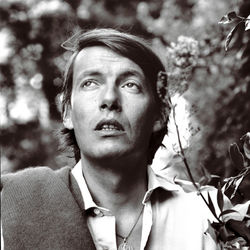
Fabrizio De André, from Italy, was a singer-songwriter celebrated for his poetic and often socially critical lyrics. He became a significant voice in Italian music, crafting songs that explored themes of human nature, society, and spirituality. His work frequently gave voice to the marginalized and the outsiders.
His discography includes albums like La buona novella, which reinterprets biblical stories, and Non al denaro non all'amore né al cielo, inspired by Edgar Lee Masters' Spoon River Anthology. Songs such as "Il pescatore", "Bocca di Rosa", and "Via del Campo" are examples of his storytelling and musical style.
Fabrizio De André wrote "Inverno" in the mid-1960s, before the political ballads that later made him famous, and it reads like a folk hymn to a Ligurian graveyard in the cold. Fog moves over pale fields — "Sale la nebbia sui prati bianchi" ("Fog rises over the white meadows") — and a bell tower stands at the border between earth and sky. The refrain "Ma tu che vai, ma tu rimani" ("But you who go, and you who stay") returns twice, addressed to someone buried under the snow, before the final verse turns it into a question: "Ma tu che stai, perché rimani?" ("But you who stay, why do you linger?"). Winter keeps coming back — "Un altro inverno tornerà domani" ("Another winter will return tomorrow") — and every year it buries the same graves again.
Suzanne draws you to the riverbank where reality slips into a dream. Suzanne, a free-spirited muse wrapped in "rags and feathers," offers tea and oranges from China, beckoning you to drift on the water of her imagination. She seems a little crazy, yet that very madness opens a portal to a love that is felt more with the mind than with the body. Drifting beside her, you sense that the river itself whispers that you and Suzanne have always been lovers, destined to voyage together blindly, guided by the vivid colors she reveals among garbage and flowers.
Midstream, De André interweaves the tale of Jesus the sailor, who walks on water and teaches that only those who risk drowning truly see. This mystical detour mirrors the pull of Suzanne: both invite you to surrender, to trust what cannot be grasped with hands. By the song’s end, Suzanne holds up a mirror; in her reflection you glimpse hidden beauty, childlike wonder and the fragile heroes of everyday life. The journey becomes a lesson in faith, empathy and the power of seeing the world— and yourself— through the eyes of someone who touches your perfect body with the mind.
Picture a dusty summer afternoon: while everyone else complains about drought, our narrator sees the swirling powder and thinks of Jenny’s skirt twirling at a long-ago dance. Il Suonatore Jones celebrates that kind of enchanted gaze, the gift of turning everyday sights into music. Fabrizio De André retells the story of a fiddler who trades plowing fields for plucking strings, convinced that real harvests are made of rhythm and laughter. He spots freedom dozing behind barbed wire in fields ruled by money, yet every note he plays shakes her awake.
As the years spin by, the musician’s land grows wild, his flute eventually snaps, and his voice turns raspy. Even so, he hoards memories instead of regrets. The song reminds us that once people know you can make music, they will ask for it forever—and that is a blessing if you love to be heard. It is an ode to choosing passion over possession, sound over silence, and dancing hearts over tidy crops.
Imagine a scientist who can manipulate the secrets of hydrogen and oxygen, yet is completely baffled by the explosive chemistry of human feelings. In “Un Chimico,” Fabrizio De André lets a deceased chemist narrate his own story from atop a lonely hill, where his body now simply feeds the earth. The song contrasts the cold precision of laboratory reactions with the unpredictable alchemy of love: molecules obey rules, lovers do not. Our narrator marvels at how smiles and colors bloom on the faces of those who seek love, only to fade on the faces of those who have found it. Fascinated yet frightened, he chose to stay outside the game, and his life ended in a failed experiment that he wryly compares to the way “idiots” die for love.
Beneath its playful irony and poetic imagery, the song poses big questions about life, passion, and mortality. Is dying for science really so different from surrendering to spring’s call and risking heartbreak? By putting cold reason and fiery emotion under the same microscope, De André invites us to ask whether there is a “better” way to live—or die—than following the volatile reaction we call love.
Welcome to Via della Povertà, a twilight street where fairytale damsels, biblical brothers, literary geniuses and unlucky sailors all rub shoulders in the same surreal crowd. Fabrizio De André turns the road into a living carousel of characters who seem ripped from history books and pop-culture posters, yet they are stripped of glory and left to wander among tarot-card fortune-tellers, corrupt police and a blind detective. The result is a darkly comic parade that exposes the fragile border between fame and oblivion, holiness and sin, reality and illusion.
Behind the fanciful cameos lies a sharp social critique: every figure – from Einstein disguised as a drunkard to Cinderella sweeping broken dreams off the pavement – reveals how easily society forgets, exploits or condemns its own creations. Authority arrests what it cannot understand, the rich fight on sinking ships, and lovers wait for a rain that will dilute both joy and pain. De André invites us to stroll with him, noticing that these outcasts are “people just like us.” The song whispers that poverty is not only about money; it is the shared human condition of loneliness, hypocrisy and missed connections. Once you have walked this street, ordinary life will forever look a little more like a carnival mirror.
Picture a sleepy seaside at sunset, where an old fisherman dozes with a faint wrinkle on his face that looks like a half-smile. Out of nowhere a terrified young man appears; he is a confessed murderer, but also just a hungry, thirsty human with child-like eyes. Instead of judging or questioning, the fisherman silently shares his bread and wine. This brief act of kindness becomes the heart of the song: no matter someone’s past, a gesture of simple humanity can shine brighter than fear or guilt.
Moments later two armed policemen ride in, hunting for the killer. They find only the fisherman, now peacefully asleep again, still wearing that mysterious smile. Did he protect the fugitive? Did he drift back into dreams? Fabrizio De André leaves the answer open, inviting us to think about mercy, compassion, and the quiet rebellion of helping a stranger even when the law says otherwise. "Il Pescatore" turns a small seaside scene into a timeless reflection on forgiveness and the power of empathy.
“La Canzone di Marinella” paints a bittersweet fairy-tale around a true, tragic event. Fabrizio De André turns the story of a young girl who mysteriously falls into a river into a luminous ballad where nature, stars and a wandering king all conspire to give her a final moment of love and wonder. By wrapping harsh reality in poetic imagery, he lets Marinella live a dreamlike romance: she follows a crownless king “like a boy follows a kite,” exchanges kisses under sun and moon, and seems to bloom for a single, perfect day—just like a rose.
Yet the song’s tenderness hides a sorrowful core. After that fleeting day, Marinella slips back into the river, her fate sealed. The king’s endless knocking on her door symbolizes love’s refusal to accept death, while the refrain reminds us that the most beautiful things are often the most ephemeral. De André invites listeners to cherish fragile beauty, question social indifference, and feel compassion for every unvoiced Marinella who deserved more than a moment in the sun.
En «Il Pescatore», Fabrizio De André cuenta una escena sencilla que se vuelve inolvidable. Un pescador duerme bajo «l’ombra dell’ultimo sole» [la sombra del último sol], con una marca en la cara «come una specie di sorriso» [como una especie de sonrisa]. Entonces aparece un asesino, asustado y con prisa. No pide perdón ni explica su historia: pide pan porque tiene hambre y vino porque tiene sed. La frase «Ho poco tempo e troppa fame» [tengo poco tiempo y demasiada hambre] es directa, casi brutal, y deja claro que está huyendo.
Lo extraordinario es la respuesta del viejo. Aunque sabe que tiene delante a un asesino, «versò il vino e spezzò il pane» [sirvió el vino y partió el pan]. No lo interroga ni lo entrega. Le da de comer. Después llegan dos gendarmes armados y preguntan si el fugitivo ha pasado por allí, pero el pescador permanece dormido, con la misma marca en el rostro. Entre la huida y el recuerdo de «un aprile giocato all’ombra di un cortile» [un abril pasado jugando a la sombra de un patio], la canción deja una imagen muy clara: por un momento, el hambre y la sed pesan más que el crimen, la persecución y las armas.
In „Il Pescatore“ von Fabrizio De André schläft ein alter Fischer im letzten Abendlicht am Strand. Sein Gesicht trägt eine lange Furche, „come una specie di sorriso“ [wie eine Art Lächeln]. Dann kommt ein Mörder zu ihm: mit großen, kindlichen Augen und sichtbarer Angst. Er bittet direkt um Brot und Wein, weil er wenig Zeit und großen Hunger hat. Der Satz „Ho sete e sono un assassino“ [Ich habe Durst und bin ein Mörder] ist erstaunlich nüchtern. Der Fischer fragt nicht nach seiner Schuld. Er schenkt ihm Wein und bricht Brot für ihn ab, einfach weil der Fremde sagt: „Ho sete, ho fame“ [Ich habe Durst, ich habe Hunger].
Dieser kurze Moment der Hilfe ist schnell vorbei. Der Mörder läuft in den Wind davon, während hinter ihm nur der Fischer zurückbleibt. Später kommen zwei bewaffnete Gendarmen zu Pferd und fragen, ob der Mörder dort vorbeigekommen sei. Doch der Fischer schläft wieder, schaut sich nicht um und gibt keine Auskunft. Das Lied erzählt keine Vorgeschichte und kein Urteil. Es zeigt einen hungrigen, verängstigten Menschen, einen alten Mann, der ihm Brot und Wein gibt, und zwei Polizisten, die zu spät kommen. Gerade diese schlichte Entscheidung des Fischers macht das Lied so stark: Für einen Moment zählt nicht das Etikett „Mörder“, sondern Durst und Hunger.

