Learn German With Rammstein with these 23 Song Recommendations (Full Translations Included!)
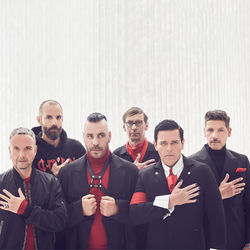
Six men from East Germany who have never swapped a member: Rammstein came together in Berlin in 1994 with Till Lindemann singing, Richard Kruspe and Paul Landers on guitars, Oliver Riedel on bass, Christoph Schneider on drums and Christian "Flake" Lorenz on keyboards. Landers, Lorenz and Schneider came out of the East Berlin punk band Feeling B. Their debut Herzeleid (1995) pushed the German music press into coining a genre name for it, Neue Deutsche Härte.
They sing in German, roll every R, and set fire to a good deal of the stage. Sehnsucht (1997) carried "Du hast" and "Engel" abroad and every album since has gone to number one in Germany, among them Mutter, Reise, Reise and Zeit (2022), while "Sonne", "Ich will", "Amerika" and the 2019 chart topper "Deutschland" fill out the setlist. Germany's youth media board put Liebe ist für alle da on its restricted index in 2009 over the track "Ich tu dir weh"; a Cologne court overturned that in 2010. Their stadium tour ended in Gelsenkirchen in July 2024 after 135 shows, and they have not been back on the road since.
German metal band Rammstein built one of their biggest heavy tracks around a clever pun that catches anyone learning the language. When lead singer Till Lindemann belts out "Du hast mich" (You have me), German listeners hear an immediate double meaning: "du hast" (you have) sounds identical to "du hasst" (you hate). So right from the start, the track tricks your ears into wondering whether someone possesses him or absolutely despises him. Then the sentence finally finishes with "Du hast mich gefragt und ich hab' nichts gesagt" (You asked me and I said nothing), clearing up the grammar but turning the mood icy cold.
What did this person ask? Traditional wedding vows. The lyrics quote the classic promise: "Willst du bis der Tod euch scheidet / Treu ihr sein für alle Tage?" (Do you want, until death separates you, to be faithful to her for all days?). Instead of a romantic "I do," Rammstein delivers a blunt, shouted "Nein, nein" (No, no). The track takes the solemn ceremony of marriage, strips away all the sweetness, and answers lifelong commitment with total silence followed by a flat refusal.
Rammstein to mistrzowie prowokacji, a w piosence „DEUTSCHLAND” biorą na warsztat swoją ojczyznę. To nie jest prosta piosenka o miłości do kraju. To skomplikowana, pełna sprzeczności relacja, którą zespół opisuje w bardzo bezpośredni sposób. Wokalista śpiewa o Niemczech jak o osobie, z którą jest w długim, trudnym związku. Z jednej strony czuje przywiązanie, a z drugiej odrazę. Widać to idealnie w refrenie: „Deutschland! Mein Herz in Flammen / Will dich lieben und verdammen” (Niemcy! Moje serce w płomieniach / Chcę cię kochać i potępiać).
Cały utwór jest zbudowany na przeciwieństwach, takich jak „Dein Atem kalt / Das Herz in Flammen” (Twój oddech zimny / Serce w płomieniach) czy „Deine Liebe ist Fluch und Segen” (Twoja miłość jest klątwą i błogosławieństwem). Zespół zmaga się z historią swojego kraju, co słychać w kontrowersyjnej linijce „Deutschland, Deutschland über allen” (Niemcy, Niemcy ponad wszystko). To nawiązanie do historycznego hymnu Niemiec, kojarzonego z nazizmem. Rammstein nie boi się dotykać najtrudniejszych tematów, pokazując, jak skomplikowane może być poczucie tożsamości narodowej.
Rammstein tackles their home country head-on in "DEUTSCHLAND", delivering a massive industrial metal track full of tension and conflicted loyalty. Right away, the lyrics set up a bitter push-and-pull relationship with lines like "Mein Herz in Flammen / Will dich lieben und verdammen" ("My heart on fire / Want to love and damn you"). It treats the nation almost like a toxic ex-partner: "Man kann dich lieben / Und will dich hassen" ("One can love you / And wants to hate you"). The contrast between fiery passion and cold detachment runs through the whole song, especially when they sing "Dein Atem kalt / Das Herz in Flammen" ("Your breath cold / The heart on fire").
The track gets especially sharp when playing with heavy prefixes. The band rattles off words starting with über- (meaning "over", "above", or "excessive"), contrasting boastful words like "Überheblich, überlegen" ("Arrogant, superior") with darker or exhausted ones like "Überflüssig" ("superfluous/useless") and "Überdrüssig" ("weary/tired of"). Then they drop the warning, "Wer hoch steigt, der wird tief fallen" ("He who climbs high will fall deep"), twisting the infamous historical slogan into "Deutschland, Deutschland über allen" ("Germany, Germany above everyone"). By the end, there is no happy resolution: "Meine Liebe kann ich dir nicht geben" ("I cannot give you my love"). It is blunt, heavy, and refuses to offer easy patriotism.
German metal band Rammstein takes something usually warm and cheerful—the sun—and turns it into an overwhelming force of destruction. Right from the start, a boxer's countdown begins: "Eins, zwei, drei... aus" ("One, two, three... out"). The crowd awaits a blinding arrival with "Alle warten auf das Licht" ("Everyone waits for the light"), while the singer delivers a contradiction: "Fürchtet euch, fürchtet euch nicht" ("Be afraid, do not be afraid"). Instead of staying in the sky, this energy pours straight out of a person. The lyrics state that the sun beams out of eyes ("scheint mir aus den Augen") and erupts directly from clenched fists ("Wenn sie aus den Fäusten bricht").
What makes this track hit so hard is the sheer physical threat packed into every verse. This light burns skin, blinds anyone looking, and lays hot against your face ("Legt sich heiß auf das Gesicht"). When the chorus declares "Sie ist der hellste Stern von allen" ("She is the brightest star of all"), notice the German grammar: because the German word for sun, die Sonne, is feminine, the lyrics use sie ("she"). The song repeats the countdown obsessively as if waiting for an inevitable knockout, ending abruptly on the word "Aus" ("Out"). It is blunt, heavy, and completely relentless.
German metal band Rammstein takes aim at worldwide cultural saturation in AMERIKA, and they do it with a sly, heavy grin. The central joke is simple: no matter where you wake up on Earth, you are culturally trapped inside the United States. They mock this invasion through famous pop culture exports, declaring that "vor Paris steht Micky Maus" (Mickey Mouse is standing outside Paris, referring to the Disneyland resort) and "Nach Afrika kommt Santa Claus" (Santa Claus comes to Africa). Even global consumer brands get dragged into the chorus, turning the patriotic cheer of "Amerika ist wunderbar" (America is wonderful) into an absurd shopping list of "Coca-Cola, Wonderbra" and, ultimately, "Coca-Cola, sometimes war."
The narrator speaks like an overbearing dance instructor who forces everyone to join in: "Wenn getanzt wird will ich führen" (When dancing happens, I want to lead) and "wer nicht tanzen will am Schluss / Weiß noch nicht dass er tanzen muss" (whoever doesn't want to dance in the end / doesn't know yet that they have to dance). Global politics becomes a forced dance where one giant makes the rules. The band even breaks character into English to sneer, "This is not a love song / I don't sing my mother tongue." It is sarcastic, biting, and ridiculously catchy metal.
„ROSENROT” opowiada krótką, ponurą historię o pragnieniu, które wymaga zbyt wiele. Dziewczyna widzi różę rosnącą wysoko w górach i prosi ukochanego, żeby ją dla niej zdobył: „Ob er es ihr steigen kann” [czy może wspiąć się po nią dla niej]. Chłopak zgadza się bez wahania. Powtarzane zdanie „Was sie will bekommt sie auch” [dostaje to, czego chce] brzmi jak zasada, której nikt nie odważa się podważyć. Róża, czyli „Rosenrot” [różana czerwień], jest tu pięknym, ale niebezpiecznym celem.
Najbardziej gorzki jest refren: „Tiefe Brunnen muss man graben, wenn man klares Wasser will” [głębokie studnie trzeba kopać, jeśli chce się czystej wody]. To proste porównanie mówi, że wartościowe rzeczy wymagają wysiłku, lecz w tej historii wysiłek prowadzi za daleko. Chłopak wspina się z trudem, nie obchodzi go nawet widok, bo myśli wyłącznie o róży. W końcu kamień odrywa się spod jego butów, a on i dziewczyna spadają w przepaść. Najmocniejszy zwrot polega na tym, że jej życzenie zostaje spełnione, ale cena jest tragiczna. Powtarzalność słów „So war es und so wird es immer sein” [tak było i tak zawsze będzie] nadaje tej opowieści chłodny, niemal baśniowy ton.
Rammstein's "Ich Will" is a powerful anthem about the strange relationship between a performer and their audience. The song is built around the blunt, repeated demand, "Ich will" (I want). The singer isn't asking nicely; he's telling you what he requires. He wants your complete devotion: "Ich will, ich will dass ihr mir vertraut" (I want, I want you to trust me) and "Ich will, ich will dass ihr mir glaubt" (I want, I want you to believe me). It gets even more intense when he declares, "Ich will jeden Herzschlag kontrollieren" (I want to control every heartbeat). He wants your energy, your imagination, and to see your hands in the air before he goes "in Beifall untergehen" (down in applause).
But here's the twist. After demanding to be seen, heard, and understood, the singer asks the crowd a series of questions: "Könnt ihr mich hören?" (Can you hear me?), "Könnt ihr mich sehen?" (Can you see me?). You'd expect a connection, but instead, the response is a cold dismissal: "Ich versteh euch nicht" (I don't understand you). The song shows a performer who craves adoration and control but offers no understanding in return. Later, the lyrics switch from "Ich" (I) to "Wir" (We), making it clear this is the band talking directly to their fans, exploring the dark and demanding side of fame.
Feel the stomp of boots and pounding drums, yet listen closely: Rammstein’s “Links 2 3 4” is not a salute to authoritarianism but a cheeky declaration of where the band’s heart truly lies. The title echoes the classic German marching order “Links, zwei, drei, vier” (“Left, two, three, four”), and the music marches forward with military precision. By repeating the word links (“left”) like a drill sergeant, Rammstein flips a militaristic image on its head, proudly announcing a left-wing stance after years of critics accusing them of right-wing sympathies.
The lyrics play with the German expression “das Herz am rechten Fleck haben” (to have one’s heart in the right place). The singer says people want his heart “am rechten Fleck,” yet when he looks down, it beats “links” — both physically on the left side of the chest and politically on the left side of the spectrum. Questions like “Kann man Herzen brechen?” (“Can you break hearts?”) and “Kann ein Herz aus Stein sein?” (“Can a heart be made of stone?”) remind listeners that human emotion, not blind obedience, drives the song. In short, “Links 2 3 4” marches with iron-clad riffs while waving a banner for solidarity, openness, and an unmistakably left-leaning spirit.
Most people grow up hearing that if you live a good life, you earn a spot in heaven. German industrial metal band Rammstein takes that traditional promise and completely flips it on its head in "Engel" (Angel). The track starts with the standard moral rule: "Wer zu Lebzeit gut auf Erden / wird nach dem Tod ein Engel werden" ("Whoever is good on Earth during their lifetime will become an angel after death"). Sounds peaceful, right? But then the singer looks up and notices something unsettling. Heaven is not a reward here; it is an isolating trap. Up there, these holy beings hide behind the sunlight, cut off from human contact, terrified of plummeting into the void: "Sie müssen sich an Sterne krallen / damit sie nicht vom Himmel fallen" ("They have to cling to stars so they do not fall from the sky").
The song really hits its stride when the perspective shifts straight into the angels' point of view. They only come out after dark ("Erst wenn die Wolken schlafengehn" / "Only when the clouds go to sleep"), shivering with dread and loneliness: "Wir haben Angst und sind allein" ("We are afraid and are alone"). Notice the blunt German idiom "zu Lebzeit" (in life / during one's lifetime) and the old-fashioned directional phrasing "gen Himmel" (towards heaven), which sets up a church-like expectation before tearing it down. It is delightfully bleak, anti-heroic rock: why behave yourself on Earth just to end up terrified and clinging to a distant rock in the dark? The singer makes his choice loud and clear in the famous chorus chant: "Gott weiß ich will kein Engel sein" ("God knows I don't want to be an angel").
Welcome to one of Rammstein's darkest fairytales. The song starts like a creepy bedtime story: "Nun, liebe kinder, gebt fein acht" (Now, dear children, pay close attention). The narrator is a terrifying figure, the "stimme aus dem kissen" (voice from the pillow), who brings children a special gift torn directly from its own chest: a burning heart.
This isn't a story about love. This heart gives the narrator the power "Die augenlider zu erpressen" (to blackmail the eyelids), controlling whether the children can sleep or not. It brings an army of nightmares with it, including "Dämonen, geister, schwarze feen" (demons, ghosts, black fairies) that crawl from the cellar to hide under the bed. These creatures then steal the children's tears and press them into the narrator's "kalten venen" (cold veins). The whole song builds around that one, intense declaration: "Mein herz brennt!" (My heart burns!).
Rammstein gets straight to the point with this one. The song sets up a conflict between two voices. One is a lonely traveler, constantly asked, "Wohin gehst du, wohin?" [Where are you going, where?]. This person wanders from east to west, north to south, completely alone. As the lyrics say, "Und nichts und niemand lädt mich zum bleiben ein" [And nothing and nobody invites me to stay]. It's a powerful statement about feeling unwelcome everywhere.
Then, another voice crashes in, aggressive and territorial. Someone comes running, "Mit der Fahne in der Hand" [With the flag in his hand], shouting, "Mein Land" [My country]. This isn't a welcoming patriotism; it's a warning: "Du bist hier in meinem Land" [You are here in my country]. The speaker even claims ownership of nature itself with the line "Meine Welle und mein Strand" [My wave and my beach]. The song ends with a final, blunt message for the traveler: "Wohin gehst du, hier ist nichts mehr frei" [Where are you going, there's nothing free here anymore]. It's a sharp critique of nationalism and the idea of closing borders to outsiders.
Rammstein's "Zeit" (which means "Time" in German) is a powerful and emotional song about the unstoppable flow of time and the human desire to hold onto perfect moments. The lyrics paint a picture of life as a river, constantly moving us towards the end. The singer describes how we are all "gefangen so im Fluss der Zeit" (caught in the river of time), always striving forward with no rest.
Throughout the song, there's a desperate plea: "Bitte bleib steh'n, bleib steh'n" (Please stand still, stand still). This feeling is strongest during a beautiful, intimate moment, like lying in a loved one's arms. The singer wishes it could last forever, but knows that "die Zeit kennt kein Erbarmen" (time knows no mercy). The song captures a universal feeling—the wish to freeze a perfect moment, even as it acknowledges the sad reality that life, and time, must go on.
В «Zeit» Rammstein время показано как река, которая не умеет останавливаться. Люди всё время движутся к концу: «Gefangen so im Fluss der Zeit» [«Пленённые в потоке времени»], а впереди уже ждёт «Unendlichkeit» [«Бесконечность»]. Лирический герой видит противоречие: мы вроде бы видим происходящее, но всё равно «sind wir blind» [«слепы»], создаём тени без света и торопимся вперёд, не успевая по-настоящему жить. Особенно сильна строка «Wir sterben weiter, bis wir leben» [«Мы продолжаем умирать, пока не начинаем жить»]. Звучит жестоко, почти как загадка, но смысл прост: осознание жизни приходит слишком поздно.
Самая человеческая часть песни возникает в объятиях: «Ich liege hier in deinen Armen» [«Я лежу здесь, в твоих объятиях»]. Этот момент кажется идеальным, но «die Zeit kennt kein Erbarmen» [«время не знает милосердия»], и он сразу проходит. Повторяющаяся просьба «Bitte bleib steh’n» [«Пожалуйста, остановись»] обращена к самому времени, хотя герой понимает, что это невозможно. Финал звучит почти как горькая инструкция: когда приходит наше время уйти, «Aufhör’n, wenn’s am schönsten ist» [«Остановиться, когда прекраснее всего»]. И всё же он признаётся: «Ich bin noch nicht bereit» [«Я ещё не готов»]. В этом и сила песни: идеальный миг существует, каждый его узнаёт, но часы всё равно продолжают идти.
V písni „Zeit“ od německé kapely Rammstein se čas chová jako řeka, která člověka stále unáší vpřed. Text začíná protiklady: „Wir sehen, doch sind wir blind“ [Vidíme, ale jsme slepí] a „Wir werfen Schatten ohne Licht“ [Vrháme stíny bez světla]. Lidé podle něj spějí od mládí k nouzi, od života ke smrti, přestože pořád pokračují dál. Obraz břehu a nekonečna je krásný i trochu děsivý: člověk je „Gefangen so im Fluss der Zeit“ [Uvězněný v proudu času] a nemůže vystoupit.
Nejvýraznější je prosba v refrénu: „Bitte bleib steh’n, bleib steh’n“ [Prosím, zastav se, zůstaň stát]. Vypravěč chce zastavit dokonalý okamžik, když leží v náručí druhého člověka, ale teplé tělo brzy vychladne a „die Zeit kennt kein Erbarmen“ [čas nezná slitování]. Konec přijde právě ve chvíli, kdy je všechno nejkrásnější: „Aufhör’n, wenn’s am schönsten ist“ [Skončit, když je to nejkrásnější]. Píseň tak spojuje něhu s neúprosným pohybem hodin. I když člověk prosí „Augenblick, verweile doch“ [Okamžiku, setrvej], čas dál běží.
Rammstein empieza esta canción con una cuenta atrás, como si se preparara para un lanzamiento o una pelea: "Eins, zwei, drei, vier... aus" (Uno, dos, tres, cuatro... fuera). La atmósfera es tensa. "Alle warten auf das Licht" (Todos esperan la luz), pero la siguiente línea nos da una advertencia contradictoria: "Fürchtet euch, fürchtet euch nicht" (Tened miedo, no tengáis miedo). Esto prepara el escenario para la llegada de algo inmenso y abrumador.
Cuando el estribillo explota con "Hier kommt die Sonne" (Aquí viene el sol), queda claro que no hablan de un día agradable en la playa. Este sol es una fuerza poderosa y casi violenta que emana del propio cantante. Él nos dice que "scheint mir aus den Händen" (me brilla desde las manos) y que "kann verbrennen, kann euch blenden" (puede quemar, puede cegaros). La imagen de un sol que "aus den Fäusten bricht" (brota de los puños) es increíblemente potente. Es "der hellste Stern von allen" (la estrella más brillante de todas) y una que "wird heute Nacht nicht untergehen" (no se pondrá esta noche). Es una declaración de poder absoluto e implacable.
Немецкие металлисты Rammstein здесь откровенно издеваются над тем, как культура США захватила весь земной шар. Музыканты надевают маску строгого «учителя танцев», который командует всей планетой: «Wenn getanzt wird will ich führen» («Если будут танцы, я хочу вести») и предупреждает, что непослушных не потерпит — «Und wer nicht tanzen will am Schluss / Weiß noch nicht dass er tanzen muss» («А кто в конце не захочет плясать, ещё не знает, что ему придётся»). В песне сталкиваются абсурдные и ядовитые образы глобализации: Санта-Клаус летит в Африку, перед Парижем вырастает Микки Маус, а музыка льется прямиком из Белого дома.
Самое смешное и злое кроется в припевах, где сладкая жизнь из рекламы внезапно оборачивается насилием. Строчка «Coca-Cola, Wonderbra» легко сменяется фразой «Coca-Cola, sometimes war» («Кока-кола, иногда война»). Тилль Линдеманн даже переходит на английский, чтобы прямо заявить слушателю: «This is not a love song / I don't sing my mother tongue» («Это не песня о любви, я пою не на родном языке»). Весь этот гимн о том, что свобода здесь подается по расписанию и только под чужую дудку.
Этот трек бьет прямо в лоб своей маниакальной прямотой. Немецкие металлисты Rammstein построили весь текст вокруг бесконечного повторения простой фразы: «Ich will» («Я хочу»). Здесь нет никаких скрытых метафор. Тилль Линдеманн методично и жестко требует абсолютного подчинения от аудитории: «Ich will, dass ihr mir vertraut» («Я хочу, чтобы вы мне доверяли»), «Ich will eure Stimmen hören» («Я хочу слышать ваши голоса») и даже «Ich will jeden Herzschlag kontrollieren» («Я хочу контролировать каждый удар сердца»). Строчка «Ich will in Beifall untergehen» буквально переводится как «Я хочу утонуть в аплодисментах» — глагол untergehen обычно используют для тонущих кораблей или заходящего солнца, но здесь артист буквально хочет, чтобы его захлестнул шум толпы.
Самое забавное начинается ближе к концу, когда требования переходят от одиночного «я» к хоровому «Wir wollen» («Мы хотим»). Музыканты кричат в зал: «Könnt ihr mich hören?» («Вы слышите меня?») и «Könnt ihr mich fühlen?» («Вы чувствуете меня?»), а затем моментально выдают холодное: «Ich versteh euch nicht» («Я вас не понимаю»). Это отличная сатира на то, как работают огромные стадионные концерты: музыкант требует от толпы всей ее энергии, жаждет власти над зрителями, но при этом между сценой и залом остается полная глухота.
Alman metal devi Rammstein'ın sert gitar riffleriyle bir boks maçı gibi geri sayım yaparak başlayan bu parçası, güneşi sıcacık bir gök cismi olarak değil, neredeyse yakıcı bir süper güç gibi anlatıyor. Şarkıdaki anlatıcı, ışığın doğrudan kendi bedeninden taştığını söylüyor: "Die Sonne scheint mir aus den Augen" (Güneş gözlerimden parlıyor) ve "Die Sonne scheint mir aus den Händen" (Güneş ellerimden parlıyor). Yumruklar sıkıldığında ortaya çıkan bu ışık, insanları hem kör edebilecek ("kann euch blenden") hem de yakabilecek ("kann verbrennen") kadar tehditkâr bir kuvvete dönüşüyor.
Şarkının nakaratında tekrarlanan "Hier kommt die Sonne" (İşte güneş geliyor) ve "Sie ist der hellste Stern von allen" (O, hepsinin arasındaki en parlak yıldızdır) sözleri, hem bir kurtarıcının gelişini hem de herkesin kaçması gereken bir alevi haber verir gibi. "Und die Welt zählt laut bis zehn" (Ve dünya yüksek sesle ona kadar sayıyor) dizesiyle birlikte 1'den 10'a kadar Almanca sayıları nakarat aralarında peş peşe öğreniyorsun; nakaratın en sonunda gelen "Aus" (Bitti / Nakavt) kelimesi ise maçı ve şarkıyı tek vuruşta noktalıyor.
Приготовьтесь к чему-то мрачному и задумчивому от Rammstein! Песня "Engel" (что означает "Ангел") исследует идею о том, что происходит после смерти, если ты был хорошим человеком. Лирика начинается с утверждения: "Wer zu lebzeit gut auf erden / Wird nach dem tod ein engel werden" [Кто при жизни был хорош на земле, / Тот после смерти станет ангелом]. Но это не совсем утешительная мысль. Скорее, это размышление о том, как эти ангелы становятся невидимыми для нас, людей.
Мне очень нравится, как песня рисует образ этих ангелов, которые "haben angst und sind allein" [боятся и одиноки]. Они живут "hinterm sonnenschein" [за солнечным светом] и "müssen sich an sterne krallen / Damit sie nicht vom himmel fallen" [должны цепляться за звезды, / Чтобы не упасть с неба]. Это довольно суровое представление о загробной жизни, не так ли? Повторяющаяся фраза "Gott weiß ich will kein engel sein" [Бог знает, я не хочу быть ангелом] ясно показывает, что быть ангелом не так уж и прекрасно. Это мощное заявление о страхе и изоляции, даже в раю.
В «OHNE DICH» Rammstein превращают отсутствие любимого человека в почти физическое пространство. Герой идёт в еловый лес, туда, где в последний раз видел её: «Ich werde in die Tannen geh’n» [Я пойду к елям]. Но наступает вечер, земля словно накрывается тёмной тканью, а лес становится «schwarz und leer» [чёрным и пустым]. Даже птицы больше не поют. Повтор «Weh mir, weh» [Горе мне, горе] звучит просто и резко, без попытки спрятать боль за сложными словами.
Самая сильная мысль появляется в припеве: «Ohne dich kann ich nicht sein» [Без тебя я не могу быть], но сразу рядом звучит противоречие: «Mit dir bin ich auch allein» [С тобой я тоже один]. Получается, герой потерян и в разлуке, и рядом с этим человеком. Он считает часы без неё, а с ней секунды будто остановились и ничего не стоят: «Mit dir stehen die Sekunden» [С тобой секунды стоят]. К финалу ему даже трудно дышать, а повтор «Ohne dich» [Без тебя] становится почти навязчивым. Это песня о пустоте, где лес молчит, время ломается, а отсутствие одного человека заполняет всё вокруг.
В этой песне немецкая группа Rammstein играет с образом сердца и политическим намёком на левую сторону. В начале звучат почти абсурдные вопросы: «Kann man Herzen brechen?» [Можно ли разбивать сердца?], «Kann man Herzen stehlen?» [Можно ли красть сердца?]. Затем появляется главный спор: «Sie wollen mein Herz am rechten Fleck» [Они хотят, чтобы моё сердце было с правой стороны]. Но герой смотрит вниз и отвечает: «Dann schlägt es links» [Тогда оно бьётся слева]. Здесь важна буквальная игра со сторонами тела: сердце находится в левой части груди, а слово rechts по-немецки означает «справа». Поэтому фраза звучит одновременно как шутка, вызов и очень прямое заявление о своей позиции.
Припев превращает эту позицию в строевой счёт: «Links Zwo Drei Vier» [Слева, два, три, четыре]. Zwo здесь значит «два» в армейской манере счёта, чтобы слово не спутали с «drei», «три». Ритм звучит как марш, но текст продолжает задавать странные вопросы: «Können Herzen singen?» [Могут ли сердца петь?], «Kann ein Herz aus Stein sein?» [Может ли сердце быть каменным?], «Mit dem Herzen denken» [Думать сердцем]. В финале герой повторяет, что сердце находится «in der linken Brust» [в левой груди], а завистник ошибся: «Der Neider hat es schlecht gewusst» [Завистник этого не знал]. Получается резкая, запоминающаяся песня о сердце, которое нельзя переставить по чужому приказу, даже если весь хор считает: «Links, zwo, drei, vier!»
Rammstein w utworze „Ich Will” stawia na totalną bezczelność i prostotę, którą po prostu uwielbiam! Cały tekst kręci się wokół obsesyjnej żądzy uwagi i całkowitego posłuszeństwa tłumu. Wokalista bez ogródek powtarza swoje żądania: „Ich will, ich will dass ihr mir vertraut” (Chcę, chcę, żebyście mi ufali) oraz „Ich will jeden Herzschlag kontrollieren” (Chcę kontrolować każde uderzenie serca). Nie ma tu miejsca na subtelności. Zespół wchodzi w rolę bezwzględnego lidera sceny, który chce zburzyć spokój („Ich will die Ruhe stören” / Chcę zakłócić spokój) i dosłownie utonąć w oklaskach („Ich will in Beifall untergehen” / Chcę utonąć w brawach).
Ciekawie robi się w refrenie, gdzie pewność siebie zamienia się w chłodną prowokację. Zespół pyta słuchaczy: „Könnt ihr mich hören?” (Czy mnie słyszycie?) i „Könnt ihr mich sehen?” (Czy mnie widzicie?), po czym ucina kontakt krótkim, twardym „Ich versteh euch nicht” (Nie rozumiem was). Pod koniec perspektywa zmienia się z pojedynczego „ja” na grupowe „my” („Wir wollen, dass ihr uns vertraut” / Chcemy, żebyście nam ufali). To fantastyczny, rytmiczny kawałek do nauki niemieckich czasowników modalnych, rozkazów i bezpośrednich zwrotów do grupy ludzi!
Rammstein's "Ohne Dich" (which means "Without You") paints a dark and lonely picture of someone lost without a loved one. The singer describes a world that has lost all its life and color now that this person is gone. The forest is "black and empty," the birds "sing no more," and even breathing has become difficult. It's a powerful expression of how grief can make the entire world feel silent and dead.
The chorus reveals a complicated relationship. The singer declares, "Without you, I cannot be," showing deep dependence. However, they also add a confusing twist: "With you, I am also alone." This suggests that even when they were together, there was a sense of loneliness. Time itself is affected by this loss: without the person, the hours drag on, but with them, the seconds would stand still and feel worthless. The song captures the heartbreaking feeling of being unable to live with or without someone.

