Learn French With Nuit Incolore with these 11 Song Recommendations (Full Translations Included!)
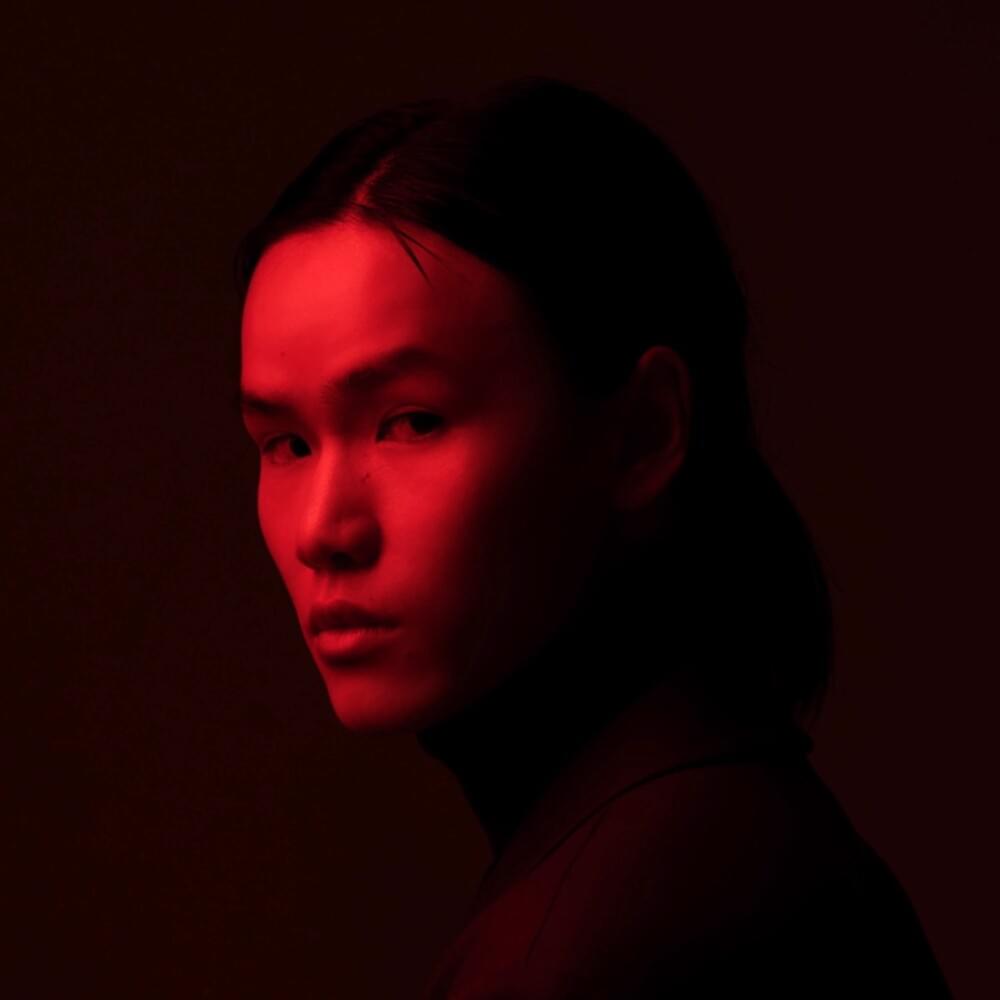
Nuit Incolore teams up with Belgian powerhouse Loïc Nottet to turn late-night loneliness into poetic fireworks. On S'écrira paints a scene of rain-soaked insomnia where memories, fears, and unspoken feelings swirl around the narrator like storm clouds. Instead of surrendering to the gloom, the duo decides to fight back with ink: they promise, “On s’écrira” — “We’ll write to each other.” These future letters become life rafts, filling the silence, anchoring forgotten words, and giving purpose to nights that feel endless.
At its heart, the song is a love letter to self-expression. Writing is portrayed as both confession and cure, a way to stitch up emotional cracks when patience runs thin and the mind derails. Each verse acknowledges the pain, while every chorus offers a hopeful ritual: keep writing, keep connecting, and the darkness will eventually lift. It is a bittersweet reminder that even when the clouds move on, the rain-inked pages will still hold us together.
Nuit Incolore's "Paradoxe" is about feeling torn between who you really are and the role you play for everyone else. The singer describes putting on a different face each day, like makeup covering her own skin, and calls performing that role her last one before she can finally just be herself.
She talks about hiding to see herself more clearly, comparing herself to others in her nightmares, and lying to herself just to feel better. Those contradictions are the paradox in the title: trying to be honest while still performing, feeling like an impostor even in her own life.
By the end she admits it isn't always easy to learn who she is while keeping up with everyone else's pace. Even when the illusions fall apart, only the imperfect, real parts of her stay standing.
Enfant De Nulle Part paints a haunting diary of a soul that feels it was “born from nowhere.” Nuit Incolore, the Swiss-Vietnamese artist known for melancholic storytelling, guides us through chilly nights and gravel roads where every step counts. Imagery of wilting flowers, grey eyes, and winter winds captures the weight of time and isolation, yet a faint hope glimmers: if the clouds could drink all the rain, perhaps the tears would finally dry.
The chorus becomes a rallying cry: “Cours sans te retourner” – run without looking back. The “child from nowhere” gears up for an inner war, clutching a dream of a small slice of ocean to soothe his private hell. Seasons turn, leaves bury themselves, pages fill with scribbles, but perseverance remains. By urging us to race through the night and outrun the dawn, the song transforms loneliness into motion, encouraging every wanderer to reclaim lost paths and keep their fragile dreams alive.
“Adieux” is a poetic farewell letter wrapped in sound. Nuit Incolore paints a windswept landscape where love has eroded, using vivid images of mistral winds, scarecrows facing off, and rusting metal to show how anxiety corrodes the heart. The singer wanders through mountains and reefs, desperately mimicking each fading footprint, yet always “à court de paroles” — short of words — to stop the inevitable goodbye. Every line feels like a cinematic scene: shouting a lover’s name to drown out the days, dragging a broken heart from place to place, and covering tear-filled eyes “with the mist of happy people.”
At its core, the song captures the uneasy mix of wanting someone to stay while urging them to leave for their own good. References to Hippolyte (the tragic Greek hero), the French mistral, and an imagined trip to Italy underline the clash between passionate devotion and cold reality. “Adieux” is both a lament and a liberation, inviting listeners to feel the sting of parting, then to exhale and accept that some stories end so others can begin.
Rendez-vous plunges us into a stormy night where love, loss, and inner shadows collide. Against a backdrop of rain, flooding hopes, and drowned words, Nuit Incolore and KYO sing about two hearts drifting apart even when they physically meet. The repeated images of water – rain that “hits,” tears that “find each other,” screams “underwater” – show how overwhelming emotions can feel like suffocation. Add in the pulse-like tension of a finger poised on a trigger and the haunting sight of one’s own shadow dancing on a lover’s wall, and the song paints a vivid portrait of heartbreak mixed with the fear of losing oneself.
Yet beneath the darkness, a fragile thread of resilience remains. The line “L’espoir n’a pas de distance” (“Hope has no distance”) reminds us that despair and hope often coexist. By the finale, the lovers ride different waves, accepting separation while still believing in tomorrow. Rendez-vous is therefore both a lament and a quiet act of survival: an atmospheric hymn for anyone who has felt the madness of passionate love, faced the temptation to give up, and still chosen to breathe, hope, and carry on.
“Crush” is a poetic confession of secret love caught between fireworks and frustration. Nuit Incolore sings about feeling most alive when only “half herself,” drifting through night after night of parties that never reach sunrise. She paints the sky with the red of her crush’s heart, floods the sea with the taste of her own tears, and wanders Paris in August with hands full of caresses that have nowhere to land. These vivid images show a heart bursting with affection yet stranded by distance, self-doubt, and the fear of speaking out.
Beneath the dreamy metaphors lies a familiar story: I like you, you don’t know, and it’s driving me crazy. The singer admits she expects nothing because the other person lives “too far” away, yet just saying it out loud brings relief, as if words could tip the scales against loneliness. She feels “in hell and against everything,” haunted by memories, desperately seeking a remedy while denying her feelings in public. The result is a haunting, bittersweet anthem that captures the thrill of an intense crush plus the ache of unreturned love—perfect for anyone who has ever whispered “I’ve got a crush on you” only inside their own head.
"L'envol" feels like watching someone stand in front of a mirror and ask: Who am I, and what am I even doing here before I die? Nuit Incolore uses strong images instead of long explanations. He starts with "L'envol des papillons" [the flight of butterflies] and "Le cri des cendres" [the scream of the ashes], putting beauty and destruction side by side. The soul is compared to a butterfly in its cocoon: "Comme un papillon dans une chrysalide" [like a butterfly in a chrysalis]. He feels his soul is "Enfermée dans un corps, née de la terre" [locked in a body, born from the earth], stuck between wanting to rise toward something eternal and being trapped in something temporary.
The song keeps coming back to the idea that everything can be healed, but everything will still be destroyed in the end: "Tout peux être soigné / Mais tout finira détruit" [everything can be healed / but everything will end up destroyed]. He calls himself "un inconnu" [a stranger] and admits "Je sais même pas d'où je viens" [I don't even know where I come from], torn between heaven and hell: "Tombé du ciel, craché des enfers" [fallen from the sky, spat out of hell]. What pushes him forward is the belief that he has to be useful, that his actions are what build him: "Car ce qui me construit, ce sont mes actes" [because what builds me are my actions]. The darkest and most honest touch is the voice of the butterfly behind him repeating "Souviens-toi / Que tu va mourir" [remember / that you are going to die]. It is a bit brutal, but that reminder of death is exactly what gives weight to every choice he makes while he is still here.
Nuit Incolore, a Swiss artist, brings us "Cœur Sous Cadenas" [Heart Under Padlock], a song that really gets into the feeling of waiting for love, but with a lot of fear about what that might mean. He talks about having "Deux, trois coups d'foudre / Mais toujours à côté" [Two, three love at first sight / But always beside the point], like he's almost found love but it never quite connects. He's not rushing, saying "C'n'est pas une course / Je ne serai pas le dernier" [It's not a race / I won't be the last], but you can feel his loneliness when he says he'll "attendrai mon tour enfermé" [wait for my turn locked away].
It's like he feels a bit out of place, mentioning "Les masques ne me vont pas / Mais sans, j'ai un peu froid" [Masks don't suit me / But without them, I'm a bit cold]. He's protecting himself, and that's where the main idea comes in: "Cœur sous cadenas / J'ai peur de qui l'ouvrira" [Heart under padlock / I'm afraid of who will open it]. He's worried about how someone might try to get in, whether it's "Sur un trois-mâts / Ou dans un cheval de Troie" [On a three-masted ship / Or in a Trojan horse], which is a really cool way to say he's scared of both direct and sneaky approaches to his heart. He even talks about sharpening his tears "Comme un poignard" [Like a dagger], showing how he's ready to defend himself, even from his own emotions. It's a really honest look at vulnerability and the fear of opening up.
Dépassé plunges us into the speeding mind of someone who feels out-raced by time itself. Surrounded by ticking clocks, catacombs, and a Faust-like temptation to give in to darker impulses, the singer wrestles with sleepless nights, melting memories, and a gnawing need to breathe fresh air. Each line paints the tension between two forces: the magnetic pull of the abyss and the distant glow of a liberating light.
Despite the heavy atmosphere, the song pulses with a quiet resilience. The narrator may feel "au fond de l’enfer," yet a stubborn spark keeps him chasing the sun, counting dreams until the hours finally stop. Dépassé is a poetic reminder that even when we are overwhelmed, the very act of reaching for light can keep us alive.
Nuit Incolore, a Swiss artist, brings us "Ep. 2 : Les Beaux Jours" [The Good Old Days], a song that feels like a bittersweet reflection on finding moments of joy amidst a world that often feels heavy. He starts by welcoming the arrival of spring, with "Les beaux jours éclosent à mon secours" [The good old days bloom to my rescue] and "La pluie s'efface et les tournesols prennent place" [The rain fades and the sunflowers take their place]. It's a beautiful image of nature bringing comfort.
But even with the sunshine, there's a sense of longing for something more. He talks about chasing "mes souvenirs éteints" [my extinguished memories] and wishing for a love that isn't disapproved of. There's a desire for passion to "faner les idées noires" [wither the dark thoughts] and for the sun's rays to "abolir mes cauchemars" [abolish my nightmares]. Despite the bright imagery, he admits, "Il n'fait beau que sur mes yeux / Au dos des vitres, c'n'est pas joyeux" [It's only beautiful in my eyes / Behind the windows, it's not joyful], suggesting an internal struggle. It's a really honest look at trying to find light even when things feel a bit dark inside.
Nuit Incolore's song "Je" [I] is a really introspective look into the artist's mind, almost like a diary entry set to music. He talks about feeling a deep sense of emptiness and a lack of desire, saying things like "J'arrive plus à dormir, Je n'ai plus de désir, Je me sens coquille vide" [I can't sleep anymore, I have no more desire, I feel like an empty shell]. It's a feeling many of us can relate to, that sense of being lost or uninspired.
He also touches on his creative process, seeing his room as "un asile" [an asylum] and the "genèse de tous mes textes" [genesis of all my texts]. It's clear that writing is his way of coping, a "réflexe" [reflex] to his volatile mood. He even mentions being a "bipolaire dans l'sang" [bipolar in the blood] but still timid, which adds another layer to his self-exploration. It's a really honest and vulnerable song about finding an outlet for difficult emotions, even if that outlet is sometimes about self-destruction, as he bluntly puts it: "Ma passion c'est de me détruire" [My passion is to destroy myself].

