Learn French With Manu Chao with these 23 Song Recommendations (Full Translations Included!)
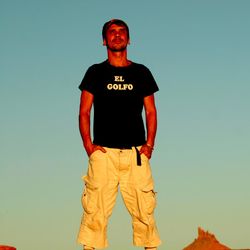
Manu Chao, born José Manuel Tomás Arturo Chao Ortega in Paris in 1961, is a celebrated French-Spanish musician known for his eclectic blend of Latin alternative, reggae, worldbeat, and ska. Singing fluently in multiple languages including French, Spanish, English, and Arabic, Manu's diverse sound reflects his multicultural upbringing and his travels across the globe.
Beginning his music career busking in Paris, Manu Chao gained international acclaim as the frontman of the band Mano Negra before launching a successful solo career with his band Radio Bemba Sound System. His solo debut album, Clandestino, became a worldwide favorite, featuring heartfelt lyrics paired with infectious rhythms. Manu continues to inspire listeners with his socially conscious music, blending global sounds into an unforgettable party where language and culture unite.
Manu Chao delivers one of the most brutally repetitive break-up tracks you will ever hear. The whole song hinges on an ironic contradiction: he says "Je ne t'aime plus" (I don't love you anymore) while immediately calling the person "Mon amour" (My love). It sounds like someone chanting a mantra to convince themselves it is true, repeating that feeling "Tous les jours" (Every day). The delivery is casual, almost breezy, which makes the stubborn sting of the words hit even harder.
Then he drops the upbeat facade and turns completely dramatic. He admits, "Parfois j'aimerais mourir" (Sometimes I would like to die), simply "Pour ne plus rien savoir" (To know nothing anymore) and "Pour plus jamais te voir" (To never see you again). In the line "Tellement y'a plus d'espoir", notice the conversational shortcut y'a (short for il y a, meaning "there is"), loosely translating to "Because there is so little hope left." He wanted to believe so badly ("Tellement j'ai voulu croire") that wiping the slate clean feels like the only escape.
Manu Chao, Fransa ve İspanya ile bağlantılı bir sanatçı olarak bu şarkıda ayrılığı son derece doğrudan anlatıyor. Tekrarlanan “Je ne t’aime plus, mon amour” [Seni artık sevmiyorum, aşkım] cümlesi, sözlerin merkezinde duruyor. “Je ne t’aime plus tous les jours” [Seni artık her gün sevmiyorum] ifadesindeki tous les jours, “her gün” demek. Bu tekrar, sevginin bitişini sanki karşısındaki kişiye defalarca söyleyerek kabullenmeye çalışma hissi yaratıyor. “Mon amour” [aşkım] demeye devam etmesi ise cümleyi daha da çelişkili ve biraz acı biçimde komik yapıyor: Sevgi bittiğini söylerken eski hitabını bırakamıyor.
Sonraki dizelerde anlatıcının umutsuzluğu sertleşiyor: “Parfois j’aimerais mourir” [Bazen ölmek isterdim] diyor; sebep olarak da eskiden çok inanmış olmayı, artık hiç umut kalmamasını ve karşısındaki kişiyi bir daha görmemek istemesini söylüyor. “Pour ne plus rien avoir” [Artık hiçbir şeye sahip olmamak için] ve “Pour ne plus rien savoir” [Artık hiçbir şey bilmemek için] sözleri, yalnızca ilişkiyi değil, onunla bağlantılı her şeyi geride bırakma arzusunu anlatıyor. Şarkının dili basit, tekrarları neredeyse ısrarcı ve duygusu ağır: Bir yanda kesin bir “artık sevmiyorum” var, diğer yanda hâlâ “aşkım” diye seslenme alışkanlığı.
Manu Chao strips things down to an honest, rambling checklist of what keeps him going. He sets cosmic cravings right next to ordinary human routines. In one breath, he needs the moon to confide in late at night ("J'ai besoin de la lune / Pour lui parler la nuit" [I need the moon / To talk to it at night]) and the sun to warm up his existence ("Pour me chauffer la vie" [To warm up my life]). Then he shifts straight into everyday street survival: catching the subway to grab a drink ("J'ai besoin du métro / Pour aller boire un verre" [I need the metro / To go have a drink]). He honors his roots through his parents, needing his father to know where he comes from ("Pour savoir d'où je viens") and his mother to show the way ("Pour montrer le chemin").
What makes the track so charming is how blunt and unpretentious it gets. Right alongside heavy existential thoughts, he drops a completely unvarnished bodily truth: he needs a little spot to pee in the morning ("Tant besoin d'un p'tit coin / Pour pisser le matin" [So much need for a little corner / To pee in the morning]). In French, "un p'tit coin" plays directly on the everyday idiom "le petit coin", which people casually use for the restroom. Anchoring all these scattered impulses is a constant ache for companionship ("J'ai tant besoin de toi / Tout à côté de moi" [I need you so much / Right beside me]). By the time he shrugs off mortality with "Pas besoin de la mort / Pour rire à mon destin" [No need for death / To laugh at my destiny], the song feels like a midnight stroll where laughter, earthiness, and longing sit comfortably side by side.
Con su estilo acústico y directo, el hispanofrancés Manu Chao hace una lista sincera de las cosas que necesita para sobrellevar la existencia. Entre elementos de la naturaleza y afectos básicos, pide la luna para desahogarse a oscuras con «J'ai besoin de la lune / Pour lui parler la nuit» (Necesito la luna / Para hablarle de noche) y busca a sus raíces con «J'ai besoin de mon père / Pour savoir d'où je viens» (Necesito a mi padre / Para saber de dónde vengo). Entre el mar, el sol y el amor de una persona a su lado para salvarle la vida, el tema junta lo poético con la necesidad humana más pura.
Pero Manu Chao nunca se queda en la solemnidad perfecta. En medio de rezos y reflexiones cósmicas, te suelta de golpe la rutina urbana y terrenal: necesita tomar el metro para ir de copas («J'ai besoin du métro / Pour aller boire un verre») e incluye sin filtros una parada biológica matutina al pedir «un p'tit coin / Pour pisser le matin» (un rinconcito / para orinar por la mañana, usando p'tit coin, que es como se le llama coloquialmente al baño en francés). Al final, se ríe de su propia suerte y deja claro que no le hace falta el final de todo para encarar la vida con humor: «Pas besoin de la mort / Pour rire à mon destin» (No necesito a la muerte / Para reírme de mi destino).
Esta canción de Manu Chao es una de las declaraciones de desamor más directas que escucharás. El título y el estribillo lo dicen todo, repitiéndolo una y otra vez como un mantra: "Je ne t'aime plus / Mon amour" [Ya no te quiero / Mi amor]. Es casi como si el cantante intentara convencerse a sí mismo de que el sentimiento ha desaparecido, repitiéndolo "tous les jours" [todos los días]. La melodía puede sonar simple y pegadiza, pero la letra es brutalmente honesta.
Pero la canción se vuelve mucho más oscura. Entre las declaraciones de desamor, el cantante confiesa pensamientos muy sombríos: "Parfois j'aimerais mourir" [A veces me gustaría morir]. ¿Por qué? Para escapar del dolor de haber perdido la esperanza y para no volver a ver a esa persona nunca más: "Pour plus jamais te revoir" [Para no volver a verte nunca más]. Es un contraste tremendo: una frase de ruptura casi infantil junto a una expresión de desesperación total. Es una canción sencilla, pero con una carga emocional enorme.
Manu Chao v tomhle kousku servíruje rozchod s neuvěřitelnou přímočarostí. Žádné složité metafory, žádné chození kolem horké kaše. Celý text stojí na neustálém opakování mrazivé věty: „Je ne t'aime plus, mon amour“ (Už tě nemiluju, má lásko). Je v tom parádní kontrast – pořád tomu člověku říká „mon amour“ (má lásko), což je něžné oslovení zvyku, ale hned před to hodí chladné odmítnutí. A aby to bolelo ještě víc, dodává „tous les jours“ (každý den). Jako by si to sám potřeboval vtlouct do hlavy.
Když se pak z téhle monotónní smyčky vymaní, zajde do pořádného melodramatu. Zpívá „Parfois j'aimerais mourir, tellement y'a plus d'espoir“ (Někdy bych si přál umřít, protože už není žádná naděje). A důvod? Chce radši nebýt, jen aby dotyčného nemusel potkat: „Pour plus jamais te revoir“ (Abych tě už nikdy znovu neviděl) a „Pour ne plus rien savoir“ (Abych už nic nevěděl). Manu Chao je původem z francouzsko-španělského prostředí a v téhle minimalistické alternativě ukazuje, jak může být konec vztahu absolutně vyčerpávající a definitivní.
¡Prepárate para sumergirte en el mundo de Manu Chao con "La Couleur Du Temps"! Esta canción nos lleva por un viaje de observaciones muy personales, casi como si Manu nos estuviera contando secretos al oído. Él dice conocer "la couleur du temps" [el color del tiempo] y "la rue des enfants" [la calle de los niños], lo que me hace pensar en cómo ve el mundo a través de sus experiencias, desde lo más simple hasta lo más complejo.
Me encanta cómo Manu Chao contrasta cosas como "l'odeur de l'argent" [el olor del dinero] con "la folie des gens" [la locura de la gente], y luego suelta una línea tan directa como "Je connais ta mère / Mieux qu'ton père" [Conozco a tu madre / Mejor que a tu padre]. La canción se siente como una historia de alguien que ha visto mucho, y que incluso en medio de la locura, como en "C'est une histoire de fou / Aveuglé de partout" [Es una historia de locos / Cegado por todas partes], todavía tiene esperanza. La repetición de "Dormir debout" [Dormir de pie] al final es muy pegadiza y te hace pensar en esa sensación de estar despierto pero soñando, o quizás de estar tan cansado de todo que ya no sabes si estás despierto o dormido. Es una canción que te deja pensando, ¡y eso me encanta!
Manu Chao turns the world into a colorful checklist of sights, smells, and feelings. In just a few lines he walks us down the “street of children,” through the “streets of winter,” past the “smell of money,” and even right into “hell on Earth.” Each “I know…” is like a postcard from a different corner of life, showing how one person can be over-informed yet powerless in a world that feels upside-down. The repeated chorus — “C’est une histoire de fou” (“This is a mad story”) — reminds us that the singer, and maybe all of us, are standing in the middle of chaos, dreaming with our eyes closed and our fists clenched.
But the song is not only about despair. When Manu Chao confesses “j’espère qu’il est encore temps” (“I hope there is still time”), he slips in a spark of optimism. He is urging us to wake up before we sleepwalk through history again, before war returns and indifference wins. In the end, “La Couleur Du Temps” paints time itself as something we can still change — if we open our eyes, pay attention, and refuse to keep “dormir debout” (“sleeping while standing”).
«Je Ne T'aime Plus» («Я більше тебе не кохаю») від Manu Chao, митця з Франції та Іспанії, звучить майже як уперте повторення однієї фрази. «Je ne t'aime plus, mon amour» [Я більше тебе не кохаю, моє кохання] і «tous les jours» [щодня] повертаються знову й знову. У цьому є щось водночас просте й трохи гірко-смішне: людина так часто запевняє, що кохання скінчилося, ніби сама ще намагається в це повірити. Зверніть увагу на ne ... plus: це французька конструкція «більше не», а mon amour буквально означає «моє кохання» або «коханий / кохана».
Далі пісня стає набагато темнішою. «Parfois j'aimerais mourir» [Іноді я хотів би померти] пояснюється не спокійним прийняттям розриву, а бажанням більше нічого не мати, не бачити й не знати. «Tellement j'ai voulu croire» [Так сильно я хотів вірити] показує, що за теперішнім відчуженням стояла надія. А «y'a plus d'espoir» [більше немає надії] є розмовним скороченням від il n'y a plus d'espoir. Тут немає складного сюжету: лише одна людина, яка щодня повторює «я тебе більше не кохаю», згадує втрачену віру й хоче назавжди не бачити колишнє кохання.
В этой песне Ману Чао, французско-испанский музыкант, повторяет одну фразу почти как заклинание: «Je ne t’aime plus, mon amour» [«Я больше тебя не люблю, моя любовь»]. Рядом с ней звучит «tous les jours» [«каждый день»], поэтому это не внезапная ссора, а мысль, к которой герой возвращается снова и снова. В этом есть почти странная насмешка: он обращается к человеку как к «моей любви», одновременно утверждая, что любви больше нет.
Дальше песня становится гораздо тяжелее. Герой говорит: «Parfois j’aimerais mourir» [«Иногда я хотел бы умереть»], потому что слишком сильно верил, больше не видит надежды, не хочет снова видеть бывшего любимого человека и не хочет ничего знать. В строке «Pour plus jamais te revoir» [«Чтобы больше никогда тебя не увидеть»] разрыв звучит предельно окончательно. Обратите внимание на разговорное «y’a plus d’espoir» [«больше нет надежды»]: это сокращённое «il n’y a plus d’espoir», обычная устная форма. Песня держится на контрасте между простой, почти будничной фразой «я больше тебя не люблю» и очень мрачными желаниями, которые за ней следуют.
Em “Je Ne T’aime Plus”, Manu Chao, artista ligado à França e à Espanha, repete uma frase simples até ela ficar impossível de ignorar: “Je ne t’aime plus” [não amo mais você]. Logo depois vem “mon amour” [meu amor], o que cria uma contradição amarga: a pessoa ainda é chamada de “meu amor”, mas o sentimento acabou. “Tous les jours” [todos os dias] deixa claro que não se trata de um momento passageiro. É uma despedida direta, quase como uma frase que o narrador precisa repetir para conseguir acreditar nela.
A canção fica mais pesada quando ele diz “Parfois j’aimerais mourir” [às vezes eu gostaria de morrer]. O motivo aparece em seguida: ele quis acreditar demais, sente que não há mais esperança e quer “ne plus rien avoir” [não ter mais nada], “pour plus jamais te voir” [para nunca mais ver você] e “pour ne plus rien savoir” [para não saber mais nada]. É uma imagem extrema de alguém tentando escapar de uma relação e de tudo que ainda a lembra. A repetição torna a letra quase hipnótica, enquanto palavras muito simples em francês, como aimer [amar], plus [mais/não mais] e parfois [às vezes], carregam uma dor enorme.
Manu Chao, ein Künstler aus Frankreich und Spanien, entwirft hier mit wenigen, starken Bildern eine Welt, die sich gleichzeitig vertraut und verdreht anfühlt. Der Erzähler behauptet immer wieder: „Je connais la couleur du temps“ [Ich kenne die Farbe der Zeit] und „Je connais le monde à l’envers“ [Ich kenne die Welt auf dem Kopf]. Er kennt den Winter, die Straße der Kinder, den Geruch des Geldes und sogar „la folie des gens“ [den Wahnsinn der Menschen]. Besonders schön und ein wenig frech ist die Zeile „Je connais ta mère / Mieux qu’ton père“ [Ich kenne deine Mutter / besser als deinen Vater]. „Qu’ton“ ist die umgangssprachliche Kurzform von „que ton“. Der Vater „faisait la pluie, le beau temps“ [machte Regen und gutes Wetter], eine französische Redewendung dafür, dass jemand die Bedingungen bestimmt oder großen Einfluss hat.
Dann kippt die Sprache ins Dunkle: „C’est une histoire de fou“ [Das ist eine verrückte Geschichte], in der jemand mit geschlossenen Fäusten aufrecht träumt und die Augen schließt, um zu vergessen. Der Erzähler kennt „l’enfer sur la Terre“ [die Hölle auf der Erde], „les yeux du néant“ [die Augen des Nichts] und sagt schlicht: „naguère / reviendra la guerre“ [einst / wird der Krieg zurückkehren]. Trotzdem bleibt ein kleiner Rest Hoffnung: „J’espère qu’il est encore temps“ [Ich hoffe, dass noch Zeit ist]. Am Ende wird aus der verrückten Geschichte eine „histoire à dormir debout“ [eine Geschichte, die so unglaubwürdig ist, dass man sie im Stehen einschlafen lässt]. Das klingt zugleich witzig und erschöpft: Alle kümmern sich nicht darum, und der Erzähler will endlich mit diesem absurden Zustand fertig werden.
In "J'ai Besoin De La Lune" nimmt uns Manu Chao mit auf eine Reise durch seine grundlegenden Bedürfnisse – die großen und die kleinen. Er braucht den Mond ("J'ai besoin de la lune") um nachts mit ihm zu sprechen und die Sonne ("J'ai besoin du soleil"), um sein Leben zu wärmen. Auch das Meer ("J'ai besoin de la mer") ist wichtig für ihn, um in die Ferne zu schauen.
Aber nicht nur die Natur ist essenziell. Er braucht auch seine Eltern, um zu wissen, woher er kommt und wohin er gehen soll. Und dann gibt es die ganz menschlichen Bedürfnisse: Er braucht das U-Bahn-System ("J'ai besoin du métro"), um etwas trinken zu gehen, und die Liebe ("J'ai tant besoin d'amour") jeden Tag. Am wichtigsten ist ihm aber eine bestimmte Person: "J'ai tant besoin de toi / Tout à côté de moi" [Ich brauche dich so sehr / Ganz nah bei mir]. Dieses Lied ist eine wunderbare Erinnerung daran, wie viele verschiedene Dinge wir im Leben brauchen, um uns ganz zu fühlen.
Привіт! Пісня Manu Chao "J'ai Besoin De La Lune" — це така собі ода всьому, що дає нам сили жити, і що робить життя повним. Це ніби список бажань і потреб, які є у кожного з нас. Він співає: "J'ai besoin de la lune / Pour lui parler la nuit" [Мені потрібен місяць, щоб говорити з ним вночі], і це так зрозуміло, правда? Місяць для розмов, сонце для тепла ("J'ai besoin du soleil / Pour me chauffer la vie" [Мені потрібне сонце, щоб зігріти моє життя]), море, щоб дивитися в далечінь. Але найголовніше, він каже: "J'ai tant besoin de toi / Tout à côté de moi" [Мені так потрібен ти, зовсім поруч зі мною]. Це показує, що попри всі ці великі речі, найбільша потреба — це близькість іншої людини.
Пісня продовжує перераховувати інші речі, які йому потрібні, від батьків, щоб знати своє коріння і шлях ("J'ai besoin de mon père / Pour savoir d'où je viens" [Мені потрібен мій батько, щоб знати, звідки я], "Tant besoin de ma mère / Pour montrer le chemin" [Так потрібна моя мати, щоб показати шлях]), до більш приземлених речей, як метро, щоб випити келих ("J'ai besoin du métro / Pour aller boire un verre" [Мені потрібне метро, щоб піти випити]). Він навіть згадує потребу забути і потребу в молитвах. Це така суміш повсякденного і глибокого, що робить пісню дуже людяною. І знову, в кінці, він повертається до місяця і до того, що йому не потрібна смерть, щоб сміятися над своєю долею ("Pas besoin de la mort / Pour rire à mon destin" [Не потрібна смерть, щоб сміятися над моєю долею]). Це дуже оптимістично і життєствердно!
Эта песня Ману Чао, «J'ai Besoin De La Lune» (Мне нужна луна), — как тёплый разговор с самим собой о том, что действительно важно в жизни. Он поёт о самых простых, но таких необходимых вещах, которые нас окружают. Например, ему нужна луна, чтобы «lui parler la nuit» (говорить с ней ночью), и солнце, чтобы «me chauffer la vie» (согревать мою жизнь). Это очень личные и искренние признания.
Ману Чао также говорит о более глубоких связях: ему нужны его родители, чтобы знать, «d'où je viens» (откуда я пришёл) и «montrer le chemin» (показать путь). И, конечно, он постоянно повторяет: «J'ai tant besoin de toi / Tout à côté de moi» (Мне так нужна ты / Совсем рядом со мной). Это может быть обращение к любимому человеку или даже к самой жизни. В песне есть и забавные моменты, например, когда он говорит, что ему нужен метро, чтобы «aller boire un verre» (пойти выпить) или «un p'tit coin / Pour pisser le matin» (маленький уголок / Чтобы пописать утром). Это показывает, что жизнь состоит из самых разных мелочей, и все они важны.
Manu Chao, en artist med rötter i Frankrike och Spanien, fyller låten med korta, märkliga bilder: ”Je connais la couleur du temps” [Jag känner tidens färg] och ”Je connais le monde à l’envers” [Jag känner världen upp och ner]. Berättaren säger att han känner vinterns gator, pengarnas lukt, människors galenskap och till och med ”ta mère / mieux qu’ton père” [din mamma / bättre än din pappa]. Det är både roligt och lite fräckt. Uttrycket ”faire la pluie et le beau temps” betyder egentligen att bestämma över allt, ungefär att ”göra regn och solsken”, så raden om pappan får en överdriven, nästan absurd ton.
Sedan blir bilderna mörkare. ”C’est une histoire de fou” [Det är en galen historia] handlar om någon som står upp och drömmer med knutna nävar, men blundar för att glömma. Han känner ”helvetet på jorden”, ser ”les yeux du néant” [intighetens ögon] och tror att kriget kommer tillbaka. Ändå hoppas han att tiden inte är ute: ”j’espère qu’il est encore temps” [jag hoppas att det fortfarande finns tid]. Refrängens ”à dormir debout” betyder bokstavligen ”att sova stående”, men används om något så orimligt att det låter som en lögn eller dum historia. När alla andra inte bryr sig och berättaren till sist får nog, blir slutet nästan trotsigt: han vill vakna ur denna absurda historia.
¡Prepárate para sumergirte en el mundo de Manu Chao con "La Couleur Du Temps"! Esta canción nos lleva por un viaje de observaciones muy personales, casi como si Manu nos estuviera contando secretos al oído. Él dice conocer "la couleur du temps" [el color del tiempo] y "la rue des enfants" [la calle de los niños], lo que me hace pensar en cómo ve el mundo a través de sus experiencias, desde lo más simple hasta lo más complejo.
Me encanta cómo Manu Chao contrasta cosas como "l'odeur de l'argent" [el olor del dinero] con "la folie des gens" [la locura de la gente], y luego suelta una línea tan directa como "Je connais ta mère / Mieux qu'ton père" [Conozco a tu madre / Mejor que a tu padre]. La canción se siente como una historia de alguien que ha visto mucho, y que incluso en medio de la locura, como en "C'est une histoire de fou / Aveuglé de partout" [Es una historia de locos / Cegado por todas partes], todavía tiene esperanza. La repetición de "Dormir debout" [Dormir de pie] al final es muy pegadiza y te hace pensar en esa sensación de estar despierto pero soñando, o quizás de estar tan cansado de todo que ya no sabes si estás despierto o dormido. Es una canción que te deja pensando, ¡y eso me encanta!
Manu Chao, artysta związany z Francją i Hiszpanią, buduje tu opowieść z krótkich, mocnych obrazów. Podmiot mówi: „Je connais la couleur du temps” [Znam kolor czasu] i „Je connais les rues de l'hiver” [Znam ulice zimy], jakby znał świat od jego dziwnej, chłodnej strony. Zna też „l'odeur de l'argent” [zapach pieniędzy] oraz „la folie des gens” [szaleństwo ludzi]. Szczególnie ciekawa jest linia „Je connais ta mère / Mieux qu'ton père” [Znam twoją matkę lepiej niż twojego ojca]. Skrócone „qu'ton” brzmi potocznie, a cała uwaga jest trochę zuchwała i celowo niepokojąca. „Faire la pluie et le beau temps” dosłownie znaczy „robić deszcz i dobrą pogodę”, lecz we francuskim oznacza też mieć wpływ na sytuację, decydować o wszystkim.
Refren nazywa tę historię „une histoire de fou” [szaloną historią]. Ktoś „rêve debout, à poings fermés” [śni na stojąco, z zaciśniętymi pięściami], zamyka oczy, żeby zapomnieć, a mimo to widzi „l'enfer sur la Terre” [piekło na Ziemi]. Pojawia się nawet ostrzeżenie: „je sais que naguère / reviendra la guerre” [wiem, że wojna z przeszłości powróci]. Finał jest gorzki i bezpośredni: „Tout l'monde s'en fout” [Wszystkim wszystko jedno], a powtarzane „dormir debout” [spać na stojąco] opisuje świat, który zachowuje się tak, jakby nie chciał się obudzić. Tytułowa „couleur du temps” [kolor czasu] pozostaje czymś niejasnym, ale narrator wciąż ma nadzieję: „j'espère qu'il est encore temps” [mam nadzieję, że wciąż jest czas].
Hai presente quando una rottura è così definitiva che devi ripeterla ad alta voce come un mantra per crederci davvero? Ecco cosa fa Manu Chao in «Je Ne T'aime Plus». Con uno stile essenziale e quasi ipnotico, il cantautore franco-spagnolo ripete all'infinito la frase «Je ne t'aime plus, mon amour» (Non ti amo più, amore mio), alternata a «Tous les jours» (Tutti i giorni). C'è una contraddizione quasi comica e amarissima nel chiamare ancora l'altra persona «amore mio» mentre le stai dicendo, senza mezzi termini, che il sentimento è finito da un pezzo.
Sotto la melodia semplice, però, le parole picchiano duro e diventano drammatiche. Il testo scivola verso l'esagerazione tipica della disperazione: «Parfois j'aimerais mourir» (A volte vorrei morire), una confessione drastica giustificata dal fatto che «y'a più d'espoir» (non c'è più speranza). Nota qui l'uso colloquiale di «y'a», contrazione del francese «il y a» (c'è): Manu Chao canta come parla la gente vera. Il desiderio di sparire serve solo a smettere di soffrire, «Pour plus jamais te revoir» (Per non rivederti mai più) e «Pour ne plus rien savoir» (Per non sapere più niente). Pochi versi, zero metafore complicate: solo una resa totale ripetuta all'infinito per convincersene davvero.
Manu Chao, atlikėjas iš Prancūzijos ir Ispanijos, šioje dainoje meilės pabaigą pasako neįtikėtinai tiesiai: „Je ne t’aime plus, mon amour“ [„Aš tavęs nebemyliu, mano meile“]. Žodžiai „tous les jours“ reiškia „kiekvieną dieną“, todėl ši frazė kartojama lyg įkyrus bandymas pačiam sau įrodyti, kad jausmų tikrai nebeliko. Prancūziškas „ne … plus“ čia reiškia „neb … daugiau“ arba „nebe-“, tad verta įsidėmėti visą junginį: je ne t’aime plus = „aš tavęs nebemyliu“.
Tačiau po tuo šaltu pareiškimu slypi neviltis. Pasakotojas sako: „Parfois j’aimerais mourir“ [„Kartais norėčiau mirti“], nes kažkada taip stipriai norėjo patikėti, o dabar mano, kad nebėra vilties. Jis nori daugiau nieko neturėti, nieko nebežinoti ir daugiau niekada nematyti ar nesutikti mylimo žmogaus: „Pour plus jamais te voir“ [„Kad tavęs daugiau niekada nematyčiau“] ir „Pour plus jamais te revoir“ [„Kad tavęs daugiau niekada nebesutikčiau“]. Tai labai niūri, net kiek perdėta išsiskyrimo kalba, o nuolat kartojamas paprastas sakinys skamba beveik kaip mantra po santykių griūties.
„Je Ne T'aime Plus” Manu Chao, artysta związany z Francją i Hiszpanią, opiera na jednym zdaniu, powtarzanym niemal jak zimny refren: „Je ne t'aime plus” [Już cię nie kocham]. Zaraz potem pojawia się „Mon amour” [Moja miłości], co brzmi jak gorzka sprzeczność: uczucie ma się skończyć, ale dawny czuły zwrot wciąż wraca. „Tous les jours” [Codziennie] pokazuje, że to nie jednorazowa deklaracja, tylko myśl powtarzana każdego dnia.
W drugiej części narrator mówi o skrajnym zmęczeniu po utracie nadziei. „Parfois j'aimerais mourir” [Czasami chciałbym umrzeć] łączy z pragnieniem, by już niczego nie mieć, niczego nie wiedzieć i nigdy więcej nie widzieć ani nie spotkać tej osoby. Zwrot „y'a plus d'espoir” [nie ma już nadziei] jest potoczną formą „il n'y a plus d'espoir”, czyli „nie ma już nadziei”. Tekst jest prosty i bezpośredni, a jego siła tkwi w kontraście między „moja miłości” a „już cię nie kocham”. To piosenka o rozstaniu wypowiedzianym tak wiele razy, że brzmi jak próba przekonania przede wszystkim samego siebie.
Manu Chaon ”Je Ne T’aime Plus” on lyhyt ja hyvin suorasukainen erolaulu. Kertosäe toistaa lausetta ”Je ne t’aime plus, mon amour” [En rakasta sinua enää, rakkaani] ja lisää siihen ”tous les jours” [joka päivä]. Toisto kuulostaa melkein vakuuttelulta: puhuja sanoo saman asian yhä uudelleen, kuin yrittäisi saada itsensäkin uskomaan, että rakkaus on todella loppunut.
Säkeistöissä tunnelma muuttuu paljon raskaammaksi. ”Parfois j’aimerais mourir” [Joskus haluaisin kuolla] seuraa perusteluja, kuten ”tellement j’ai voulu croire” [koska halusin niin kovasti uskoa] ja ”y’a plus d’espoir” [toivoa ei enää ole]. Puheessa y’a on arkinen lyhennys ilmauksesta il y a, ”on olemassa”. Hän haluaa päästä pois kivusta, tietämättömyydestä ja toisen näkemisestä: ”pour plus jamais te voir” [etten enää koskaan näkisi sinua] ja ”pour ne plus rien savoir” [etten enää tietäisi mitään]. Kertosäkeen kylmä lause ja näiden äärimmäisten ajatusten välinen ristiriita tekee kappaleesta yhtä aikaa yksinkertaisen, epätoivoisen ja hieman järkyttävänkin.
Manu Chao, umetnik povezan sa Francuskom i Španijom, u ovoj pesmi govori veoma jednostavno, gotovo bez zaobilaženja: ljubav je nestala. Refren stalno ponavlja „Je ne t’aime plus, mon amour“ [„Više te ne volim, ljubavi moja“] i „Tous les jours“ [„Svakog dana“]. Upravo je u tome posebna snaga pesme: rečenica je kratka, ali se vraća toliko puta da zvuči kao pokušaj da se konačno prihvati ono što boli. Izraz mon amour [„moja ljubavi“] još uvek zvuči nežno, pa u kombinaciji sa „više te ne volim“ deluje pomalo gorko i čak ironično.
U strofama pripovedač odlazi u mnogo mračnije misli. Kaže „Parfois j’aimerais mourir“ [„Ponekad bih voleo da umrem“], jer je toliko želeo da veruje, više nema nadu i ne želi ništa da ima sa tom pričom. Njegov cilj je vrlo konkretan: „Pour plus jamais te voir“ [„Da te više nikad ne vidim“] i „Pour plus jamais te revoir“ [„Da te više nikad ponovo ne sretnem“]. U stihu „Tellement y’a plus d’espoir“ [„Toliko više nema nade“], y’a je razgovorni, skraćeni oblik izraza il y a, odnosno „ima“. Pesma zato ne objašnjava raskid niti traži krivca. Ona se vrti oko jedne grube, jasne poruke: ljubavi više nema, ali odvajanje i dalje veoma boli.

