Learn French With Francis Cabrel with these 13 Song Recommendations (Full Translations Included!)
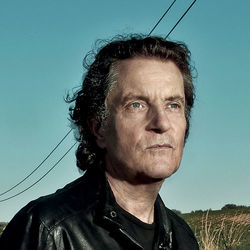
Francis Cabrel convierte Toulouse en un personaje: se despierta entre autobuses, calor y palomas que se persiguen sobre Arnaud Bernard, un barrio de la ciudad. La imagen central es deliciosamente absurda: «Tu mets un morceau de Sicre / Dans ton café noir» [Pones un trozo de Sicre en tu café negro]. Sicre es Claude Sicre, músico y figura vinculada a la cultura popular de Toulouse; aquí su nombre funciona como una dosis de identidad local, algo que se mezcla con la vida diaria como el azúcar o el café. La canción dice que uno puede irse, pero siempre termina pidiendo volver: «On est d'ici cent pour cent» [Somos de aquí al cien por cien].
Luego llega un retrato cariñoso y ruidoso de la ciudad: «ville noire et rouge» [ciudad negra y roja], una alusión a sus colores tradicionales; rugby, petanca y música callejera caben en la misma escena. «Ici, tous les ballons sont ovales» [Aquí todos los balones son ovalados] bromea con la importancia del rugby, mientras «un cochonnet et des boules» [un boliche y bolas] evoca la petanca. También aparecen nombres y voces de Toulouse: los Motivés, Claude Sicre y el dúo Flo y Oli, presentado a través del slam. El transeúnte se vuelve «troubadour» [trovador], con «la tchatche» [la labia, la facilidad para hablar], y la ciudad queda como una mezcla de historia, acento, orgullo y conversación que se lleva puesta, incluso al pedir un café.
Francis Cabrel invites us on a sunrise stroll through Toulouse, the pink-brick city that beats to its own musical rhythm. From the first lines we hop on the “ballet of buses,” watch pigeons swirl above the Arnaud-Bernard neighborhood, and sweeten our strong morning coffee with “un morceau de Sicre.” The word is a playful wink: it sounds like sucre (sugar) yet salutes Claude Sicre, the local troubadour who helped turn street poetry and regional pride into a party. Cabrel’s refrain is a recipe for the day – add a dash of Sicre, stir, and taste the city’s warmth that grows alongside the rising temperature.
The song is a joyous love letter to Toulouse’s character: rugby balls are oval, pétanque balls are always within reach, and conversation (“la tchatche”) flows like the Garonne River. Cabrel name-checks activists Les Motivés, rapper brothers Bigflo & Oli, and the ever-present Claudes, sketching a mosaic of voices that keep the city “debout” – upright and proud. Beneath the playful imagery sits a deeper truth: Toulouse casts a magnetic spell on its people. Leave if you must, but you will always feel the pull to return and drop another flavorful cube of Sicre into your black coffee.
Picture a tiny seed drifting through the air. It finally lands on just one gram of soil, a speck hardly big enough to hold hope, yet that seed digs in, drinks the rain, braces against storms, and rises toward the light. Francis Cabrel turns this simple image into a vibrant metaphor for human resilience: the seed is every one of us, launching a quiet fight for survival in a world full of gusts, stones, and careless feet. Its roots grow deep, drawing up courage and feverish energy, promising that even when the odds look microscopic, life can still shoot upward and bloom.
Un Gramme De Terre reminds us that progress is usually born from perseverance. Each new sprout inspires another, spreading strength across generations and borders just as the song shifts fluidly between French and regional languages. By the closing lines, the seed has become a symbol of perpetual renewal: it rolls, it searches, it lands, and it starts the miracle all over again. Cabrel invites listeners to hear their own heartbeat in that fragile stem and to trust that, given even the smallest chance, we too can stand tall.
Imagine wandering through the cobblestoned streets of France, stopping at every ornate fountain to whisper your secrets. That is exactly what Francis Cabrel does in Peuple Des Fontaines. The singer treats each fountain like a wise old confidant, pouring out his heartbreak and begging the waters to carry a single wish: may his lost lover return and slip her arm through his once more. Day after day feels colorless, and even the beauty of famous rivers (the Rhône, the Seine) or the words of legendary poets (Rimbaud, Verlaine) can’t wash away the ache.
Cabrel uses the fountains as a timeless bulletin board of love’s woes. He reminds us that princes, actresses, and countless clumsy lovers have all carved the same sighs into the stone. The question he keeps asking these silent witnesses is simple yet universal: Do the women we breathe for ever forgive? He is willing to trade celebrated songs like Barbara’s “Göttingen” and Leonard Cohen’s “Suzanne” for just one blessed day when he hears her footsteps again. The result is a tender, almost cinematic portrait of longing, where every splash of water echoes with hope, regret, and the age-old promise that love might still circle back.
Francis Cabrel sings this as a letter to a parent who worked brutally hard, factory shifts, early mornings, cold hands on a bicycle in the dark, just so their children could sleep well and grow up comfortably.
He admits he wanted to turn out like that parent but never really did. One day he picked up a guitar instead and lived a lighter, more playful life than the one built on that kind of sacrifice. Feelings were never said out loud between them, but he always knew what it cost.
Looking back, he sometimes feels guilty for how easy his own life became, a big house, a decorative garden, next to the harder life that made it possible. Even so, he believes that parent has kept watching over him from somewhere far away, quietly proud of the path he chose, however different it was from their own.
Imagine your thoughts turning into paper birds that take off under the moonlight and glide straight to the window of someone you love. That is the playful, dream-like mood of Tu Me Corresponds by French troubadour Francis Cabrel. The singer pictures his poems, worries and wishes sneaking out of his mind at night, wrapping themselves in seasonal coats, then landing softly on the balcony of the woman who corresponds to him in every sense. Even when distance keeps them apart, he trusts that his words will light up her living room, swirl around her shoulders like flower petals and start a secret dance on her forehead.
Behind the charming images is a simple, universal feeling: an irresistible need to connect. Cabrel admits he cannot fully control his desires; each one escapes in search of her. He fantasizes about having the power to orbit the Earth, press himself against her iron shutters and stay there for good. The song becomes a tender ode to romantic correspondence, reminding us that when two souls truly match, no border—physical or emotional—can stop their letters, melodies or dreams from finding their way.
Francis Cabrel’s classic "Je L'aime À Mourir" is a poetic love letter where the singer marvels at how completely love has changed his world. He begins by admitting he “was nothing,” yet now he guards his beloved’s sleep as if it were the most precious treasure. Her embrace can rebuild anything that life destroys, and her laughter turns the dull ticking of neighborhood clocks into playful paper boats. The lyrics overflow with vivid images: bridges to the sky, dream-painted forests, and sky-bound ribbons she refuses to let him capture.
At its heart, the song celebrates the transformative, almost magical power of devotion. The woman he adores has weathered “all the wars” of life and love, emerging strong enough to create whole universes from simple moments. All he wants is to belong to her, sit quietly in her hidden attic sanctuary, and let her light reshape his existence. It’s an ode to a love so deep that the singer would gladly “love her to death” — not in darkness, but in a life-giving surrender that rebuilds everything it touches.
Saturday night, a crowded bar, and two strangers who do not stay strangers for long – that is the whole stage Francis Cabrel needs to paint a universal story. In Samedi Soir Sur La Terre the French singer-songwriter zooms in on the electric moment when a woman’s sparkling glance meets a man’s curious eyes. We follow their small, almost choreographed moves: she heats the air with graceful gestures, he rehearses clever lines, the music forces them closer until conversation turns to touch. It feels intimate, yet Cabrel keeps reminding us that this dance is anything but rare. It is “a child’s story, an ordinary story,” the kind that plays out in every city once the weekend lights switch on.
That is the beauty of the song – its simplicity. Nothing dramatic happens beyond a flirt, a shared drink, and a tumble onto the back seat of a car. By repeating the line “un samedi soir sur la terre,” Cabrel underlines how common, even comforting, these fleeting connections are. He shows that a quick romance can be both magical and mundane: two people chase desire, live it for a night, then leave it in the past without regret. The result is a warm, relatable snapshot of human longing, served with Cabrel’s tender guitar and gentle voice, perfect for anyone who has ever felt the spark of possibility on a Saturday night.
Francis Cabrel opens by handing the mic straight to the con man: "L'homme qui parlait, disait, 'je viens pour vous tondre'" [The man who spoke, said, 'I've come to shear you']. Whoever he's talking to has heard the line before and doesn't bother answering: "J'étais déjà tondu, j'allais pas répondre" [I was already shorn, I wasn't going to answer]. This politician lives "Sous les dorures des palaces" [Under the gilding of palaces], so his concern comes with office hours attached: if he ever thinks of the people outside, "Ce sera aux horaires bureaux" [It'll be during office hours].
The chorus turns his whole speech into a rigged bet. He swears it "dur comme fer" [hard as iron], with the same confidence a gambler uses on a ticket he hasn't checked yet: "Ce sera l'eldorado, il a les six bons numéros" [It'll be the eldorado, he's got the six right numbers], "Plus le complémentaire" [Plus the bonus ball]. By the last verse the line just repeats and thins out, until "Et sa voix se perd dans l'écho" [And his voice gets lost in the echo]. The oath never changes; it's the man behind it who disappears.
Francis Cabrel’s “Ma Place Dans Le Trafic” paints the picture of an everyday commuter who feels both wide-awake and half-asleep inside the concrete jungle. From the very first tear at dawn to the scent of exhaust that “perfumes” his life, the narrator ticks through familiar morning rituals that do nothing but slide him back into the endless line of cars. Cabrel uses that traffic jam as a metaphor for a society where promises of comfort sound cozy yet quietly imprison us, turning people into “mutants” who don’t even own their own desires.
While the engine idles, the song wrestles with bigger fears: pollution, consumerism, the loss of individuality, and the haunting thought that the next generation will inherit the same gridlock. Even the rebellious dreamers fade into the distance, leaving the singer clutching a phone and dialing le 12 (directory assistance) just to hear another human voice. Darkly humorous and deeply relatable, the track invites listeners to question how often we simply accept our assigned lane—and challenges us to find the courage to signal for an exit before it’s too late.
Francis Cabrel’s “Sarbacane” paints the intoxicating moment when love bursts into someone’s life as suddenly and precisely as a dart shot from a blow-pipe. The narrator believed he already knew every nook of romance: bodies memorized, hearts comfortably wrapped “in velvet.” Then she appears — a “bout de femme,” small yet powerful — and the very sky seems to glitter differently. Cabrel compares her arrival to being soufflée d’une sarbacane, suggesting a swift, breath-propelled magic that knocks the wind out of him and resets his entire world.
From that instant, everything shifts — inside and out. Words become pointless because feelings speak louder; gloomy mornings lift; his once-solid identity feels delightfully shaken. He clings to her like a vine, praying she never drifts farther than a single blow-pipe’s shot. “Sarbacane” is therefore a celebration of transformative love: that thrilling, disorienting rush when someone new makes colors brighter, burdens lighter, and life itself feel freshly blown into motion.
La Corrida invites us into the arena through the eyes of the bull rather than the matador. At first, the animal is confused by the music, trumpets and dazzling light after waiting in a dark pen. Very quickly the bull realizes there is no escape, and his natural instinct to defend himself is met with taunts, colorful costumes and sharp blows. Each charge, each swirl of the torero’s cape, feels like a grotesque dance staged for the crowd’s amusement. The bull’s repeated question, “Est-ce que ce monde est sérieux ?” (“Is this world serious?”), becomes a haunting refrain that exposes the absurdity of glorifying violence as entertainment.
Francis Cabrel turns a traditional symbol of Spanish culture into a powerful protest song against cruelty and spectacle. By giving the bull a voice, he flips the usual narrative: the so-called hero appears as a “ridiculous dancer,” while the doomed animal emerges as the tragic, relatable protagonist. The final lines in Spanish, urging the crowd to “dance again” and “kill others,” underline how easily society can become numb to suffering once it is wrapped in ritual and celebration. La Corrida is therefore not just a tale of bullfighting — it is a broader plea for empathy, asking listeners to rethink any tradition that masks brutality with pageantry.
Picture the alarm ringing before sunrise, the smell of hot coffee, the elevator waiting, and an endless line of headlights already forming outside. In Ma Place Dans Le Trafic, French singer-songwriter Francis Cabrel walks us through this all-too-familiar morning ritual, only to reveal the quiet despair hiding beneath it. With every verse he paints the life of a modern commuter who feels like a “mutant” — someone molded by exhaust fumes, buzzed phones, and the pressure to earn just enough to survive. The chorus, prendre ma place dans le trafic (take my place in traffic), becomes a haunting reminder that society expects us to merge into the flow, keep our promises to “tapis merchants” (the people who sell us comfort), and swallow any urge to break free.
Cabrel’s lyrics read like an urban blues where the road is both literal and symbolic. He questions consumerism, environmental damage, and the way children quickly learn they will inherit the same gridlock. Even when he dreams of climbing “the law of the ladder,” he admits the first step is still the traffic jam. This song is a candid, almost cinematic look at everyday alienation — a gentle nudge to listeners to notice how easily we trade our desires for routine, and maybe to search for an off-ramp before it is too late.

